Red Hat Virtualization (formerly Red Hat Enterprise Virtualization, broadly known as RHEV) is an enterprise level server and desktop virtualization solution. Red Hat Virtualization also contains the functionality of Red Hat Enterprise Virtualization for Desktop in later editions of the platform.
$999
Per Year Per Hypervisor
SolarWinds AppOptics
Score7.6 out of 10
N/A
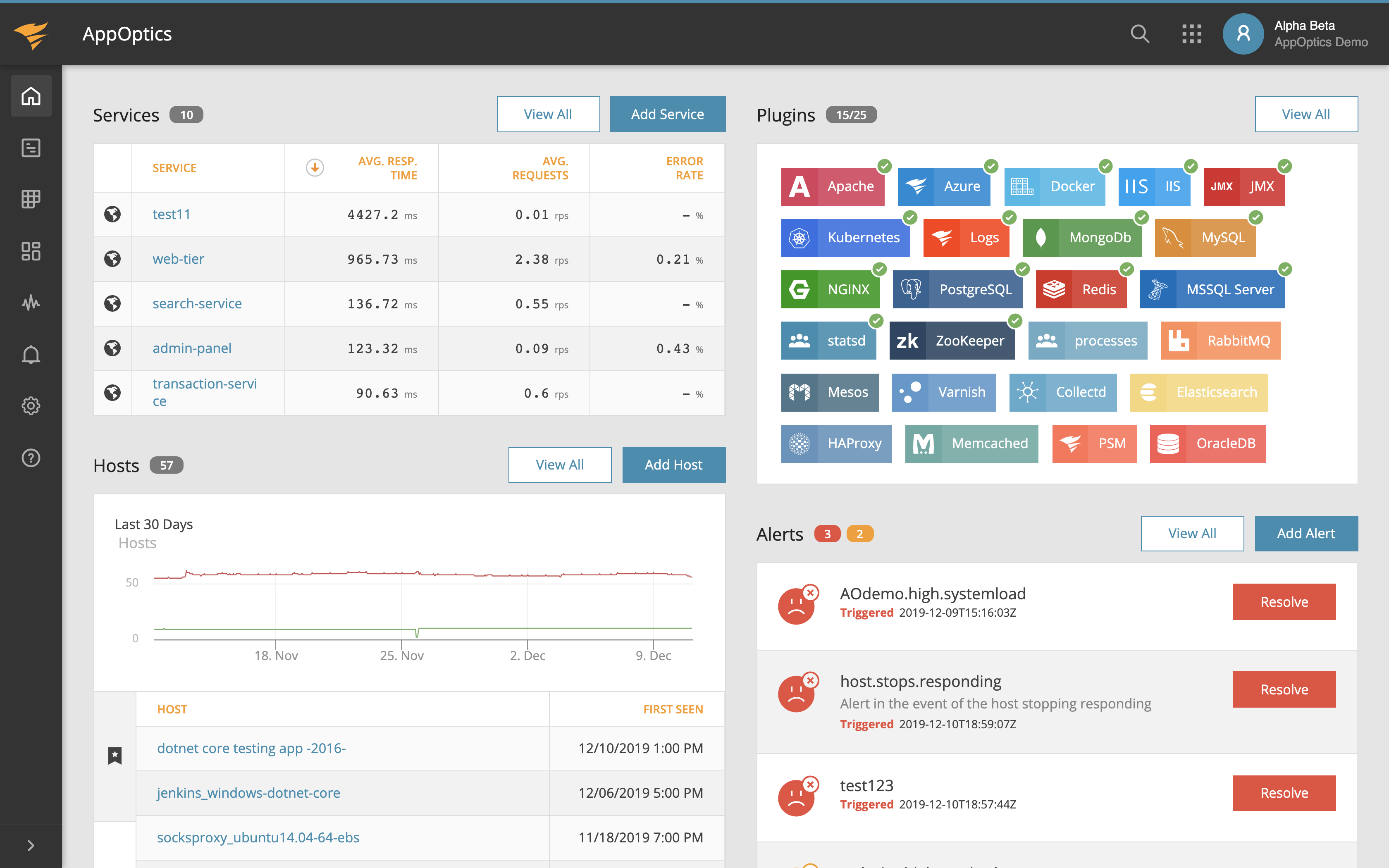
SolarWinds AppOptics (formerly Librato) is an IT infrastructure monitoring service and APM, based on technology acquired by SolarWinds with Librato in 2015 to expand its cloud monitoring portfolio.
RHEV is well suited for organizations that need a cost-effective and flexible solution for their environment. As its vendor-independent software, easily install on any type of hardware. RHEV provides a GUI interface to manage the software, which makes the management of the software easier for the end-user. RHEV is best for non-production or less critical applications. RHEV can be easily integrated with other REDHAT software.
A de minimis incentive was given to thank the reviewer for their time. The incentive was not used to bias or drive a particular response, nor was the incentive contingent on a positive endorsement. More Info
AppOptics is good for small to medium-sized organizations with less than 150 servers or less than 40 services to monitor. It performs well for this use case where people need to get an overview of application performance, and 95%ile data is okay. Somewhere every data point and every record is critical; it should be avoided.
A de minimis incentive was given to thank the reviewer for their time. The incentive was not used to bias or drive a particular response, nor was the incentive contingent on a positive endorsement. More Info
A de minimis incentive was given to thank the reviewer for their time. The incentive was not used to bias or drive a particular response, nor was the incentive contingent on a positive endorsement. More Info
A de minimis incentive was given to thank the reviewer for their time. The incentive was not used to bias or drive a particular response, nor was the incentive contingent on a positive endorsement. More Info
1- RHVM API is pretty slow, especially after creating a VM it is not possible to retrieve the VM details (i.e VM's MAC Address) fast enough, where we need to place a pause in our Ansible Playbook, make the automation process slow.
2- RHV is still using collected to monitor the hypervisors which is deviating from Red Hat policy for other RHEL based applications to use PCP to monitor, which is richer in features.
3- It will be great if it is possible to patch the hypervisors using other tools such as satellite and not only via RHVM.
4- In the past Red Hat used to present patches in the z release (i.e. 4.3.z), and features in the y release (i.e 4. y), but starting from 4.4 that is mixed together wherein the Z release you get both patches and features, that is not good because that requires a lot of time to test when we patch as it includes features as well.
5- Engineering team has to be more reactive when new feature is requested.
A de minimis incentive was given to thank the reviewer for their time. The incentive was not used to bias or drive a particular response, nor was the incentive contingent on a positive endorsement. More Info
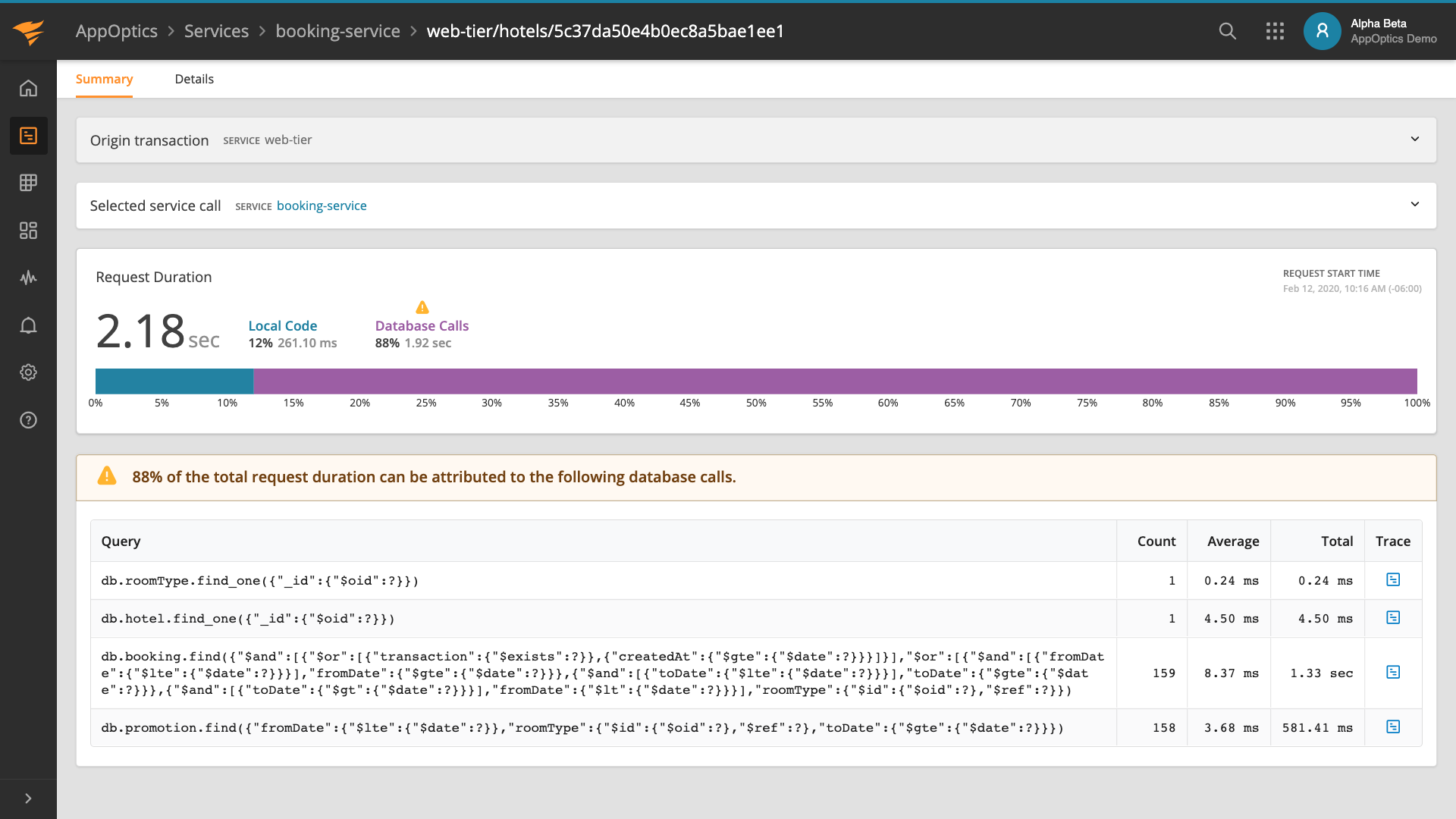
The only thing that I would add is the possibility to display every single query our servers receive to eventually analyze them and query through them. We could also generate nice visualizations from that. Right now I believe we can only see averages.
A de minimis incentive was given to thank the reviewer for their time. The incentive was not used to bias or drive a particular response, nor was the incentive contingent on a positive endorsement. More Info
A de minimis incentive was given to thank the reviewer for their time. The incentive was not used to bias or drive a particular response, nor was the incentive contingent on a positive endorsement. More Info
As far a usability is concerned for AppOptics, it is just as matter of few minutes away even if you start from scratch, as all you need to do is register on the site and you will get the URL and password. And after this all you have to do is follow the instruction, as per the configuration wizard (tool tip) within the console for various technology such as SQL, IIS, .NET
A de minimis incentive was given to thank the reviewer for their time. The incentive was not used to bias or drive a particular response, nor was the incentive contingent on a positive endorsement. TR verified that a representative sample of customers was invited. More Info
Solarwinds AppOptics is rated as 9 out of 10 and the reason is there are still few areas where AppOptics needs to improve such as Service Now Integration, GCP Cloud Support, Better Dashboard visualization for application transactions flow. Other than these feature everything is there in AppOptics and that's a reason given 9 points out of 10.
A de minimis incentive was given to thank the reviewer for their time. The incentive was not used to bias or drive a particular response, nor was the incentive contingent on a positive endorsement. TR verified that a representative sample of customers was invited. More Info
RHEV is an excellent product, includes more features, is less expensive, and has rock solid reliability and is backed with the best Red Hat Support in the industry. RHEV uses KVM under the hood which is used by all the big players in the industry (AWS, Rackspace, etc) to lower their overall costs and improve efficiency and profits and that's why RHEV is an excellent solution!
A de minimis incentive was given to thank the reviewer for their time. The incentive was not used to bias or drive a particular response, nor was the incentive contingent on a positive endorsement. More Info
What we found positive in AppOptics from others is:
Easy to install and manage.
Various stack support.
Point to point deep-dive metrics and correlation.
Metrics like DB connection, query analysis, latency in API calls, and other connections, response codes for various APIs, etc are the key ones in our case, which AppOptics provides efficiently.
A de minimis incentive was given to thank the reviewer for their time. The incentive was not used to bias or drive a particular response, nor was the incentive contingent on a positive endorsement. More Info
A de minimis incentive was given to thank the reviewer for their time. The incentive was not used to bias or drive a particular response, nor was the incentive contingent on a positive endorsement. More Info
A de minimis incentive was given to thank the reviewer for their time. The incentive was not used to bias or drive a particular response, nor was the incentive contingent on a positive endorsement. More Info