Sage Fixed Assets provides simplified fixed-asset tracking with comprehensive depreciation calculations, including over 300,000 U.S. and Canadian regulations for businesses, governments and nonprofits.
N/A
SAIM
Score 0.0 out of 10
Enterprise companies (1,001+ employees)
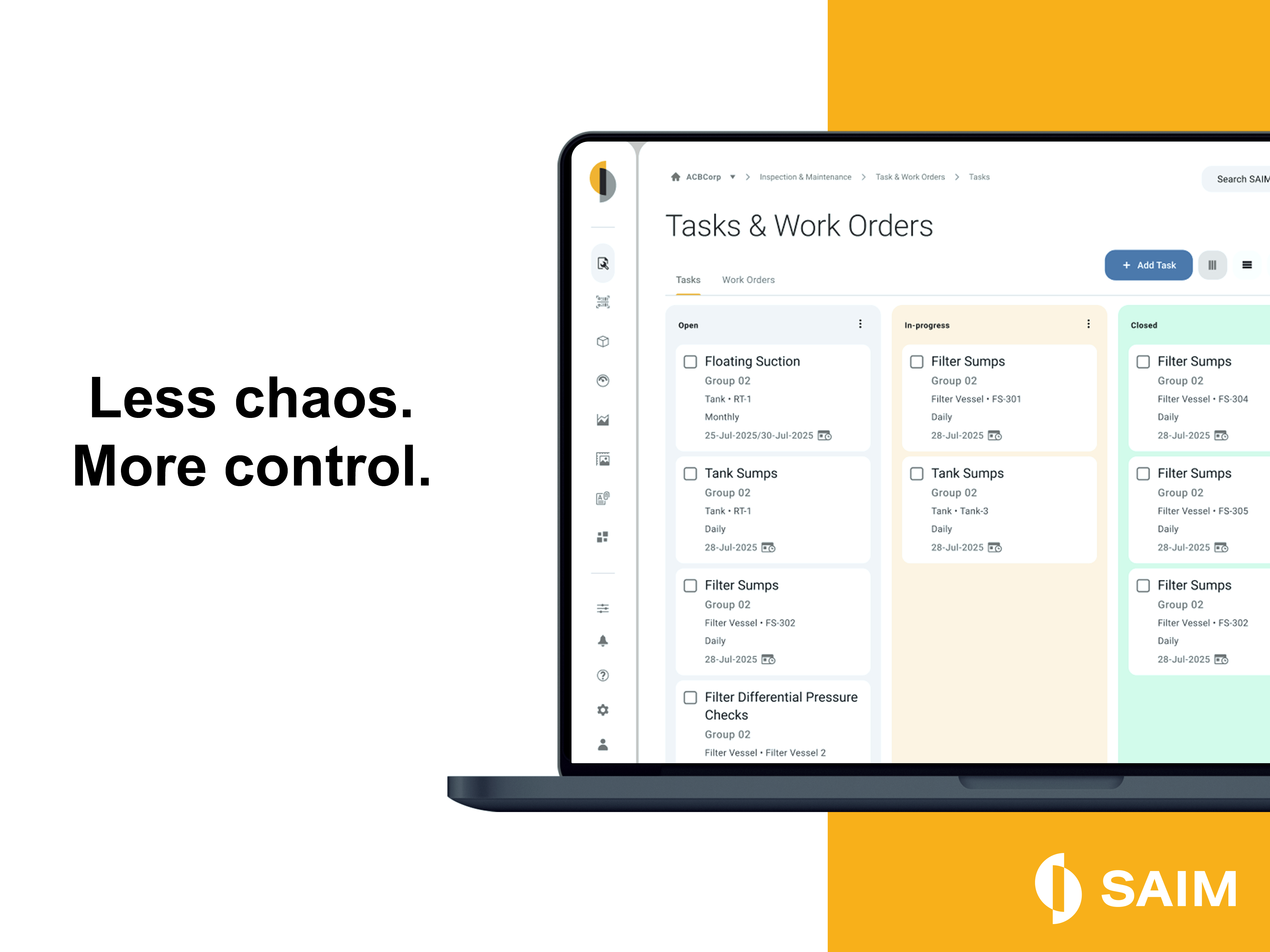
SAIM (Smart Asset Integrity Management) is a modern, cloud-based platform designed for field-centric industries that need to manage facilities, assets, and field data with greater accountability and efficiency. By combining maintenance, monitoring, and digital twin capabilities in a single system, SAIM eliminates siloed tools and outdated workflows. Core Capabilities Maintenance Management SAIM simplifies inspections, recurring tasks, and work…
N/A
Pricing
Sage Fixed Assets
SAIM
Editions & Modules
No answers on this topic
No answers on this topic
Offerings
Pricing Offerings
Sage Fixed Assets
SAIM
Free Trial
No
No
Free/Freemium Version
No
No
Premium Consulting/Integration Services
No
No
Entry-level Setup Fee
No setup fee
Optional
Additional Details
—
—
More Pricing Information
Community Pulse
Sage Fixed Assets
SAIM
Considered Both Products
Sage Fixed Assets
Verified User
Anonymous
Chose Sage Fixed Assets
AssetsWorks is very reliable for maintenance-related operations, such as real-time location tracking and inspections of physical items and performances, but Sage is better at financial guidance, including tax compliance, depreciation, audit preparation, and readiness, which is …
Sage was overall a much simpler product to understand. Our users were able to wrap their heads around how it worked and the learning curve was very short. Meanwhile the other products we looked at seemed so complicated for what were needing. I am glad that we chose Sage in …
[I believe that] Sage is nowhere near as good as Oracle. Oracle is easy to use and administer and the features are much better. The system is cloud-based so there are fewer issues with on-prem or virtual servers.
We have considered using Thomson Reuters fixed asset offering in the past, since we use their income tax offering for our domestic tax preparation. While it contained some nice features, the cost was simply prohibitive. As a result, and due to Sage Fixed Assets' price point, …
To me, the best use case for Sage Fixed Assets are: 1. you run a Sage based ERP. or 2. you have an ERP that is limited in its Fixed Asset abilities. We have not done any integration per se, but if we did, it would be fairly easy given the fact that Sage uses SQL tables.
Of all the software we use, Sage is one of the easiest to use. The simple interface makes the whole fixed asset process easy to understand and when new users are onboarded, they have no trouble learning the product. The product also performs well speed and stability wise, making for a great user experience overall
Rather lackluster. Our account manager generally works with Sage's support team and oftentimes finds herself frustrated with a lack of understanding from the support team. Additionally, when IT is attempting to update the system (which from my understanding is a bear of epic complex proportions) they often times find themselves frustrated and at a loss for what needs done.
AssetsWorks is very reliable for maintenance-related operations, such as real-time location tracking and inspections of physical items and performances, but Sage is better at financial guidance, including tax compliance, depreciation, audit preparation, and readiness, which is more suitable for the type of company we are.