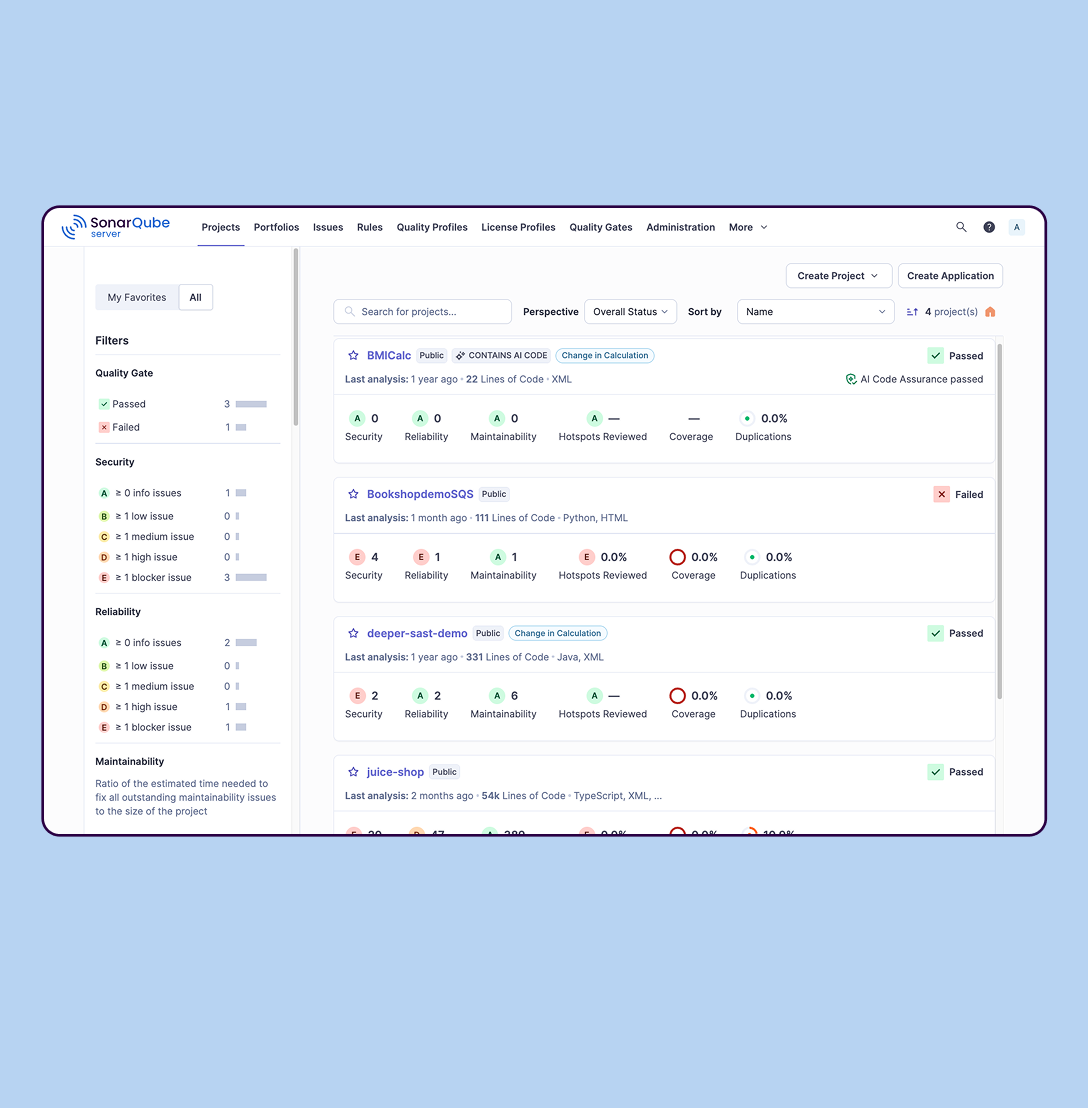
SonarQube is an automated code review solution, serving as the verification layer for code quality and SDLC security. SonarQube is used to ensure that code is secure, reliable, and maintainable. It is available through SaaS or self-managed deployment.
$34
per month Recommended for teams <50 developers
SUSE Rancher
Score9.5 out of 10
N/A
Developed by Rancher Labs and now from SUSE, Rancher is open-source software that enables organizations to deploy and manage Kubernetes at scale, on any infrastructure across the data center, cloud, branch offices, and the network edge. Rancher centrally manages Kubernetes clusters across the organization in order to ensure security and accelerate transformation. Rancher is also available hosted. Hosted Rancher is a fully managed Rancher control plane - presented as the fastest, most cost…
SonarQube is excellent if you start using it at the beginning when developing a new system, in this situation you will be able to fix things before they become spread and expensive to correct. It’s a bit less suitable to use on existing code with bad design as it’s usually too expensive to fix everything and only allows you to ensure the situation doesn’t get worse.
A de minimis incentive was given to thank the reviewer for their time. The incentive was not used to bias or drive a particular response, nor was the incentive contingent on a positive endorsement. More Info
SUSE Rancher as a management tool becomes useful on a larger scale. Small deployments not so much. If someone also requires Kubernetes capacity or storage, Rancher is an excellent choice. Also, without Kubernetes' skills, it is unlikely that Rancher deployment is going to be a success. Then again if someone else is managing your Kubernetes capacity, setting up the software's capacity will yield greater control. Rancher is not a very integrated solution similar to others in the market.
A de minimis incentive was given to thank the reviewer for their time. The incentive was not used to bias or drive a particular response, nor was the incentive contingent on a positive endorsement. More Info
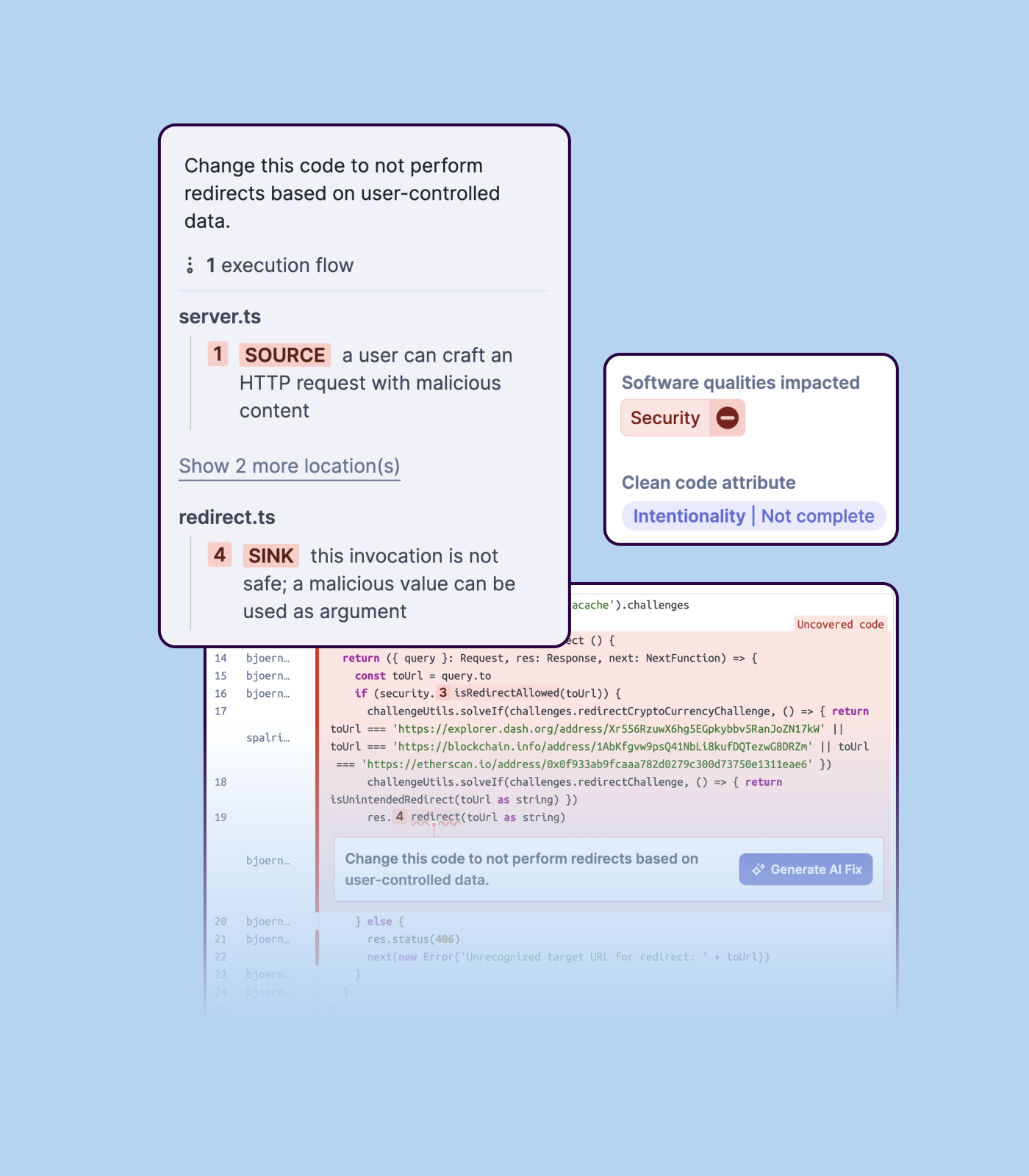
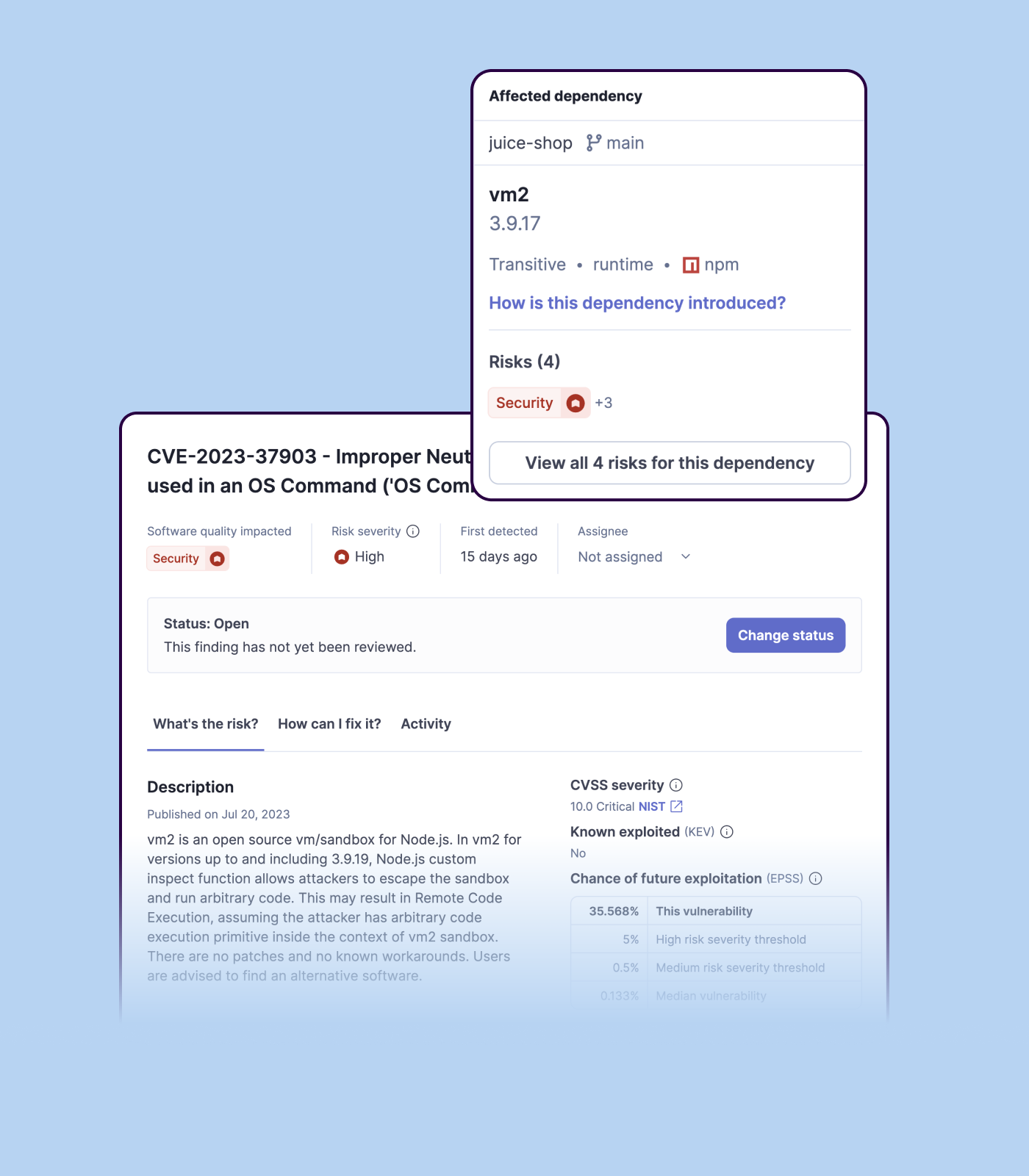
Detecting bugs and vulnerabilities: SonarQube can identify a wide range of bugs and vulnerabilities in code, such as null pointer exceptions, SQL injection, and cross-site scripting (XSS) attacks. It uses static analysis to analyze the code and identify potential issues, and it can also integrate with dynamic analysis tools to provide even more detailed analysis.
Measuring code quality: SonarQube can measure a wide range of code quality metrics, such as cyclomatic complexity, duplicated code, and code coverage. This can help teams understand the quality of their code and identify areas that need improvement.
Providing actionable insights: SonarQube provides detailed information about issues in the code, including the file and line number where the issue occurs and the severity of the issue. This makes it easy for developers to understand and address issues in the code.
Integrating with other tools: SonarQube can be integrated with a wide range of development tools and programming languages, such as Git, Maven, and Java. This allows teams to use SonarQube in their existing development workflow and take advantage of its powerful code analysis capabilities.
Managing technical debt: SonarQube provides metrics and insights on the technical debt on the codebase, enabling teams to better prioritize issues to improve the quality of the code.
Compliance with coding standards: SonarQube can check the code against industry standards like OWASP, CWE and more, making sure the code is compliant with security and coding standards.
A de minimis incentive was given to thank the reviewer for their time. The incentive was not used to bias or drive a particular response, nor was the incentive contingent on a positive endorsement. More Info
Importing a new custom quality profile on SonarQube is a bit tricky, it can be made easier
Every second time when we want to rerun the server, we have to restart the whole system, otherwise, the server stops and closes automatically
When we generate a new report a second time and try to access the report, it shows details of the old report only and takes a lot of time to get updated with the details of the new and fresh report generated
A de minimis incentive was given to thank the reviewer for their time. The incentive was not used to bias or drive a particular response, nor was the incentive contingent on a positive endorsement. More Info
No possibility to snapshot Projects. You can snapshot and restore the whole Kubernetes cluster, but not a Project or Namespace. For this, you have to use external tools.
You cannot detach the Rancher-created Kubernetes clusters from Rancher management.
A de minimis incentive was given to thank the reviewer for their time. The incentive was not used to bias or drive a particular response, nor was the incentive contingent on a positive endorsement. More Info
Overall it deserves an 8 out of 10. The platform is very easy to use as long as the UI is stable. We have had a few buggy versions in the past. However the CLI is excellent and the platform is simple to manage and maintain. It is easy to deploy and offer for company wide use which increases utilization and ROI.
A de minimis incentive was given to thank the reviewer for their time. The incentive was not used to bias or drive a particular response, nor was the incentive contingent on a positive endorsement. More Info
We we easily able to integrate the SonarQube steps into our TFS process via the Microsoft Marektplace, we didn't have the need to call SonarQube support. We've used their online documentation and community forum if we ran into any issues.
A de minimis incentive was given to thank the reviewer for their time. The incentive was not used to bias or drive a particular response, nor was the incentive contingent on a positive endorsement. More Info
The documentation is quite complete and there is a very active community that is willing to collaborate and answer questions for those who are just starting out.
SonarQube is an open-source. It's a scalable product. The costs for this application, for the kind of job it does, are pretty descent. Pipeline scan is more secured in SonarQube. Its a very good tool and its support multiple languages. Its main core competency is of static code analysis and that is why SonarQube exists and it does it exceedingly well. The quality of scan on code convention, best practices, coding standards, unit test coverage etc makes them one of the best competent tool in the market
A de minimis incentive was given to thank the reviewer for their time. The incentive was not used to bias or drive a particular response, nor was the incentive contingent on a positive endorsement. More Info
We started using SUSE Rancher in the early days and spent a large amount of time getting to know and love it. This was before the days of some of the likes of Amazon Web Services who may now provide a cheaper but less feature-rich alternative to SUSE Rancher, however we have yet to explore this.
A de minimis incentive was given to thank the reviewer for their time. The incentive was not used to bias or drive a particular response, nor was the incentive contingent on a positive endorsement. More Info
The investment for small environments is quite significant. There has to be a compelling case to enhance the areas where SUSE Rancher brings in value to make such a financial leap. There is also a free version to test the value propositions, which will help support the user's buying decisions. More clusters, more volume, more tasks and more complexity in the environment equals more value that Rancher can provide.
A de minimis incentive was given to thank the reviewer for their time. The incentive was not used to bias or drive a particular response, nor was the incentive contingent on a positive endorsement. More Info
Positive ROI from the standpoint of flagging several issues that would have otherwise likely been unaddressed and caused more time to be spent closer to launch
Slightly positive ROI from time-saving perspective (it's an automated check which is nice, but depending on the issues it finds, can take developers time to investigate and resolve)
Shortens "Time-to-Market" factor for new business applications or implementing new functionalities. From 1 to 50 microservices-based business applications in 6 years.
24/7 availability, generates more money. There are many infrastructure components that are regularly powered-off for maintenance or upgrade, bur we rarely are turning off our downstream Kubernetes clusters where our business applications lives.
Single Point of Contact with platform maintenance and development Team, eases implementation of new business applications