


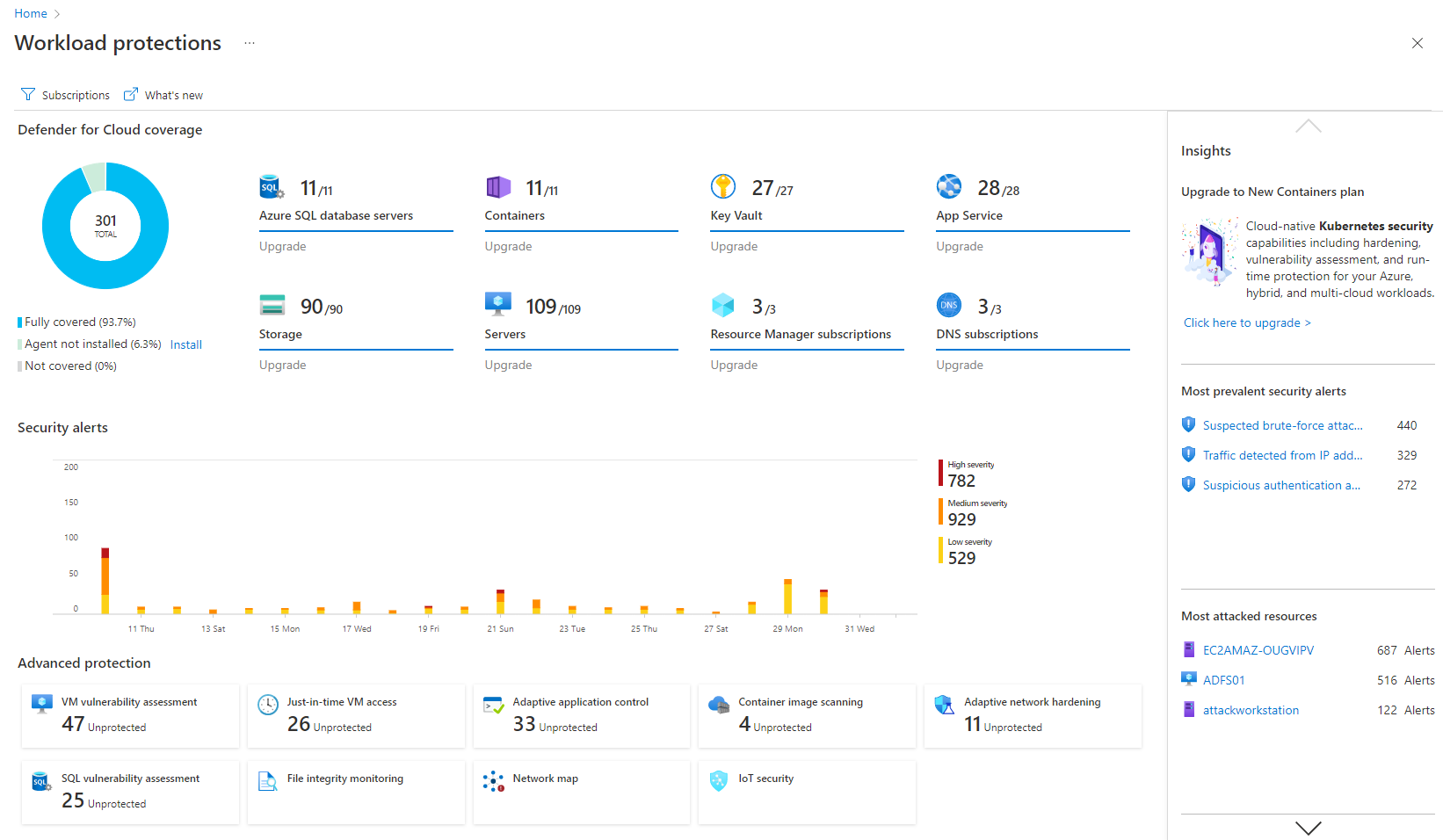


Microsoft Defender for Cloud review

Use Cases and Deployment Scope
For my organization, we assess other companies' use of it. I think the biggest problem right now is that smaller companies lack understanding of exactly how it works and how it applies to the requirements they have to maintain for security. But Microsoft does a really good job of providing training to them. So if we do identify something where they're deficient in training, Microsoft usually comes in and takes care of it pretty quickly.
Pros
- So one of our biggest concerns with the Department of Defense is FedRAMP and cloud security. And this does an excellent job of providing that level of security that we need for controlled unclassified information.
Cons
- For a while, it didn't do a really good job of handling things like vulnerability scanning. I believe they bought a module for that, and now it's one of the options that some companies can select. And it does an excellent job of doing good vulnerability scanning on the products that it covers. I would prefer it to be able to do an agent-based scan of some other things that are not Microsoft-based, but that may be something for their future development.


