
Aerospike vs. Amazon Relational Database Service (RDS)
Aerospike vs. Amazon Relational Database Service (RDS)
| Product | Rating | Most Used By | Product Summary | Starting Price |
|---|---|---|---|---|
 Aerospike | N/A | The Aerospike Real-time Data Platform aims to enable organizations to act instantly across billions of transactions while reducing server footprint up to 80%. The vendor states Aerospike multi-cloud platform powers real-time applications with predictable sub-millisecond performance up to petabyte scale with five-nines uptime with globally distributed, consistent data. Aerospike boasts customers such as Airtel, Experian, European Central Bank, Nielsen, PayPal, Snap, Verizon Media and Wayfair. | N/A | |
 Amazon RDS | N/A | Amazon Relational Database Service (Amazon RDS) is a database-as-a-service (DBaaS) from Amazon Web Services. | N/A |
| Aerospike | Amazon Relational Database Service (RDS) | |||||||||||||||
|---|---|---|---|---|---|---|---|---|---|---|---|---|---|---|---|---|
| Editions & Modules | No answers on this topic |
| ||||||||||||||
| Offerings |
| |||||||||||||||
| Entry-level Setup Fee | No setup fee | Optional | ||||||||||||||
| Additional Details | — | — | ||||||||||||||
| More Pricing Information | ||||||||||||||||
| Aerospike | Amazon Relational Database Service (RDS) |
|---|
| Aerospike | Amazon Relational Database Service (RDS) | ||||||||||||||||||||||||
|---|---|---|---|---|---|---|---|---|---|---|---|---|---|---|---|---|---|---|---|---|---|---|---|---|---|
| NoSQL Databases |
|
| Aerospike | Amazon Relational Database Service (RDS) | |
|---|---|---|
| Small Businesses |  IBM Cloudant Score 7.4 out of 10 |  InterSystems IRIS Score 8.0 out of 10 |
| Medium-sized Companies | IBM Cloudant Score 7.4 out of 10 | InterSystems IRIS Score 8.0 out of 10 |
| Enterprises | IBM Cloudant Score 7.4 out of 10 |  SAP IQ Score 10.0 out of 10 |
| All Alternatives | View all alternatives | View all alternatives |
| Aerospike | Amazon Relational Database Service (RDS) | |
|---|---|---|
| Likelihood to Recommend | 9.0 (4 ratings) | 8.9 (131 ratings) |
| Likelihood to Renew | 8.0 (1 ratings) | 8.4 (5 ratings) |
| Usability | 7.0 (3 ratings) | 8.7 (8 ratings) |
| Availability | - (0 ratings) | 9.0 (1 ratings) |
| Performance | - (0 ratings) | 7.0 (1 ratings) |
| Support Rating | 8.9 (2 ratings) | 9.6 (13 ratings) |
| Online Training | - (0 ratings) | 10.0 (1 ratings) |
| Product Scalability | - (0 ratings) | 9.0 (1 ratings) |
| Aerospike | Amazon Relational Database Service (RDS) | |
|---|---|---|
| Likelihood to Recommend |  Aerospike Inc
 Savan Solanki Senior Software Engineer | Amazon AWS
|
| Pros | Aerospike Inc
| Amazon AWS
|
| Cons | Aerospike Inc
 Anson Abraham Data Lord | Amazon AWS
 Animesh Kumar Senior Member of Technical Staff |
| Likelihood to Renew | Aerospike Inc
Anson Abraham Data Lord | Amazon AWS
 Rahul Jain Software Engineer |
| Usability | Aerospike Inc
| Amazon AWS
 Erlon Sousa Pinheiro Senior Devops Engineer |
| Support Rating | Aerospike Inc
Savan Solanki Senior Software Engineer | Amazon AWS
 Michael Jenkins Senior Systems Reliability Engineer |
| Online Training | Aerospike Inc No answers on this topic | Amazon AWS
 KAUSHIK DEBNATH SAP BASIS Consultant |
| Alternatives Considered | Aerospike Inc
| Amazon AWS
|
| Return on Investment | Aerospike Inc
| Amazon AWS
|
| ScreenShots | Amazon RDS Screenshots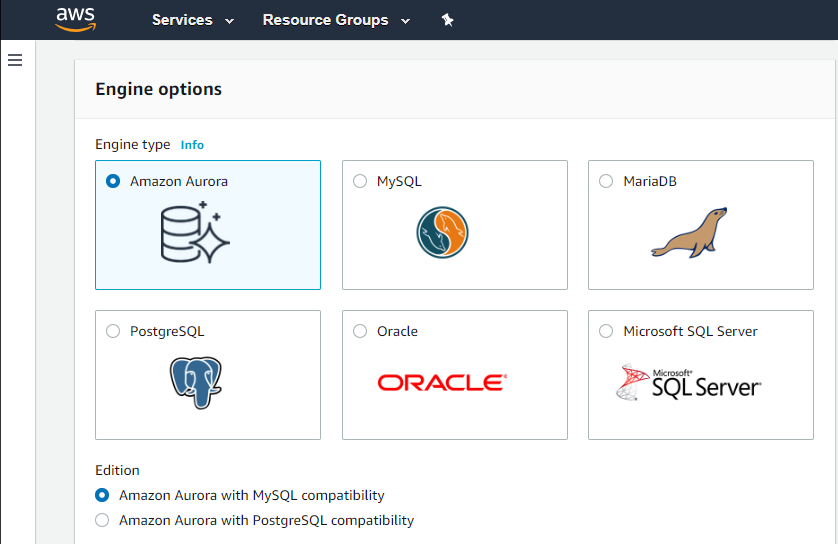 |