
AlertBot Website Monitoring vs. Nagios Core
AlertBot Website Monitoring vs. Nagios Core
| Product | Rating | Most Used By | Product Summary | Starting Price |
|---|---|---|---|---|
 AlertBot Website Monitoring | N/A | AlertBot provides availability and performance real browser monitoring from an end user perspective. | $17.95 Per Month [Unlimited Users] | |
 Nagios Core | N/A | Nagios provides monitoring of all mission-critical infrastructure components. Multiple APIs and community-build add-ons enable integration and monitoring with in-house and third-party applications for optimized scaling. | N/A |
| AlertBot Website Monitoring | Nagios Core | |||||||||||||||
|---|---|---|---|---|---|---|---|---|---|---|---|---|---|---|---|---|
| Editions & Modules |
|
| ||||||||||||||
| Offerings |
| |||||||||||||||
| Entry-level Setup Fee | No setup fee | No setup fee | ||||||||||||||
| Additional Details | — | — | ||||||||||||||
| More Pricing Information | ||||||||||||||||
| AlertBot Website Monitoring | Nagios Core |
|---|
| AlertBot Website Monitoring | Nagios Core | ||||||||||||||||||
|---|---|---|---|---|---|---|---|---|---|---|---|---|---|---|---|---|---|---|---|
| Monitoring Tasks |
| ||||||||||||||||||
| Management Tasks |
| ||||||||||||||||||
| Reporting |
| ||||||||||||||||||
| Security |
|
| AlertBot Website Monitoring | Nagios Core | |
|---|---|---|
| Small Businesses |  Panda Systems Management Score 8.0 out of 10 |  ConnectWise Automate Score 8.5 out of 10 |
| Medium-sized Companies |  ManageEngine ADAudit Plus Score 9.0 out of 10 |  Icinga Score 8.8 out of 10 |
| Enterprises | ManageEngine ADAudit Plus Score 9.0 out of 10 |  ScienceLogic SL1 Score 8.8 out of 10 |
| All Alternatives | View all alternatives | View all alternatives |
| AlertBot Website Monitoring | Nagios Core | |
|---|---|---|
| Likelihood to Recommend | 5.1 (2 ratings) | 8.5 (44 ratings) |
| Likelihood to Renew | - (0 ratings) | 9.9 (3 ratings) |
| Usability | - (0 ratings) | 4.0 (1 ratings) |
| Support Rating | 6.0 (1 ratings) | 7.7 (9 ratings) |
| AlertBot Website Monitoring | Nagios Core | |
|---|---|---|
| Likelihood to Recommend |  AlertBot
|  Nagios Enterprises
 Shawn Brito Senior Systems Architect |
| Pros | AlertBot
| Nagios Enterprises
 Eric Krueger Operations/Systems Manager |
| Cons | AlertBot
| Nagios Enterprises
|
| Likelihood to Renew | AlertBot No answers on this topic | Nagios Enterprises
|
| Usability | AlertBot No answers on this topic | Nagios Enterprises
|
| Support Rating | AlertBot
| Nagios Enterprises
 Chris Saenz Lead System Engineer |
| Alternatives Considered | AlertBot
| Nagios Enterprises  Pavan Mehare Linux Administrator |
| Return on Investment | AlertBot
| Nagios Enterprises
|
| ScreenShots | AlertBot Website Monitoring Screenshots 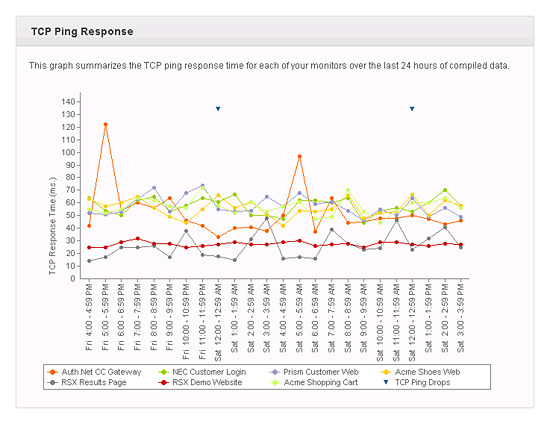 |