CloudFront is the content delivery network (CDN) from Amazon Web Services.
$0.02
Cloudimage
Score 6.0 out of 10
N/A
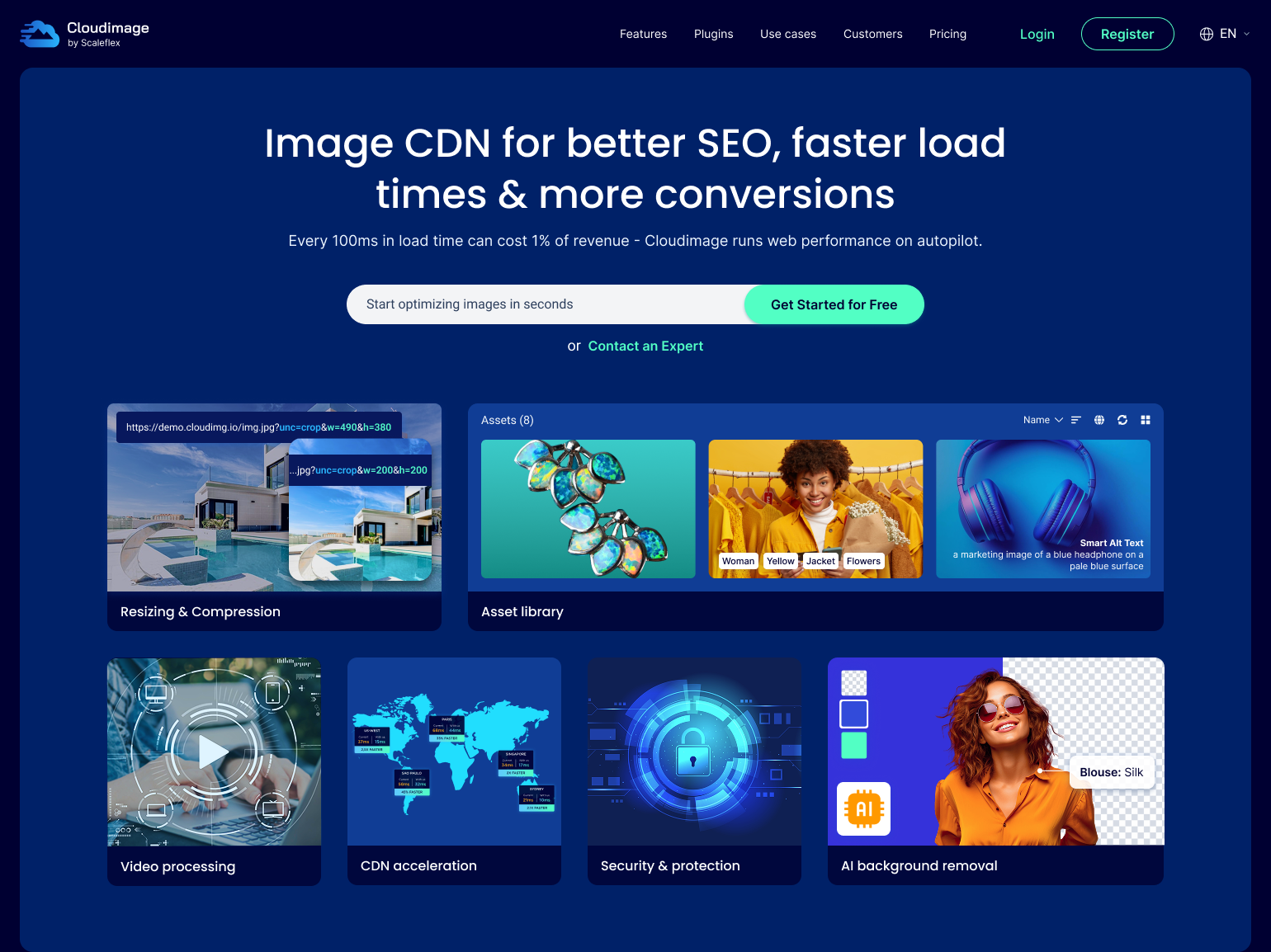
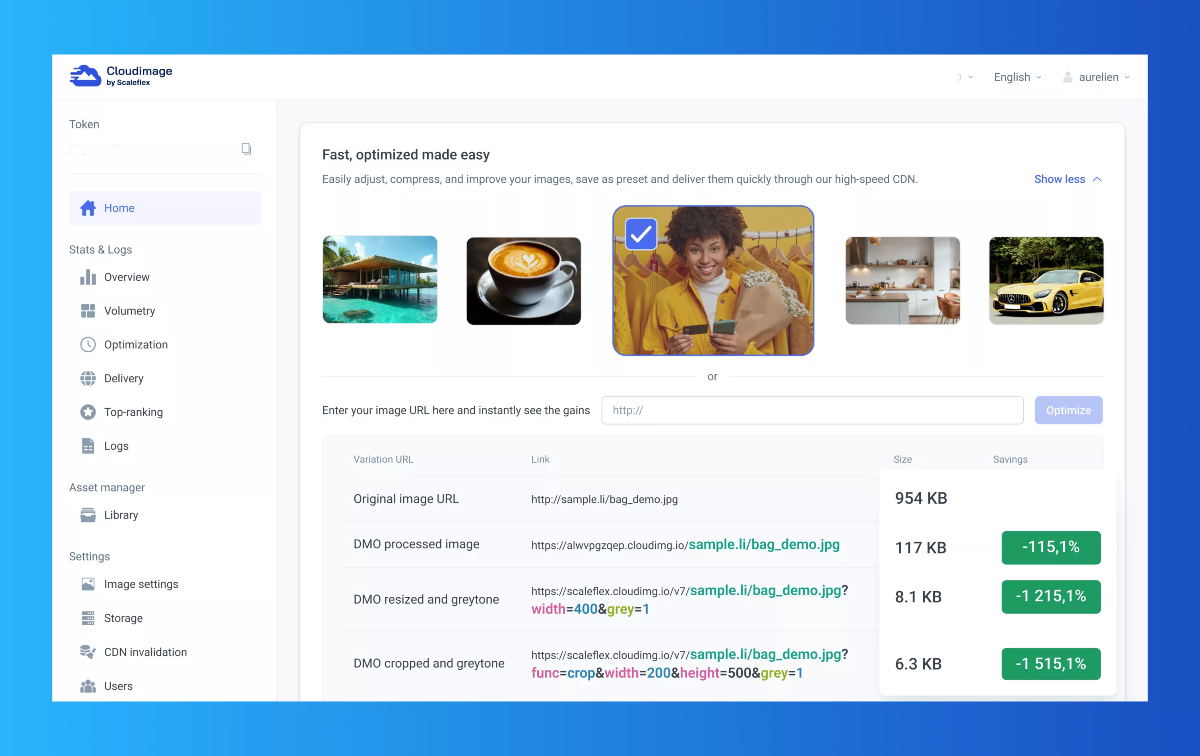
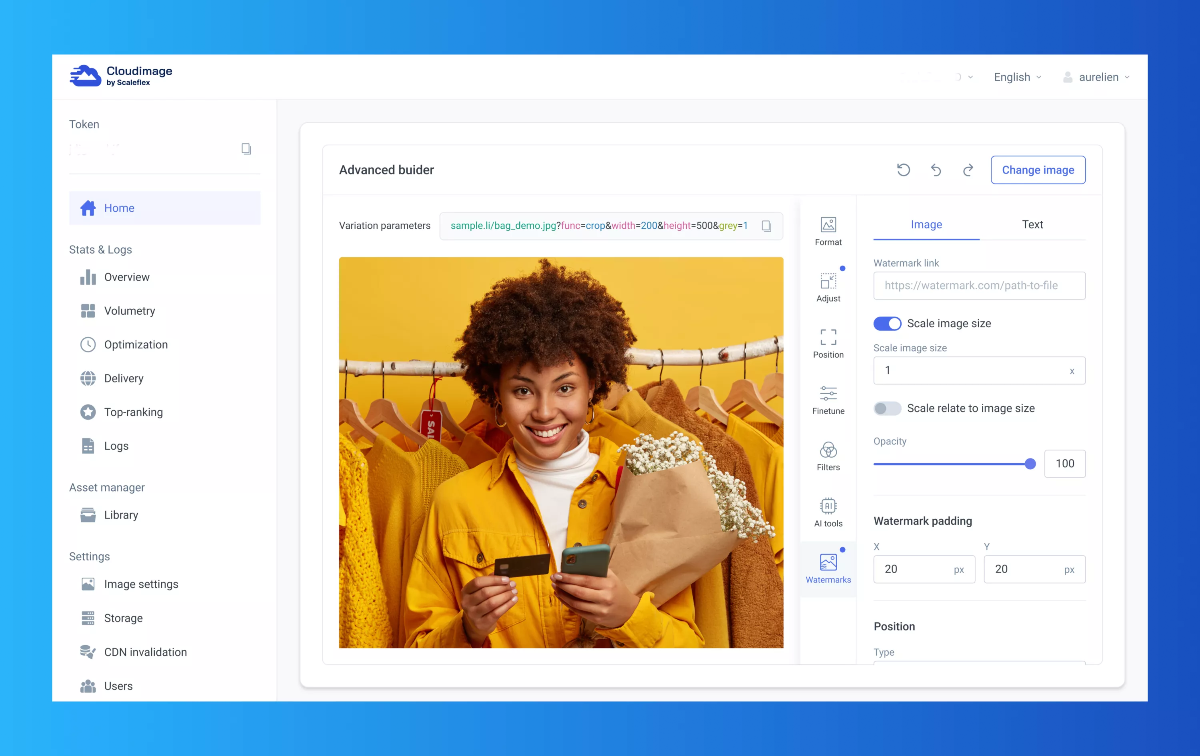
Cloudimage offers a way to optimize and accelerate images for the web. Cloudimage automates the transformation and optimization of images on the fly and accelerates their distribution via the Content Delivery Network (CDN). Cloudimage helps web pages to become faster and lighter, to improve both SEO and the user experience of the web or mobile application. Built by Scaleflex, the Cloudimage plugin helps users to: Optimize images on the fly; image URLs will be…
$59
per month
Pricing
Amazon CloudFront
Cloudimage
Editions & Modules
Over 5PB
$0.02
Next 524TB
$0.03
Next 4PB
$0.03
Next 350TB
$0.04
Next 100TB
$0.06
Next 40TB
$0.08
First 10TB
$0.09
Essential
$59
per month
Grow
$119
per month
Scale
$329
per month
Enterprise
Custom Quote
Offerings
Pricing Offerings
Amazon CloudFront
Cloudimage
Free Trial
No
Yes
Free/Freemium Version
No
No
Premium Consulting/Integration Services
No
No
Entry-level Setup Fee
No setup fee
No setup fee
Additional Details
—
Essential: 100 GB of CDN traffic, 25 GB of cloud storage, 10K Visual operations credits, 99.90% SLA, 1 Custom CNAME with SSL certificate
Grow: 250 GB of CDN traffic, 100 GB of cloud storage, 50K Visual operations credits, 99.90% SLA, 2 Custom CNAMEs with SSL certificate
Scale: 1000 GB of CDN traffic, 250 GB of cloud storage, 100K Visual operations credits, 99.95% SLA, 4 Custom CNAMEs with SSL certificate
Enterprise: Custom volumes for CDN traffic, CloudStorage and Visual operations (credits system), Tailored support, Dedicated Account Manager, Multi-CDN, SAML SSO
CloudFronts beats everyone with their free 1 TB monthly bandwidth usage. And if we compare speed and latency of CloudFront with the BunnyCDN and CloudFare, CloudFront is was faster than them. With CloudFront, we get options like signed URL and signed cookies which prevent our …
Have used the IBM Cloud Content Delivery Network for a very short time span like a couple of weeks. Both the setup as well as interactions with other services are a little complicated or not straightforward when compared to AWS. Also, IBM cloud has less number of edge locations …
Cloudfront is one of the oldest CDN with presence in a lot of locations. This really helps in making the content load faster in all the locations globally. Other products have also caught up with this but still AWS has a lot of other services which can be connected with the CDN …
Amazon has always been creative and leading, and I have been using its services for years. They are very reassuring and have fast and responsive support--you can call them from any time zone to respond quickly. High security on servers, open hands on changes, and increasing and …
We use a great set of AWS features and it was easy to implement Amazon CloudFront. It fulfills our needs, and the learning curve was not difficult given the AWS configuration we already have.
Because our products are built and utilize other AWS features, it was easiest to implement Amazon CloudFront based on initial environment configuration. Other CDNs were easier to get started with but required manual intervention to update overtime.
If you are using other AWS services, then no other CDN can compete with AWS CloudFront. Its integration with WAF, Route53, ACM allow it to provide a whole ecosystem for building websites and using a CDN. It gives developers access to inexpensive, pay-as-you-go pricing. …
We ended up selecting CloudFront because we were already using an Amazon stack. To be honest, since we were already in the ecosystem there was little reason to deviate once we saw pricing was comparable.
We went with CloudFront primarily because we have all of our other services with Amazon already. We are using EC2, S3, Elastic Beanstalk, and are very familiar with the interface. It did not disappoint.
CloudFront is well-suited for a particular use case with its native tie-ins to other Amazon/AWS services, like S3. If choosing from a platform-specific CDN, we tend to go with whichever CDN is available for use on that platform (e.g. Google or Azure). In rare cases we might …
Cloudflare is another great CDN service. It comes with a lot of things set up of the box for you, and gives you a basic and reasonable set up straight away. It also has a free-tier for smaller sites. Cloudflare doesn't quite have the same level of configurability, however. …
Amazon CloudFront free Tier allows up to 50 GB of data transfer per month which is not there in any of the above. Amazon CloudFront provides detailed reporting around the most frequently used objects, monitoring and usage charts. Amazon CloudFront is suitable to help you …
We don't like the new pricing scheme for imgix at all. We could have gone from 100 USD / month to 500 USD / month because they price based on source image (we had 50, 000). With Cloudimage, the pricing is based on source image cache (gigabytes) and CDN bandwidth (gigabytes).
So apparently I can't select the options. I have tried, but the only other one we seriously looked at was Piio. A couple of others we evaluated (for such a brief time) were similar to Piio, and didn't really cover what we needed. Piio (and others) don't tick all the boxes we …
Amazon CloudFront is best suited when there is a need of speed in serving static and dynanic web contents of a web application. If the content is already in that edge location, CloudFront delivers it immediately. If the content is not currently in that edge location, CloudFront retrieves it from an Amazon S3 bucket or an HTTP server. Amazon CloudFront is not appropriate in case users can tolerate some delays or servers are present near to the location of user. It also Integrates through the W3 Total Cache plugin. Amazon CloudFront Pricing based on bandwidth usage that's the best part of it.
Use it if you have a ton of source images and need many transformations. Don't use it if you only want to serve a few image[s] to a very very large number of users (CDN bandwidth costs)
Lots of configuration options, which allow for different setups and pricing strategies
Lambda@Edge integration allows for really quite complex behaviours to be executed in the cloud at the edge node itself. This means there are a huge amount of possibilities for shaping and altering traffic close to the viewer.
Simple integration to other AWS services (e.g. S3)
CloudFront is a good CDN solution. It can be a bit complicated to implement depending on your needs, but AWS tech support is great. You get to avoid a ton of upfront costs by going with CloudFront. It works best in conjunction with other AWS services in your infrastructure. Once you set it up, you won't need to do much to maintain it. It just works.
Have used the IBM Cloud Content Delivery Network for a very short time span like a couple of weeks. Both the setup as well as interactions with other services are a little complicated or not straightforward when compared to AWS. Also, IBM cloud has less number of edge locations than AWS Cloudfront.