Amazon Relational Database Service (RDS) vs. UpCloud

Overview
ProductRatingMost Used ByProduct SummaryStarting Price
Amazon RDS
Score 8.4 out of 10
N/A
Amazon Relational Database Service (Amazon RDS) is a database-as-a-service (DBaaS) from Amazon Web Services.N/A
UpCloud
Score 8.1 out of 10
N/A
UpCloud is a global cloud hosting company offering cloud servers on an hourly billed infrastructure-as-a-service. Their IaaS services include MaxIOPS block storage, their Simple backup service, SDN services, and resource isolation.
$0.09
per month per GB
Pricing
Amazon Relational Database Service (RDS)UpCloud
Editions & Modules
Amazon RDS for PostgreSQL
$0.24 ($0.48)
per hour, R5 Large (R5 Extra Large)
Amazon RDS for MariaDB
$0.25 ($0.50)
per hour, R5 Large (R5 Extra Large)
Amazon RDS for MySQL
$0.29 ($0.58)
per hour, R5 Large (R5 Extra Large)
Amazon RDS for Oracle
$0.482 ($0.964)
per hour, R5 Large (R5 Extra Large)
Amazon RDS for SQL Server
$1.02 ($1.52)
per hour, R5 Large (R5 Extra Large)
Private Cloud Storage
€0.085
per month per GB
Block Storage - Standard
€0.085
per month
Block Storage - MaxIOPS
€0.220
per month
SDN Private Networks - Floating IP address
€3.15
per month
Private Cloud Hosts -Standard Nodes
€2,499
per month
Cloud Servers - General Purpose
Starting from €7
per month
GPU Servers
Starting from €1.111
per hour
Cloud Servers - High CPU
Starting from €130
per month
Cloud Servers - Developer
Starting from €3
per month
Cloud Servers - High Memory
Starting from €40
per month
Cloud Servers - Cloud Native
Starting from €12
per month
Relational Databases - 1 Node
Starting from €30
per month
Managed Object Storage
starting from €5
per month 250GB
Offerings
Pricing Offerings
Amazon RDSUpCloud
Free Trial
NoYes
Free/Freemium Version
NoNo
Premium Consulting/Integration Services
NoNo
Entry-level Setup FeeOptionalNo setup fee
Additional DetailsExact prices depend on memory and CPU demands.
More Pricing Information
Community Pulse
Amazon Relational Database Service (RDS)UpCloud
Features
Amazon Relational Database Service (RDS)UpCloud
Infrastructure-as-a-Service (IaaS)
Comparison of Infrastructure-as-a-Service (IaaS) features of Product A and Product B
Amazon Relational Database Service (RDS)
-
Ratings
UpCloud
6.0
1 Ratings
31% below category average
Service-level Agreement (SLA) uptime00 Ratings9.11 Ratings
Dynamic scaling00 Ratings7.31 Ratings
Elastic load balancing00 Ratings4.51 Ratings
Pre-configured templates00 Ratings2.71 Ratings
Monitoring tools00 Ratings6.41 Ratings
Pre-defined machine images00 Ratings4.51 Ratings
Operating system support00 Ratings8.21 Ratings
Security controls00 Ratings5.51 Ratings
Automation00 Ratings5.51 Ratings
Best Alternatives
Amazon Relational Database Service (RDS)UpCloud
Small Businesses
InterSystems IRIS
InterSystems IRIS
Score 8.0 out of 10
DigitalOcean Droplets
Score 9.4 out of 10
Medium-sized Companies
InterSystems IRIS
InterSystems IRIS
Score 8.0 out of 10
SAP on IBM Cloud
SAP on IBM Cloud
Score 9.0 out of 10
Enterprises
SAP IQ
SAP IQ
Score 10.0 out of 10
SAP on IBM Cloud
SAP on IBM Cloud
Score 9.0 out of 10
All AlternativesView all alternativesView all alternatives
User Ratings
Amazon Relational Database Service (RDS)UpCloud
Likelihood to Recommend
8.9
(131 ratings)
5.5
(1 ratings)
Likelihood to Renew
8.4
(5 ratings)
-
(0 ratings)
Usability
8.7
(8 ratings)
-
(0 ratings)
Availability
9.0
(1 ratings)
-
(0 ratings)
Performance
7.0
(1 ratings)
-
(0 ratings)
Support Rating
9.6
(13 ratings)
-
(0 ratings)
Online Training
10.0
(1 ratings)
-
(0 ratings)
Product Scalability
9.0
(1 ratings)
-
(0 ratings)
User Testimonials
Amazon Relational Database Service (RDS)UpCloud
Likelihood to Recommend
Amazon AWS
If your application needs a relational data store and uses other AWS services, AWS RDS is a no-brainer. It offers all the traditional database features, makes it a snap to set up, creates cross-region replication, has advanced security, built-in monitoring, and much more at a very good price. You can also set up streaming to a data lake using various other AWS services on your RDS.
Read full review
UpCloud
If you're looking for a cost-effective solution then this is a good choice, be sure to keep on top of your balance! The 100% uptime is also a nice addition, although not unique in a cloud hosting service.
Read full review
Pros
Amazon AWS
  • Automated Database Management: We use it for streamlining routine tasks like software patching and database backups.
  • Scalability on Demand: we use it to handle traffic spikes, scaling both vertically and horizontally.
  • Database Engine Compatibility: It works amazingly with multiple database engines used by different departments within our organization including MySQL, PostgreSQL, SQL Server, and Oracle.
  • Monitoring: It covers our extensive monitoring and logging, and also has great compatibility with Amazon CloudWatch
Read full review
UpCloud
  • Pricing
  • Ease of use - super easy to manage existing servers and deploy new ones
  • Great customer service
Read full review
Cons
Amazon AWS
  • It is a little difficult to configure and connect to an RDS instance. The integration with ECS can be made more seamless.
  • Exploring features within RDS is not very easy and intuitive. Either a human friendly documentation should be added or the User Interface be made intuitive so that people can explore and find features on their own.
  • There should be tools to analyze cost and minimize it according to the usage.
Read full review
UpCloud
  • The billing reports are quite hard to read, could be simplified
  • A control panel function would be useful
  • The re-billing process could be better, not so cut throat if you miss a payment!
Read full review
Likelihood to Renew
Amazon AWS
We do renew our use of Amazon Relational Database Service. We don't have any problems faced with RDS in place. RDS has taken away lot of overhead of hosting database, managing the database and keeping a team just to manage database. Even the backup, security and recovery another overhead that has been taken away by RDS. So, we will keep on using RDS.
Read full review
UpCloud
No answers on this topic
Usability
Amazon AWS
I've been using AWS Relational Database Services in several projects in different environments and from the AWS products, maybe this one together to EC2 are my favourite. They deliver what they promise. Reliable, fast, easy and with a fair price (in comparison to commercial products which have obscure license agreements).
Read full review
UpCloud
No answers on this topic
Support Rating
Amazon AWS
I have only had good experiences in working with AWS support. I will admit that my experience comes from the benefit of having a premium tier of support but even working with free-tier accounts I have not had problems getting help with AWS products when needed. And most often, the docs do a pretty good job of explaining how to operate a service so a quick spin through the docs has been useful in solving problems.
Read full review
UpCloud
No answers on this topic
Online Training
Amazon AWS
the online training & digital content available on the web from AWS was having sufficient information to deploy and run the service
Read full review
UpCloud
No answers on this topic
Alternatives Considered
Amazon AWS
Amazon Relational Database Service (RDS) stands out among similar products due to its seamless integration with other AWS services, automated backups, and multi-AZ deployments for high availability. Its support for various database engines, such as MySQL, PostgreSQL, and Oracle, provides flexibility. Additionally, RDS offers managed security features, including encryption and IAM integration, enhancing data protection. The pay-as-you-go pricing model makes it cost-effective. Overall, Amazon RDS excels in ease of use, scalability, and a comprehensive feature set, making it a top choice for organizations seeking a reliable and scalable managed relational database service in the cloud.
Read full review
UpCloud
We trialed UpCloud to see if it would be better than DigitalOcean but for our needs, it was not. On DigitalOcean once a droplet is created, almost no thought needs to go into maintenance, outages, or other reliability-based issues.
Read full review
Return on Investment
Amazon AWS
  • The overall cost increases, but we spect this and we can mitigate other risks.
  • Is easy to work from the cloud. Is reliable, but we keep our local solution as well where RDS works quite good.
  • RDS allow us to focurs on owr objetives instead of the other matters regarding databases.
Read full review
UpCloud
  • The low cost means you don't really need to worry about pricing
  • To us as a business it was not as useful as DigitalOcean
Read full review
ScreenShots

Amazon RDS Screenshots

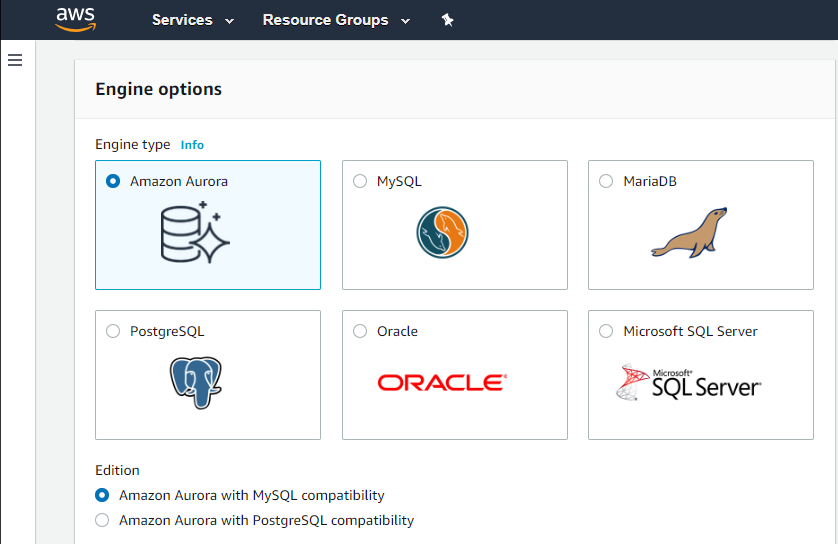
Screenshot of A look inside the RDS console.

UpCloud Screenshots

Screenshot of UpCloud cloud serversScreenshot of UpCloud backup, with SnapShooterScreenshot of UpCloud server, with RunCloud