Amazon TensorFlow enables developers to quickly and easily get started with deep learning in the cloud.
N/A
DataRobot
Score 8.2 out of 10
N/A
The DataRobot AI Platform is presented as a solution that accelerates and democratizes data science by automating the end-to-end journey from data to value and allows users to deploy AI applications at scale. DataRobot provides a centrally governed platform that gives users AI to drive business outcomes, that is available on the user's cloud platform-of-choice, on-premise, or as a fully-managed service. The solutions include tools providing data preparation enabling users to explore and…
A well-suited scenario for using AWS Tensor Flow is when having a project with a geographically dispersed team, a client overseas and large data to use for training. AWS Tensor Flow is less appropriate when working for clients in regions where it hasn't been allowed yet for use. Since smaller clients are in regions where AWS Tensor Flow hasn't been allowed for use, and those clients traditionally don't have enough hardware, this situation deters a wider use of the tool.
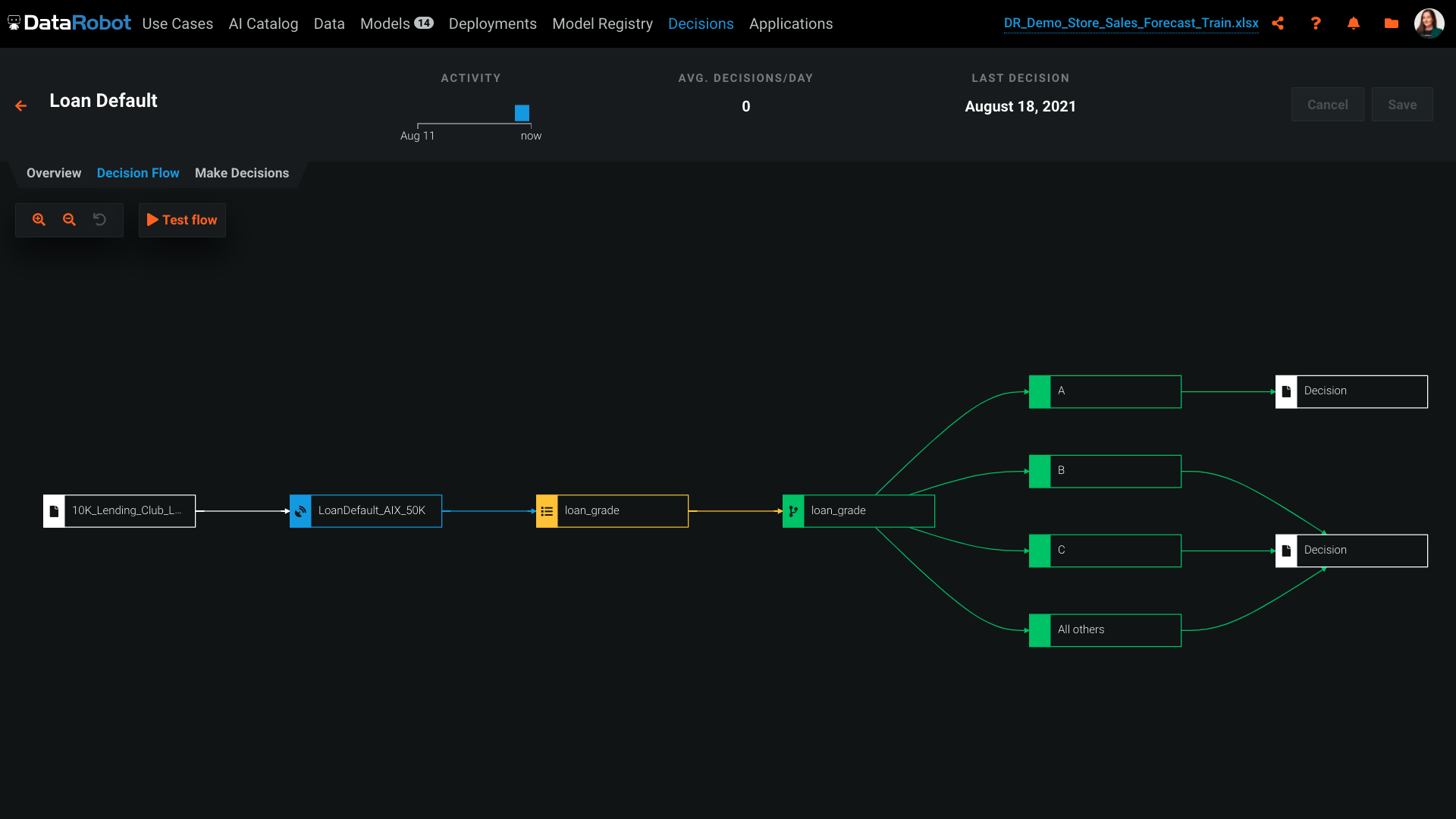
DataRobot can be used for risk assessment, such as predicting the likelihood of loan default. It can handle both classification and regression tasks effectively. It relies on historical data for model training. If you have limited historical data or the data quality is poor, it may not be the best choice as it requires a sufficient amount of high-quality data for accurate model building.
Amazon Elastic Compute Cloud (EC2) allows resizable compute capacity in the cloud, providing the necessary elasticity to provide services for both, small and medium-sized businesses.
Tensor Flow allows us to train our models much faster than in our on-premise equipment.
Most of the pre-trained models are easy to adapt to our clients' needs.
DataRobot helps, with algorithms, to analyze and decipher numerous machine-learning techniques in order to provide models to assist in company-wide decision making.
Our DataRobot program puts on an "even playing field" the strength of auto-machine learning and allows us to make decisions in an extremely timely manner. The speed is consistent without being offset by errors or false-negatives.
It encompasses many desired techniques that help companies in general, to reconfigure in to artificial intelligence driven firms, with little to no inconvenience.
SageMaker isn't available in all regions. This is complicated for some clients overseas.
For larger instances, when using a GPU, it takes a while to talk to a customer service representative to ask for a limit increase. Given this, it's recommendable to ask in advance for a limit increase in more expensive and larger cases; otherwise, SageMaker will set the limit to zero by default.
Since the data has to be stored in S3 and copied to training, it doesn't allow to test and debug locally. Therefore, we have to wait a lot to check everything after every trail.
The platform itself is very complicated. It probably can't function well without being complicated, but there is a big training curve to get over before you can effectively use it. Even I'm not sure if I'm effectively using it now.
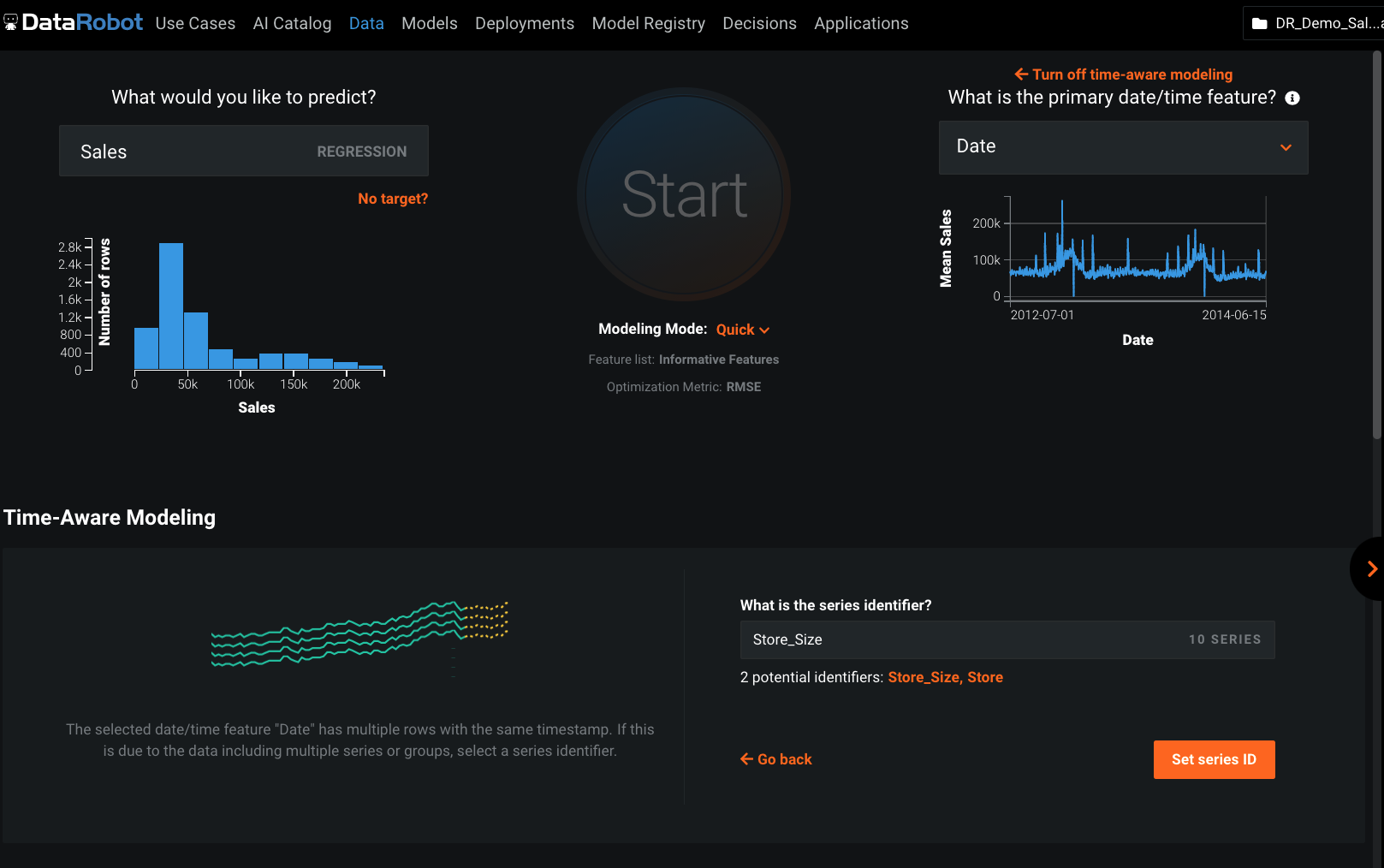
The suggested model DataRobot deploys often not the best model for our purposes. We've had to do a lot of testing to make sure what model is the best. For regressive models, DataRobot does give you a MASE score but, for some reason, often doesn't suggest the best MASE score model.
The software will give you errors if output files are not entered correctly but will not exactly tell you how to fix them. Perhaps that is complicated, but being able to download a template with your data for an output file in the correct format would be nice.
DataRobot presents a machine-learning platform designed by data scientists from an array of backgrounds, to construct and develop precise predictive modeling in a fraction of the time previously taken. The tech invloved addresses the critical shortage of data scientists by changing the speed and economics of predictive analytics. DataRobot utilizes parallel processing to evaluate models in R, Python, Spark MLlib, H2O and other open source databases. It searches for possible permutations and algorithms, features, transformation, processes, steps and tuning to yield the best models for the dataset and predictive goal.
As I am writing this report I am participating with Datarobot Engineers in an complex environment and we have their whole support. We are in Mexico and is not common to have this commitment from companies without expensive contract services. Installing is on premise and the client does not want us to take control and they, the client, is also limited because of internal IT regulations ,,, soo we are just doing magic and everybody is committed.
Microsoft Azure is better than Amazon Tensor Flow because it provides easier and pre-built capabilities such as Anomaly Detection, Recommendation, and Ranking. AWS is better than IBM Watson ML Studio because it has direct and prebuilt clustering capabilities AWS, like IBM Watson ML Studio, has powerful built-in algorithms, providing a stronger platform when comparing it with MS Azure ML Services and Google ML Engine.
I've done machine learning through python before, however having to code and test each model individually was very time consuming and required a lot of expertise. The data Robot approach, is an excellent way of getting to a well placed starting point. You can then pick up the model from there and fine tune further if you need.