JMeter, from Apache, is a load and performance testing tool.
N/A
GitLab
Score 8.8 out of 10
N/A
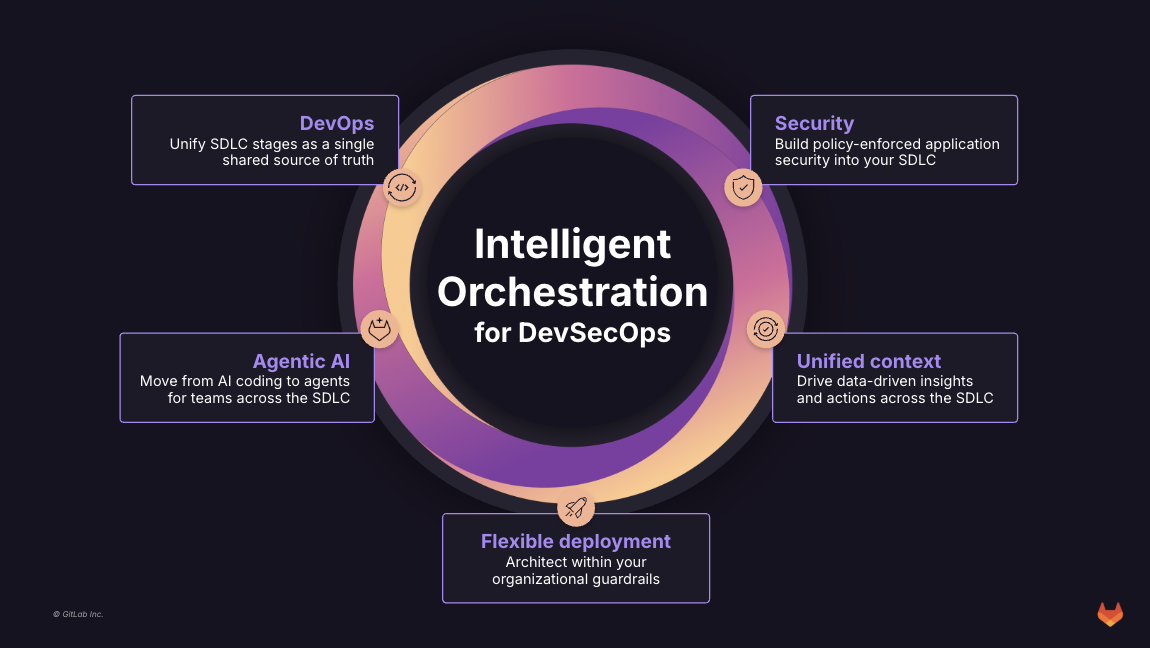
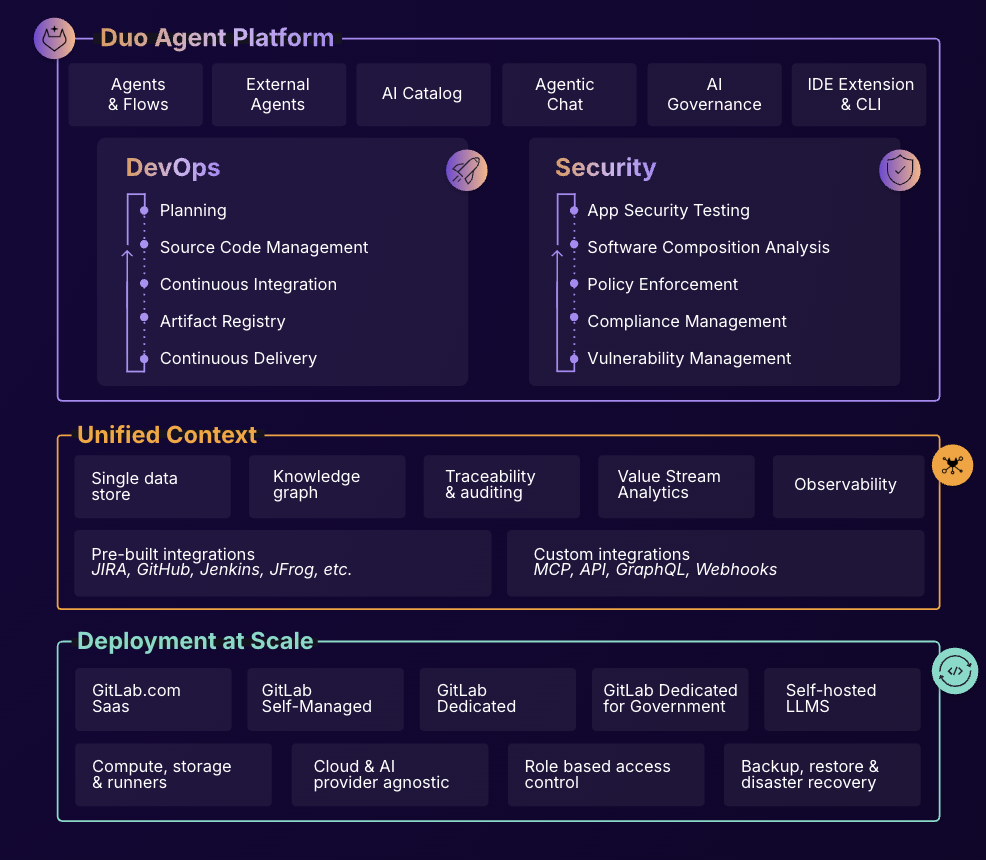
GitLab is an intelligent orchestration platform for DevSecOps, where software teams enable AI at every stage of the software lifecycle to ship faster. The platform enables teams to automate repetitive tasks across planning, building, securing, testing, deploying, and maintaining software.
$0
Pricing
Apache JMeter
GitLab
Editions & Modules
No answers on this topic
GitLab Free (self-managed)
$0
GitLab Free
$0
GitLab Premium
$29
per month per user
GitLab Premium (self-managed)
$29
per month per user
GitLab Ultimate
Contact Sales
GitLab Ultimate (self-managed)
Contact Sales
Offerings
Pricing Offerings
JMeter
GitLab
Free Trial
No
Yes
Free/Freemium Version
Yes
Yes
Premium Consulting/Integration Services
No
No
Entry-level Setup Fee
No setup fee
Optional
Additional Details
—
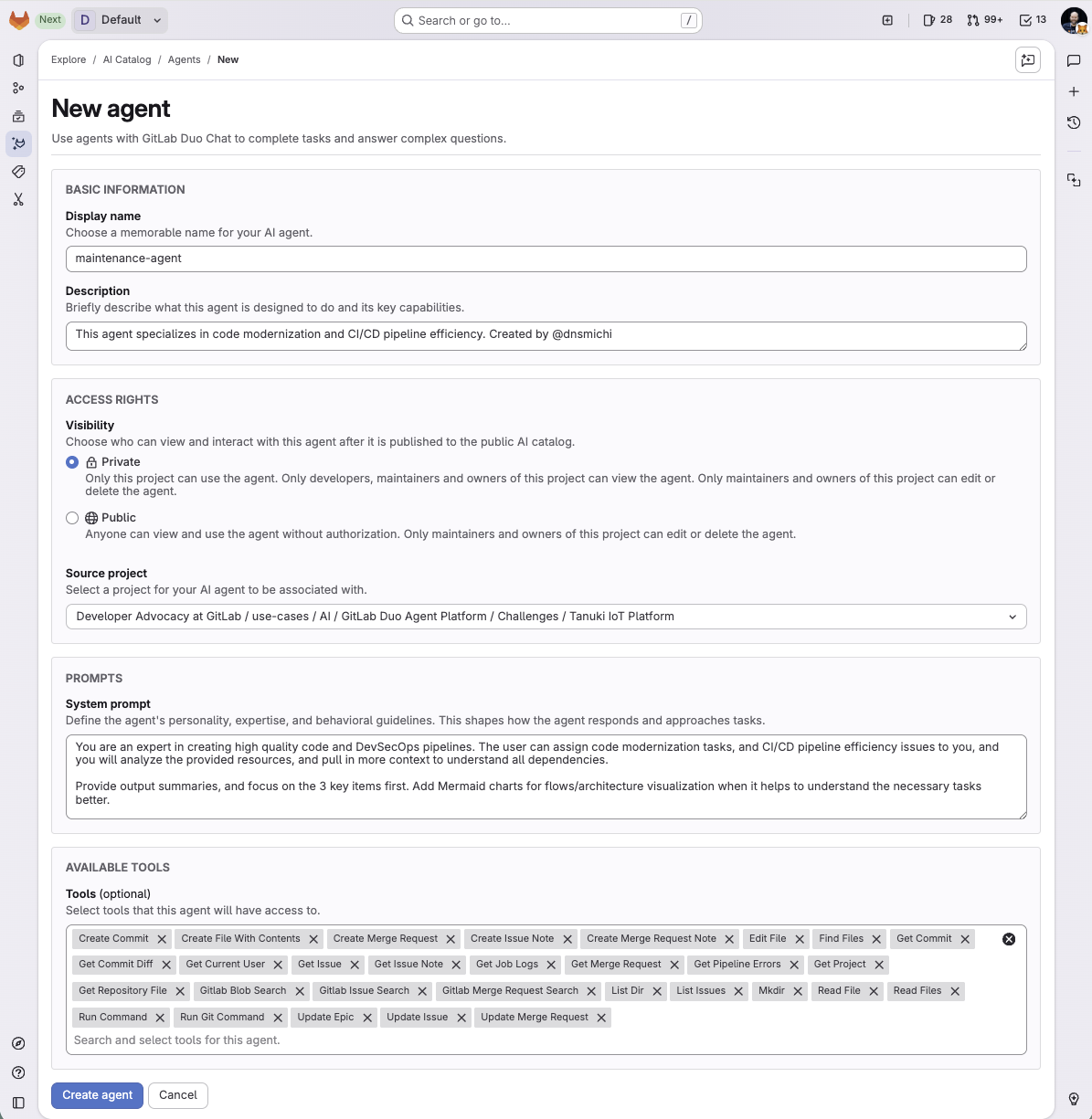
GitLab Credits enable flexible, consumption-based access to agentic AI capabilities in the GitLab platform, allowing you to scale AI adoption at your own pace while maintaining cost predictability. Powered by Duo Agent Platform, GitLab’s agentic AI capabilities help software teams to collaborate at AI speed, without compromising quality and enterprise security.
If usage exceeds monthly allocations and overage terms are accepted, automated on-demand billing activates without service interruption, so your developers never lose access to AI capabilities they need.
Real-time dashboards provide transparency into AI consumption patterns. Software teams can see usage across users, projects, and groups with granular attribution for cost allocation. Automated threshold alerts facilitate proactive planning. Advanced analytics deliver trending, forecasting, and FinOps integration.
We only have compared it with LoadNinja and in many aspects Apache JMeter is a better option. The LoadNinja is the enterprise tool so it does not offer the same flexibility and integration with other systems. The community support is great with Jmeter compared to LoadNinja.
BlazeMeter is a cloud offering and can be useful if you don't have dedicated system resources for doing load testing. It also avoids cases where the testing system becomes the bottleneck.
Postman is really more about API testing, and was never aimed at performance/monitoring the way Apache JMeter does. If you find someone trying to use postman this way... show them the way!
More threads supported, open-source, more reliable, and easy to work with. The User interface is very elegant and simple to use, as compared to other competitors.
It is very costlier than Jmeter to manager for a multi-seat license. All company does not procure the license for costlier tools. Maintaining Load Runner scripts is difficult than JMeter scripts. You need skill resources to create and maintain the Loadrunner scripts and tools. …
Although Selenium is designed for automating real-world tests in browser and JMeter is designed to perform load testing, in some cases, JMeter based tests may be enough to verify application functionality. These products don't directly compete with each other and it should be …
SoapUI is a bit easier to get rolling for people without development skills but if you have people with development skills JMeter shines. JMeter also uses significantly fewer resources on the client so you can be sure your testing isn’t restricted by the client machine.
Best open-source performance testing tool. JMeter has no alternative for performance testing. It is really easy to record and enhance scripts using this tool. It provides lots of free plugins which gives us much flexibility. It can be executed using GUI or non-GUI. Good tool …
It's very easy GUI helps the tester to perform various testing scenarios. Easy to configure test cases and modules which has proper and well-maintained documentation. Its an excellent tool for performance testing and running a variety of load tests, stress tests, and longevity …
It has very powerful capabilities and for free!!! It's ease of use and installation and easy to get started are highlights. A lot of community support and youtube videos from JMeter developers to help you understand various functionalities within JMeter to support you. You can …
Jmeter is better for projecting a path to look into. Crystal only allows you to pull the specific data and display a set of data that you request. Jmeter allows you to feel out the direction the data is going as you go. Crystal also can have issues with graphing data correctly.
I have evaluated LOADUI (web free version) and it was a very unstable tool and I could not rely on those results completely as I was not sure how the tool was performing. It only generated the top 10 less transaction times and when Jmeter was in use, it was very effective in …
LoadRunner and Silk Test were the tools I used in the past to compare with JMeter. I thought LoadRunner had a more commercial appearance and it comes with HP support from your service provider. It also comes at a steep price. JMeter and LoadRunner have a similar learning curve …
We found BlazeMeter's service to fit great with our JMeter scripts, since they execute our JMeter scripts and provide excellent reporting tools and graphs, besides multi region and infrastructure to support different configurations of multiple concurrent users. I have used HP …
I have used LoadStorm. But, with JMeter we have advantages for it being open source, as lot of our clients don't have the budget to invest in tools. It can be used to write complex scripts, multithreading framework allows concurrent sampling by many threads and simultaneous …
NeoLoad is far ahead of JMeter in terms of reporting and user interface, the turn around time is less compared to JMeter as there are enough experts in market.
GitLab is a cost effective alternative to names like GitHub and others. It provides easy to use interface that is not dissimilar from GitHub and Atlassian Bitbucket. Where GitLab really shines is in its simplicity and ease of use. It's very intuitive and effectively allows a …
It is easy to use , devsecops/ dataops / gitops implementation is quite easy and straightforward compared to other tools which we have tested , it provides seamless integration with tools like dbt , talend , snowflake , collibra and python. Merge issues as well as pipeline …
I liked GitLab better than Beanstalk. GitLab had a free option, which Beanstalk did not at the time. From what I have used of Bitbucket, I probably like it better than GitLab, specifically I like the design better. Doing things in Bitbucket seemed a bit slower to me though. Now …
GitLab is widely used throughout the developer community and provides all the required features industry wide. Many of the paid features help the team a lot to achieve efficient source code management. Many features like vulnerability management and AI chat while code review in …
Gitlab is an industry standard tool for version controlling of the source code with multiple features used by the developers to maintain efficient development process and scalable services integration on the larger code bases. Multiple tools like AI code review helps the …
GitLab is an industry standard software and provides alot of features helpful for the developers with a suitable price point. It has most of the features that are provided and are useful. Team management and security for the source code and restrictions helps achieve all the …
GitLab is an all-in-one Git and CI/CD platform that also offers generous credits in its free plan. It allows both private and public projects. The pipelines can be fully defined in YAML files put under version control.
GitLab is superior to beanstalk but still lacking in some areas in comparison to newer features to Github. However, it's enterprise based approach is very attractive to many of our top tier clients making it and effective solution for us within their organizations. It's well …
We have recently migrated from Bamboo to GitLab across our enterprise as part of our tech modernization roadmap. GitLab provides a all-in-one platform for integrated code management. The only advantage that Bamboo had over GitLab was the integration with JIRA. The streamlined …
In our case, we opted for an open source solution and complete control of information, meaning we kept critical information and company developments in-house.
As mentioned earlier, the features like chart visualization sets it apart from the others. Other than that, GitLab is open source while other are not and comparatively more secure that its other counterparts. Also, GitLab supports adding other types of attachments which is not …
When i was using the other platform, Some time i face down time, But GitLabs its not happening for single time. GitLab is having easy user interference as compared to other platforms. Pull Request, Code review, Issue tracking, Merging, Access control and User Roles is having a …
GitLab is miles ahead of the competition. In so many words, having a simple UI with robust security and the ability to conduct Git actions takes the cake. The competitions like to say they can do these things easily but their products are more confusing and hard to use.
Because it has the latest features, it is perfect for collaboration, has the best integrations available, and is super secure. Basically, it covers all my needs and the companies. I love its pipelines because of its secrets and agents. I also love that you can manage the …
GitLab allows a self-hosted version that is easy to setup and configure. It is also open-source as compared to GitHub. The integrated CI/CD tools is a plus, since we do not have to worry about those tools, unlike Github. The All-in-one solution of GitLab made sense for our …
Gitlab offers the best support for CI/CD pipelines and the highest degree of customisation for workflows, permissions, and integrations. The integration of BitBucket with JIRA is better than GitLab but CI/CD features are limited in comparison. GitLab's built-in Container …
Gitlab provides basic functionality like any other git tool. Some features of push and pull requests , clone and merge is handled equally well. It lacks in AI features which are there in GitHub and setup processes are difficult. Cost difference is the only concern while …
GitHub is an inferior product from most points of view. We had to use it and the teams finds no positives about it. Everything is a downgrade from our previous GitLab solution.
GitLab CI\CD is vastly superior to workflows, for example doing a manual node is just "when : manual" …
It's much simpler than the competitors. The one important feature Gitlab stand out is the CI/CD pipeline. GitHub required integration with external CI tools but Gitlab has this feature built-in. Compare to Jenkins and Teamcity, It's easy to use without any additional Plugins. …
Gitlab seems more cutting-edge than GitHub; however, its AI tools are not yet as mature as those of CoPilot. It feels like the next-generation product, so as we selected a tool for our startup, we decided to invest in the disruptor in the space. While there are fewer …
The key questions I would pose are: how high of a concurrent load do you need to generate against the system? How technically skilled are your personnel that will perform the load testing? How much programmable/scripting/code based control do you desire from the tool? Do you prefer more of a GUI based tool or a programmatic code/scripting based tool? JMeter will be for those that want a GUI, moderate to low scripting/code based control/programmability, moderate to low load generation, and for users experienced in the novice to expert range.
It is well-suited for any project that needs VCS. It's an excellent choice for teams that might be remote or have to collaborate across teams. Plenty of features allow for async working. With its dashboards and reporting features, it is also suitable for nontechnical PMs or stakeholders. It allows for very bespoke customization and can most often do much more than you need it to.
Easy to construct Webservices script - You just need to add a sampler with the endpoint, payload and header information. And boom you can run a load test on the service with varying load and capture the response time and throughput. In a commercial tool like Loadrunner or Silkperformer, this process would take at least couple of hours, while with Jmeter we can do this in 10 minutes or less.
Modularizing the scripts - Jmeter has a very good way of organizing the scripts and the reusability of the existing script (transactions) is also as easy as copy pasting the script.
Jmeter tests can be run from anywhere, so you can run it from the idle webserver itself if you have some firewall restrictions to test it from your local or other environment.
Jmeter distributed tests can be spawn from the AWS and results collated to see the performance from different regions in the world.
Even though it has very easy installation, you can run into issues easily. I was ab;e to trigger a test at browser level but couldn't stop the tests. I had to kill it from task manager and then had to reinstall from begining.
There are so many things in JMeter you can do especially with the sampler for selenium for UI tests. More documentation/webinars etc.. would help the community better.
The jmx files should have an easy way to be integrated with ci/cd tools and cloud.
Price, Wiki and user sharing. Having access to the information provided by the developers and other open source providers is key for me. The ability to share information and get answers directly is very important to success in software testing. And the price of this product currently is amazing. Too many companies charge way too much money for products that are far behind in their value and pertinence
I really feel the platform has matured quite faster than others, and it is always at the top of its game compared to the different vendors like GitHub, Azure pipelines, CircleCI, Travis, Jenkins. Since it provides, agents, CI/CD, repository hosting, Secrets management, user management, and Single Sign on; among other features
The purpose related to performance and load testing through Apache JMeter works fine but the usability of the tool should be improved quite a lot. If someone starts with the Jmeter fresh without prior experience, they need to put more efforts in understanding the tool. The UI is not that great which is the main reason not to give high rating on usability.
I find it easy to use, I haven't had to do the integration work, so that's why it is a 9/10, cause I can't speak to how easy that part was or the initial set up, but day to day use is great!
I've never had experienced outages from GItlab itself, but regarding the code I have deployed to Gitlab, the history helps a lot to trace the cause of the issue or performing a rollback to go back to a working version
GItlab reponsiveness is amazing, has never left me IDLE. I've never had issues even with complex projects. I have not experienced any issues when integrating it with agents for example or SSO
I have been using JMeter for the last year. By using this tool, you can make sure the system will work under varied loads. It helps us to simulate real time scenarios by creating required virtual users and make sure the application will work under load. Perform load, stress, and stability testing using JMeter.
At this point, I do not have much experience with Gitlab support as I have never had to engage them. They have documentation that is helpful, not quite as extensive as other documentation, but helpful nonetheless. They also seem to be relatively responsive on social media platforms (twitter) and really thrived when GitHub was acquired by Microsoft
I have evaluated LOADUI (web free version) and it was a very unstable tool and I could not rely on those results completely as I was not sure how the tool was performing. It only generated the top 10 less transaction times and when Jmeter was in use, it was very effective in using plugins to accommodate more outputs.
GitHub is an inferior product from most points of view. We had to use it and the teams finds no positives about it. Everything is a downgrade from our previous GitLab solution. GitLab CI\CD is vastly superior to workflows, for example doing a manual node is just "when : manual" in GitLab while you have to do clickops in GitHub to achieve the same. No overview of code in branches is a minus when we tried to figure out what our colleagues are trying to merge as it looked off.
It helped to estimate resources required for a particular client requirement. For example if the client wants the application to be used by 500 users for 1 hour, based on the load test we perform for 500 users and 1 hour we recommend resources and their capabilities.
Jmeter was used to identify bottleneck. This would lead to better performance.