Apache Subversion is a version control option that is free to download and open source under the Apache 2.0 license.
N/A
Git
Score 10.0 out of 10
N/A
N/A
N/A
SonarQube
Score 8.2 out of 10
N/A
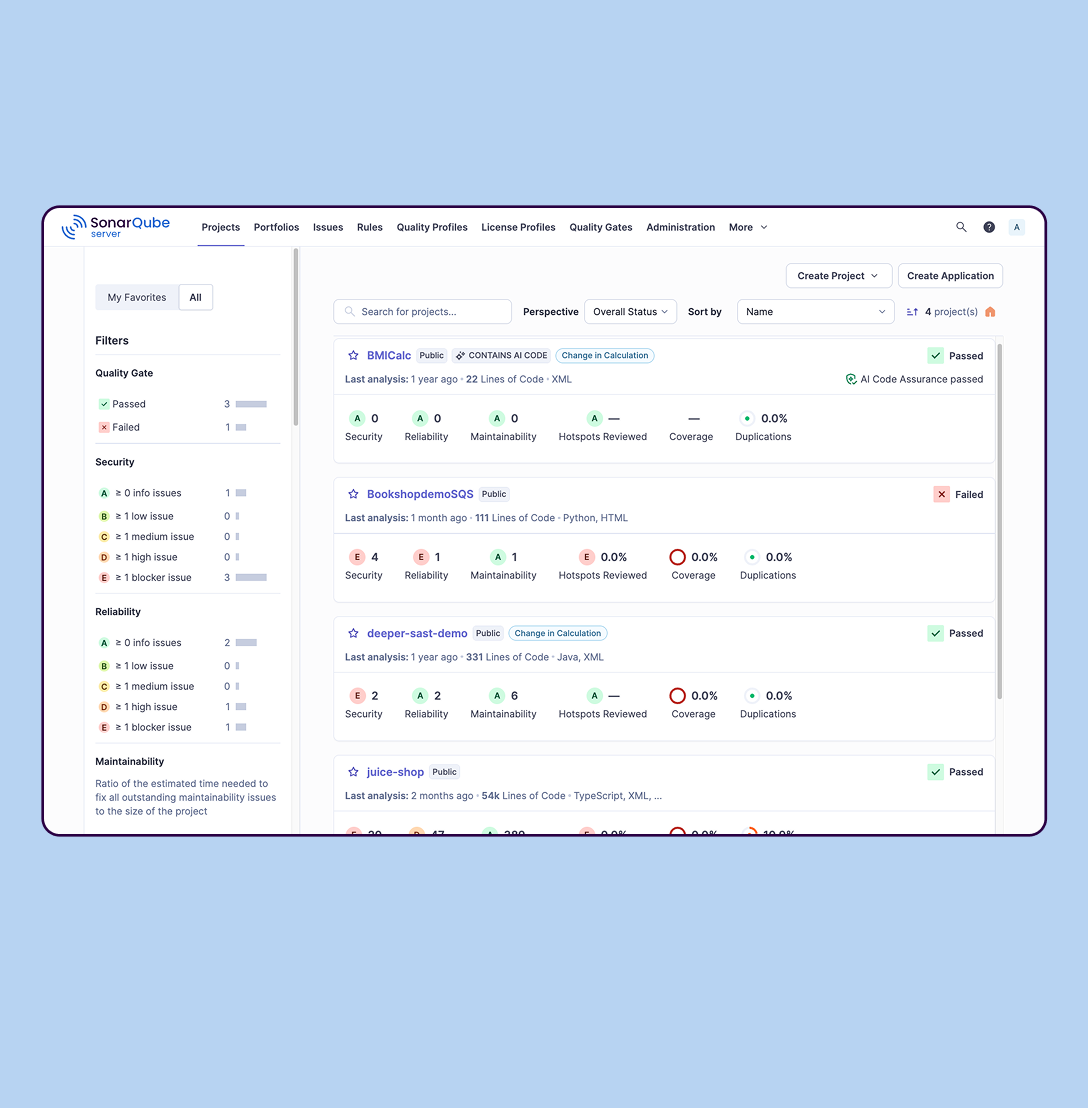
SonarQube is an automated code review solution, serving as the verification layer for code quality and SDLC security. SonarQube is used to ensure that code is secure, reliable, and maintainable. It is available through SaaS or self-managed deployment.
Git is a newer version control system compared to that of svn. I think that svn is more stable, easy to learn/use, and not-so-complex as Git. Also, svn has very good client applications which provide extremely user-friendly user interfaces. Apache Subversion is also open source …
Git is probably the biggest open source rival to Subversion. It's designed for distributed development, an environment I'm not very familiar with. I've only got some experience with it, and only as a user, and even that is limited. I had some trouble wrapping my mind around the …
We used Visual SourceSafe before SVN many years ago and we chose SVN at that time mainly because it allowed us to do collaborative work on the same source code. It also had improved conflict resolution when doing code merges, blaming changes etc, which improved the speed of …
Git has become the new standard of version control, with its support for distributed design. As a tool to manage and control versions, Subversion does it well, but Git is the future.
Git is better than Subversion in every aspect except that is not free . But since our company has bought Git licenses and I would not go back to using Subversion .
Git
Verified User
Engineer
Chose Git
I've used both Apache Subversion & Git over the years and have maintained my allegiance to Git. Git is not objectively better than Subversion. It's different.
The key difference is that it is decentralized. With Subversion, you have a problem here: The SVN Repository may be in …
Front-End Web Developer, Office of Mediated Education
Chose Git
The two main alternatives to Git that I know about are Mercurial and Subversion. I've never used either one, but I know a bit about Subversion. From what I remember, Subversion requires a server. I don't anyone using any other source control other than Git, it seems to have …
Git is more advanced and easier to use. It has a very simple UI and a very efficient command-line tool. Git gives you flexibility and performance for the price, and has greatly increased the complexity of workflow. The overall performance is good. It caches information locally …
GIT being a widely used tool have better reliability than its peers and have stands out when we compare it on operational performance criteria. GIT with speedy and extensive branching capabilities have helped developers to use check in their code quickly and space efficient way. G…
Compared to SVN, Git has a decentralized approach which increases collaboration in the team by enabling the local stored branches. There is no need to be connected to the repository(via an internet link) to work and commit code. Besides the fact that the performance of Git is …
I do not have much experience with other version control tools. Git is highly used everywhere and it is hard to find a development team that isn't using it. One thing I know is that with Git each developer has their own copy of a repository so they could technically work …
Git is the best Source Control Management Tool I've used. Every company, team, and project I've worked on professionally either used Git 100%, or was moving to Git, away from the alternatives like SVN. Git has all the features necessary, as well as a very large community of …
Git is by far the best version control system out there. It's open source, free, and fast. No other version control system I've ever used has had all three features.
Git is a distributed version control system. There is more flexibility to work with a bigger team. You can modify the same file and later merge all changes into a single file.
After using Subversion previously for a number of years, Git comes across as the new and improved source control approach. Git seems very suited to working with Agile:- branches can be created easily, allowing multiple developers to switch to them quickly, and having local …
Git is my favorite among all of the version control systems out there. It follows the Linux software philosophy of being built by many loosely coupled and small components that do one thing well. It's incredibly open, and its adoption in the open source community seems to be …
It's a relatively simple version control system so it works great for an individual or small team (less than 10 people). But if you have a medium to large team, especially one with members distributed over a large geographic area, or one where individuals need to be able to work "offline" without access to a central server, Apache Subversion will likely not be the best choice.
Also, if you're maintaining an open-source project where outside people will be interacting with your code repository, git is probably a better choice because it's becoming the de-facto standard these days and what most developers are familiar with.
GIT is good to be used for faster and high availability operations during code release cycle. Git provides a complete replica of the repository on the developer's local system which is why every developer will have complete repository available for quick access on his system and they can merge the specific branches that they have worked on back to the centralized repository. The limitations with GIT are seen when checking in large files.
SonarQube is excellent if you start using it at the beginning when developing a new system, in this situation you will be able to fix things before they become spread and expensive to correct. It’s a bit less suitable to use on existing code with bad design as it’s usually too expensive to fix everything and only allows you to ensure the situation doesn’t get worse.
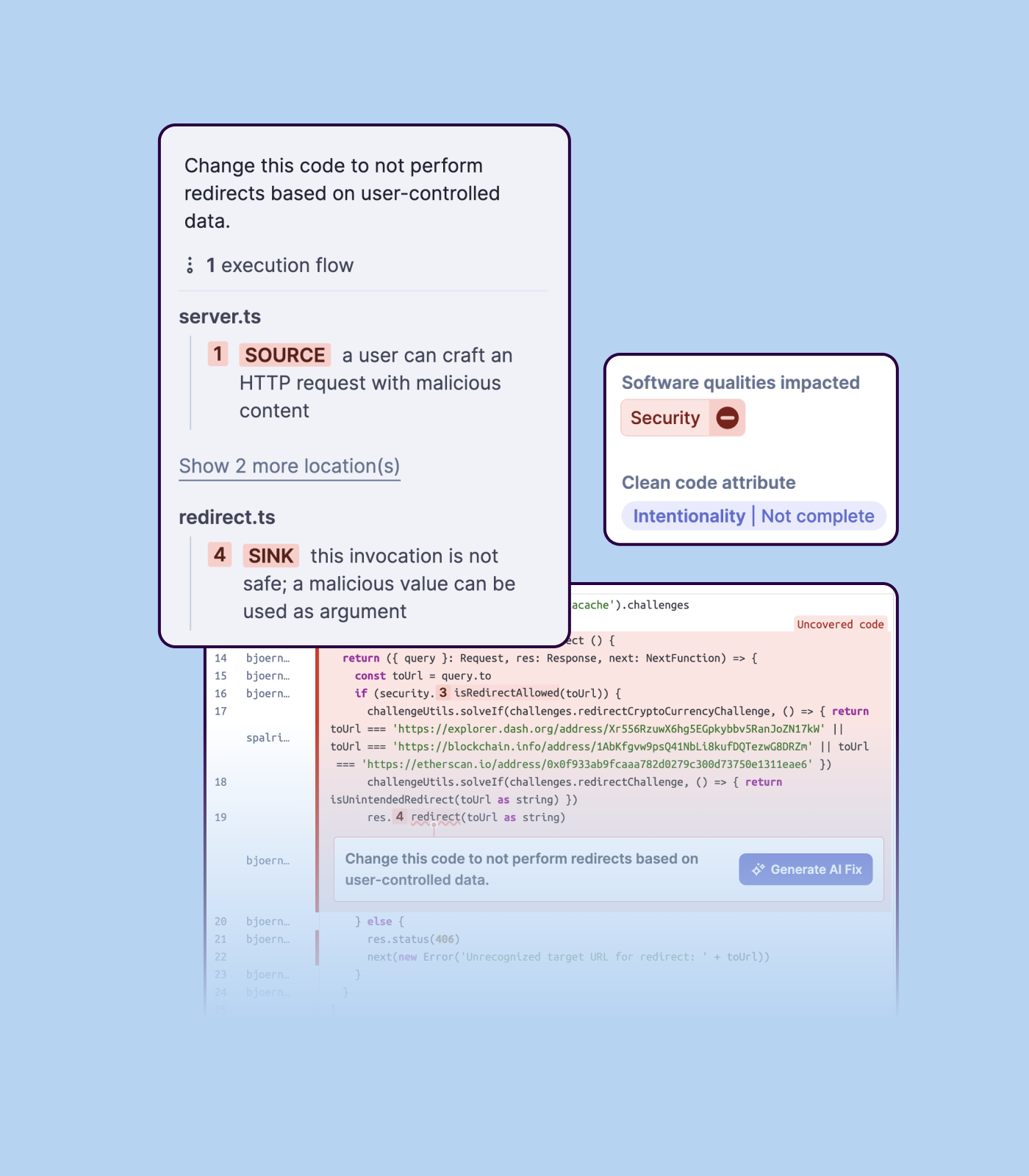
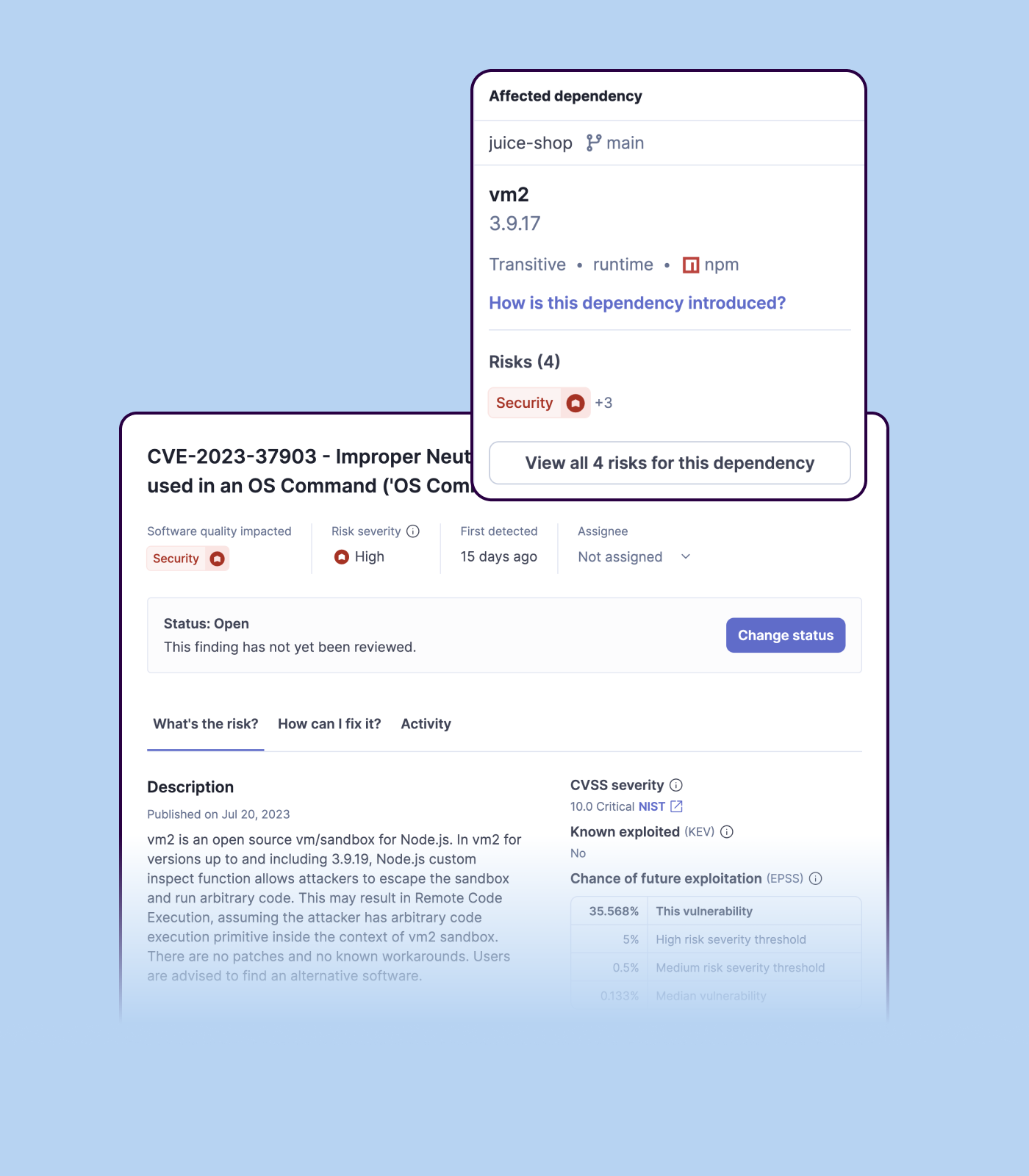
Detecting bugs and vulnerabilities: SonarQube can identify a wide range of bugs and vulnerabilities in code, such as null pointer exceptions, SQL injection, and cross-site scripting (XSS) attacks. It uses static analysis to analyze the code and identify potential issues, and it can also integrate with dynamic analysis tools to provide even more detailed analysis.
Measuring code quality: SonarQube can measure a wide range of code quality metrics, such as cyclomatic complexity, duplicated code, and code coverage. This can help teams understand the quality of their code and identify areas that need improvement.
Providing actionable insights: SonarQube provides detailed information about issues in the code, including the file and line number where the issue occurs and the severity of the issue. This makes it easy for developers to understand and address issues in the code.
Integrating with other tools: SonarQube can be integrated with a wide range of development tools and programming languages, such as Git, Maven, and Java. This allows teams to use SonarQube in their existing development workflow and take advantage of its powerful code analysis capabilities.
Managing technical debt: SonarQube provides metrics and insights on the technical debt on the codebase, enabling teams to better prioritize issues to improve the quality of the code.
Compliance with coding standards: SonarQube can check the code against industry standards like OWASP, CWE and more, making sure the code is compliant with security and coding standards.
Distributed development - I've never worked in an environment where distributed development (developers widely scattered geographically) was a factor, but that's why git exists.
Merging - Merging of code from one branch to another can be painful, especially if it's not done frequently. (On the other hand, doing merges is one of the reasons I get a nice salary, so I can't complain too much!)
Acceptance - Let's face it, git is what "all the cool kids are using." If you've got a bunch of developers fresh out of school, they'll probably know git and not Subversion.
Importing a new custom quality profile on SonarQube is a bit tricky, it can be made easier
Every second time when we want to rerun the server, we have to restart the whole system, otherwise, the server stops and closes automatically
When we generate a new report a second time and try to access the report, it shows details of the old report only and takes a lot of time to get updated with the details of the new and fresh report generated
While there are interesting alternatives, such a GIT, Subversion has been a breath of fresh air compared to its predecessors like CVS or Microsoft Source Safe (now called Team Foundation Server). Its ease of use and high adoption rate is going to keep me using this product for years to come.
Git has met all standards for a source control tool and even exceeded those standards. Git is so integrated with our work that I can't imagine a day without it.
I am not sure what the official Git support channels are like as I have never needed to use any official support. Because Git is so popular among all developers now, it is pretty easy to find the answer to almost any Git question with a quick Google search. I've never had trouble finding what I'm looking for.
We we easily able to integrate the SonarQube steps into our TFS process via the Microsoft Marektplace, we didn't have the need to call SonarQube support. We've used their online documentation and community forum if we ran into any issues.
Git has become the new standard of version control, with its support for distributed design. As a tool to manage and control versions, Subversion does it well, but Git is the future.
I've used both Apache Subversion & Git over the years and have maintained my allegiance to Git. Git is not objectively better than Subversion. It's different. The key difference is that it is decentralized. With Subversion, you have a problem here: The SVN Repository may be in a location you can't reach (behind a VPN, intranet - etc), you cannot commit. If you want to make a copy of your code, you have to literally copy/paste it. With Git, you do not have this problem. Your local copy is a repository, and you can commit to it and get all benefits of source control. When you regain connectivity to the main repository, you can commit against it. Another thing for consideration is that Git tracks content rather than files. Branches are lightweight and merging is easy, and I mean really easy. It's distributed, basically every repository is a branch. It's much easier to develop concurrently and collaboratively than with Subversion, in my opinion. It also makes offline development possible. It doesn't impose any workflow, as seen on the above linked website, there are many workflows possible with Git. A Subversion-style workflow is easily mimicked.
SonarQube is an open-source. It's a scalable product. The costs for this application, for the kind of job it does, are pretty descent. Pipeline scan is more secured in SonarQube. Its a very good tool and its support multiple languages. Its main core competency is of static code analysis and that is why SonarQube exists and it does it exceedingly well. The quality of scan on code convention, best practices, coding standards, unit test coverage etc makes them one of the best competent tool in the market
Git has saved our organization countless hours having to manually trace code to a breaking change or manage conflicting changes. It has no equal when it comes to scalability or manageability.
Git has allowed our engineering team to build code reviews into its workflow by preventing a developer from approving or merging in their own code; instead, all proposed changes are reviewed by another engineer to assess the impact of the code and whether or not it should be merged in first. This greatly reduces the likelihood of breaking changes getting into production.
Git has at times created some confusion among developers about what to do if they accidentally commit a change they decide later they want to roll back. There are multiple ways to address this problem and the best available option may not be obvious in all cases.
Positive ROI from the standpoint of flagging several issues that would have otherwise likely been unaddressed and caused more time to be spent closer to launch
Slightly positive ROI from time-saving perspective (it's an automated check which is nice, but depending on the issues it finds, can take developers time to investigate and resolve)