Aurea Process (formerly CX Process) from Aurea Software in Austin is a business process management offering, based on Savvion BPM.
$200,000
per year
AWS Data Exchange
Score 10.0 out of 10
N/A
AWS Data Exchange is an integration for data service, from which subscribers can easily browse the AWS Data Exchange catalog to find relevant and up-to-date commercial data products covering a wide range of industries, including financial services, healthcare, life sciences, geospatial, consumer, media & entertainment, and more.
N/A
Anypoint Platform
Score 7.9 out of 10
N/A
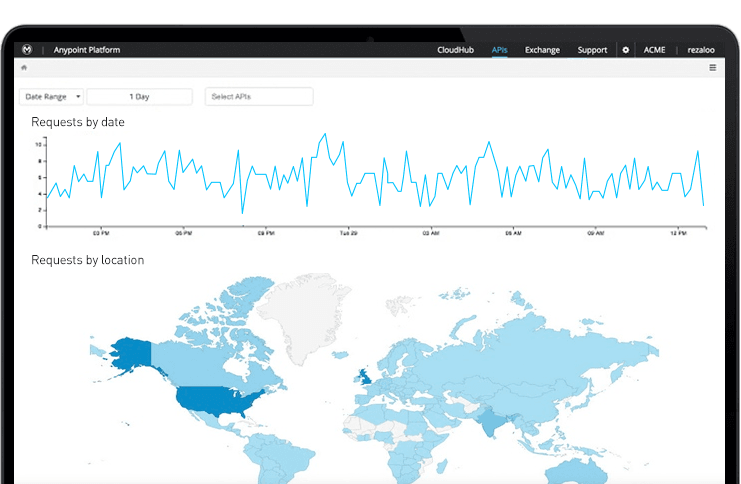
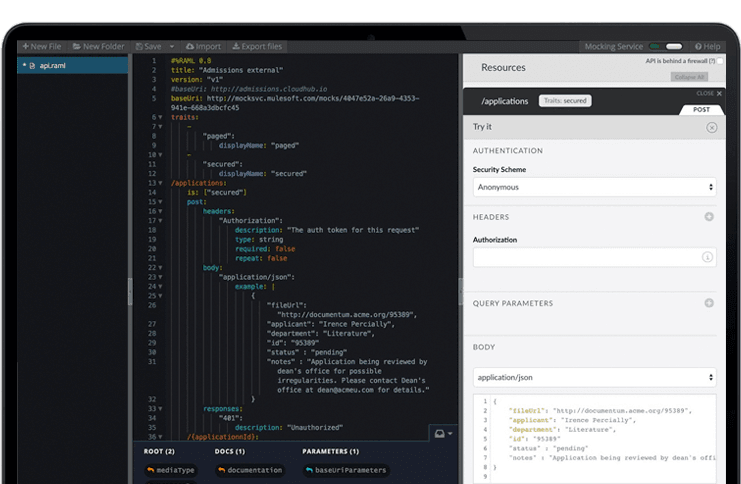
The Anypoint Platform developed by MuleSoft and acquired by Salesforce in early 2018 is designed to
connect apps, data, and devices anywhere, on-premises or in the cloud. This platform was built to
offer out-of-the-box connectors as well as tools that architects and developers can adopt quickly to
design, build and manage the entire lifecycle of their APIs, applications, and products.
N/A
Pricing
Aurea Process
AWS Data Exchange
MuleSoft Anypoint Platform
Editions & Modules
License
$200,000
per year
No answers on this topic
No answers on this topic
Offerings
Pricing Offerings
Aurea Process
AWS Data Exchange
Anypoint Platform
Free Trial
No
No
Yes
Free/Freemium Version
No
No
Yes
Premium Consulting/Integration Services
No
No
No
Entry-level Setup Fee
No setup fee
No setup fee
No setup fee
Additional Details
—
—
—
More Pricing Information
Community Pulse
Aurea Process
AWS Data Exchange
MuleSoft Anypoint Platform
Features
Aurea Process
AWS Data Exchange
MuleSoft Anypoint Platform
Reporting & Analytics
Comparison of Reporting & Analytics features of Product A and Product B
Aurea Process
5.3
1 Ratings
38% below category average
AWS Data Exchange
-
Ratings
MuleSoft Anypoint Platform
-
Ratings
Dashboards
6.01 Ratings
00 Ratings
00 Ratings
Standard reports
6.01 Ratings
00 Ratings
00 Ratings
Custom reports
4.01 Ratings
00 Ratings
00 Ratings
Process Engine
Comparison of Process Engine features of Product A and Product B
Aurea Process
5.8
1 Ratings
36% below category average
AWS Data Exchange
-
Ratings
MuleSoft Anypoint Platform
-
Ratings
Process designer
6.01 Ratings
00 Ratings
00 Ratings
Process simulation
7.01 Ratings
00 Ratings
00 Ratings
Business rules engine
5.01 Ratings
00 Ratings
00 Ratings
SOA support
5.01 Ratings
00 Ratings
00 Ratings
Process player
7.01 Ratings
00 Ratings
00 Ratings
Model execution
5.01 Ratings
00 Ratings
00 Ratings
Collaboration
Comparison of Collaboration features of Product A and Product B
Aurea Process
4.0
1 Ratings
70% below category average
AWS Data Exchange
-
Ratings
MuleSoft Anypoint Platform
-
Ratings
Social collaboration tools
4.01 Ratings
00 Ratings
00 Ratings
Content Management Capabilties
Comparison of Content Management Capabilties features of Product A and Product B
Aurea Process
4.0
1 Ratings
68% below category average
AWS Data Exchange
-
Ratings
MuleSoft Anypoint Platform
-
Ratings
Content management
4.01 Ratings
00 Ratings
00 Ratings
Data Source Connection
Comparison of Data Source Connection features of Product A and Product B
Aurea Process
-
Ratings
AWS Data Exchange
8.0
2 Ratings
3% below category average
MuleSoft Anypoint Platform
-
Ratings
Connect to traditional data sources
00 Ratings
7.02 Ratings
00 Ratings
Connecto to Big Data and NoSQL
00 Ratings
9.01 Ratings
00 Ratings
Data Modeling
Comparison of Data Modeling features of Product A and Product B
Aurea Process
-
Ratings
AWS Data Exchange
8.2
1 Ratings
5% above category average
MuleSoft Anypoint Platform
-
Ratings
Data model creation
00 Ratings
9.01 Ratings
00 Ratings
Metadata management
00 Ratings
9.01 Ratings
00 Ratings
Business rules and workflow
00 Ratings
7.01 Ratings
00 Ratings
Collaboration
00 Ratings
9.01 Ratings
00 Ratings
Testing and debugging
00 Ratings
7.01 Ratings
00 Ratings
Data Governance
Comparison of Data Governance features of Product A and Product B
Aurea Process
-
Ratings
AWS Data Exchange
7.0
1 Ratings
13% below category average
MuleSoft Anypoint Platform
-
Ratings
Integration with data quality tools
00 Ratings
7.01 Ratings
00 Ratings
Cloud Data Integration
Comparison of Cloud Data Integration features of Product A and Product B
The tool has potential. Its capabilities and visual aspects could be considered rather basic but this might improve, particularly if the business intelligence/analytics aspect is leveraged. Once running well, it could allow (perhaps smaller) companies to successfully improve their customers' experiences through digitalizing customer journey - and we all know that customer loyalty goes a long way. However, whether or not the tool is comprehensive enough to deliver this for larger companies with more complex, multi- and omni-channel interactions is yet to be seen...
AWS Data Exchange fits best for scenarios where you have datasets that you would like to sell and you want to deliver it to anyone who would like to purchase it. It really beats having to set up downloads via your own website or portal. However, it can get complicated to manage if you're trying to deliver a dataset a client has already paid for.
MuleSoft Anypoint Platform is best tool in the market for developing APIs with complex structures communicating with various different types of applications including web applications as well as legacy applications. Also applications including database connectivity for fetching and updating data in the DB tables. I cant think of any scenario which MuleSoft Anypoint Platform could not be used for developing the integrations.
Has more features than what we really need so we're paying for more than we use. Sort of like paying for an Abrams tank when all we really need is a Toyota Corolla.
Not a value product, tends to be expensive.
Takes a while for developers to learn to use Mulesoft Anypoint.
There have been a lot of problems with ADX. First, the entire system is incredibly clunky from beginning to end.First, by AWS's own admission they're missing a lot of "tablestakes functionality" like the ability to see who is coming to your pages, more flexibility to edit and update your listings, the ability to create a storefront or catalog that actually tries to sell your products. All-in-all you're flying completely blind with AWS. In our convos with other sellers we strongly believe very little organic traffic is flowing through the AWS exchange. For the headache, it's not worth the time or the effort. It's very difficult to market or sell your products.We've also had a number of simple UX bugs where they just don't accurately reflect the attributes of your product. For instance for an S3 bucket they had "+metered costs" displayed to one of our buyers in the price. This of course caused a lot of confusion. They also misrepresented the historical revisions that were available in our product sets because of another UX bug. It's difficult to know what other things in the UX are also broken and incongruent.We also did have a purchase, but the seller is completely at their whim at providing you fake emails, fake company names, fake use cases because AWS hasn't thought through simple workflows like "why even have subscription confirmation if I can fake literally everything about a subscription request." So as a result we're now in an endless, timewasting, unhelpful thread with AWS support trying to get payment. They're confused of what to do and we feel completely lost.Lastly, the AWS team has been abysmal in addressing our concerns. Conversations with them result in a laundry list of excuses of why simple functionalities are so hard (including just having accurate documentation). It was a very frustrating and unproductive call. Our objective of our call was to help us see that ADX is a well-resourced and well-visioned product. Ultimately they couldn't clearly articulate who they built the exchange for both on the seller side and the buyer side.Don't waste your time. This is at best a very foggy experiment. Look at other sellers, they have a lot of free pages to try to get attention, but then have smart tactics to divert transactions away from the ADX. Ultimately, smart move. Why give 8-10% of your cut to a product that is basically bare-bones infrastructure.
There’s a lot of learning curve at the beginning when it comes to building the code and everything. In terms of usability, I’d say once you get used to it, it’s fine — but it’s not very easy during the initial stages.
Anypoint Platform support is very responsive. There is also a huge knowledge base and an active online forum where answers to most questions can be found. When needed support engages the engineering group so adequate solutions or workarounds are always provided.
Once we have moved all of our system integration APIs to the MuleSoft Anypoint Platform, we will need to communicate with a wide variety of external systems. All of our business and service logic is stored in the aforementioned core systems. Anypoint Platform (and all of our APIs) makes it easy to connect to various other platforms. In order to link to these many other systems, connectors and/or components are utilized, and they are simple to configure and integrate.
As our customers vary in size and maturity, the ROI ranges accordingly.
For younger, smaller businesses this is a useful tool. Digitalization of he customer journey has certainly helped save time and efforts in many cases.
For more mature market players the tool is not always comprehensive enough. Dashboard and report personalization take time and efforts, and sometimes it feels that a dedicated BI tool would be a more suitable solution.