CData's Sync is a data pipeline tool able to connect data sources to the user's database or data warehouse, supporting at present over 200 possible sources, and a range of destinations (e.g. Snowflake, S3, Redshift), connecting on-premise or SaaS sources and destinations.
N/A
IBM DataStage
Score 7.7 out of 10
N/A
IBM® DataStage® is a data integration tool that helps users to design, develop and run jobs that move and transform data. At its core, the DataStage tool supports extract, transform and load (ETL) and extract, load and transform (ELT) patterns. A basic version of the software is available for on-premises deployment, and the cloud-based DataStage for IBM Cloud Pak® for Data offers automated integration capabilities in a hybrid or multicloud environment.
N/A
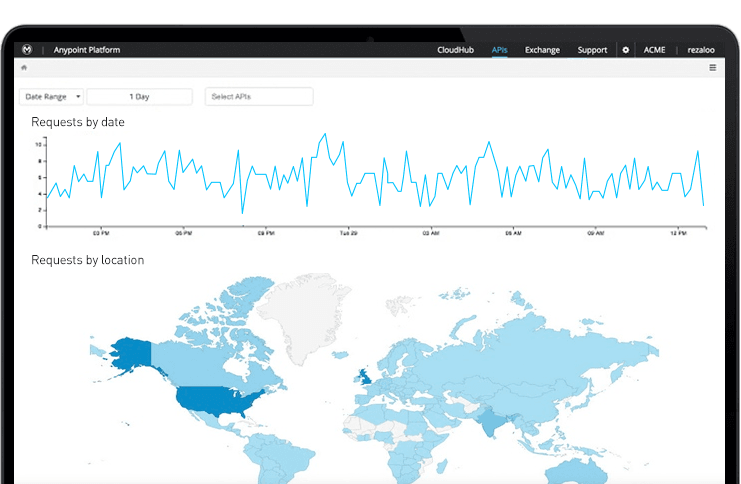
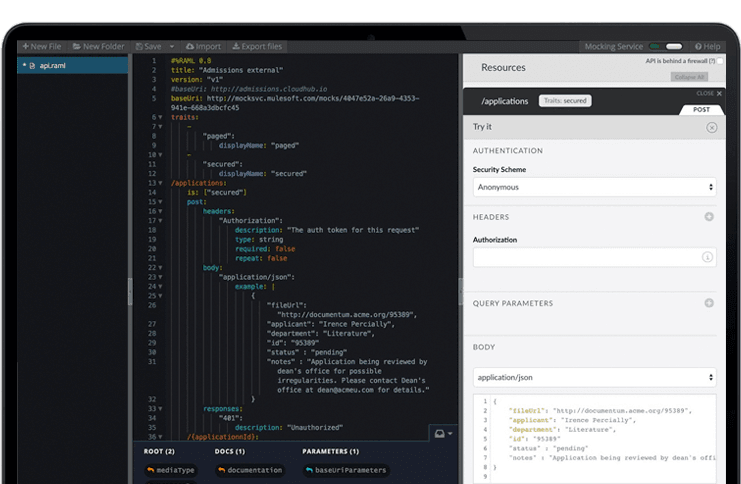
Anypoint Platform
Score 7.9 out of 10
N/A
The Anypoint Platform developed by MuleSoft and acquired by Salesforce in early 2018 is designed to
connect apps, data, and devices anywhere, on-premises or in the cloud. This platform was built to
offer out-of-the-box connectors as well as tools that architects and developers can adopt quickly to
design, build and manage the entire lifecycle of their APIs, applications, and products.
N/A
Pricing
CData Sync
IBM DataStage
MuleSoft Anypoint Platform
Editions & Modules
No answers on this topic
No answers on this topic
No answers on this topic
Offerings
Pricing Offerings
CData Sync
IBM DataStage
Anypoint Platform
Free Trial
No
Yes
Yes
Free/Freemium Version
No
No
Yes
Premium Consulting/Integration Services
No
No
No
Entry-level Setup Fee
No setup fee
No setup fee
No setup fee
Additional Details
—
—
—
More Pricing Information
Community Pulse
CData Sync
IBM DataStage
MuleSoft Anypoint Platform
Features
CData Sync
IBM DataStage
MuleSoft Anypoint Platform
Data Source Connection
Comparison of Data Source Connection features of Product A and Product B
CData Sync
8.0
1 Ratings
3% below category average
IBM DataStage
8.1
11 Ratings
2% below category average
MuleSoft Anypoint Platform
-
Ratings
Connect to traditional data sources
8.01 Ratings
8.311 Ratings
00 Ratings
Connecto to Big Data and NoSQL
00 Ratings
7.910 Ratings
00 Ratings
Data Modeling
Comparison of Data Modeling features of Product A and Product B
CData Sync
7.5
1 Ratings
4% below category average
IBM DataStage
7.0
11 Ratings
11% below category average
MuleSoft Anypoint Platform
-
Ratings
Collaboration
8.01 Ratings
7.111 Ratings
00 Ratings
Testing and debugging
7.01 Ratings
6.611 Ratings
00 Ratings
Data model creation
00 Ratings
6.78 Ratings
00 Ratings
Metadata management
00 Ratings
5.010 Ratings
00 Ratings
Business rules and workflow
00 Ratings
7.110 Ratings
00 Ratings
Data Transformations
Comparison of Data Transformations features of Product A and Product B
CData Sync
-
Ratings
IBM DataStage
7.7
11 Ratings
5% below category average
MuleSoft Anypoint Platform
-
Ratings
Simple transformations
00 Ratings
8.011 Ratings
00 Ratings
Complex transformations
00 Ratings
7.411 Ratings
00 Ratings
Data Governance
Comparison of Data Governance features of Product A and Product B
CData Sync
-
Ratings
IBM DataStage
5.4
10 Ratings
38% below category average
MuleSoft Anypoint Platform
-
Ratings
Integration with data quality tools
00 Ratings
5.410 Ratings
00 Ratings
Integration with MDM tools
00 Ratings
5.410 Ratings
00 Ratings
Cloud Data Integration
Comparison of Cloud Data Integration features of Product A and Product B
Evidently, CData Sync is an excellent middleware tool that is perfect for syncing data between systems. It is especially suitable and works well on SQL servers, DB2, MySQL, and Snowflake, and some of their brothering domains. However, it is a limitation in working with Sage 50 API. But if it is extracted with ODBC, it works well.
DataStage is somewhat outdated for an ETL. I guess that's what makes it a bit lagged behind its competitors. It can be used for data processing, sure, but its performance seems to be lagging behind or quite slow given the server it is running from. I won’t depend on this application if it's handling a lot of mission-critical banking and business data.
MuleSoft Anypoint Platform is best tool in the market for developing APIs with complex structures communicating with various different types of applications including web applications as well as legacy applications. Also applications including database connectivity for fetching and updating data in the DB tables. I cant think of any scenario which MuleSoft Anypoint Platform could not be used for developing the integrations.
Although efficient for SQL servers and MySQL, as well as Snowflake. It is not strong for other database engines, and an upgrade on this would do a lot.
The installation process is manual as opposed to the cloud installation it should be.
A feature of syncing auto increment ID key, that will help in existing data management.
Technical support is a key area IBM should improve for this product. Sometimes our case is assigned to a support engineer and he has no idea of the product or services.
Provide custom reports for datastage jobs and performance such as job history reports, warning messages or error messages.
Make it fully compatible with Oracle and users can direct use of Oracle ODBC drivers instead of Data Direct driver. Same for SQL server.
Has more features than what we really need so we're paying for more than we use. Sort of like paying for an Abrams tank when all we really need is a Toyota Corolla.
Not a value product, tends to be expensive.
Takes a while for developers to learn to use Mulesoft Anypoint.
Because it is robust, and it is being continuously improved. DS is one of the most used and recognized tools in the market. Large companies have implemented it in the first instance to develop their DW, but finding the advantages it has, they could use it for other types of projects such as migrations, application feeding, etc.
There’s a lot of learning curve at the beginning when it comes to building the code and everything. In terms of usability, I’d say once you get used to it, it’s fine — but it’s not very easy during the initial stages.
It could load thousands of records in seconds. But in the Parallel version, you need to understand how to particionate the data. If you use the algorithms erroneously, or the functionalities that it gives for the parsing of data, the performance can fall drastically, even with few records. It is necessary to have people with experience to be able to determine which algorithm to use and understand why.
IBM offers different levels of support but in my experience being and IBM shop helps to get direct support from more knowledgeable technicians from IBM. Not sure on the cost of having this kind of support, but I know there's also general support and community blogs and websites on the Internet make it easy to troubleshoot issues whenever there's need for that.
Anypoint Platform support is very responsive. There is also a huge knowledge base and an active online forum where answers to most questions can be found. When needed support engages the engineering group so adequate solutions or workarounds are always provided.
Tableau is another similar software tool, unlike CData Sync, rather transforms data into actionable insights. While CData Sync works with automation, Tableau uses a drag box on its AVA, which in turn slows the work speed on the syncing of data. Over the years, I enjoyed the friendly and customizable option of CData Sync over Tableau's.
With effective capabilities and easy to manipulate the features and easy to produce accurate data analytics and the Cloud services Automation, this IBM platform is more reliable and easy to document management. The features on this platform are equipped with excellent big data management and easy to provide accurate data analytics.
Once we have moved all of our system integration APIs to the MuleSoft Anypoint Platform, we will need to communicate with a wide variety of external systems. All of our business and service logic is stored in the aforementioned core systems. Anypoint Platform (and all of our APIs) makes it easy to connect to various other platforms. In order to link to these many other systems, connectors and/or components are utilized, and they are simple to configure and integrate.
It’s hard to say at this point, it delivers, but not quite as I expected. It takes a lot of resources to manage and sort this out (manpower, financial).
Definitely, I don’t have the exact numbers, but given the data it processes, it is A LOT. So props to the developer of this application.
Again, based on my experience, I’d choose other ETL apps if there is one that's more user-friendly.