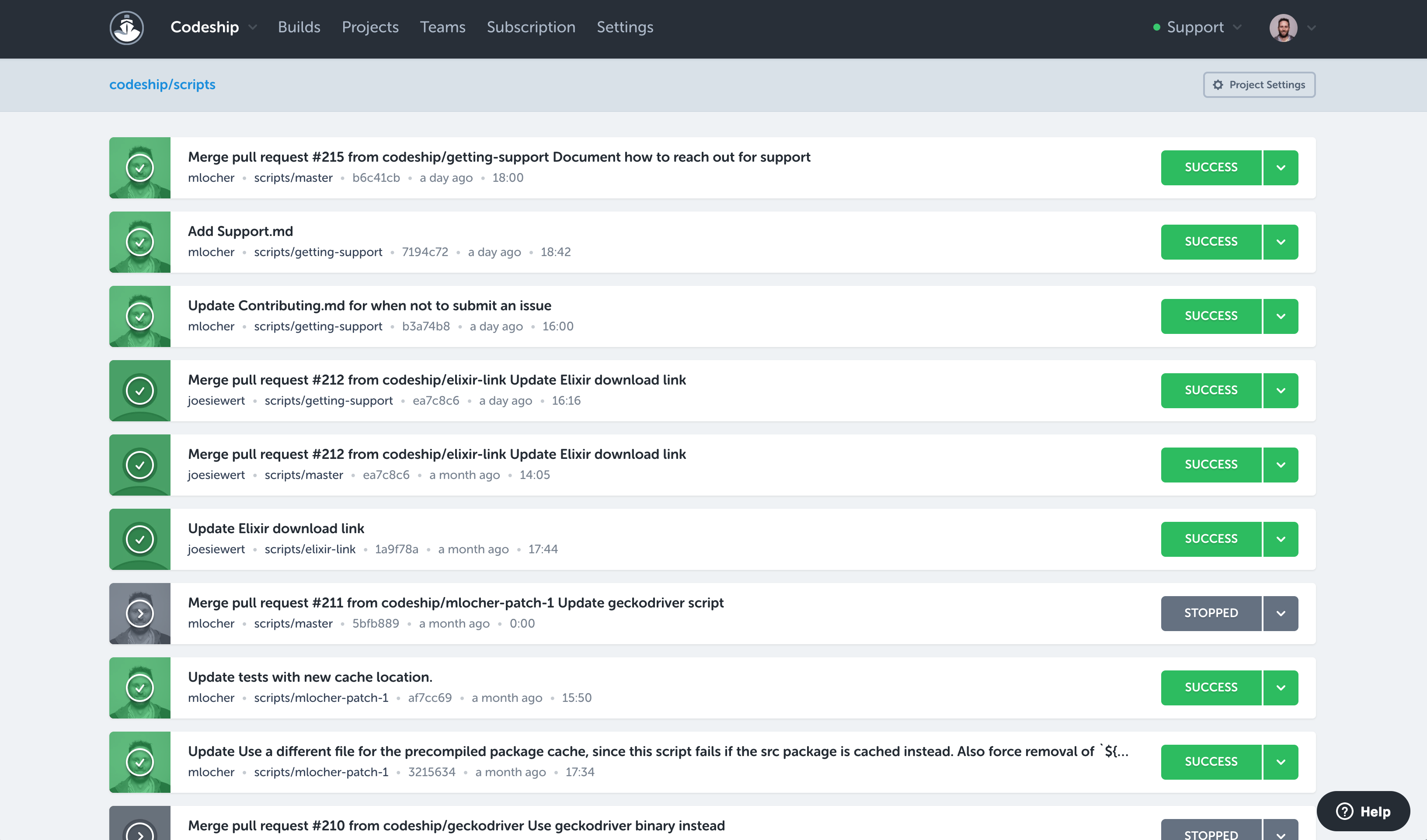
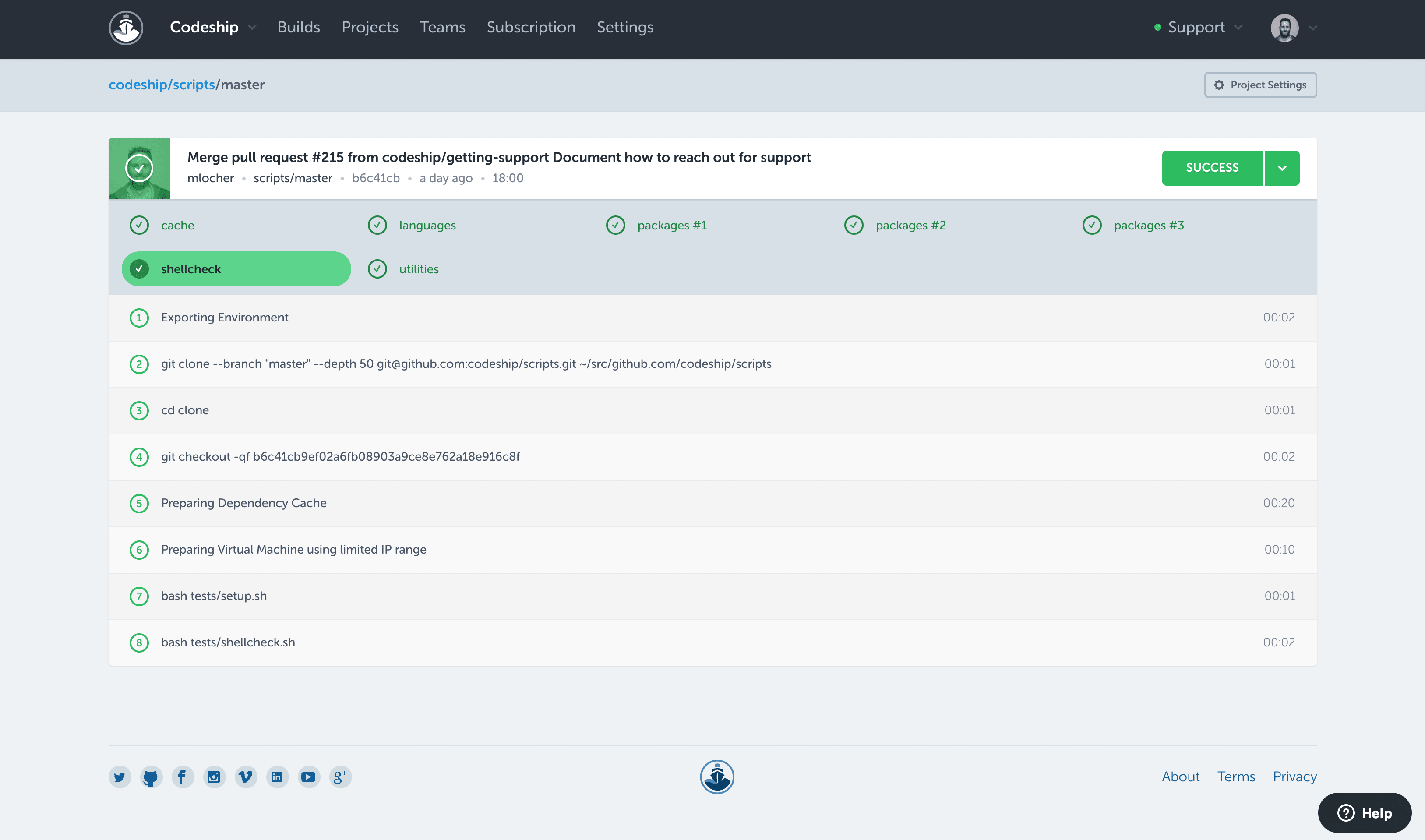
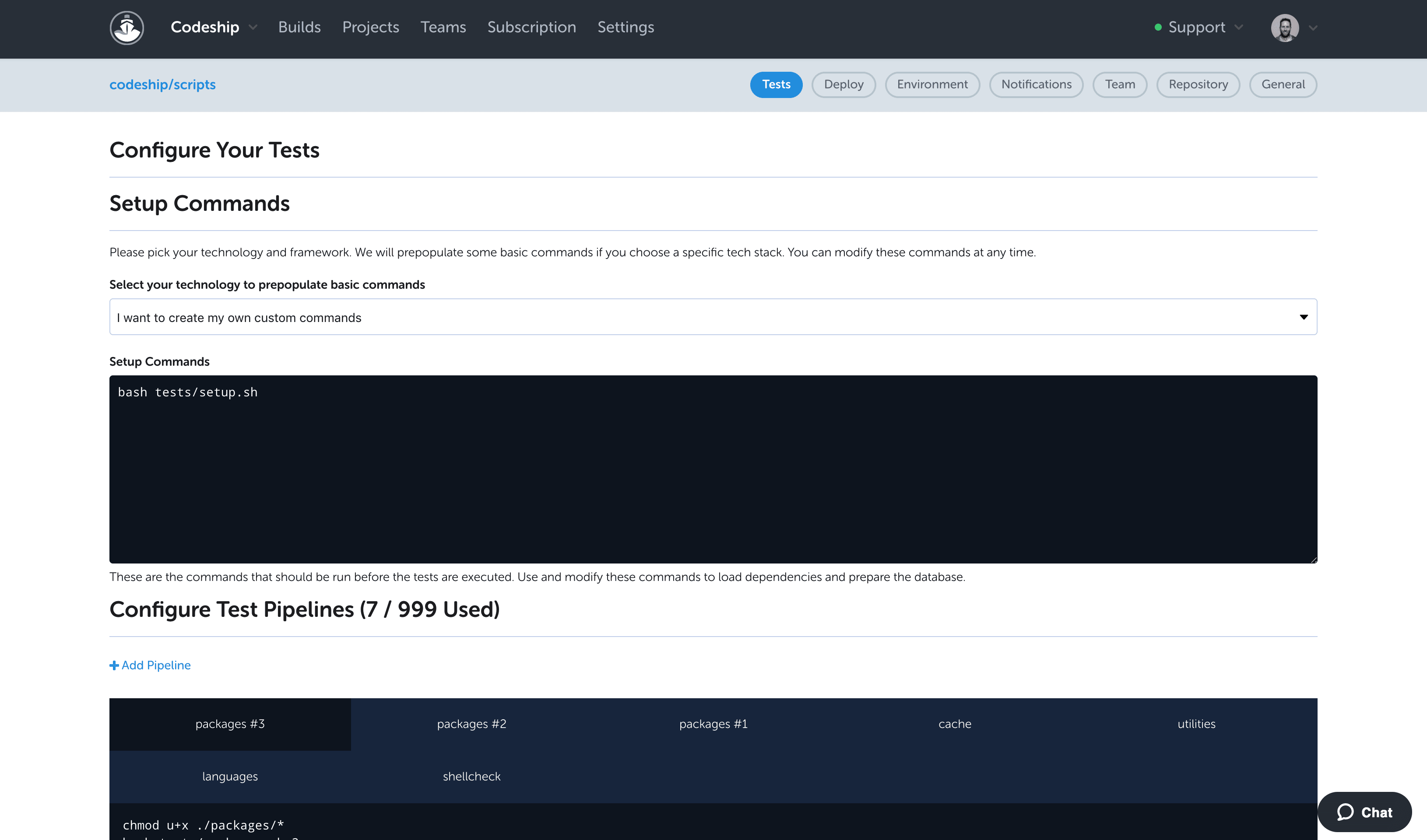
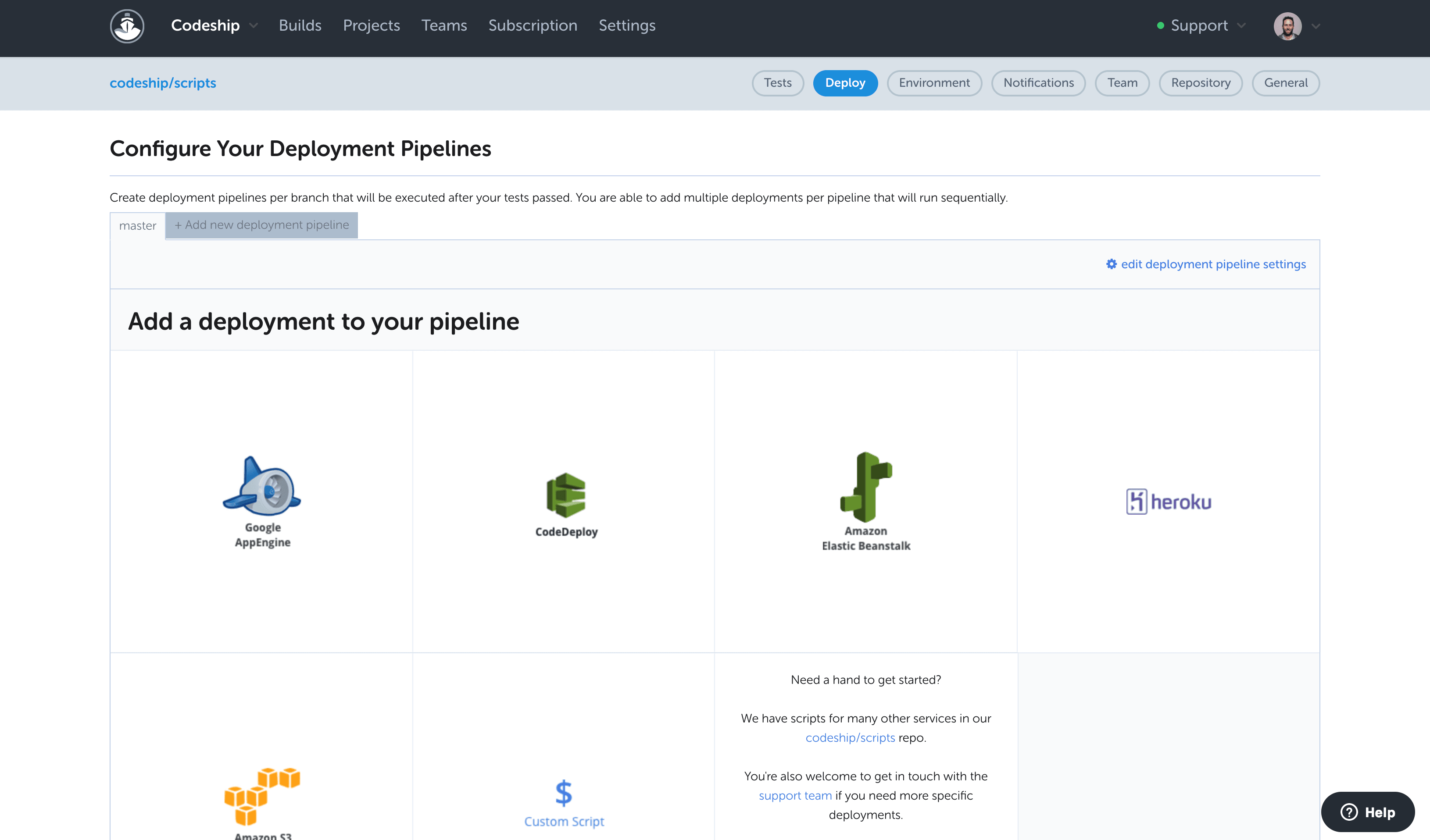
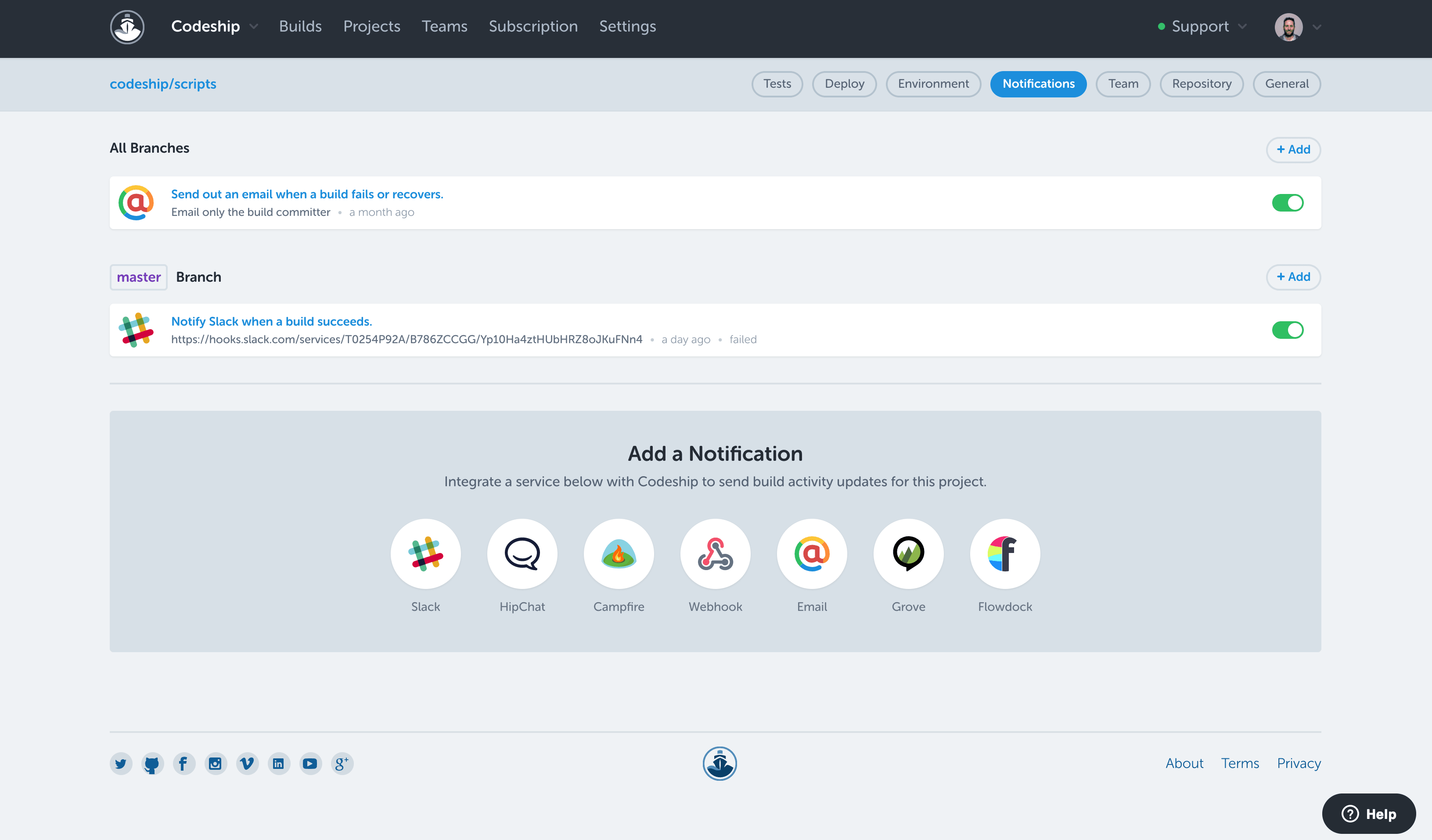
Codeship from CloudBees is a build automation platform from the Austrian company of the same name.
N/A
CloudBees Continuous Integration
Score8.9 out of 10
N/A
CloudBees Continuous Integration (formerly the CloudBees Jenkins Platform) is a continuous integration (CI) and continuous delivery (CD) solution that extends Jenkins. Developed for on-premise installations, CloudBees CI offers stable releases with monthly updates, as well as additional proprietary tools and enterprise features to enhance the manageability and security of Jenkins. CloudBees CI helps administrators manage growing installations due to ever-increasing teams, projects and jobs…
Codeship is extremely well suited for projects that are version controlled on public hosting such as Github or Bitbucket, and for situations where you need to pick up code from these systems and deploy it to different cloud environments. For example, we had two projects for the same client that were hosted on Github and needed to be deployed to AWS and Heroku. The native CI/CD tools of these cloud environments could not provide a holistic solution to deploy to both environments the way Codeship did.
A de minimis incentive was given to thank the reviewer for their time. The incentive was not used to bias or drive a particular response, nor was the incentive contingent on a positive endorsement. More Info
For all continuous integration features like multi branch pipeline, continuous build, and deployment execution, highly customizable groovy scripting, well integration with most of repositories like SVN, GIT, etc. are some of the exceptional features which helps devOps related tasks a treat to work everyday. With some minor changes in agent configuration and handling of their configuration on master instances would reduce a lot of issues. Also, cache of maven handling on agents needs to be improved (though not related to tool but the CI pipelines). But, since this is a very mature and performant tool, we expect some out of the box functionalities to handle all such scenarios. Overall, the tool works wonders because of its highly customizable features.
A de minimis incentive was given to thank the reviewer for their time. The incentive was not used to bias or drive a particular response, nor was the incentive contingent on a positive endorsement. More Info
Codeship provides a set of tools for quickly creating and building our deployment artifacts and push them to the designated servers.
Codeship's hooks allows our developers to simply push tags from our git repositories to initiate a deployment of code to a server. No one outside of the devops team needs any expertise to get our code packages delivered.
Codeship allows us to tie in behat and unit tests easily to prevent delivery of buggy code.
A de minimis incentive was given to thank the reviewer for their time. The incentive was not used to bias or drive a particular response, nor was the incentive contingent on a positive endorsement. More Info
A de minimis incentive was given to thank the reviewer for their time. The incentive was not used to bias or drive a particular response, nor was the incentive contingent on a positive endorsement. More Info
I would like to see a little bit more than the green/red status. If there are tests, it would be good to see how many have failed on a red build.
To improve build times (and reduce feedback times), it would be good to see how long build, tests, and deployment take over time. An overview like that could very easily point to potential areas of improvement. I think Codeship users do not want to bother with the build process, but, if there is anything to improve and increase productivity it's very unlikely that users wouldn't want to do this.
A de minimis incentive was given to thank the reviewer for their time. The incentive was not used to bias or drive a particular response, nor was the incentive contingent on a positive endorsement. More Info
Support seems very unreachable from my experience. They handle cases if developers are facing issues, support seems to be very limited. It's not like other tools in a market where every mail is being taken priority and responses are sent. We see a lack in this particular aspect when it comes to CloudBees Jenkins Platform.
A de minimis incentive was given to thank the reviewer for their time. The incentive was not used to bias or drive a particular response, nor was the incentive contingent on a positive endorsement. More Info
Our company uses Jenkins for all internal deployment processes for one very important reason - it's hosted internally. But Codeship is great for personal use - it has intuitive UI, easy setup and tons of integrations.
A de minimis incentive was given to thank the reviewer for their time. The incentive was not used to bias or drive a particular response, nor was the incentive contingent on a positive endorsement. More Info
CloudBees Jenkins Support is on par with the other enterprise tools we're currently using. It has performed well enough that we've adopted the product and placed it in the critical path of our software delivery pipelines.
A de minimis incentive was given to thank the reviewer for their time. The incentive was not used to bias or drive a particular response, nor was the incentive contingent on a positive endorsement. More Info
Having the code tested thoroughly. While it's obviously a part of the job that still requires the developer to sit down and to actually have some decent and thorough tests implemented, by using codeship we were able to guarantee 100% that our code was being tested each and every time it got commited and pushed onto our repositories. Leading to a faster, shorter and sure implementation iterative cycle.
Fewer 'man in the middle' processes which required more steps and people involved just to get the code shipped onto our deployment servers.
Almost inexistent learning curve. Codeship is simple to use and very intuitive. Nobody in our development department had a hard time figuring out how to have it properly configured for each new project created there.
A de minimis incentive was given to thank the reviewer for their time. The incentive was not used to bias or drive a particular response, nor was the incentive contingent on a positive endorsement. More Info
A de minimis incentive was given to thank the reviewer for their time. The incentive was not used to bias or drive a particular response, nor was the incentive contingent on a positive endorsement. More Info