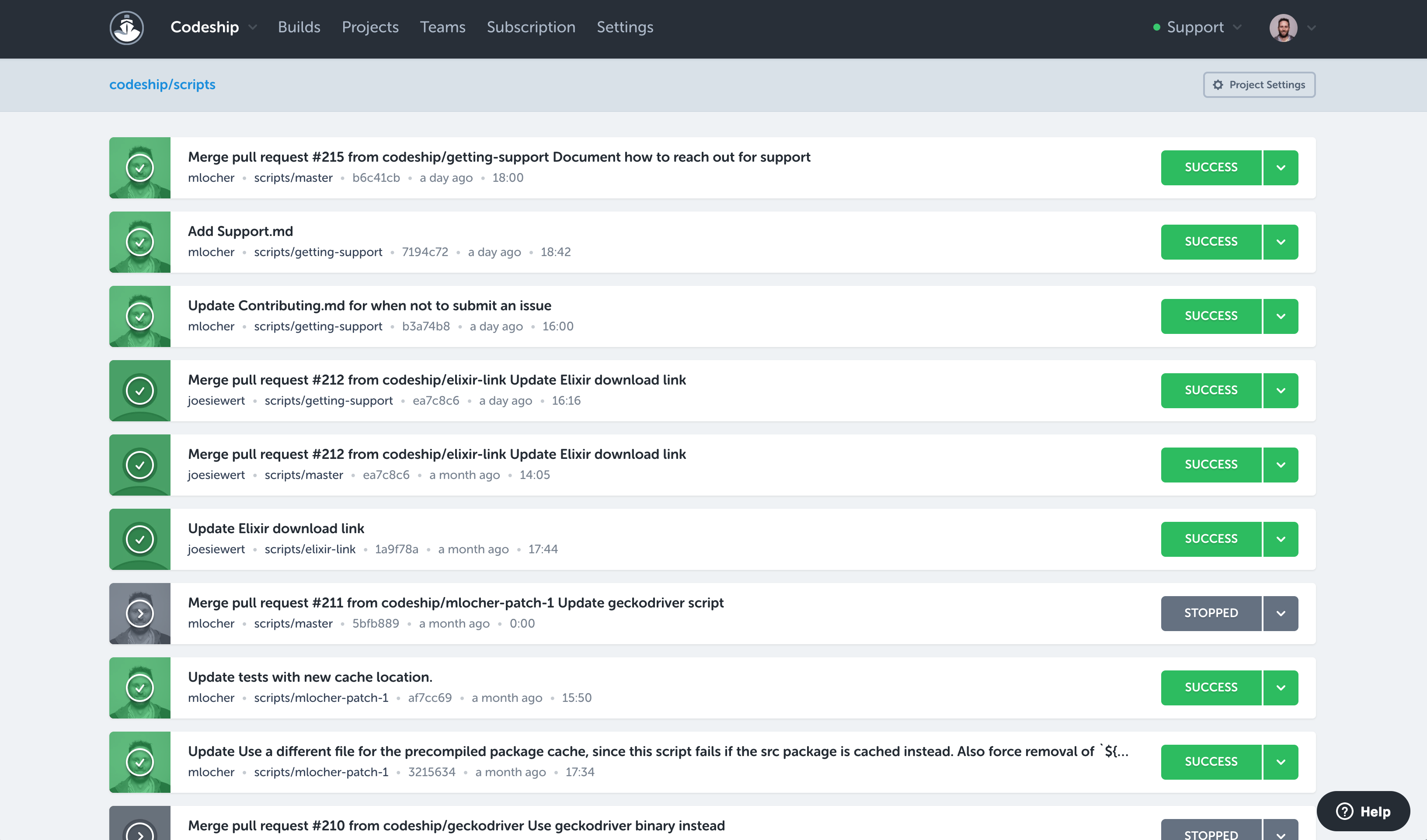
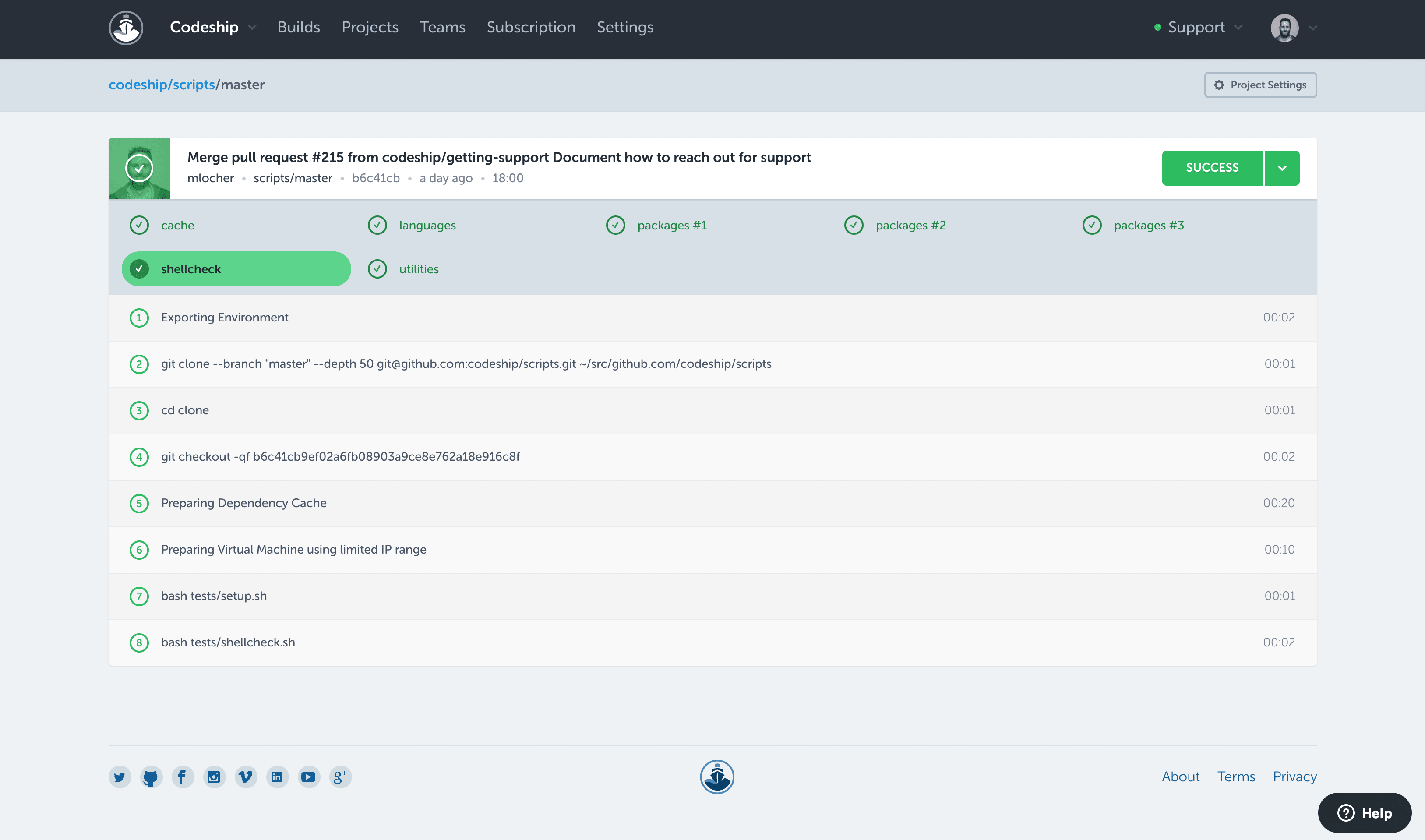
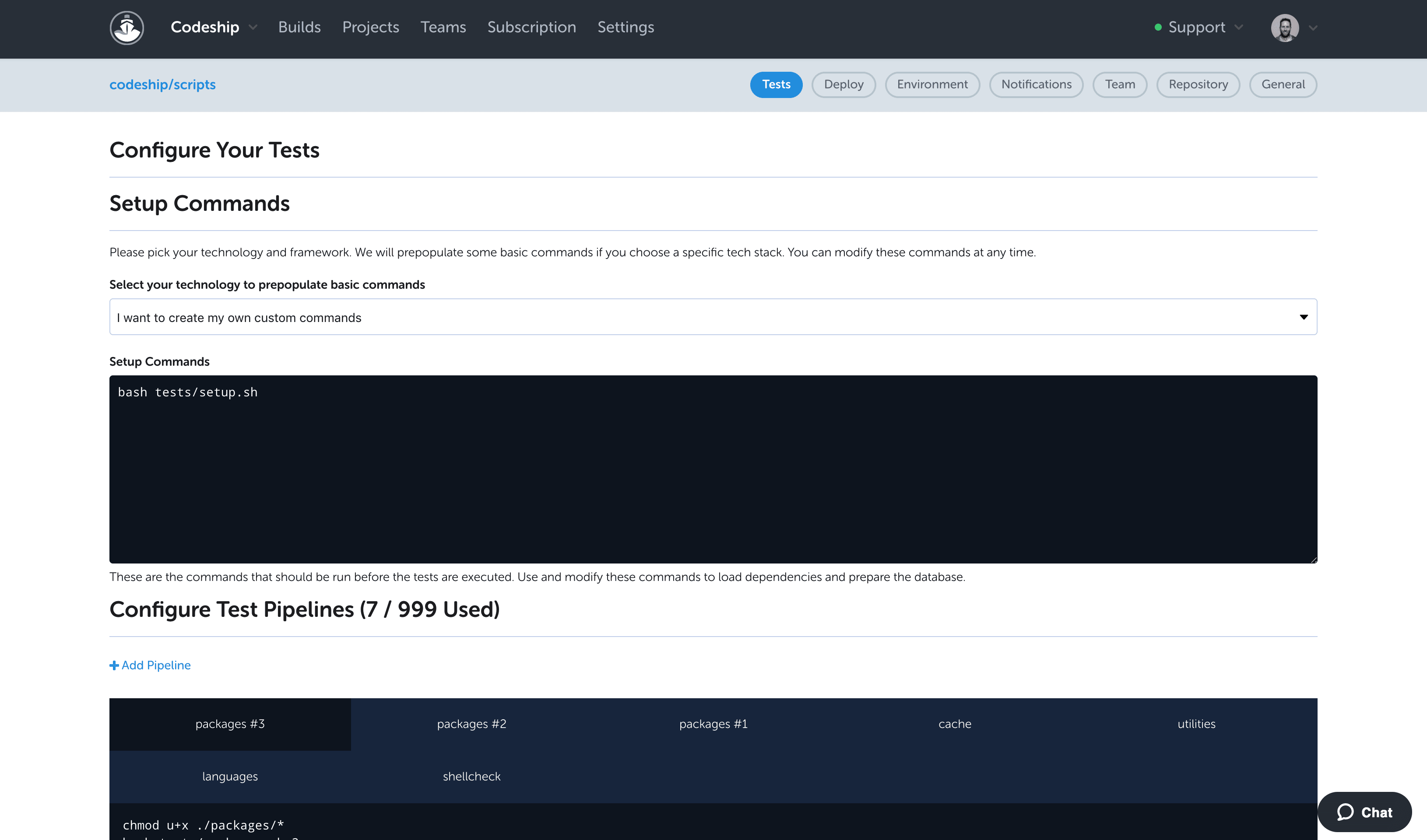
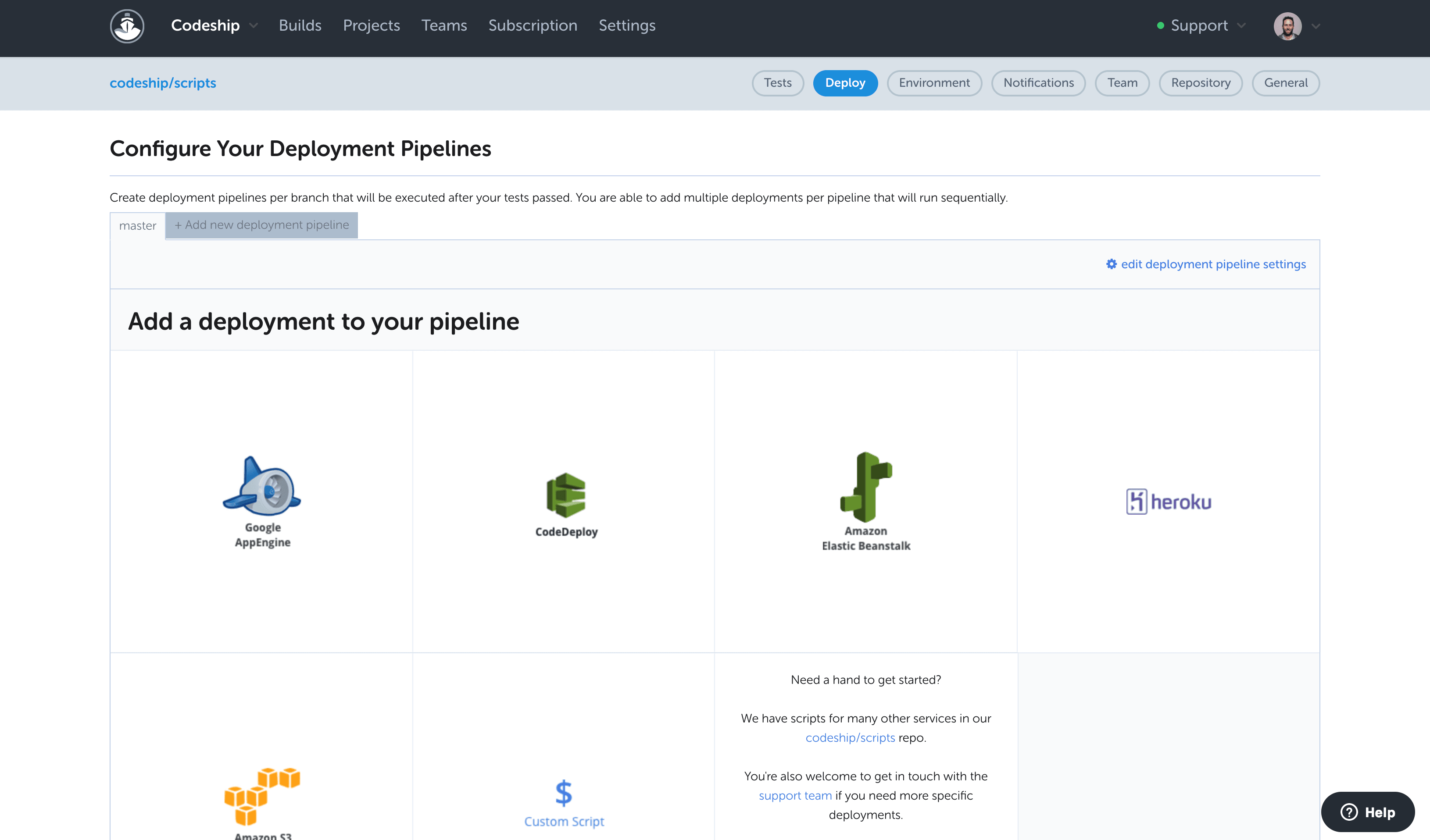
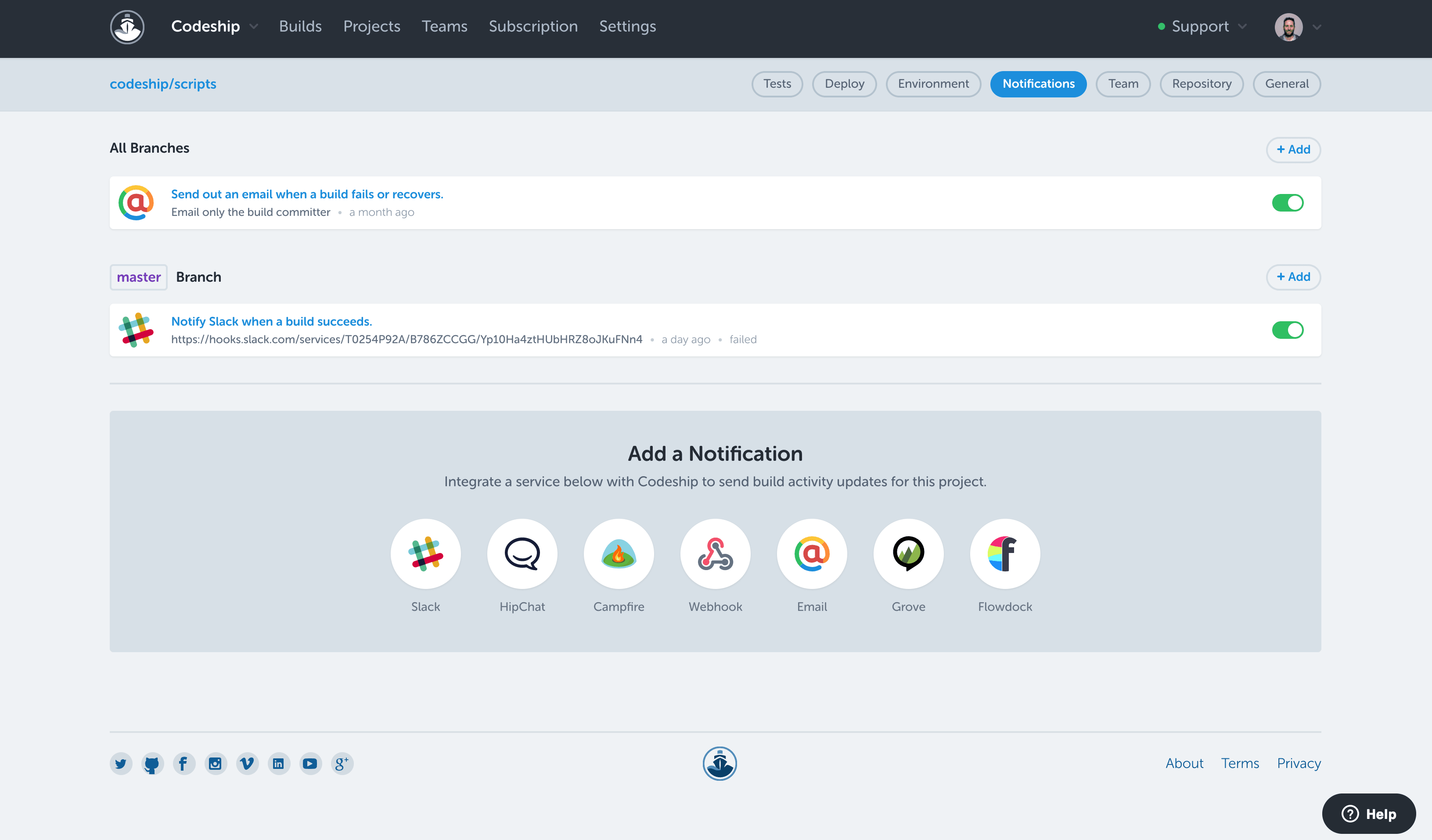
Codeship from CloudBees is a build automation platform from the Austrian company of the same name.
N/A
Progress Chef
Score6.5 out of 10
N/A
Chef IT infrastructure automation suites were developed by Chef Software in Seattle and acquired by Progress Software in September 2020. The Chef Enterprise Automation Stack is an integrated suite of automation technologies presented as a solution for delivering change quickly, repeatedly, and securely over every application's lifecycle. The Chef Effortless Infrastructure Suit is an integrated suite of automation technologies to codify infrastructure, security, and compliance, as well as…
Codeship is extremely well suited for projects that are version controlled on public hosting such as Github or Bitbucket, and for situations where you need to pick up code from these systems and deploy it to different cloud environments. For example, we had two projects for the same client that were hosted on Github and needed to be deployed to AWS and Heroku. The native CI/CD tools of these cloud environments could not provide a holistic solution to deploy to both environments the way Codeship did.
A de minimis incentive was given to thank the reviewer for their time. The incentive was not used to bias or drive a particular response, nor was the incentive contingent on a positive endorsement. More Info
Chef is a fantastic tool for automating software deployments that aren't able to be containerized. It's more developer-oriented than its other competitors and thus allows you to do more with it. The Chef Infra Server software is rock-solid and has been extremely stable in our experience. I would definitely recommend its use if you're looking for an automation framework. And it also offers InSpec which is a very good tool for testing your infrastructure to ensure it deployed as intended.
A de minimis incentive was given to thank the reviewer for their time. The incentive was not used to bias or drive a particular response, nor was the incentive contingent on a positive endorsement. More Info
Codeship provides a set of tools for quickly creating and building our deployment artifacts and push them to the designated servers.
Codeship's hooks allows our developers to simply push tags from our git repositories to initiate a deployment of code to a server. No one outside of the devops team needs any expertise to get our code packages delivered.
Codeship allows us to tie in behat and unit tests easily to prevent delivery of buggy code.
A de minimis incentive was given to thank the reviewer for their time. The incentive was not used to bias or drive a particular response, nor was the incentive contingent on a positive endorsement. More Info
A de minimis incentive was given to thank the reviewer for their time. The incentive was not used to bias or drive a particular response, nor was the incentive contingent on a positive endorsement. More Info
I would like to see a little bit more than the green/red status. If there are tests, it would be good to see how many have failed on a red build.
To improve build times (and reduce feedback times), it would be good to see how long build, tests, and deployment take over time. An overview like that could very easily point to potential areas of improvement. I think Codeship users do not want to bother with the build process, but, if there is anything to improve and increase productivity it's very unlikely that users wouldn't want to do this.
Chef could do a better job with integration with other DevOps tools. Our company relies on Jenkins and Ansible, which took some development and convincing for plug-ins to be created/available.
It would be nice if kitchen didn't only have a vagrant/virtual-box prerequisite. Our company one day stop allowing virtual-box to run without special privileges, and that caused a lot of issues for people trying to do kitchen tests.
Chef could use more practice materials for the advanced certification badges. There was not a lot of guidance in what to study or examples of certain topics.
A de minimis incentive was given to thank the reviewer for their time. The incentive was not used to bias or drive a particular response, nor was the incentive contingent on a positive endorsement. More Info
The suite of tools is very powerful. The ability to create custom modules allows for unlimited potential for managing all aspects of a system. However, there is pretty significant learning curve with the toolset. It currently takes approx 3-4 months for new engineers to feel comfortable with our implementation
A de minimis incentive was given to thank the reviewer for their time. The incentive was not used to bias or drive a particular response, nor was the incentive contingent on a positive endorsement. More Info
It loads quick enough for basically all our systems. Because we have this for local dev environments, speed isn't really a big issue here. Yes, depending on the system, sometimes it does take a relatively long time, but it's not an issue for me. One thing that is annoying is that if I want to make a small change to a cookbook and re-run the Chef client, I can't just make the change in the cache and run it. I have to do the whole process of updating the server.
A de minimis incentive was given to thank the reviewer for their time. The incentive was not used to bias or drive a particular response, nor was the incentive contingent on a positive endorsement. More Info
Support for Chef is easily available for fee or through the open source community as most the issues you will face will have been addressed through the Chef developer community forums. The documentation for Chef is moderate to great and easily readable.
A de minimis incentive was given to thank the reviewer for their time. The incentive was not used to bias or drive a particular response, nor was the incentive contingent on a positive endorsement. More Info
Our company uses Jenkins for all internal deployment processes for one very important reason - it's hosted internally. But Codeship is great for personal use - it has intuitive UI, easy setup and tons of integrations.
A de minimis incentive was given to thank the reviewer for their time. The incentive was not used to bias or drive a particular response, nor was the incentive contingent on a positive endorsement. More Info
We considered the three leading competitors in the field: Chef, Puppet and Ansible. Ansible is a very strong competitor and has a nice degree of flexibility in that it does not require a client install. Instead the configuration is delivered by SSH which is very simple. Puppet seems like it has fallen off the pace of the competition and lacked the strong community offered by Chef. We chose Chef because of the strong support by the company and the dynamic and deep community support.
A de minimis incentive was given to thank the reviewer for their time. The incentive was not used to bias or drive a particular response, nor was the incentive contingent on a positive endorsement. More Info
A de minimis incentive was given to thank the reviewer for their time. The incentive was not used to bias or drive a particular response, nor was the incentive contingent on a positive endorsement. More Info
The entire professional services team was great to work with. The curriculum was tailored to our specific use cases. The group we worked with were very responsive, listened to our feedback, was very easy to schedule and accommodate. I cannot say enough good things about our professional services experience
A de minimis incentive was given to thank the reviewer for their time. The incentive was not used to bias or drive a particular response, nor was the incentive contingent on a positive endorsement. More Info
Having the code tested thoroughly. While it's obviously a part of the job that still requires the developer to sit down and to actually have some decent and thorough tests implemented, by using codeship we were able to guarantee 100% that our code was being tested each and every time it got commited and pushed onto our repositories. Leading to a faster, shorter and sure implementation iterative cycle.
Fewer 'man in the middle' processes which required more steps and people involved just to get the code shipped onto our deployment servers.
Almost inexistent learning curve. Codeship is simple to use and very intuitive. Nobody in our development department had a hard time figuring out how to have it properly configured for each new project created there.
A de minimis incentive was given to thank the reviewer for their time. The incentive was not used to bias or drive a particular response, nor was the incentive contingent on a positive endorsement. More Info
Chef is a good tool for baselining servers. It will be a good ROI when there are huge number of servers. For less number of servers maintaining a master will be an over head.
One good ROI will be that the Operations Team also gets into agile and DevOps methodologies. Operational teams can start writing scripts/automations to keep their infra more stable and their application stack more reliable.
Implementation of Chef eliminates the manual mode of doing things and everyone aligns to automation mind set. It helps in change of culture.
A de minimis incentive was given to thank the reviewer for their time. The incentive was not used to bias or drive a particular response, nor was the incentive contingent on a positive endorsement. More Info