Darktrace AI interrupts in-progress cyber-attacks, including ransomware, email phishing, and threats to cloud environments. It's able to detect and establish baselines for your organization so it can make the distinction between what is and what isn't normal network activity for your organization. This allows it to tackle complex cyber-attacks as they happen and prevent future cyber-attacks from happening.
N/A
Lastline
Score 10.0 out of 10
N/A
Lastline in San Mateo, California offers a network detection and response solution designed to provide network traffic analysis (NTA) to protect enterprise networks against sophisticated threats in real-time.
N/A
Microsoft Defender for Endpoint
Score 8.8 out of 10
N/A
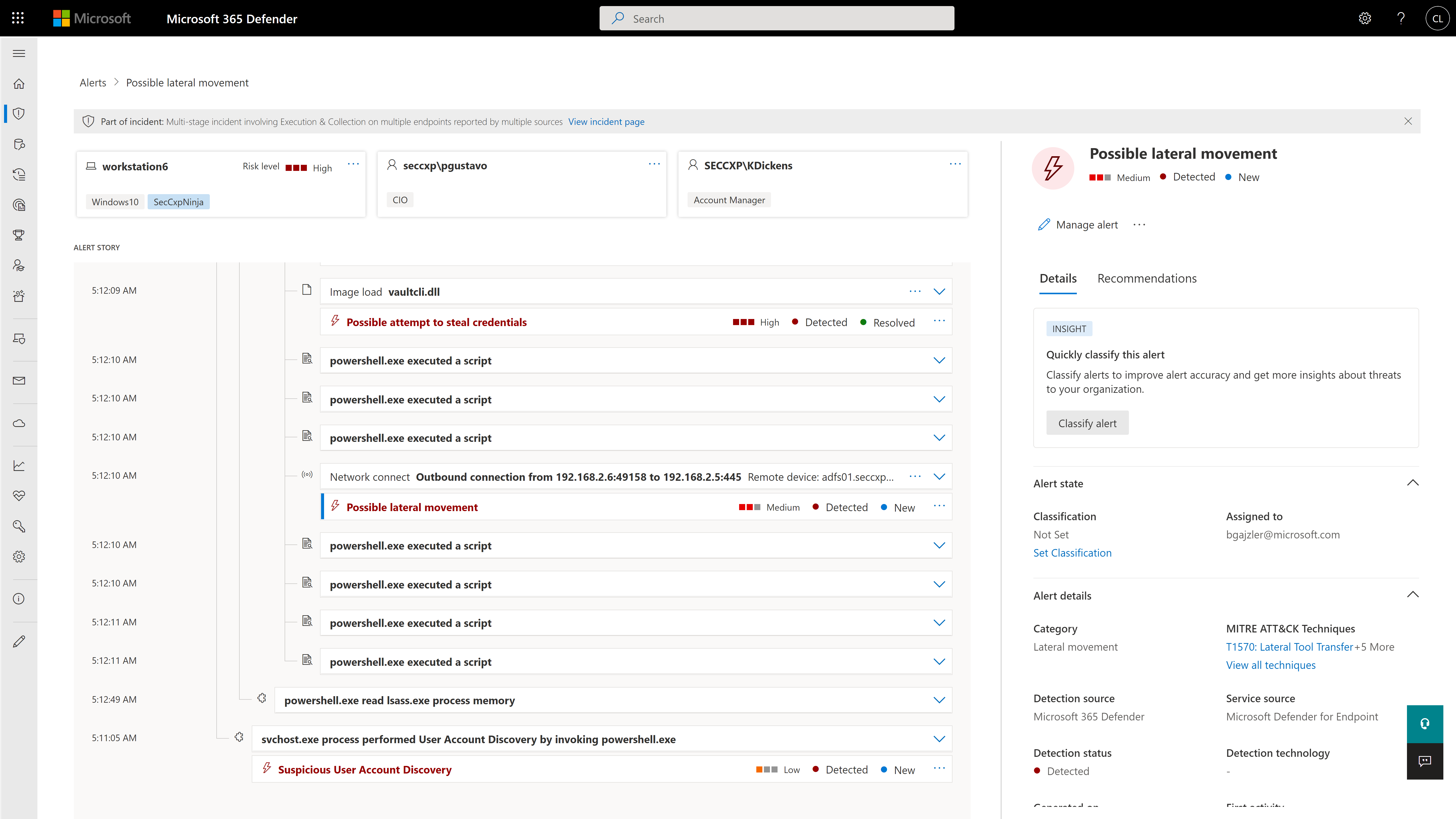
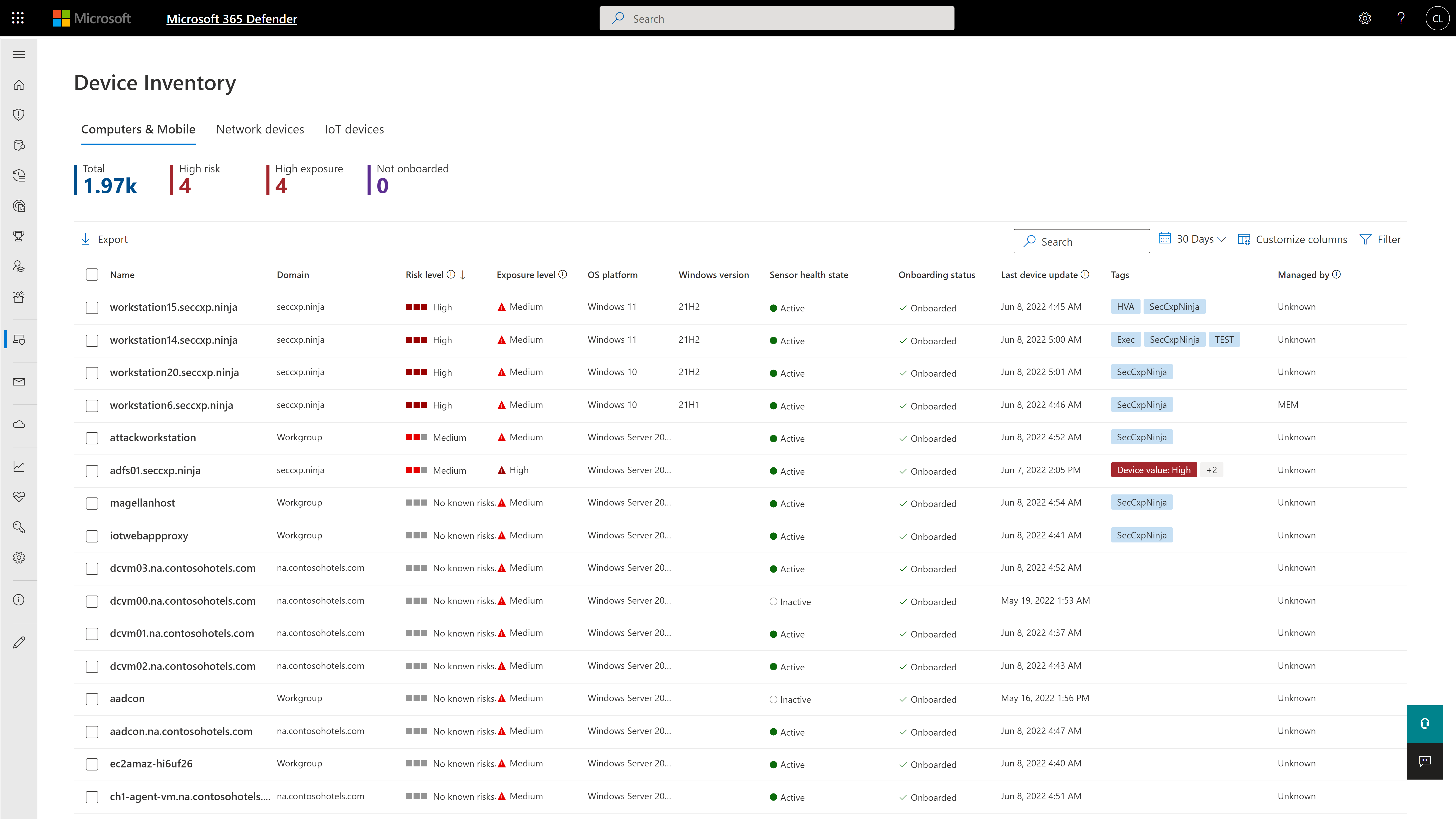
Microsoft Defender for Endpoint (formerly Microsoft Defender ATP) is a holistic, cloud delivered endpoint security solution that includes risk-based vulnerability management and assessment, attack surface reduction, behavioral based and cloud-powered next generation protection, endpoint detection and response (EDR), automatic investigation and remediation, managed hunting services, rich APIs, and unified security management.
I would say at the end all they are doing the same, but with the benefit that we don't need to install anything. So it's just kind of enabling and then the functionality is available, so other products need to be installed, which is not necessary with the defend
Darktrace is a product well suited for the vast majority of infrastructures and helps monitoring and responding to threats based on the network in a very elastic way. This is a product based on on-premise infrastructures that hosts its machines locally, of course it can be technically difficult to monitor an entire On-Cloud infrastructure but even there there's room for sensors and monitoring, not to mention the SaaS and mail integration that completes the product.
I can definitely tell you where it’s more suited, because we haven’t come across any less appropriate scenarios. But definitely in regard to how we centrally manage our user space and our endpoints, it’s been beneficial from an API perspective and is really transferable, with strong collaboration with our Azure stack. It works very well.
Uses it Al model UEBA to detect anomalies in the behaviour of not only the users in a corporate network but also the routers, servers, and endpoints in that network.
Provides a visualisation of both egress and outbound network traffics flowing in and out of the organisation.
Darktrace comes with it autonomous AI model detection and responses capabilities.
Darktrace as an AI next generation NDR solution, prevents ,contains and quarantines malicious traffics from and into the corporate network.
Definitely on the threat action and response. We didn't have a stress-response option before, but the dependent brand point provided it instantly. Also, it's doing UVA and machine learning, which we didn't have before. So it's definitely providing more sophisticated threat-detection capabilities than we had before.
There are few areas that I would say need to be improved; their customer support portal allows you to log tickets with any suggestions or things you feel the product is missing, and they will generally show you how to achieve what you want, or in some cases, introduce it as a feature in a later update.
The only thing is sometimes, because Microsoft has so many platforms, it gets a little confusing, like am I in the security platform? Am I in Purview? Where am I at right now? Because there's so many sites that are kind of doing a lot of the same thing, and so that does get a little confusing from time to time, but outside of that, it's a pretty good product.
Cost add-ons for Security features is nickel and diming the process to keep pace with cybercrime. Limited Education budgets require us to be more pro-active in finding cost-effective measures to protect our devices, staff and students. Defender is a strong, well-featured product that is pricing itself out of the education market
The Darktrace toolset is very expansive, allowing it to handle many different tasks, but this leads to a user interface that is sometimes not at all intuitive. Icons don't always make sense visually, and the associated tool tips do not always provide enough detail on what action the button performs
Microsoft Defender for Endpoint is a great EDR to have that works quickly and silently in the background and it integrates well with other Microsoft services. As an IT manager, I can appreciate that I do not get bombarded by alerts for every small detail. On the flipside, the management site can use some work in being more clear and should be more streamlined so I'm not clicking through multiple pages to figure out what happened
Microsoft Defender for Endpoint chugs along just fine no matter what we throw at it and what systems it's running on. It doesn't take up a lot of resources either, so that's welcomed.
Darktrace support is excellent in my experience. They send a competent engineer on-site to provide on-boarding training. They were also very responsive in responding to questions and concerns. Having an individual point of contact who is a competent network and security engineer is not a common experience, at least for me.
The first time I tried to onboard my macOS endpoints to MDE I struggled for quite a bit. I had to reach out to Microsoft's MDE support team. The tech was very helpful in walking me through the steps during a screen share session
Deployment was handled by our team here and everything went pretty smoothly. We did have a few hiccups in our test group, but that only took a bit to get ironed out.
We did NOT select Darktrace. OSSIM/AlienVault is a more mature product and it provided better intelligence and reporting. The end user interface is much easier to use - and you can tell built form engineers who have had to do the work. My suggestion for anyone considering Darktrace, is to get the price upfront; do a 30/60 onsite trail; and do the same thing, at the same time, with AlienVault. AlientVault will win every time. I say that because that's exactly what I did.
Previously, we've used Sophos. We've used, way back when, McAfee, Norton, Symantec, all those. And we finally settled on Microsoft Defender for Endpoint. We're a Microsoft technology stack shop. So obviously it was natural. It's built into Windows, so we're not adding additional agents. Some of the other vendors and their agents, for a while, would compete with CPU usage. And so it actually slowed down the machines. Because Microsoft Defender for Endpoint is built into the Windows product, Microsoft is going to ensure that it does not affect the other productivity tools that a user may use.
One big positive is how it helps us with the security assessments that clients have done on us. They are looking to see if we know how we might have unusual/malicious traffic running on the network.
If you have a small network and only need 1 appliance, it can be a good ROI and peace of mind.
You could go down a hole in trying to spend time looking at all of your traffic with this software. You need to focus only on what it is showing as potential bad traffic.