The DataRobot AI Platform is presented as a solution that accelerates and democratizes data science by automating the end-to-end journey from data to value and allows users to deploy AI applications at scale. DataRobot provides a centrally governed platform that gives users AI to drive business outcomes, that is available on the user's cloud platform-of-choice, on-premise, or as a fully-managed service. The solutions include tools providing data preparation enabling users to explore and…
$0
H2O.ai
Score 6.5 out of 10
N/A
An open-source end-to-end GenAI platform for air-gapped, on-premises or cloud VPC deployments. Users can Query and summarize documents or just chat with local private GPT LLMs using h2oGPT, an Apache V2 open-source project. And the commercially available Enterprise h2oGPTe provides information retrieval on internal data, privately hosts LLMs, and secures data.
N/A
Splunk Cloud Platform
Score 7.9 out of 10
N/A
Splunk Cloud Platform is a data platform service thats help users search, analyze, visualize and act on data. The service can go live in as little as two days, and with an IT backend managed by Splunk experts.
Comparable to H2O but my company chose DataRobot so that's why I'm using it. Pricing is reasonable and the feature coverage is probably better from an end-to-end perspective. DataRobot has less flexibility than Amazon SageMaker but is a lot simpler to use, which again for a …
When we ran the purchase process, two factors were critical: price of course and the customer success service as we were new in this datascience world. H2O and DataRobot were the finalists (Dataiku too expensive for our needs), but we decide to choose DataRobot as they give us …
DataRobot provided the perfect balance of features and price points. The other tools we tried were very expensive and provided extra things that we really didn't need. Some of the other tools also required you to host them on a server at your institution or pay for their cloud …
DataRobot is the product that seemed to have the most professional platform all in all. It was also the best one for the second part of the model development, which is monitoring what the model is doing in production and governing what that model was doing, giving us the …
Many products tend to offer a sort of baseline interface with statistical models and call it AI. These are things like linear regression formulas being built into BI platforms (Tableau, PowerBI). The problem with these types of platforms is often the depth and accuracy of the …
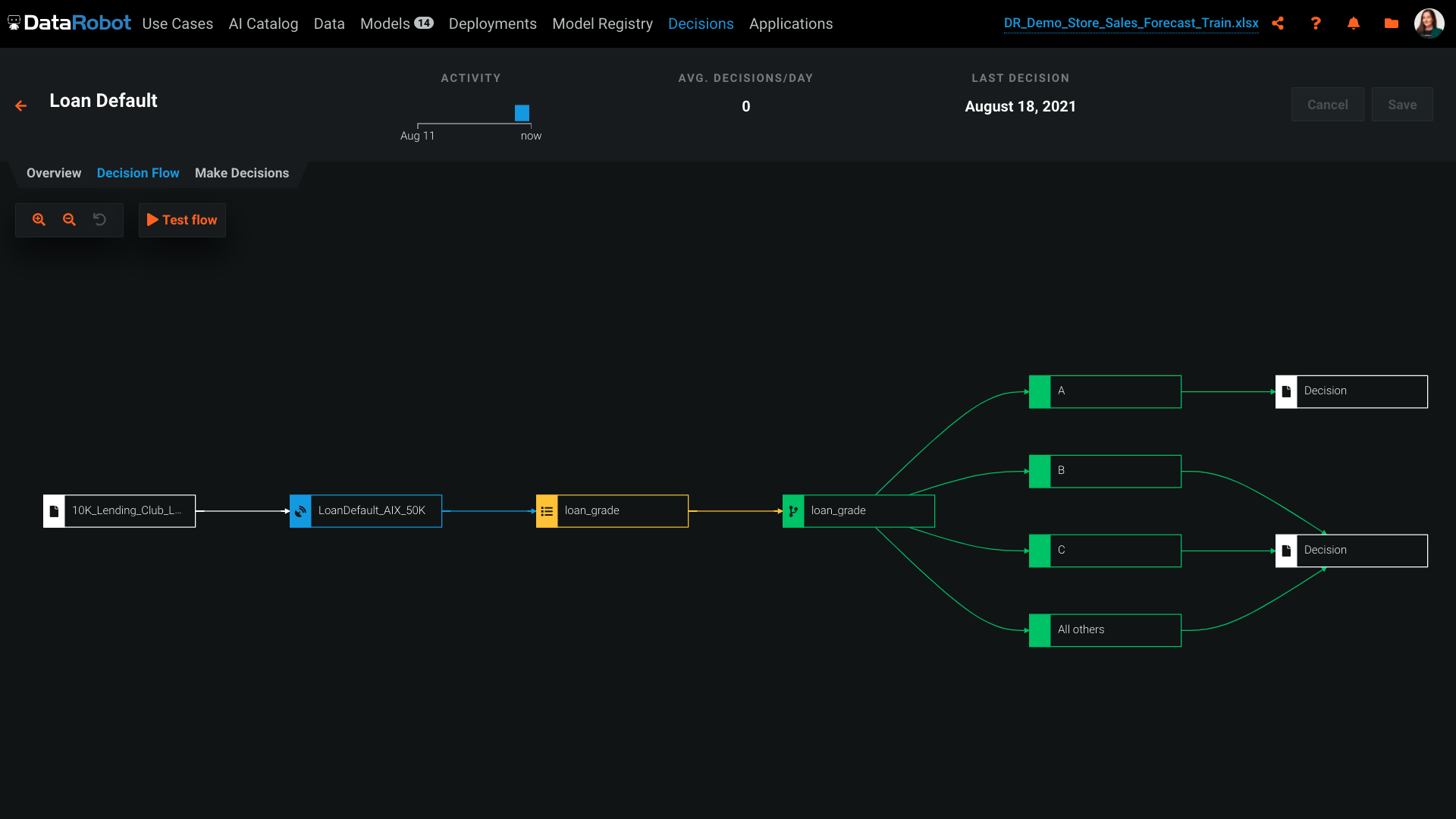
DataRobot can be used for risk assessment, such as predicting the likelihood of loan default. It can handle both classification and regression tasks effectively. It relies on historical data for model training. If you have limited historical data or the data quality is poor, it may not be the best choice as it requires a sufficient amount of high-quality data for accurate model building.
Most suited if in little time you wanted to build and train a model. Then, H2O makes life very simple. It has support with R, Python and Java, so no programming dependency is required to use it. It's very simple to use. If you want to modify or tweak your ML algorithm then H2O is not suitable. You can't develop a model from scratch.
Splunk is excellent when all your data is in one location. Its ability to correlate all that data is intuitive (once the hurdle of learning the query language is overcome). It is also easy to standardize the presentation of information to the company. When data is siloed/standalone, other systems can be cheaper and faster to implement.
DataRobot helps, with algorithms, to analyze and decipher numerous machine-learning techniques in order to provide models to assist in company-wide decision making.
Our DataRobot program puts on an "even playing field" the strength of auto-machine learning and allows us to make decisions in an extremely timely manner. The speed is consistent without being offset by errors or false-negatives.
It encompasses many desired techniques that help companies in general, to reconfigure in to artificial intelligence driven firms, with little to no inconvenience.
This SIEM consolidates multiple data points and offers several features and benefits, creating custom dashboards and managing alert workflows.
Splunk Cloud provides a simple way to have a central monitoring and security solution. Though it does not have a huge learning curve, you should spend some time learning the basics.
Splunk Cloud enables me to create and schedule statistical reports on network use for Management.
The platform itself is very complicated. It probably can't function well without being complicated, but there is a big training curve to get over before you can effectively use it. Even I'm not sure if I'm effectively using it now.
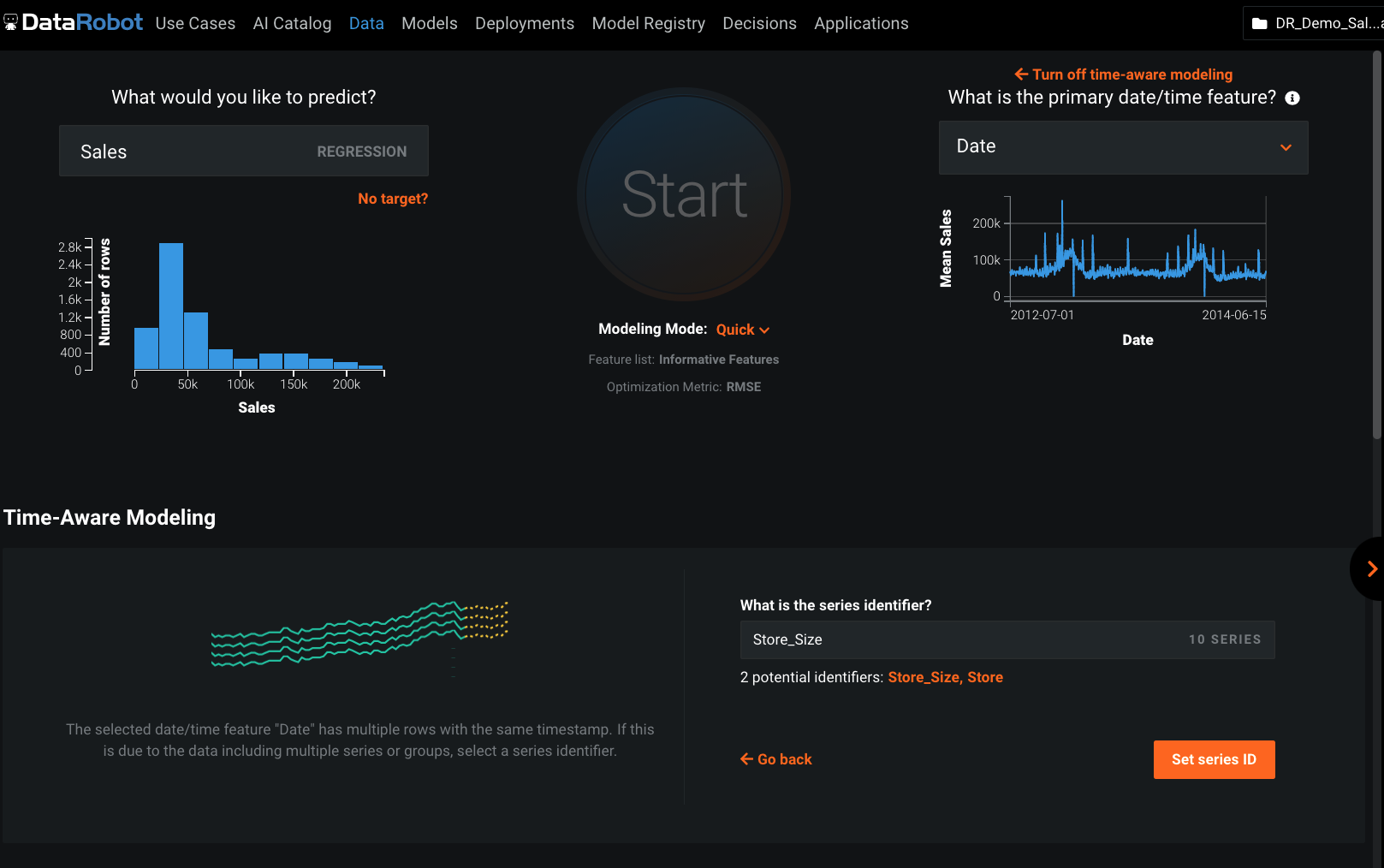
The suggested model DataRobot deploys often not the best model for our purposes. We've had to do a lot of testing to make sure what model is the best. For regressive models, DataRobot does give you a MASE score but, for some reason, often doesn't suggest the best MASE score model.
The software will give you errors if output files are not entered correctly but will not exactly tell you how to fix them. Perhaps that is complicated, but being able to download a template with your data for an output file in the correct format would be nice.
DataRobot presents a machine-learning platform designed by data scientists from an array of backgrounds, to construct and develop precise predictive modeling in a fraction of the time previously taken. The tech invloved addresses the critical shortage of data scientists by changing the speed and economics of predictive analytics. DataRobot utilizes parallel processing to evaluate models in R, Python, Spark MLlib, H2O and other open source databases. It searches for possible permutations and algorithms, features, transformation, processes, steps and tuning to yield the best models for the dataset and predictive goal.
As I am writing this report I am participating with Datarobot Engineers in an complex environment and we have their whole support. We are in Mexico and is not common to have this commitment from companies without expensive contract services. Installing is on premise and the client does not want us to take control and they, the client, is also limited because of internal IT regulations ,,, soo we are just doing magic and everybody is committed.
Splunk Cloud support is sorely lacking unfortunately. The portal where you submit tickets is not very good and is lacking polish. Tickets are left for days without any updates and when chased it is only sometimes you get a reply back. I get the feeling the support team are very understaffed and have far too much going on. From what I know, Splunk is aware of this and seem to be trying to remedy it.
I've done machine learning through python before, however having to code and test each model individually was very time consuming and required a lot of expertise. The data Robot approach, is an excellent way of getting to a well placed starting point. You can then pick up the model from there and fine tune further if you need.
Both are open source (though H2O only up to some level). Both comprise of deep learning, but H2O is not focused directly on deep learning, while Tensor Flow has a "laser" focus on deep learning. H2O is also more focused on scalability. H2O should be looked at not as a competitor but rather a complementary tool. The use case is usually not only about the algorithms, but also about the data model and data logistics and accessibility. H2O is more accessible due to its UI. Also, both can be accessed from Python. The community around TensorFlow seems larger than that of H2O.
Search Processing Language really is a game changer for writing easy-to-understand and maintainable queries on your data base logs. Once understood, setting up and validating a query can be done in no time- which leaves us the option to focus on more monitoring and improved services. We have no other tools that utilizes data this efficiently
Positive impact: saving in infrastructure expenses - compared to other bulky tools this costs a fraction
Positive impact: ability to get quick fixes from H2O when problems arise - compared to waiting for several months/years for new releases from other vendors
Positive impact: Access to H2O core team and able to get features that are needed for our business quickly added to the core H2O product