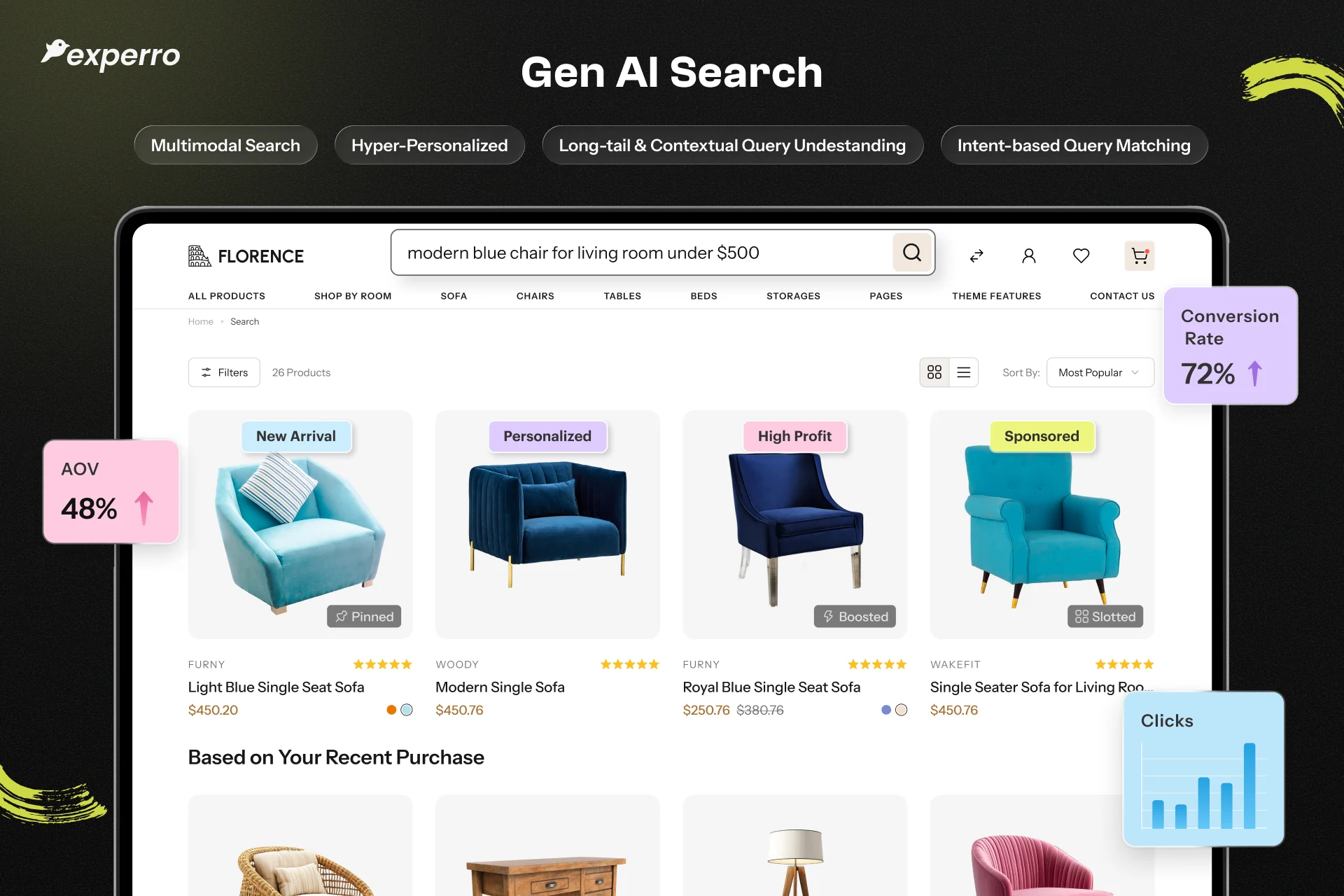
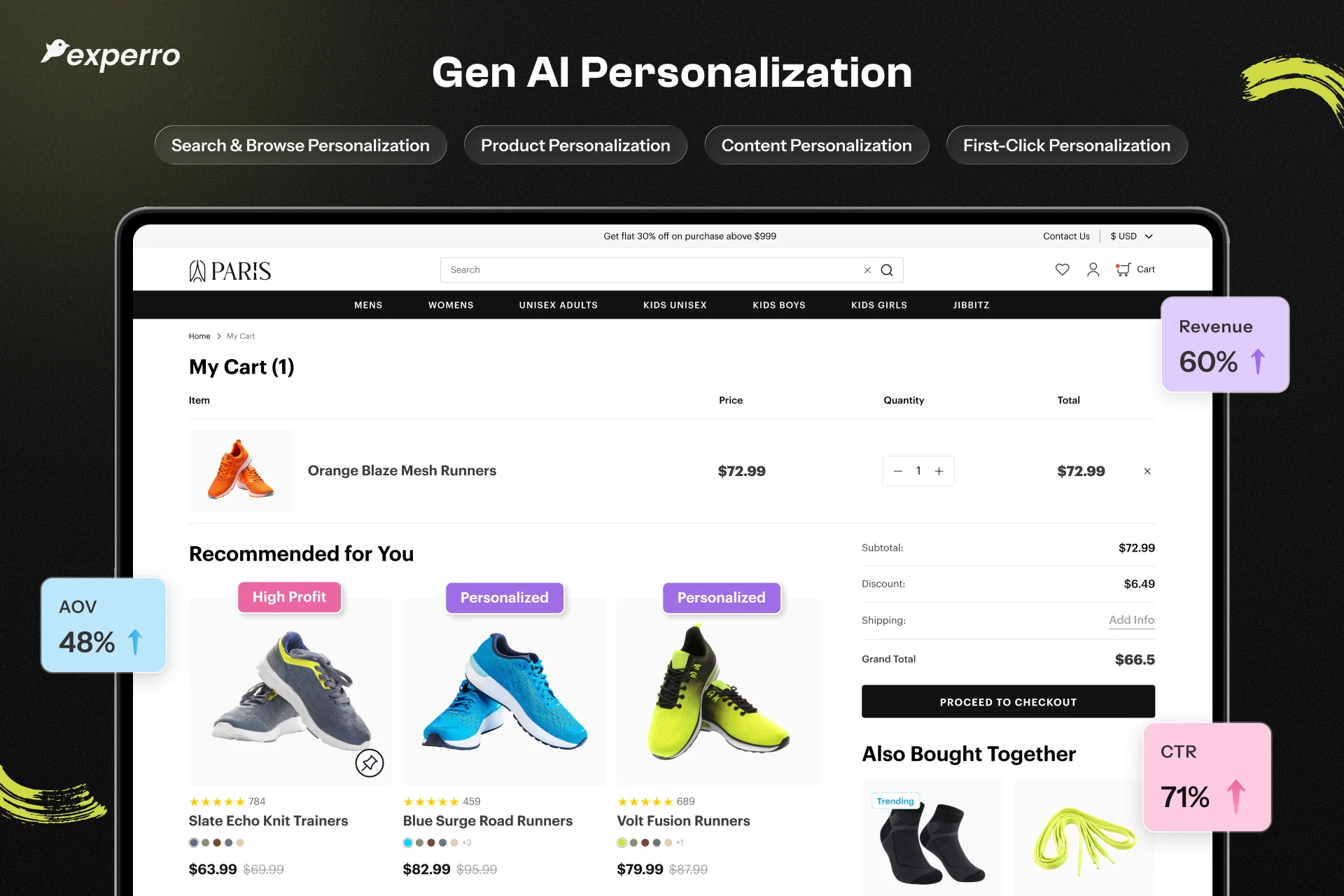
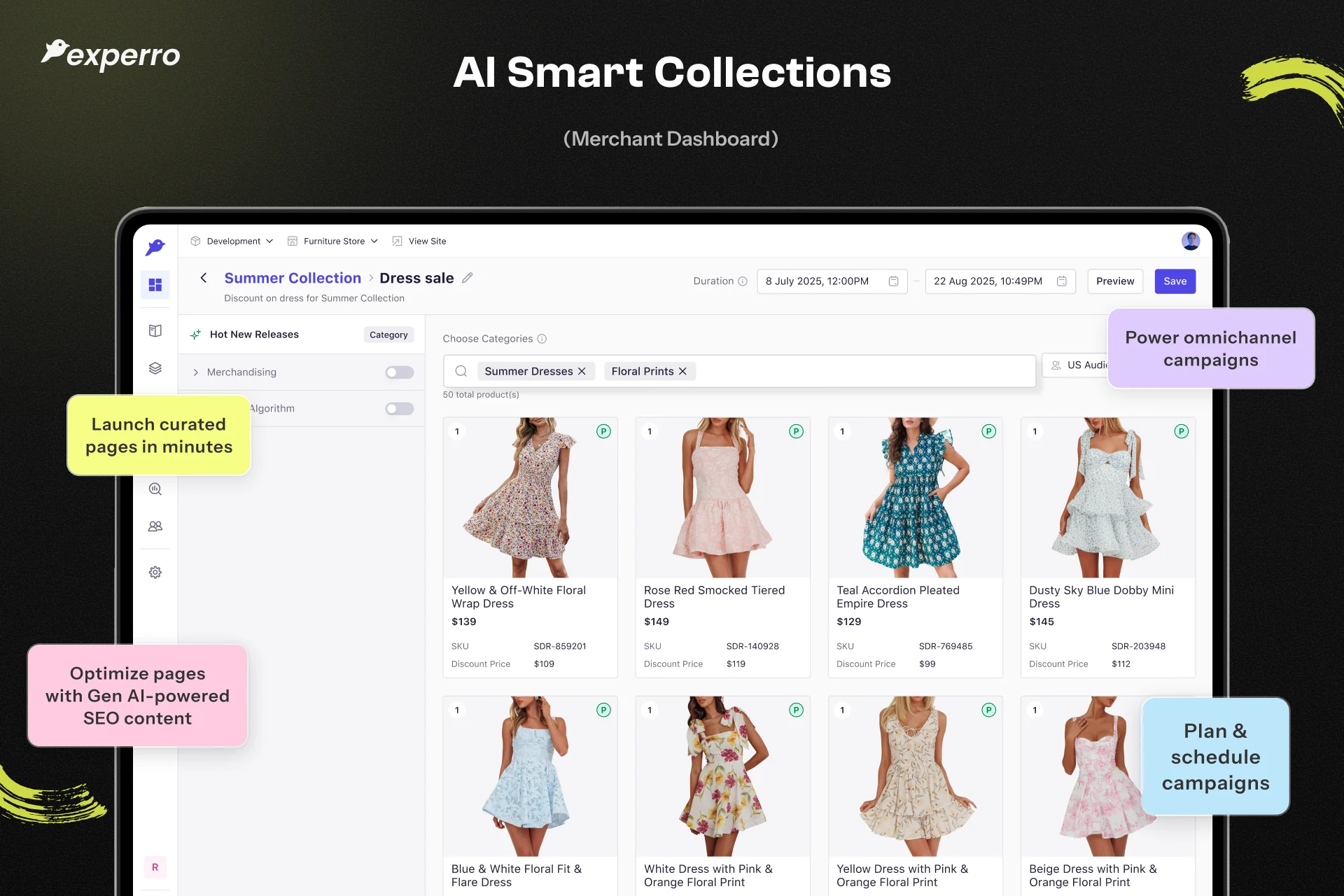
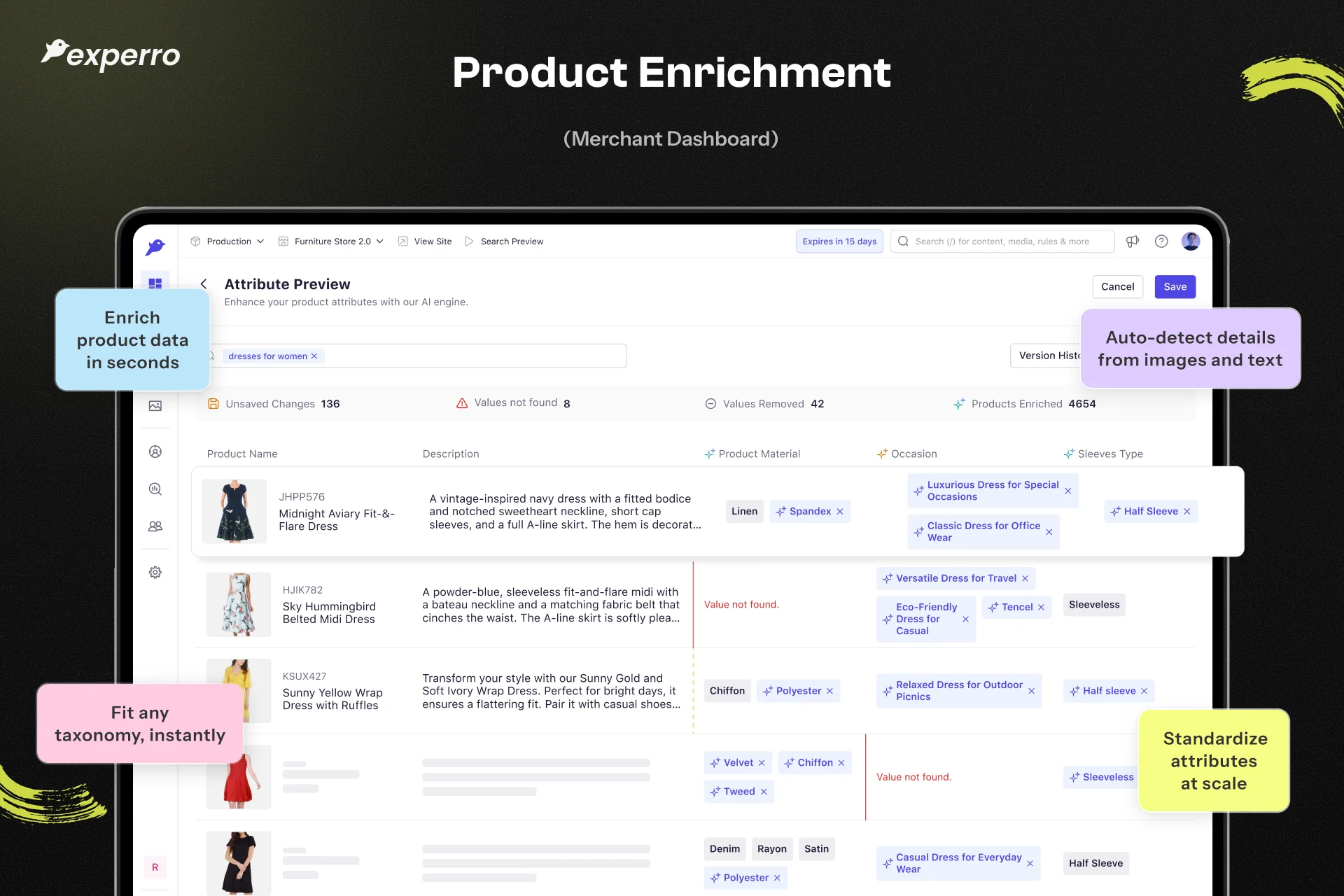
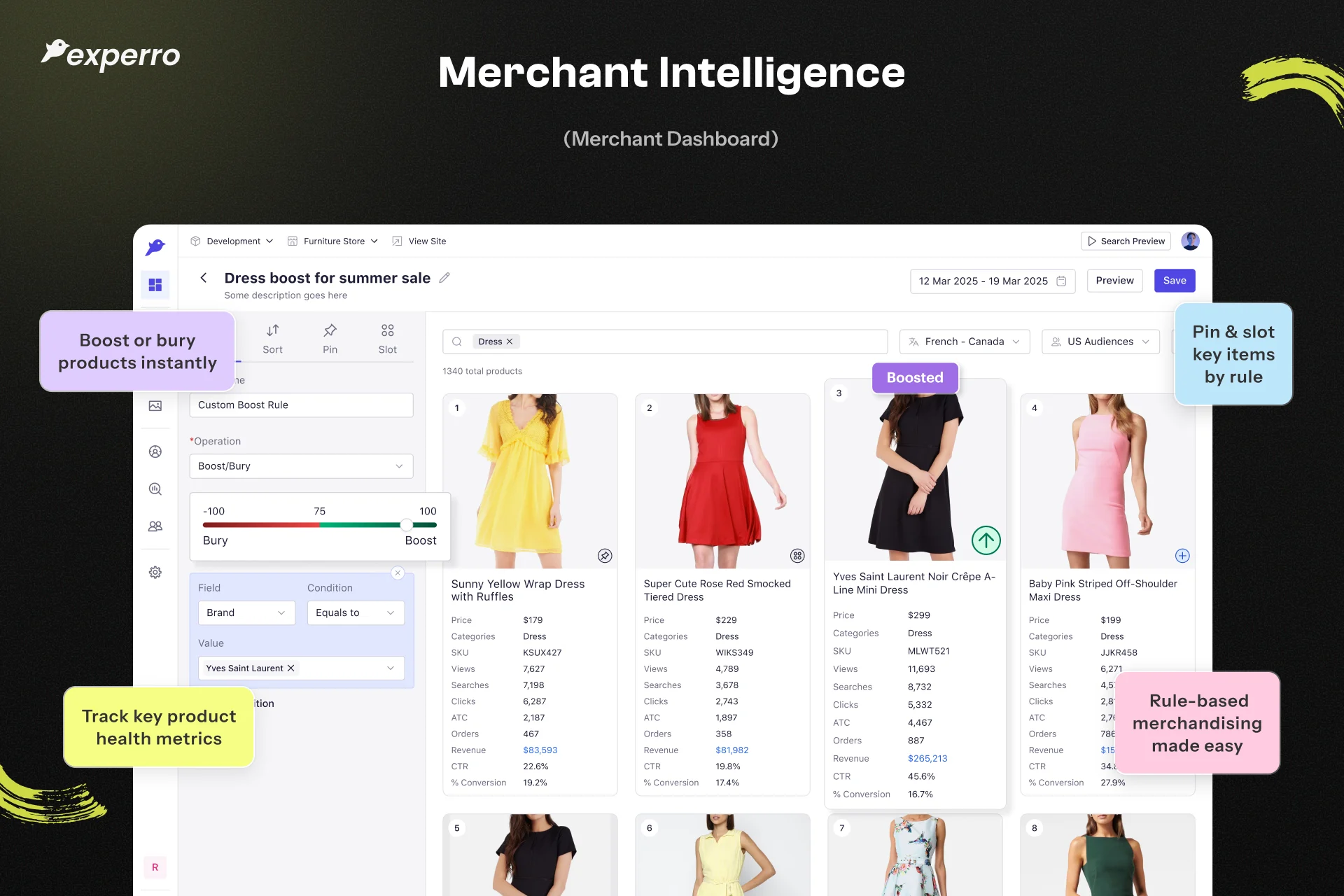
Experro is an agentic product discovery and personalization platform built to optimize eCommerce experiences, used by brands to deliver search, discovery, and content that is hyper-personalized for every shopper and automatically optimized to drive key business KPIs. Available for B2C, B2B, and DTC brands, Experro creates intelligent, intent-driven journeys by analyzing real-time shopper behavior and surfacing high-performing products through advanced text and image…
N/A
MongoDB
Score8.8 out of 10
N/A
MongoDB is an open source document-oriented database system. It is part of the NoSQL family of database systems. Instead of storing data in tables as is done in a "classical" relational database, MongoDB stores structured data as JSON-like documents with dynamic schemas (MongoDB calls the format BSON), making the integration of data in certain types of applications easier and faster.
$0.10
million reads
Pricing
Experro
MongoDB
Editions & Modules
No answers on this topic
Shared
$0
per month
Serverless
$0.10million reads
million reads
Dedicated
$57
per month
Offerings
Pricing Offerings
Experro
MongoDB
Free Trial
No
Yes
Free/Freemium Version
No
Yes
Premium Consulting/Integration Services
No
No
Entry-level Setup Fee
No setup fee
No setup fee
Additional Details
—
Fully managed, global cloud database on AWS, Azure, and GCP
Here's why I wholeheartedly recommend Experro to any Ecommerce/Retail business AI- Powered Search: Experro takes the guesswork out of online shopping. It corrects typos and suggests the most common and popular search words for my customers type. This ensured that my customer found what they want faster, eliminating frustration and streamlining the shopping journey. Continuous Learning for Unmatched Personalization: Experro is not static; it's constantly learning from customers' interactions. With each search, click, and purchase, Experro fine-tuned its recommendations to match my customers' preferences and intent. My shoppers now feel like I have tailored the entire shopping experience just for them. Segment-Based Results: Not all customers are the same, and Experro understands this. It can re-rank products or provide entirely different search results for the same query based on customer segments like geography or demographics. This means results are more personalized and optimized for higher conversions. In conclusion, Experro is a game-changer in the world of Ecommerce. It doesn't just provide a platform for shoppers; it provides an experience. With its real-time learning, segment-based results, and actionable insights, Experro helped me to stand out in the competitive online marketplace. If you want to offer your customers a shopping experience like no other, I strongly recommend giving Experro a try.
If asked by a colleague I would highly recommend MongoDB. MongoDB provides incredible flexibility and is quick and easy to set up. It also provides extensive documentation which is very useful for someone new to the tool. Though I've used it for years and still referenced the docs often. From my experience and the use cases I've worked on, I'd suggest using it anywhere that needs a fast, efficient storage space for non-relational data. If a relational database is needed then another tool would be more apt.
A de minimis incentive was given to thank the reviewer for their time. The incentive was not used to bias or drive a particular response, nor was the incentive contingent on a positive endorsement. More Info
The ability of Experro CMS to update content quickly and independently is a significant advantage. Whether it's a feature launch or new promotional content, we’re ready to go live in no time!
The platform offers an intuitive and user-friendly editing experience, making it accessible to individuals of all skill levels.
Being a JSON language optimizes the response time of a query, you can directly build a query logic from the same service
You can install a local, database-based environment rather than the non-relational real-time bases such a firebase does not allow, the local environment is paramount since you can work without relying on the internet.
Forming collections in Mango is relatively simple, you do not need to know of query to work with it, since it has a simple graphic environment that allows you to manage databases for those who are not experts in console management.
A de minimis incentive was given to thank the reviewer for their time. The incentive was not used to bias or drive a particular response, nor was the incentive contingent on a positive endorsement. More Info
An aggregate pipeline can be a bit overwhelming as a newcomer.
There's still no real concept of joins with references/foreign keys, although the aggregate framework has a feature that is close.
Database management/dev ops can still be time-consuming if rolling your own deployments. (Thankfully there are plenty of providers like Compose or even MongoDB's own Atlas that helps take care of the nitty-gritty.
A de minimis incentive was given to thank the reviewer for their time. The incentive was not used to bias or drive a particular response, nor was the incentive contingent on a positive endorsement. More Info
I am looking forward to increasing our SaaS subscriptions such that I get to experience global replica sets, working in reads from secondaries, and what not. Can't wait to be able to exploit some of the power that the "Big Boys" use MongoDB for.
A de minimis incentive was given to thank the reviewer for their time. The incentive was not used to bias or drive a particular response, nor was the incentive contingent on a positive endorsement. More Info
The ease of use is top-notch! Honestly, the platform is intuitive. Whether it i uploading new content or managing the digital assets of a landing page - we got the hang of it pretty quickly.
NoSQL database systems such as MongoDB lack graphical interfaces by default and therefore to improve usability it is necessary to install third-party applications to see more visually the schemas and stored documents. In addition, these tools also allow us to visualize the commands to be executed for each operation.
A de minimis incentive was given to thank the reviewer for their time. The incentive was not used to bias or drive a particular response, nor was the incentive contingent on a positive endorsement. More Info
We had contacted the support team to solve our doubts about the theme integration. The team was quick. Apparently they are available 24x5, it is pretty much enough to cover all our needs in the real-time.
Finding support from local companies can be difficult. There were times when the local company could not find a solution and we reached a solution by getting support globally. If a good local company is found, it will overcome all your problems with its global support.
A de minimis incentive was given to thank the reviewer for their time. The incentive was not used to bias or drive a particular response, nor was the incentive contingent on a positive endorsement. More Info
While the setup and configuration of MongoDB is pretty straight forward, having a vendor that performs automatic backups and scales the cluster automatically is very convenient. If you do not have a system administrator or DBA familiar with MongoDB on hand, it's a very good idea to use a 3rd party vendor that specializes in MongoDB hosting. The value is very well worth it over hosting it yourself since the cost is often reasonable among providers.
A de minimis incentive was given to thank the reviewer for their time. The incentive was not used to bias or drive a particular response, nor was the incentive contingent on a positive endorsement. More Info
In my opinion, setting up Experro is much easier compare to Bloomreach and we also didn't have to integrate with whole lot of tools to get the end results. Also, Experro is DXP with a combination of multiple tools like Headless CMS, Search, Merchandising, etc. giving us all the tools at a single place to play around without spending on integrations.
We have [measured] the speed in reading/write operations in high load and finally select the winner = MongoDBWe have [not] too much data but in case there will be 10 [times] more we need Cassandra. Cassandra's storage engine provides constant-time writes no matter how big your data set grows. For analytics, MongoDB provides a custom map/reduce implementation; Cassandra provides native Hadoop support.
Open Source w/ reasonable support costs have a direct, positive impact on the ROI (we moved away from large, monolithic, locked in licensing models)
You do have to balance the necessary level of HA & DR with the number of servers required to scale up and scale out. Servers cost money - so DR & HR doesn't come for free (even though it's built into the architecture of MongoDB