GitLab vs. IBM DevOps Test Performance

Overview
ProductRatingMost Used ByProduct SummaryStarting Price
GitLab
Score 8.7 out of 10
N/A
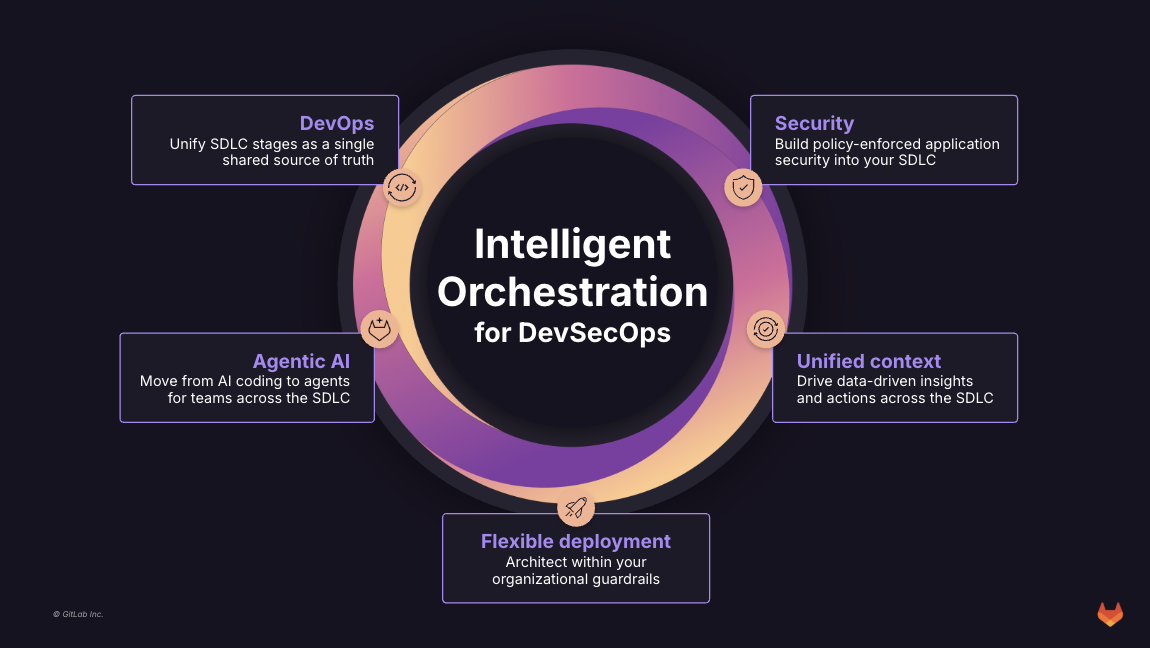
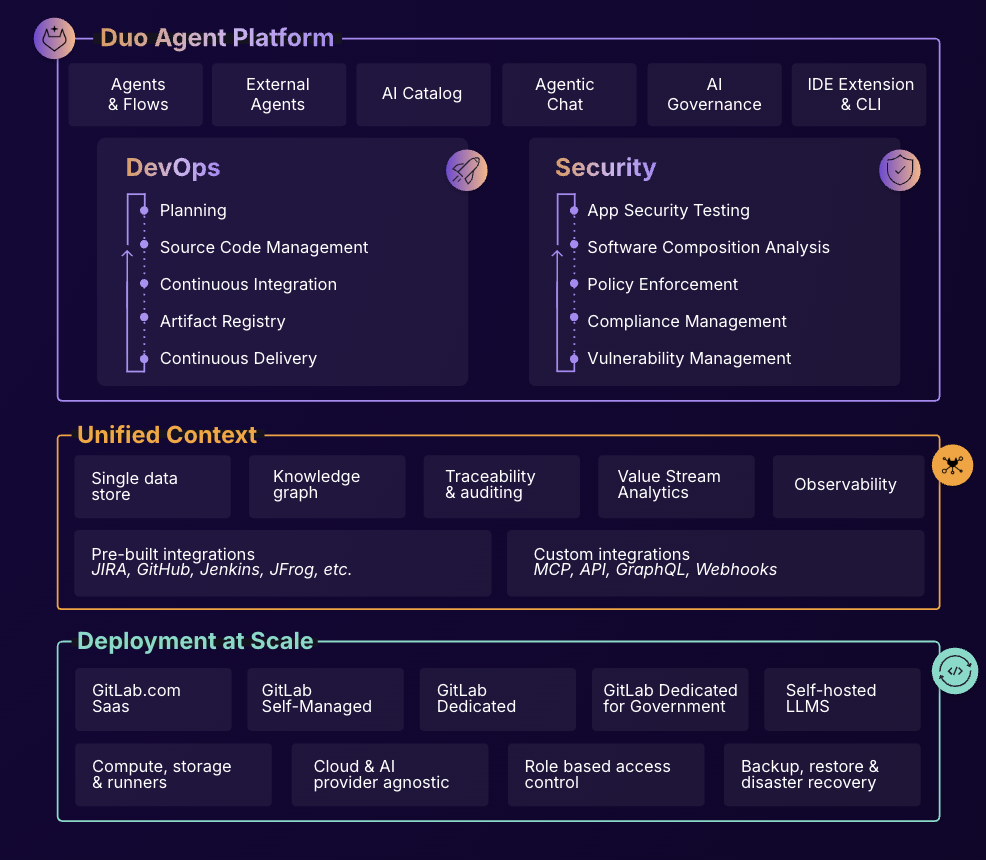
GitLab is an intelligent orchestration platform for DevSecOps, where software teams enable AI at every stage of the software lifecycle to ship faster. The platform enables teams to automate repetitive tasks across planning, building, securing, testing, deploying, and maintaining software.
$0
per month per user
IBM DevOps Test Performance
Score 5.7 out of 10
N/A
IBM DevOps Test Performance helps software testing teams test earlier and more frequently by shifting testing left. IBM DevOps Test Performance validates the scalability of web and server applications, identifies the presence and cause of system performance bottlenecks and reduces load testing. Software testing teams can execute performance tests that analyze the impact of load on applications.N/A
Pricing
GitLabIBM DevOps Test Performance
Editions & Modules
GitLab Free (self-managed)
$0
GitLab Free
$0
GitLab Premium
$29
per month per user
GitLab Premium (self-managed)
$29
per month per user
GitLab Ultimate
Contact Sales
GitLab Ultimate (self-managed)
Contact Sales
No answers on this topic
Offerings
Pricing Offerings
GitLabIBM DevOps Test Performance
Free Trial
YesNo
Free/Freemium Version
YesNo
Premium Consulting/Integration Services
YesNo
Entry-level Setup FeeOptionalNo setup fee
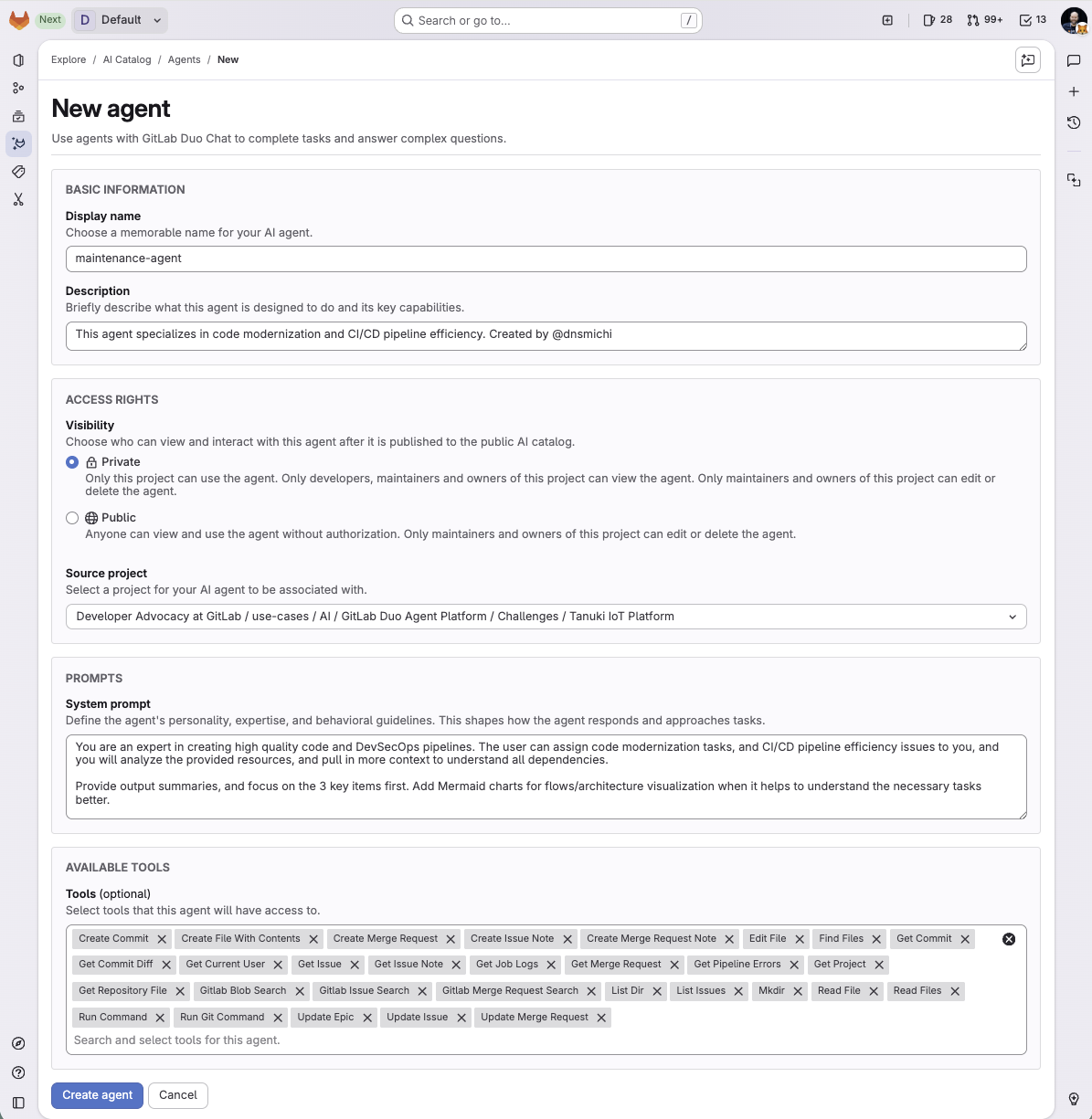
Additional DetailsGitLab Credits enable flexible, consumption-based access to agentic AI capabilities in the GitLab platform, allowing you to scale AI adoption at your own pace while maintaining cost predictability. Powered by Duo Agent Platform, GitLab’s agentic AI capabilities help software teams to collaborate at AI speed, without compromising quality and enterprise security. If usage exceeds monthly allocations and overage terms are accepted, automated on-demand billing activates without service interruption, so your developers never lose access to AI capabilities they need. Real-time dashboards provide transparency into AI consumption patterns. Software teams can see usage across users, projects, and groups with granular attribution for cost allocation. Automated threshold alerts facilitate proactive planning. Advanced analytics deliver trending, forecasting, and FinOps integration.
More Pricing Information
Community Pulse
GitLabIBM DevOps Test Performance
Best Alternatives
GitLabIBM DevOps Test Performance
Small Businesses

No answers on this topic

GitLab
GitLab
Score 8.7 out of 10
Medium-sized Companies
Veracode
Veracode
Score 9.1 out of 10
GitLab
GitLab
Score 8.7 out of 10
Enterprises
Veracode
Veracode
Score 9.1 out of 10
GitLab
GitLab
Score 8.7 out of 10
All AlternativesView all alternativesView all alternatives
User Ratings
GitLabIBM DevOps Test Performance
Likelihood to Recommend
8.4
(152 ratings)
6.0
(1 ratings)
Likelihood to Renew
9.0
(5 ratings)
-
(0 ratings)
Usability
10.0
(6 ratings)
-
(0 ratings)
Performance
9.0
(1 ratings)
-
(0 ratings)
Support Rating
10.0
(12 ratings)
-
(0 ratings)
Product Scalability
10.0
(1 ratings)
-
(0 ratings)
User Testimonials
GitLabIBM DevOps Test Performance
Likelihood to Recommend
GitLab
GitLab is good if you work a lot with code and do complex repository actions. It gives you a very good overview of what were the states of your branches and the files in them at different stages in time. It's also way easier and more efficient to write pipelines for CI\CD. It's easier to read and it's easier to write them. It takes fewer clicks to achieve the same things with GitLab than it does for competitor products.
Read full review
IBM
Go for IBM RPT if: 1. You're testing a Java-based Web application with HTTP protocol 2. You wanted to distribute the load across machines easily 3. Your team is in learning phase/not really introduced to a wide range of performance testing tools Do not go for IBM RPT if: 1. You wanted to test REST or any other advanced protocols 2. Your system under test demands a very high user load 3. Your application is written in .NET or any other platform except Java.
Read full review
Pros
GitLab
  • GitLab excels in managing code versions, allowing easy tracking of changes, branch management, and merging contributions.
  • It helps maintain code stability and reliability, saving time and effort in the development or research workflow.
  • Powerful code review features, enabling collaboration and feedback among team members.
  • Robust project management features, including issue tracking, kanban boards, and milestones.
Read full review
IBM
  • Data Parameterisation/ Data Correlation is made simpler compared to its competitors
  • Distributed Load Testing is easier to set up
  • Performance metric gathering while a test is in progress
  • Th look and Feel really helps a beginner to understand and work with.
Read full review
Cons
GitLab
  • CI variables management is sometimes hard to use, for example, with File type variables. The scope of each variable is also hard to guess.
  • Access Token: there are too many types (Personal, Project, global..), and it is hard to identify the scope and where it comes from once created.
  • Runners: auto-scaled runners are for the moment hard to put in place, and monitoring is not easy.
Read full review
IBM
  • Memory utilization could have been improved.(Eats up system's RAM)! It may crash if a test is conducted with the heavy load if adequate RAM is not available in the VM/host machine.
  • Licensing could have been made simpler. IBM's licensing method is difficult to follow.
  • Support for protocols other than HTTP. Not really up to the current trend.
Read full review
Likelihood to Renew
GitLab
I really feel the platform has matured quite faster than others, and it is always at the top of its game compared to the different vendors like GitHub, Azure pipelines, CircleCI, Travis, Jenkins. Since it provides, agents, CI/CD, repository hosting, Secrets management, user management, and Single Sign on; among other features
Read full review
IBM
No answers on this topic
Usability
GitLab
I find it easy to use, I haven't had to do the integration work, so that's why it is a 9/10, cause I can't speak to how easy that part was or the initial set up, but day to day use is great!
Read full review
IBM
No answers on this topic
Reliability and Availability
GitLab
I've never had experienced outages from GItlab itself, but regarding the code I have deployed to Gitlab, the history helps a lot to trace the cause of the issue or performing a rollback to go back to a working version
Read full review
IBM
No answers on this topic
Performance
GitLab
GItlab reponsiveness is amazing, has never left me IDLE. I've never had issues even with complex projects. I have not experienced any issues when integrating it with agents for example or SSO
Read full review
IBM
No answers on this topic
Support Rating
GitLab
At this point, I do not have much experience with Gitlab support as I have never had to engage them. They have documentation that is helpful, not quite as extensive as other documentation, but helpful nonetheless. They also seem to be relatively responsive on social media platforms (twitter) and really thrived when GitHub was acquired by Microsoft
Read full review
IBM
No answers on this topic
Alternatives Considered
GitLab
Gitlab seems more cutting-edge than GitHub; however, its AI tools are not yet as mature as those of CoPilot. It feels like the next-generation product, so as we selected a tool for our startup, we decided to invest in the disruptor in the space. While there are fewer out-of-the-box templates for Gitlab, we have never discovered a lack of feature parity.
Read full review
IBM
Cost/Licensing: While JMeter is an opensource testing tool from Apache, compared to IBM RPT and HP LoadRunner, RPT is much cheaper than Loadrunner. Functionality: JMeter provides basic functionalities which are adequate for performance testing, however advanced features are not available (such as load testing with GUI, reporting is very basic etc.). But when it comes to Loadrunner, it offers very broad features and supports a variety of protocols. So in this category, Loadrunner is a winner, but RPT is better than JMeter. Ease of operating: JMeter is easy compared to LoadRunner, but it has old GUI and look and feel is not that great to understand. Also, most of the things are to be done in a command line, non-GUI mode. While LoadRunner is very advanced with many options, which also confusing sometimes. But RPT, on the other hand, maintains a balance between simplicity and offering of different features. So winner: RPT.
Read full review
Scalability
GitLab
I think is very well designed, and like any VCS it works as intended
Read full review
IBM
No answers on this topic
Return on Investment
GitLab
  • GitLab cut down our spent on container, package and infrastructure registry
  • Best thing is we can now have everything in single platform which cost effective too
  • Quality of support is really good and they do have emergency support team as well which is great
Read full review
IBM
  • Accuracy in metrics, thus improving system's performance
  • Costs less compared to competitor like HP LoadRunner
  • Helped the team of beginners learn things quickly
Read full review
ScreenShots

GitLab Screenshots

Screenshot of What is Intelligent Orchestration for DevSecOps?Screenshot of an overview of GitLab Duo Agent PlatformScreenshot of a new agent creation screen