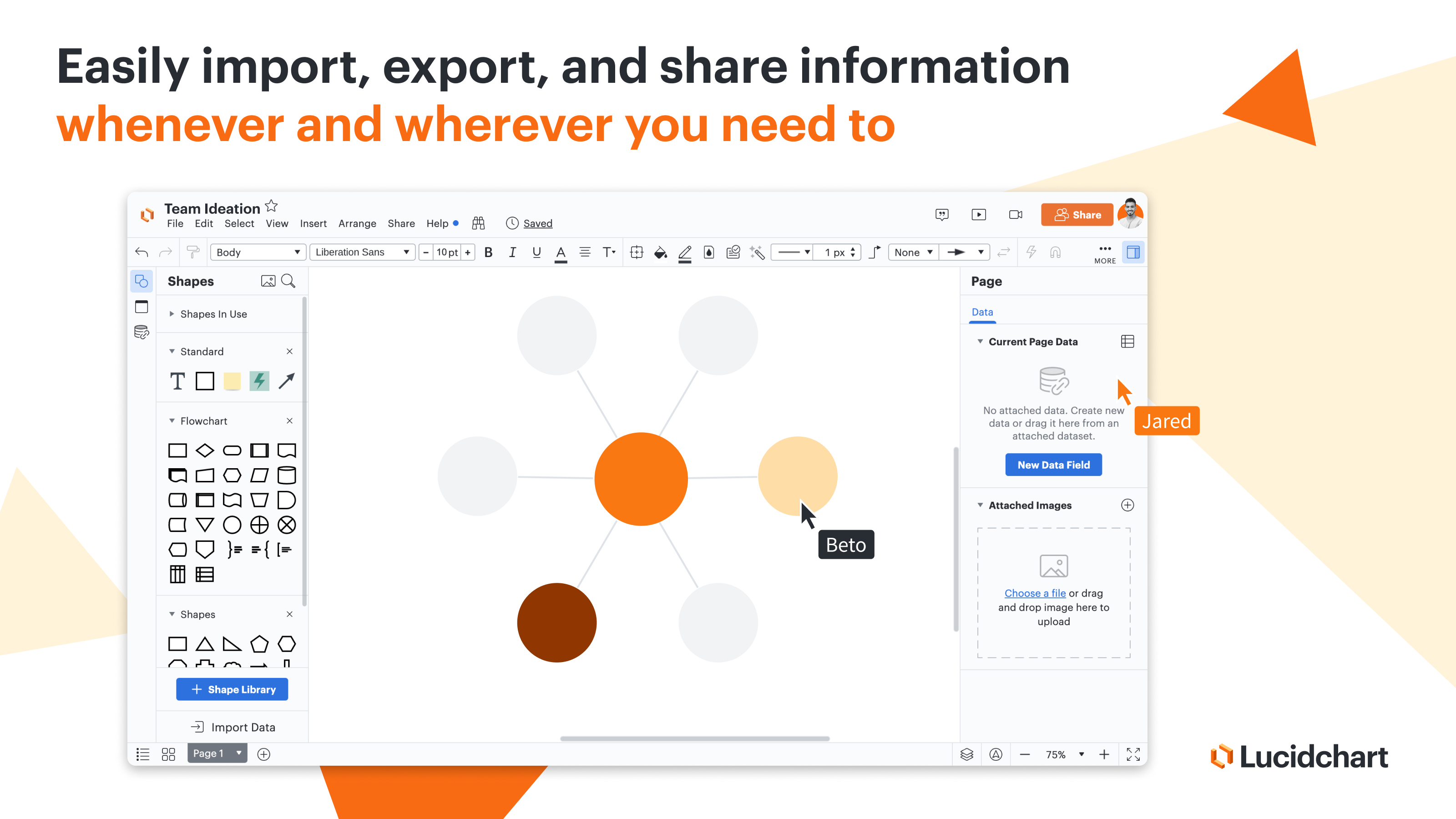
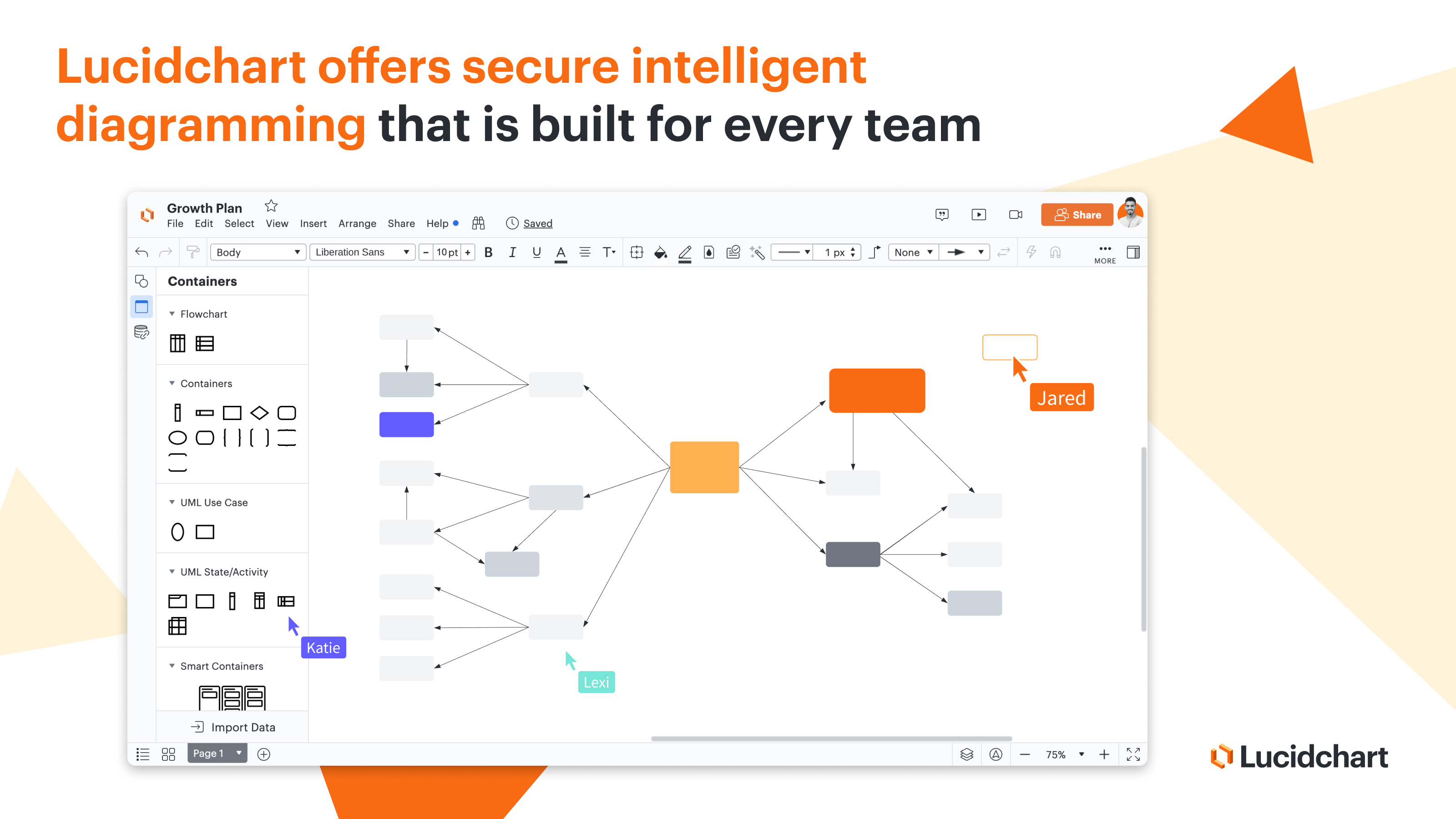
Lucid allows for seamless application of theme and design that other platforms struggle with. The number of shapes and design flows is endless with Lucid. I have found that I prefer to use Lucid over a Google Sheet because of the different ways I can present the same information.
We used the free draw.io version. It mostly focuses on cloud architecture diagraming, but it did not meet our needs. In comparison, Lucid is a way more complete solution that can be used across many teams and use cases.
Lucid works best for us because the kind of brings everything together in one place. compared to tools like miro or Microsoft Visio, we don't have to switch between apps for brainstorming and diagramming. its easy to use, collaborative, and fits nicely with the tools we already …
It is not a direct comparison, but both are different uses and specializations. A particular regard for visuals, select Lucid visual due to its competitive, easy-to-use. Examples like process P&ID, Simple process flow diagram, etc.
They're very similar platforms, with only minor differences between them. We consolidated platforms in the organization because we were using both Miro and Lucid, and we picked the one that the other teams used more.
It does what i need it to do. I don't need functions I'm not going to use. I also can't afford to spend a lot (especially when it's not what I want anyway). Lucid Visual Collaboration Suite was the way to go and well worth the money. I never give out 10 out of 10 reviews.
In my opinion, Smartsheet doesn't have nearly the same great tools to diagramming and project management. Pricewise they were comparable so picking Lucid Visual Collaboration Suite was the easiest pick.
I think that many of these tools are great, I use Lucidchart because that's what our company uses. I think Lucidchart is better than draw.io. Canva and Figma are different use cases (for me) than Lucid Visual Collab. Figma I would go to for UI design, while Canva for me is …
Draw.io is probably the closest but not as slick an experience and less collaborative tools (as of when I last used them).
Miro/Canva/Figma/Powerpoint can all mimic the functionality but are not explicitly designed for flow charting so you're fighting the UI as they want to do …
While all of the other platforms we have evaluated and some we even use, Lucid has it's own unique solution and aesthetic that we find to work well for us for many of our different deliverables. There is no "One-App-Does-All" solution out there, however, when it comes to …
Based on my personal experience, Lucid Visual Collaboration Suite is head and shoulders above any other competitor. Canva is good, but not intuitive at all. Miro is good as well, but not nearly as appealing and still lacks some of the logical functions that LucidSpark has. I’ve …
Lucid Visual Collaboration Suite is the best in class for documenting anything technical. It has all the templates you would need to represent anything from AWS, Microsoft as well as workflows for business processes. Other tools might cover just one of each of these things, but …
I've used Visio for block diagramming before, but using Lucid is like having google suite and microsoft 365 in one. We get to make all of our block diagrams as easily as visio, but we get the collaboration and sharing functionality that comes with google suite. It stacks up …
I usually use excalidraw for more ad hoc realtime visualizations, but I usually use Lucid Visual Collaboration Suite charts when I need to work on a visualization to present in a document / presentation
Lucid Visual Collaboration Suite has a more professional feel, an easier way of organizing and a simpler look. Miro, while very similar, has more aggressive color schemes and a more toy like UI that does not inspire as much confidence in our stakeholders.
I did not select Lucid Visual Collaboration Suite. That decision was taken by others in the organization. Given a choice, I am not sure I would have selected Lucid Visual Collaboration Suite. Miro was already established and, with a local client, was a better user experience in …
Lucid Visual Collaboration Suite is effective for process documentation and knowledge sharing across teams. For us, we used it to map out individual roles and specific tasks within each role to create clear and visual workflows that others can follow at any time. A key scenario where it works well in our business for business continuity during absences another colleague can pick up the role by following the process on Lucid Visual Collaboration Suite with minimal disruption. The visual diagrams are easy to understand and a written document.
Serverless. You don't need to install another program to create diagrams, you just open a new tab and there you are, ready to go.
Collaboration. You don't need to update your colleague diagram by creating a new file and creating a new file version, you both are in the same diagram and you and all the team are free to update it at any time, at the same time, you are seeing the same thing. That is really helpful and time-saving.
Shapes. It has any shape that you can think of and Lucidchart is always updating them, I can create an Azure solution architecture, an AWS one, an old on-premise solution. Or just put standard shapes to describe a business process. Providing so many specific shapes help the diagram to express specific information, and for specific teams, that's less text and more visual information, you don't need to put a text below a standard database shape (this is an Azure SQL database), you just put the azure shape and done. That....is beautifully helpful.
The usability of Lucid Visual Collaboration Suite is bar none and incomparable to any other tool used in the past. There is such a vast offering that covers all the needs of any user in industries far and wide. It is no doubt that this is a firm recommendation for anyone and everyone to utilize this tool for all their needs.
I would rate the overall support for Lucidchart as a 9. The support provided is generally robust and responsive. Their help center, tutorials, and webinars offer extensive resources for users. The ticket-based support system is effective, providing timely resolutions to most issues. Moreover, they actively gather user feedback, demonstrating a commitment to continuous improvement
Based on my personal experience, Lucid Visual Collaboration Suite is head and shoulders above any other competitor. Canva is good, but not intuitive at all. Miro is good as well, but not nearly as appealing and still lacks some of the logical functions that LucidSpark has. I’ve also used Apple FreeForm quite a bit, which is a free software with Apple. Once again you can accomplish the same things in any of these software, but Lucid Visual Collaboration Suite is so much better to the point that it is 3-4 times faster to use Lucid than Free Form or Canva.
Though I can't necessarily provide hard numbers, I can confidently say that Lucidchart has saved countless hours for myself and my teams as we don't need to try to develop some type of complex diagram using markup or any kind of code.
I have previously been able to build a complete ERD using Lucidchart in a past position, which the company never had before. It ended up being used by countless teams in the company and ultimately in a large-scale data stack migration effort.