HashiCorp Consul is a tool for discovering and configuring services in the IT infrastructure. It provides service discovery, health checking, key/value stores and support for multiple data centers out of the box.
$0
always free
Octopus Deploy
Score8.8 out of 10
Mid-Size Companies (51-1,000 employees)
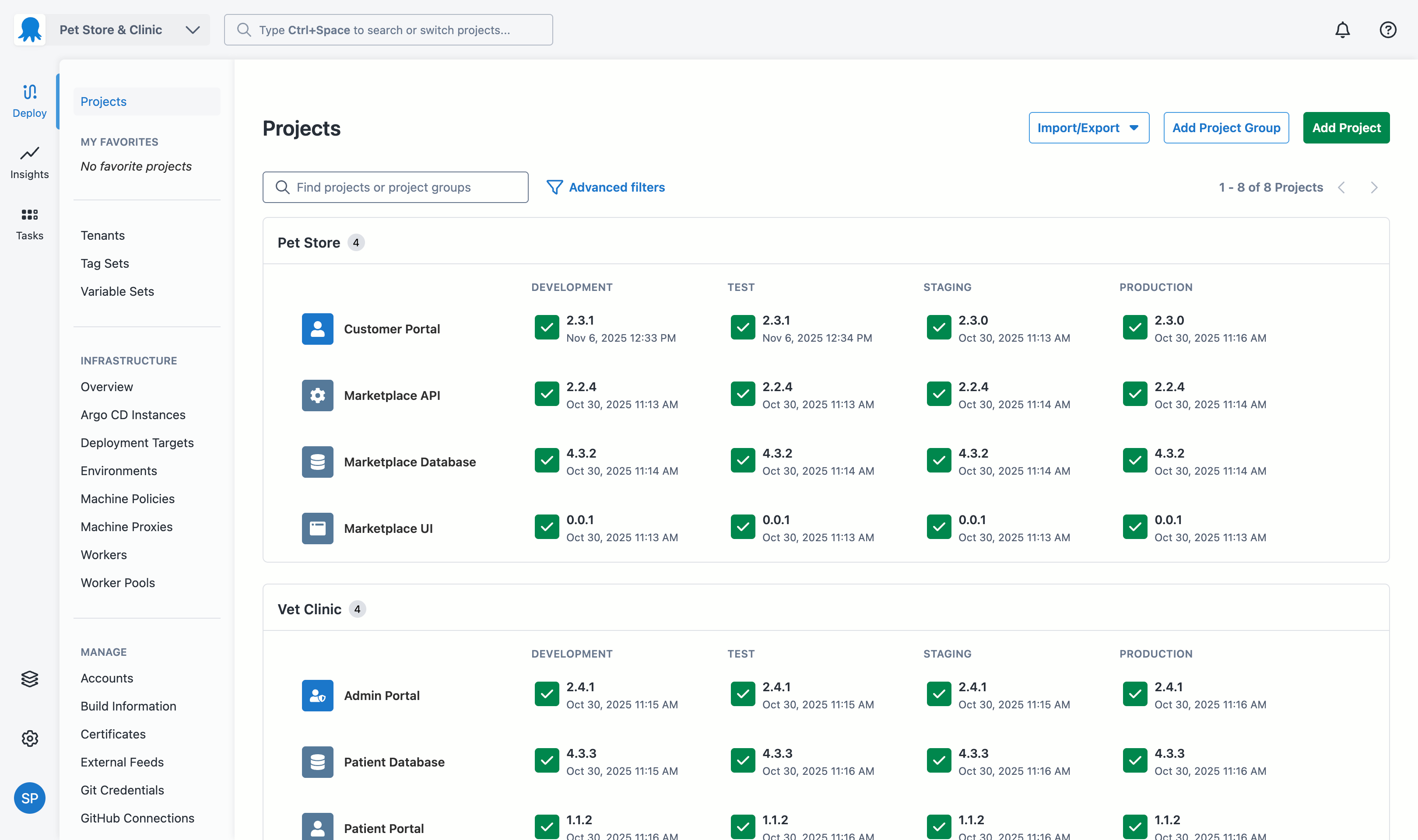
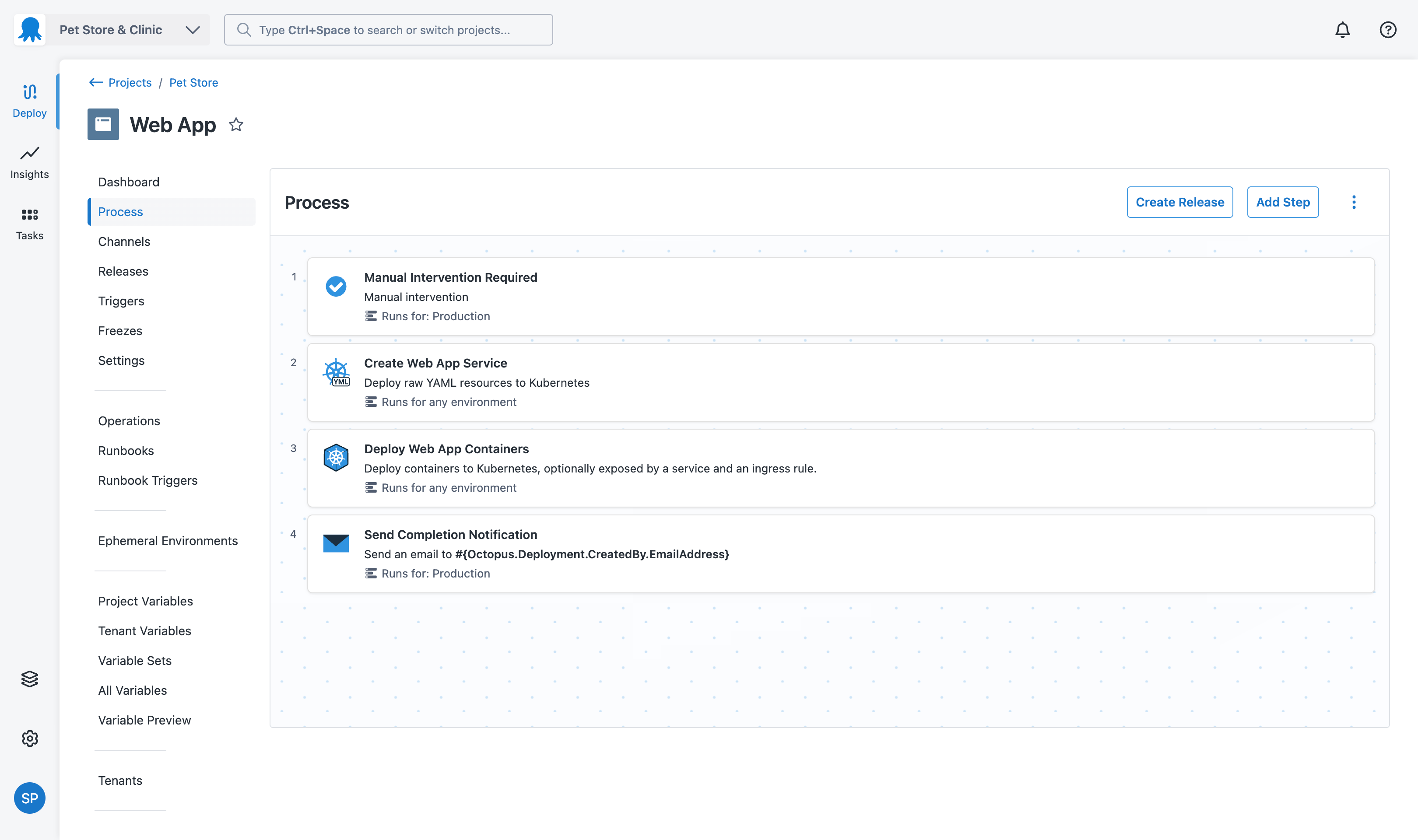
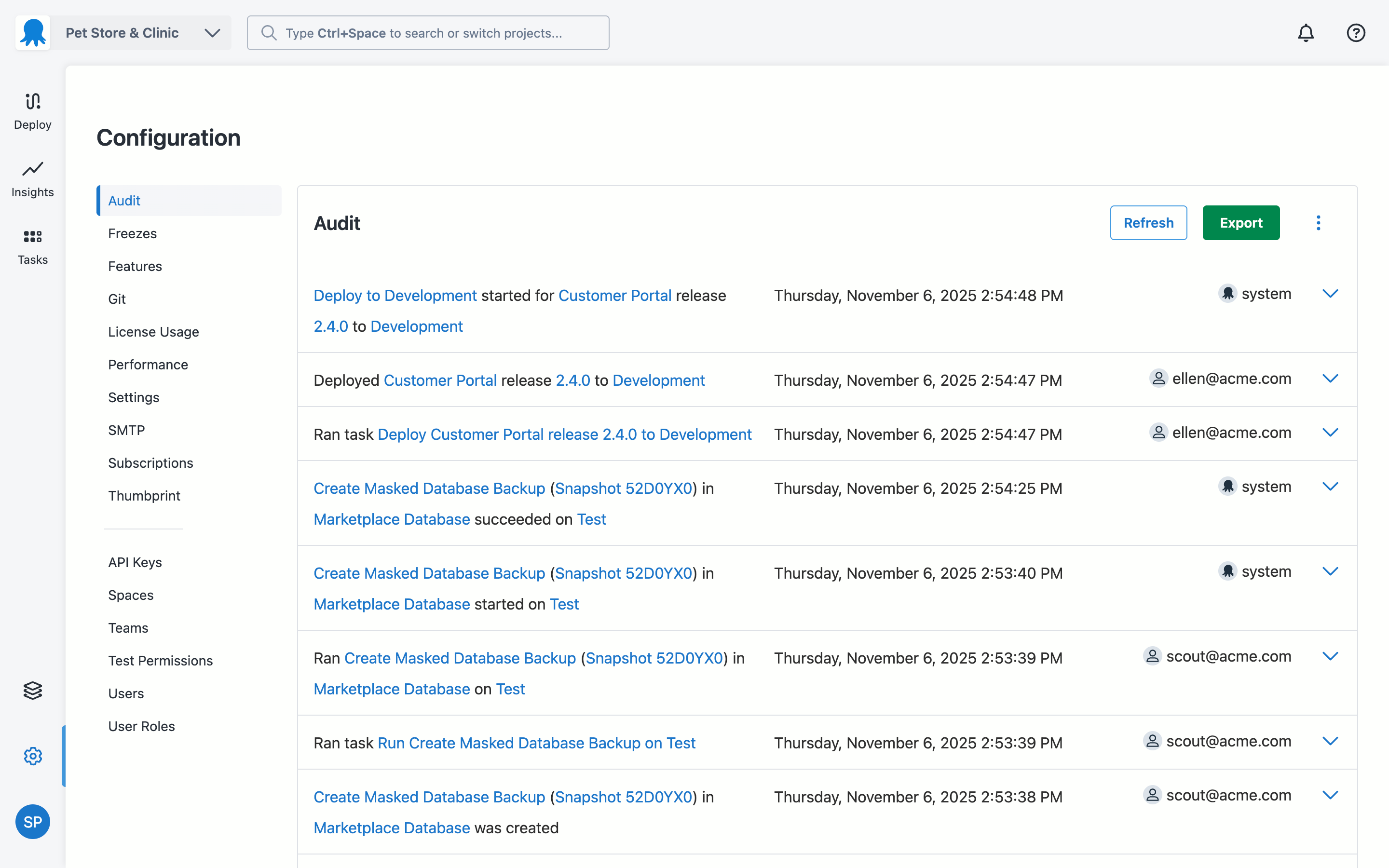
Australian company Octopus Deploy offers their eponymous automated deployment and release management software that integrates with the user's preferred CI server and adds deployment & ops automation capabilities. Octopus Deploy enables developers, release managers, and operations folks to bring all automation into a single place. The vendor states that by reusing configuration variables, environment definition, API keys, connection strings, permissions, service principals, and automation logic,…
$0
per month
Pricing
Consul
Octopus Deploy
Editions & Modules
Open Source (self-managed)
$0
always free
HCP Consul (Cloud)
$0.027/hr
Per Hour
Enterprise
Self-Managed Custom Deployments
Octopus Server - Professional
$1920
per year starting with 20 projects
Octopus Cloud - Professional
$4170
per year starting with 20 projects
Octopus Server - Enterprise
$14400
per year starting with 100 projects
Octopus Cloud - Enterprise
$23400
per year starting with 100 projects
Cloud
Free
10 users/10 projects/10 tenants/10 machines
Server
Free
10 users/10 projects/10 tenants/10 machines
Offerings
Pricing Offerings
Consul
Octopus Deploy
Free Trial
Yes
Yes
Free/Freemium Version
Yes
Yes
Premium Consulting/Integration Services
Yes
Yes
Entry-level Setup Fee
Optional
Optional
Additional Details
—
Octopus Deploy offers a Free tier (Cloud and Server) and a 30-day free trial of the Enterprise tier. No credit card needed.
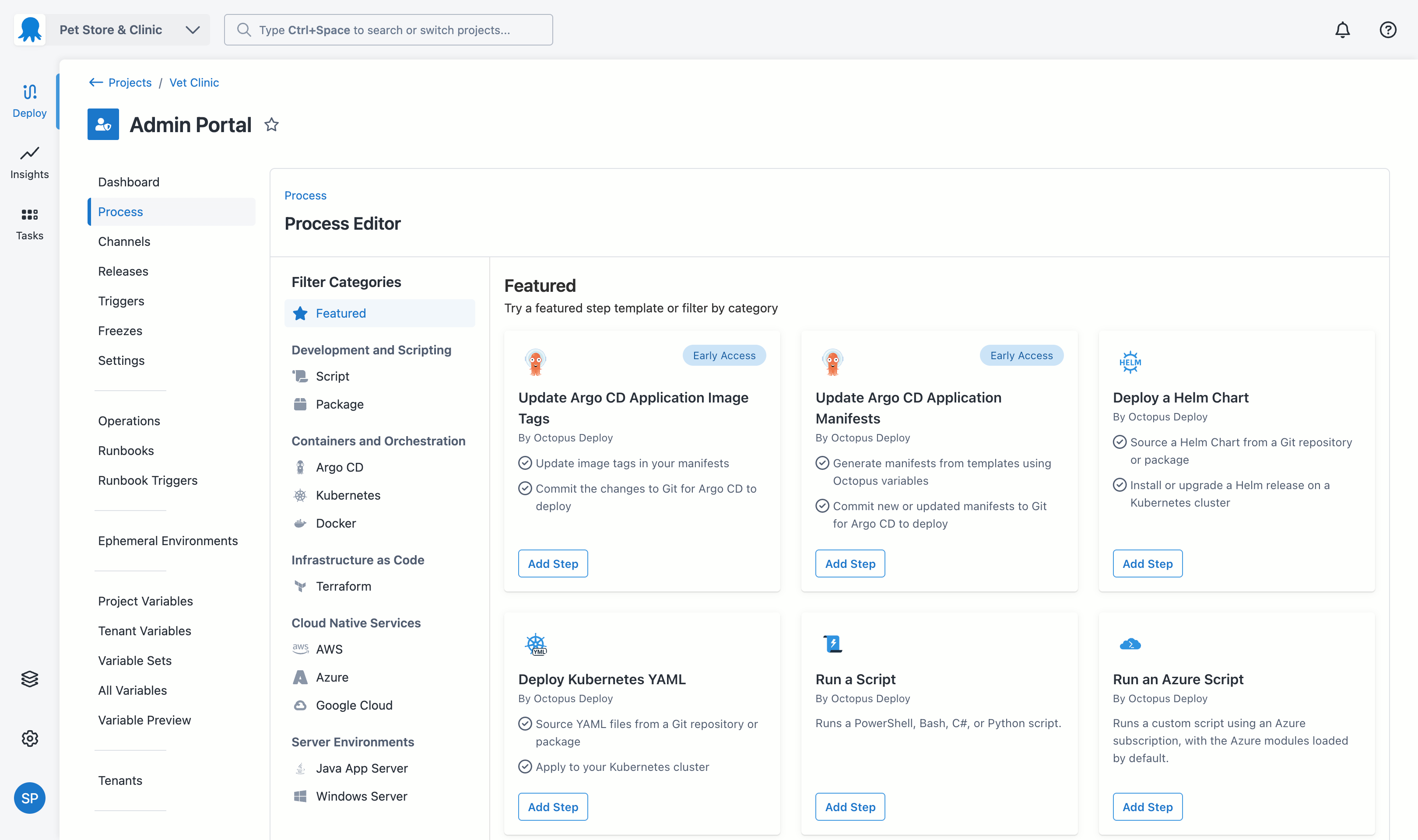
Octopus also offers a Professional tier with 8/5 support (9 am–5 pm on weekdays). The Enterprise tier provides advanced features for teams to scale, including high availability, DevOps Insights, ServiceNow & Jira Service Management integration, unlimited instances, 24/7 support & service credits, and a dedicated Customer Success Manager.
Consul can provide a light-weight, lightning-fast and robust solution for the following:
Network mesh
Service DNS
Global key-value store (values can be complex objects as well)
Utility for blue-green deployments
Service health checking
Consul can be used in any or a combination of these scenarios. Regardless if you are a network administrator or a regular software engineer, Consul can add value to your work.
A de minimis incentive was given to thank the reviewer for their time. The incentive was not used to bias or drive a particular response, nor was the incentive contingent on a positive endorsement. More Info
Octopus Deploy is well suited for our requirements of deploying across multiple environments with one consistent release. We are saving a lot of time by not having to package and move release files around. Our release process is more efficient and consistent with automation. There are some parts that we could probably perform with existing tools such as DevOps and there are one or two features we have to workaround to fit for our setup such as the step templates to install websites. These are minor in our opinion.
A de minimis incentive was given to thank the reviewer for their time. The incentive was not used to bias or drive a particular response, nor was the incentive contingent on a positive endorsement. More Info
A de minimis incentive was given to thank the reviewer for their time. The incentive was not used to bias or drive a particular response, nor was the incentive contingent on a positive endorsement. More Info
A de minimis incentive was given to thank the reviewer for their time. The incentive was not used to bias or drive a particular response, nor was the incentive contingent on a positive endorsement. More Info
The GUI: The GUI interface for Consul has gotten a lot better over the years. Since Consul is so easy to interact with via API, this isn't a showstopper, but for those that are less command line inclined it's always nice to be able to refer them to an easy to use and understand web interface
It's chatty: Consul is extremely chatty. Sometimes it's particularly chatty at 2am with no indication as to why and eats up quite a bit of resources. Just be sure to provision your systems that typically take a heavy load with a little extra for Consul
A de minimis incentive was given to thank the reviewer for their time. The incentive was not used to bias or drive a particular response, nor was the incentive contingent on a positive endorsement. More Info
In the past has been somewhat .net focused but that has been changing in recent times
Would be great if community licenses for NFP organizations were perpetual - but in saying that I appreciate that Octopus does provide my organization with a community [license]. Not all organisations do
A de minimis incentive was given to thank the reviewer for their time. The incentive was not used to bias or drive a particular response, nor was the incentive contingent on a positive endorsement. More Info
A de minimis incentive was given to thank the reviewer for their time. The incentive was not used to bias or drive a particular response, nor was the incentive contingent on a positive endorsement. More Info
Consul's API is extremely user friendly. While their web interface isn't quite as "mature", it's still pretty easily navigated for the average person. Together they make a pretty easy to pick up and use tool.
A de minimis incentive was given to thank the reviewer for their time. The incentive was not used to bias or drive a particular response, nor was the incentive contingent on a positive endorsement. More Info
Octopus Deploy has greatly helped us to improve our reliability and frequency of our deployments and given us the confidence to deploy much more often, with a direct benefit to customers. Cross-platform support and release to Cloud require more focus on the product side.
A de minimis incentive was given to thank the reviewer for their time. The incentive was not used to bias or drive a particular response, nor was the incentive contingent on a positive endorsement. More Info
Octopus Deploy is a software that runs very effectively, is easy to use, does not require such a high learning curve, provides the necessary tools to carry out the functions it offers, making it a very flexible software, it also allows that can be configured according to the needs of the user and provides integrations with other very advantageous tools since they are carried out in a very favorable way.
A de minimis incentive was given to thank the reviewer for their time. The incentive was not used to bias or drive a particular response, nor was the incentive contingent on a positive endorsement. More Info
I've never used paid support from HashiCorp, but I consider its support a good one, since they provide a lot of free resources for the community and there are good user groups supporting you on several sorts of issues. Also, HashiCorp is known as a company with a strong relationship with the community, that is easily noticed by the events HashiCorp promotes over the world.
A de minimis incentive was given to thank the reviewer for their time. The incentive was not used to bias or drive a particular response, nor was the incentive contingent on a positive endorsement. More Info
Octopus Deploy support has always been there for us, even when using the free tier, we get responsive hands-on help. We haven't needed to use that level of support since the documentation is clearly written, and help is readily available within the interface itself. Using Octopus Deploy is a truly joyful experience.
A de minimis incentive was given to thank the reviewer for their time. The incentive was not used to bias or drive a particular response, nor was the incentive contingent on a positive endorsement. More Info
Consul was easier to configure out of the box than Serf and gave us more initial options. Its easy to use tools and support were by far superior to Serf in many ways. Support alone was one of those areas that Serf could take an example from Consul to keep its customers happy.
A de minimis incentive was given to thank the reviewer for their time. The incentive was not used to bias or drive a particular response, nor was the incentive contingent on a positive endorsement. More Info
There aren't really any competitors in the land of ASP.NET. Deployment is too ad-hoc. Other tools exist that have massive downsides, like Web Deploy. Most aren't even supported anymore. You could argue that containers (Docker) are a competitor, but containers cannot be used for everything and solve a somewhat different problem. Octopus Deploy is even able to help with containers. To us, Octopus Deploy was really the only really polished solution.
A de minimis incentive was given to thank the reviewer for their time. The incentive was not used to bias or drive a particular response, nor was the incentive contingent on a positive endorsement. More Info
A de minimis incentive was given to thank the reviewer for their time. The incentive was not used to bias or drive a particular response, nor was the incentive contingent on a positive endorsement. More Info
It contains a native web UI, which in contrast to its counterparts, is handy, very intuitive and - most importantly - very informative. It leaves no room for doubt about your services "forest" health. So, for that purpose, the learning curve was almost down to non-existent. Our team managed to work seamlessly with Consul being our services API
Our management staff had a difficult time understanding what Consul was really all about. For technical staff it is pretty simple to understand the huge value such a tool can pose to our suite of solutions, but once our management staff took the grasp of its valuable handy set of tools, we didn't take long to start using it and keeping track of our Swarm overall health, with was a constant concern for the entire company before.
For load balancing purposes, we were relying pretty much on guesses before we decided to use Consul. One would check a certain node overall health and decide if we would need to spring a new instance at AWS or Digital Ocean.
A de minimis incentive was given to thank the reviewer for their time. The incentive was not used to bias or drive a particular response, nor was the incentive contingent on a positive endorsement. More Info
A de minimis incentive was given to thank the reviewer for their time. The incentive was not used to bias or drive a particular response, nor was the incentive contingent on a positive endorsement. More Info