
HCL Actian Data Platform vs. MongoDB
HCL Actian Data Platform vs. MongoDB
| Product | Rating | Most Used By | Product Summary | Starting Price |
|---|---|---|---|---|
 HCL Actian Data Platform | Mid-Size Companies (51-1,000 employees) | The HCL Actian Data Platform (formerly Actian Avalanche) hybrid cloud data warehouse is a fully managed service that aims to deliver high performance and scale across all dimensions – data volume, concurrent user, and query complexity – at a lower cost than alternative solutions. Avalanche has built-in self-service data integration that can be deployed on-premises as well as on multiple clouds, including AWS, Azure, and Google Cloud, enabling users to migrate or offload applications and data to… | N/A | |
 MongoDB | N/A | MongoDB is an open source document-oriented database system. It is part of the NoSQL family of database systems. Instead of storing data in tables as is done in a "classical" relational database, MongoDB stores structured data as JSON-like documents with dynamic schemas (MongoDB calls the format BSON), making the integration of data in certain types of applications easier and faster. | $0.10 million reads |
| HCL Actian Data Platform | MongoDB | |||||||||||||||
|---|---|---|---|---|---|---|---|---|---|---|---|---|---|---|---|---|
| Editions & Modules | No answers on this topic |
| ||||||||||||||
| Offerings |
| |||||||||||||||
| Entry-level Setup Fee | Optional | No setup fee | ||||||||||||||
| Additional Details | — | Fully managed, global cloud database on AWS, Azure, and GCP | ||||||||||||||
| More Pricing Information | ||||||||||||||||
| HCL Actian Data Platform | MongoDB |
|---|
| HCL Actian Data Platform | MongoDB | ||||||||||||||||||||||||
|---|---|---|---|---|---|---|---|---|---|---|---|---|---|---|---|---|---|---|---|---|---|---|---|---|---|
| NoSQL Databases |
|
| HCL Actian Data Platform | MongoDB | |
|---|---|---|
| Small Businesses |  Google BigQuery Score 8.8 out of 10 |  IBM Cloudant Score 7.4 out of 10 |
| Medium-sized Companies |  Snowflake Score 8.7 out of 10 | IBM Cloudant Score 7.4 out of 10 |
| Enterprises | Snowflake Score 8.7 out of 10 | IBM Cloudant Score 7.4 out of 10 |
| All Alternatives | View all alternatives | View all alternatives |
| HCL Actian Data Platform | MongoDB | |
|---|---|---|
| Likelihood to Recommend | 8.0 (2 ratings) | 10.0 (79 ratings) |
| Likelihood to Renew | - (0 ratings) | 10.0 (67 ratings) |
| Usability | - (0 ratings) | 10.0 (15 ratings) |
| Availability | - (0 ratings) | 9.0 (1 ratings) |
| Support Rating | - (0 ratings) | 9.6 (13 ratings) |
| Implementation Rating | - (0 ratings) | 8.4 (2 ratings) |
| HCL Actian Data Platform | MongoDB | |
|---|---|---|
| Likelihood to Recommend | HCL Technologies
|  MongoDB
 Kendal Droddy Senior System Engineer |
| Pros | HCL Technologies
| MongoDB
 Ronald Melendez Desarrollador de software |
| Cons | HCL Technologies
| MongoDB
 Joshua Weaver Developer |
| Likelihood to Renew | HCL Technologies No answers on this topic | MongoDB
 Jon Kern Manager Strategic Products |
| Usability | HCL Technologies No answers on this topic | MongoDB
 Jose Manuel Ortega Software Engineer && Security researcher |
| Support Rating | HCL Technologies No answers on this topic | MongoDB
 Mehmet Fatih Onal Technical Architect |
| Implementation Rating | HCL Technologies No answers on this topic | MongoDB
 Tom Maiaroto Sr. Platform Developer / UX Designer / Optimization Engineer |
| Alternatives Considered | HCL Technologies
| MongoDB
 Oleg Chumin Java Software Engineer |
| Return on Investment | HCL Technologies
| MongoDB
 Jeff Sherard Senior Leader |
| ScreenShots | MongoDB Screenshots     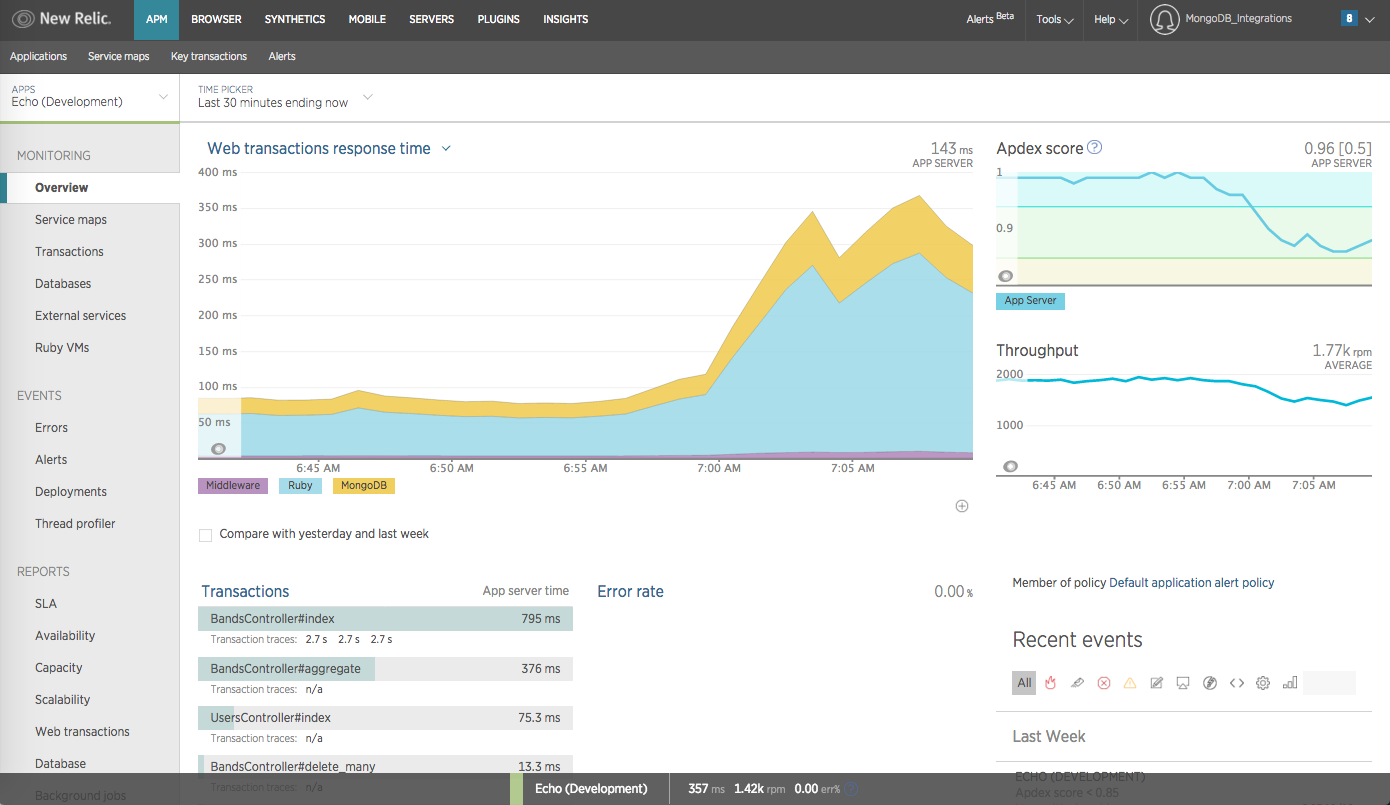 |