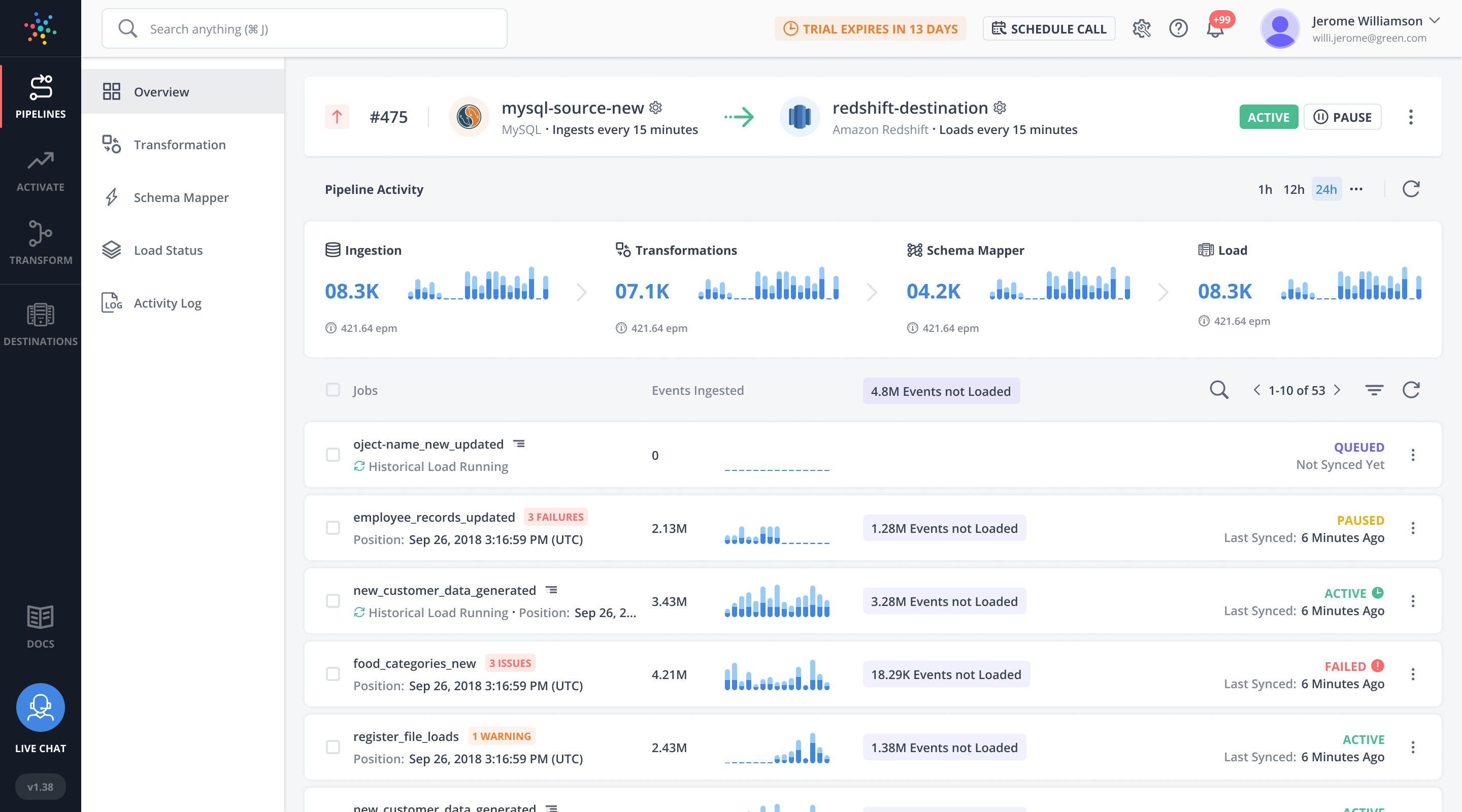
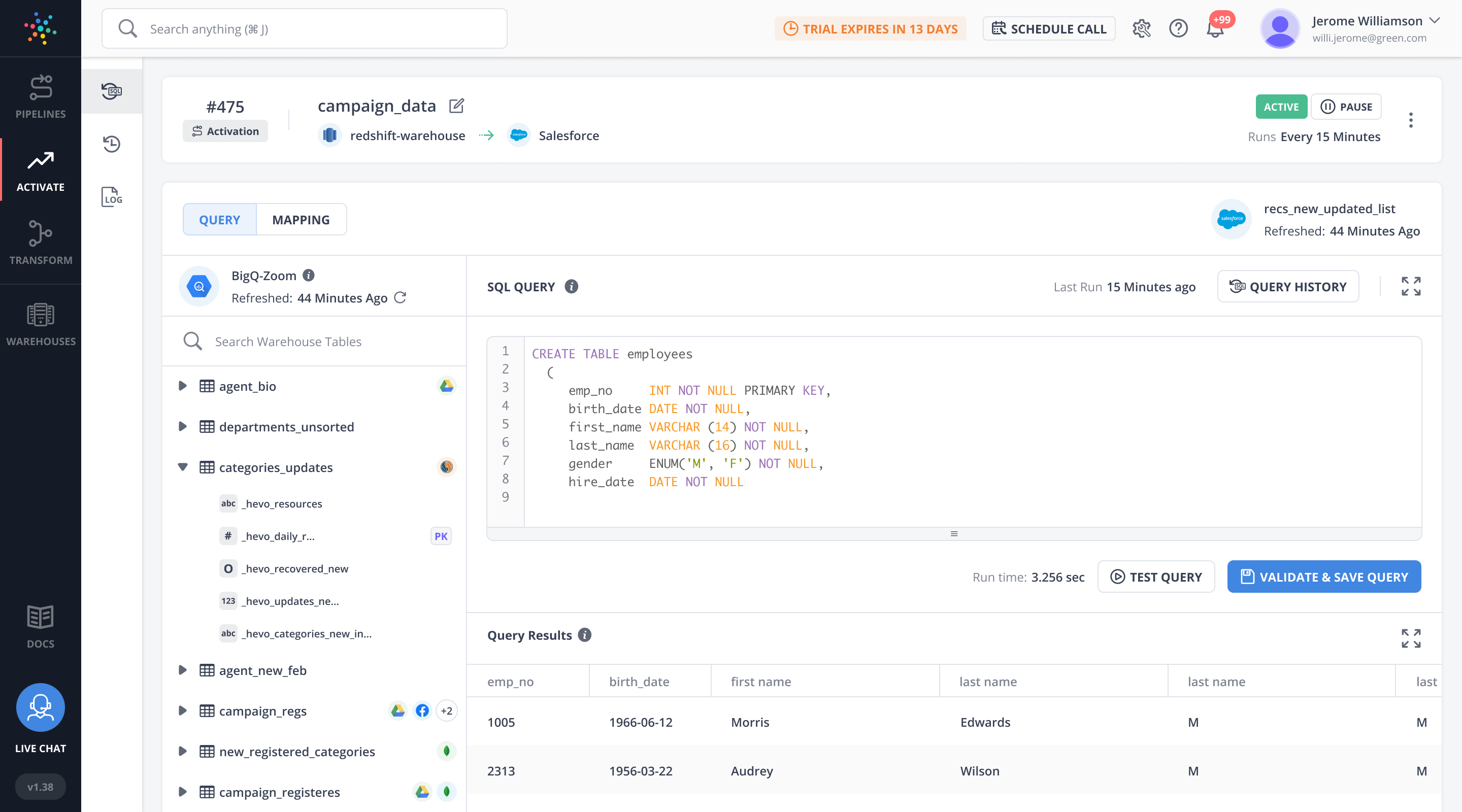
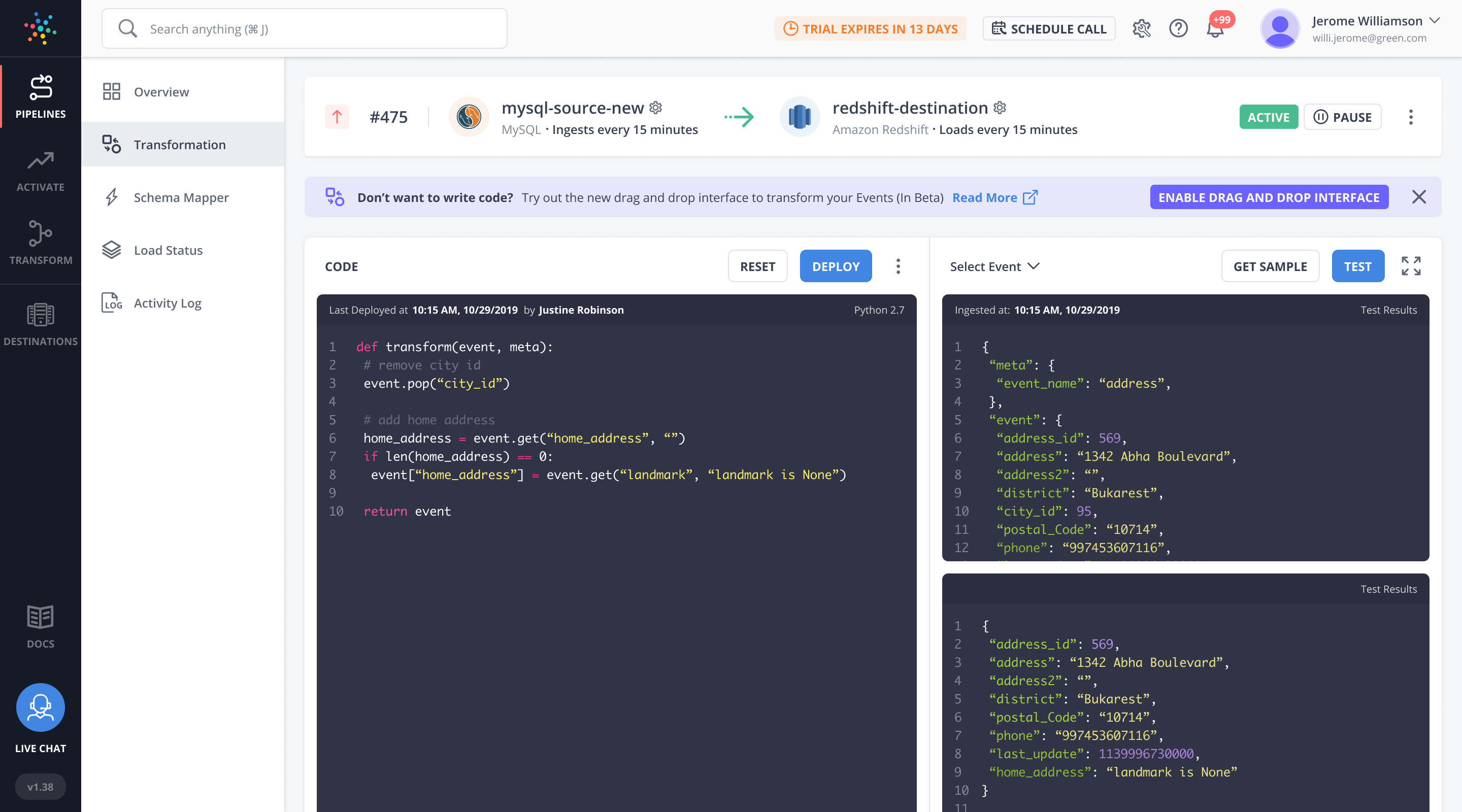
Hevo Data is a no-code, bi-directional data pipeline platform specially built for modern ETL, ELT, and Reverse ETL Needs. It helps data teams streamline and automate org-wide data flows to save engineering time/week and drive faster reporting, analytics, and decision making. The platform supports 100+ ready-to-use integrations across Databases, SaaS Applications, Cloud Storage, SDKs, and Streaming Services. The platform boasts 500 data-driven companies spread across 35+…
$149
per month
Azure SQL Database
Score 8.4 out of 10
N/A
Azure SQL Database is Microsoft's relational database as a service (DBaaS).
$0.50
Per Hour
Pricing
Hevo Data
Azure SQL Database
Editions & Modules
Free
$0
per month
Starter
$149 to $999
Per Month (Paid Yearly)
Business
Custom Pricing
2 vCORE
$0.5044
Per Hour
6 vCORE
$1.5131
Per Hour
10 vCORE
$2.52
Per Hour
Offerings
Pricing Offerings
Hevo
Azure SQL Database
Free Trial
Yes
No
Free/Freemium Version
Yes
No
Premium Consulting/Integration Services
No
No
Entry-level Setup Fee
No setup fee
No setup fee
Additional Details
Hevo offers a Free Plan and a 14-day Free Trial for all the paid plans.
—
More Pricing Information
Community Pulse
Hevo Data
Azure SQL Database
Features
Hevo Data
Azure SQL Database
Database-as-a-Service
Comparison of Database-as-a-Service features of Product A and Product B
It is of great help for unstructured data sources. The way Hevo Data flattens the high nested data is amazing. Schema management is also good by Hevo Data. The way it's tell about the data type and then we can identify any error in the model. Additionally, It is very easy to setup for any new user and once model is created then we do not have to worry about the script maintenance and updating the script daily.
We have found it's a great alternative for making older legacy applications work with online databases instead of only on-premises databases. We've converted over a dozen applications this way, and it has allowed our clients to have a distributed workforce using their applications without incurring the expense of a complete application rewrite.
Maintenance is always an issue, so using a cloud solution saves a lot of trouble.
On premise solutions always suffer from fragmented implementations here and there, where several "dba's" keep track of security and maintenance. With a cloud database it's much easier to keep a central overview.
Security options in SQL database are next level... data masking, hiding sensitive data where always neglected on premise, whereas you'll get this automatically in the cloud.
One needs to be aware that some T-SQL features are simply not available.
The programmatic access to server, trace flags, hardware from within Azure SQL Database is taken away (for a good reason).
No SQL Agent so your jobs need to be orchestrated differently.
The maximum concurrent logins maybe an unexpected problem.
Sudden disconnects.
The developers and admin must study the capacity and tier usage limits https://docs.microsoft.com/en-us/azure/azure-subscription-service-limits otherwise some errors or even transaction aborts never seen before can occur.
Only one Latin Collation choice.
There is no way to debug T-SQL ( a big drawback in my point of view).
The interfaces are intuitive once you are familiar with all the functions. The ability to use different tools to interact with the platform, such as directly via a browser or code editors such as VS Code or Visual Studio is a great option and allows for integrating withn the project and other testing and developing tools.
We give the support a high rating simply because every time we've had issues or questions, representatives were in contact with us quickly. Without fail, our issues/questions were handled in a timely matter. That kind of response is integral when client data integrity and availability is in question. There is also a wealth of documentation for resolving issues on your own.
1. Cost efficient 2. Creation of automated pipeline 3. Can load data from multiple data sources 4. Updates data in near real-time - We were able to get near real time insights from the data model which we have created in hevo 5. It has good integration with different BI tools
We moved away from Oracle and NoSQL because we had been so reliant on them for the last 25 years, the pricing was too much and we were looking for a way to cut the cord. Snowflake is just too up in the air, feels like it is soon to be just another line item to add to your Azure subscription. Azure was just priced right, easy to migrate to and plenty of resources to hire to support/maintain it. Very easy to learn, too.