HPE BladeSystem is a brand of blade server, from Hewlett-Packard Enterprise. HPE blades include the ProLiant BL series and the ProLiant WS series.
N/A
IBM Power
Score9 out of 10
N/A
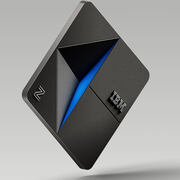
The IBM Power product line is a family of servers.
N/A
Pricing
HPE BladeSystem
IBM Power
Editions & Modules
No answers on this topic
No answers on this topic
Offerings
Pricing Offerings
HPE BladeSystem
IBM Power
Free Trial
No
Yes
Free/Freemium Version
No
No
Premium Consulting/Integration Services
No
Yes
Entry-level Setup Fee
No setup fee
Optional
Additional Details
—
—
More Pricing Information
Community Pulse
HPE BladeSystem
IBM Power
Considered Both Products
Hewlett Packard Enterprise (HPE)
Verified User
Chose HPE BladeSystem
Our use of HPE BladeSystem goes back a long way. Previously we had a solution of IBM blades, however, it is not very comparable in terms of time. We recently acquired the HPE Synergy solution, which is essentially an evolution of the HPE BladeSystem. Market solutions such as …
A de minimis incentive was given to thank the reviewer for their time. The incentive was not used to bias or drive a particular response, nor was the incentive contingent on a positive endorsement. More Info
AIX Administrator in Information Technology at DXC Technology Pvt Ltd (Information Technology & Services, 10,001+ employees)
Chose IBM Power
IBM Power system has great security features and rich storage of other vendor systems. Great processing capacity which easily manages the heavy workload with high processing speed.
A de minimis incentive was given to thank the reviewer for their time. The incentive was not used to bias or drive a particular response, nor was the incentive contingent on a positive endorsement. More Info
All nodes can be managed centrally through the ILO interface. Users and services alike benefit from the lightning-fast response time. Enable service continuity during VM migration between nodes. The purchase of a blade system is something we endorse as a viable alternative for your business. In order for the convergent system to work, the architecture can be adapted to accommodate new devices, and by applying new modules, both the technology and the system's responsiveness to demands for high availability can be enhanced.
A de minimis incentive was given to thank the reviewer for their time. The incentive was not used to bias or drive a particular response, nor was the incentive contingent on a positive endorsement. More Info
I'd strongly recommend IBM Power servers to anyone who has the budget for it. A Power Virtual Machine, what is generally called FlexTB VM, can support as many small VM of 256GB, and scale up to 32TB on the fly. If IBM recommended architecture is combined with your organizational reference architecture, then forget about running into unplanned downtimes.
A de minimis incentive was given to thank the reviewer for their time. The incentive was not used to bias or drive a particular response, nor was the incentive contingent on a positive endorsement. TR verified that a representative sample of customers was invited. More Info
A de minimis incentive was given to thank the reviewer for their time. The incentive was not used to bias or drive a particular response, nor was the incentive contingent on a positive endorsement. More Info
A de minimis incentive was given to thank the reviewer for their time. The incentive was not used to bias or drive a particular response, nor was the incentive contingent on a positive endorsement. TR verified that a representative sample of customers was invited. More Info
The small form factor of a blade server cannot accommodate expansion cards.
Shared infrastructure, like the interconnects, means a larger fault domain.
Firmware updates can be disruptive and administrators should pay close attention to firmware recipes and bundles to ensure compatibility between components.
A de minimis incentive was given to thank the reviewer for their time. The incentive was not used to bias or drive a particular response, nor was the incentive contingent on a positive endorsement. More Info
A solid IDE for editing programs. SEU was simple and solid. Then it became outdated and support for it ended as the language continued to evolve. That's fine. But RDi is expensive and shaky at best, and VS Code, while free, is severely lacking even the modicum of features RDi has.
A de minimis incentive was given to thank the reviewer for their time. The incentive was not used to bias or drive a particular response, nor was the incentive contingent on a positive endorsement. TR verified that a representative sample of customers was invited. More Info
We do not intend to make new investments in HPE BladeSystem as it is in the end-of-life phase and we have continued with the new HPE Synergy environment. It is therefore not a process of discarding, but of evolution. This environment will possibly continue to be used in the institution, but for less critical purposes and more related to the development of new solutions.
A de minimis incentive was given to thank the reviewer for their time. The incentive was not used to bias or drive a particular response, nor was the incentive contingent on a positive endorsement. More Info
This is one of the best systems on the market. You can have Flash/Copy which created another LPAR to look like the system you are copying. This takes seconds and not minutes. Then you can use BRNS to do full system backups nightly with no downtime. I am ready for us to upgrade to a Power 10.
A de minimis incentive was given to thank the reviewer for their time. The incentive was not used to bias or drive a particular response, nor was the incentive contingent on a positive endorsement. TR verified that a representative sample of customers was invited. More Info
They are very easy to set up and use once you re knowledgeable enough to deal with it. They are continuously enhance the user experience on the HMC and operations on the systems. Once setup it's like a beast, going on and on. I have experience with servers that are not being rebooted for more than 1000 days
A de minimis incentive was given to thank the reviewer for their time. The incentive was not used to bias or drive a particular response, nor was the incentive contingent on a positive endorsement. TR verified that a representative sample of customers was invited. More Info
In all of the years I have used various Power System, I have never had any problems at all. Even when hackers were attacking our email servers and many users PCs, the IBM Power System came out completely unscathed. I haven't even had any application errors that were able to take the system down. Nor have I ever experienced an unplanned outage
A de minimis incentive was given to thank the reviewer for their time. The incentive was not used to bias or drive a particular response, nor was the incentive contingent on a positive endorsement. More Info
The IBM Power System is built for integration. It supports multiple operating systems and you can run multiple OS's on the same box with no problems at all. It also supports a number of open source languages such as PHP, Java, Python, and Perl which helps you continue to grow and integrate with lots of other systems.
A de minimis incentive was given to thank the reviewer for their time. The incentive was not used to bias or drive a particular response, nor was the incentive contingent on a positive endorsement. More Info
On large-scale systems, the rating would have been 10. However, I have seen some cases in more rural areas where the IBM onsite support is not as available or of the highest quality as in the past. For software support, there are sometimes instances of language barriers.
Systems are robust and you need to know exactly what your are going to do with them. There are multiple configurations possible and you need to gather your requirements first, before going on with the implementation. Tuning is a must before migrating production systems
A de minimis incentive was given to thank the reviewer for their time. The incentive was not used to bias or drive a particular response, nor was the incentive contingent on a positive endorsement. TR verified that a representative sample of customers was invited. More Info
It's been said that BladeSystem is very similar to the UCS B-Series. While the network fabric features of the UCS B-Series outshine those of the BladeSystem, HPE has created extensive orchestration within HPE OneView to provide feature parity with and even surpass those of the UCS B-Series. The fundamental distinction between the two is whether the focus is on the computing (BladeSystem) or the fabric (UCS). In contrast to UCS's tight fabric integration, BladeSystem's centralized focus on servers simplifies administration.
A de minimis incentive was given to thank the reviewer for their time. The incentive was not used to bias or drive a particular response, nor was the incentive contingent on a positive endorsement. More Info
Power server do not need a stack of software for viruses, spam and others... Power server do not need to have release often power server are much more strong then other manufacturer Power server do not need to restart offen
A de minimis incentive was given to thank the reviewer for their time. The incentive was not used to bias or drive a particular response, nor was the incentive contingent on a positive endorsement. TR verified that a representative sample of customers was invited. More Info
This system can work in a small factory with a few users and easily scale out to thousands of users. It is truly amazing on how much you can throw at this box and it will just keep humming. It is great for use across multiple departments and even across multiple corporations. I worked at one company where we were hosting multiple corporations on just one large Power System and had ZERO problems.
A de minimis incentive was given to thank the reviewer for their time. The incentive was not used to bias or drive a particular response, nor was the incentive contingent on a positive endorsement. More Info
A de minimis incentive was given to thank the reviewer for their time. The incentive was not used to bias or drive a particular response, nor was the incentive contingent on a positive endorsement. More Info
A de minimis incentive was given to thank the reviewer for their time. The incentive was not used to bias or drive a particular response, nor was the incentive contingent on a positive endorsement. More Info