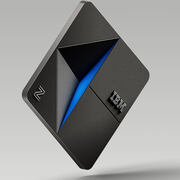
The IBM Power product line is a family of servers.
N/A
KVM
Score9.5 out of 10
N/A
Kernel-based Virtual Machine (KVM) is a virtualization solution developed by small Israeli software company Qumranet and supported by Red Hat since that company's acquisition in 2008.
I'd strongly recommend IBM Power servers to anyone who has the budget for it. A Power Virtual Machine, what is generally called FlexTB VM, can support as many small VM of 256GB, and scale up to 32TB on the fly. If IBM recommended architecture is combined with your organizational reference architecture, then forget about running into unplanned downtimes.
A de minimis incentive was given to thank the reviewer for their time. The incentive was not used to bias or drive a particular response, nor was the incentive contingent on a positive endorsement. TR verified that a representative sample of customers was invited. More Info
KVM is the best solution in the case you need to test and turn up any virtual environment with limited vCPU/RAM resources. The obvious area of its use is a network environment when we want to avoid being tied to one type of hardware/vendor and being able to swap from one instance to another with no downtimes. The use of a vSwitch (that supports VLAN tagging) is a significant bonus for network engineers that some other hypervisors do not provide.
A de minimis incentive was given to thank the reviewer for their time. The incentive was not used to bias or drive a particular response, nor was the incentive contingent on a positive endorsement. More Info
A de minimis incentive was given to thank the reviewer for their time. The incentive was not used to bias or drive a particular response, nor was the incentive contingent on a positive endorsement. TR verified that a representative sample of customers was invited. More Info
A de minimis incentive was given to thank the reviewer for their time. The incentive was not used to bias or drive a particular response, nor was the incentive contingent on a positive endorsement. More Info
A solid IDE for editing programs. SEU was simple and solid. Then it became outdated and support for it ended as the language continued to evolve. That's fine. But RDi is expensive and shaky at best, and VS Code, while free, is severely lacking even the modicum of features RDi has.
A de minimis incentive was given to thank the reviewer for their time. The incentive was not used to bias or drive a particular response, nor was the incentive contingent on a positive endorsement. TR verified that a representative sample of customers was invited. More Info
A de minimis incentive was given to thank the reviewer for their time. The incentive was not used to bias or drive a particular response, nor was the incentive contingent on a positive endorsement. More Info
This is one of the best systems on the market. You can have Flash/Copy which created another LPAR to look like the system you are copying. This takes seconds and not minutes. Then you can use BRNS to do full system backups nightly with no downtime. I am ready for us to upgrade to a Power 10.
A de minimis incentive was given to thank the reviewer for their time. The incentive was not used to bias or drive a particular response, nor was the incentive contingent on a positive endorsement. TR verified that a representative sample of customers was invited. More Info
They are very easy to set up and use once you re knowledgeable enough to deal with it. They are continuously enhance the user experience on the HMC and operations on the systems. Once setup it's like a beast, going on and on. I have experience with servers that are not being rebooted for more than 1000 days
A de minimis incentive was given to thank the reviewer for their time. The incentive was not used to bias or drive a particular response, nor was the incentive contingent on a positive endorsement. TR verified that a representative sample of customers was invited. More Info
It does the job and stays out of the way. The specifics of usability relies on the implementation, but with things like Icarus and libvirt, things are standardizing nicely.
A de minimis incentive was given to thank the reviewer for their time. The incentive was not used to bias or drive a particular response, nor was the incentive contingent on a positive endorsement. More Info
In all of the years I have used various Power System, I have never had any problems at all. Even when hackers were attacking our email servers and many users PCs, the IBM Power System came out completely unscathed. I haven't even had any application errors that were able to take the system down. Nor have I ever experienced an unplanned outage
A de minimis incentive was given to thank the reviewer for their time. The incentive was not used to bias or drive a particular response, nor was the incentive contingent on a positive endorsement. More Info
The IBM Power System is built for integration. It supports multiple operating systems and you can run multiple OS's on the same box with no problems at all. It also supports a number of open source languages such as PHP, Java, Python, and Perl which helps you continue to grow and integrate with lots of other systems.
A de minimis incentive was given to thank the reviewer for their time. The incentive was not used to bias or drive a particular response, nor was the incentive contingent on a positive endorsement. More Info
On large-scale systems, the rating would have been 10. However, I have seen some cases in more rural areas where the IBM onsite support is not as available or of the highest quality as in the past. For software support, there are sometimes instances of language barriers.
Systems are robust and you need to know exactly what your are going to do with them. There are multiple configurations possible and you need to gather your requirements first, before going on with the implementation. Tuning is a must before migrating production systems
A de minimis incentive was given to thank the reviewer for their time. The incentive was not used to bias or drive a particular response, nor was the incentive contingent on a positive endorsement. TR verified that a representative sample of customers was invited. More Info
Power server do not need a stack of software for viruses, spam and others... Power server do not need to have release often power server are much more strong then other manufacturer Power server do not need to restart offen
A de minimis incentive was given to thank the reviewer for their time. The incentive was not used to bias or drive a particular response, nor was the incentive contingent on a positive endorsement. TR verified that a representative sample of customers was invited. More Info
It is a very reliable solution that can be used for x86 architecture virtualization with low overhead. It is a free and open source software. Easy to use withOpenStack.
A de minimis incentive was given to thank the reviewer for their time. The incentive was not used to bias or drive a particular response, nor was the incentive contingent on a positive endorsement. More Info
This system can work in a small factory with a few users and easily scale out to thousands of users. It is truly amazing on how much you can throw at this box and it will just keep humming. It is great for use across multiple departments and even across multiple corporations. I worked at one company where we were hosting multiple corporations on just one large Power System and had ZERO problems.
A de minimis incentive was given to thank the reviewer for their time. The incentive was not used to bias or drive a particular response, nor was the incentive contingent on a positive endorsement. More Info
A de minimis incentive was given to thank the reviewer for their time. The incentive was not used to bias or drive a particular response, nor was the incentive contingent on a positive endorsement. More Info
A de minimis incentive was given to thank the reviewer for their time. The incentive was not used to bias or drive a particular response, nor was the incentive contingent on a positive endorsement. More Info