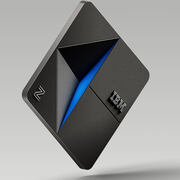
The IBM Power product line is a family of servers.
N/A
Proxmox VE
Score9.2 out of 10
N/A
Proxmox Virtual Environment is an open source server virtualization management solution based on QEMU/KVM and LXC. Users can manage virtual machines, containers, highly available clusters, storage and networks via a web interface or CLI. Proxmox VE code is licensed under the GNU Affero General Public License, version 3. The project is developed and maintained by Proxmox Server Solutions GmbH.
$7.50
per month
Pricing
IBM Power
Proxmox VE
Editions & Modules
No answers on this topic
Community
€ 90
year & CPU socket
Basic
€ 280
year & CPU socket
Standard
€ 420
year & CPU socket
Premium
€ 840
year & CPU socket
Offerings
Pricing Offerings
IBM Power
Proxmox VE
Free Trial
Yes
No
Free/Freemium Version
No
Yes
Premium Consulting/Integration Services
Yes
No
Entry-level Setup Fee
Optional
No setup fee
Additional Details
—
Proxmox Virtual Environment's source code is published under the free software license GNU AGPL, v3 and thus is freely available for download, use and share. A Proxmox VE Subscription is an additional service program that helps IT professionals and businesses keep Proxmox VE deployments up-to-date. A subscription provides access to the stable Proxmox VE Enterprise Repository delivering software updates and security enhancements, technical help and support.
I'd strongly recommend IBM Power servers to anyone who has the budget for it. A Power Virtual Machine, what is generally called FlexTB VM, can support as many small VM of 256GB, and scale up to 32TB on the fly. If IBM recommended architecture is combined with your organizational reference architecture, then forget about running into unplanned downtimes.
A de minimis incentive was given to thank the reviewer for their time. The incentive was not used to bias or drive a particular response, nor was the incentive contingent on a positive endorsement. TR verified that a representative sample of customers was invited. More Info
We used Proxmox to implement private cloud services, for clusters of a small number of servers, from 3 to 11 with and without high availability. Allways with ZFS file systems, and we used to install the root pool in SSDs mirrored and use other pools with RAID 10 in groups of four, for the virtual machines and containers, for the backups and snapshots, we used magnetic disks with RAID 10, in groups of four. Do not use an even number of servers because does not facilitates the implementation of High Availability, because the corosync service must have an odd number of servers to detect a failed server for the quorum system. We used a variety of servers, from clone PCs with AMD Ryzen with 6 cores and 12 threads with 64 GB of RAM no ECC, to high end servers with 64 cores and 128 threads per cpu and 2 cpus per server, with AMD EPYC Rome or Milan, 2 terabytes of RAM ECC.
A de minimis incentive was given to thank the reviewer for their time. The incentive was not used to bias or drive a particular response, nor was the incentive contingent on a positive endorsement. More Info
A de minimis incentive was given to thank the reviewer for their time. The incentive was not used to bias or drive a particular response, nor was the incentive contingent on a positive endorsement. TR verified that a representative sample of customers was invited. More Info
A solid IDE for editing programs. SEU was simple and solid. Then it became outdated and support for it ended as the language continued to evolve. That's fine. But RDi is expensive and shaky at best, and VS Code, while free, is severely lacking even the modicum of features RDi has.
A de minimis incentive was given to thank the reviewer for their time. The incentive was not used to bias or drive a particular response, nor was the incentive contingent on a positive endorsement. TR verified that a representative sample of customers was invited. More Info
The web UI does not work as well on mobile devices. It is useable, but a mobile optimised / responsive UI would be nice to have. There is a mobile app, so that may alleviate this issue, but I have not yet tried it.
Support in the community forums could be better. There are paid support plans, but new users trying out the software will not have access to this. Answers to questions can sometimes be terse, and I can imagine this may put some people off.
The wiki is a bit hit and miss with certain topics. I've often seen outdated or missing information, and the whole thing looks like it could do with some polish. I'd love to see it opened up for the community to add to.
A de minimis incentive was given to thank the reviewer for their time. The incentive was not used to bias or drive a particular response, nor was the incentive contingent on a positive endorsement. More Info
This is one of the best systems on the market. You can have Flash/Copy which created another LPAR to look like the system you are copying. This takes seconds and not minutes. Then you can use BRNS to do full system backups nightly with no downtime. I am ready for us to upgrade to a Power 10.
A de minimis incentive was given to thank the reviewer for their time. The incentive was not used to bias or drive a particular response, nor was the incentive contingent on a positive endorsement. TR verified that a representative sample of customers was invited. More Info
Proxmox VE provides the most capable, yet stable virtualization platform in the market today. Licensing options are also competitive and cost-effective for support, and support is extremely fast and knowledgable of getting issues resolved as quickly and soundly as possible.
A de minimis incentive was given to thank the reviewer for their time. The incentive was not used to bias or drive a particular response, nor was the incentive contingent on a positive endorsement. More Info
They are very easy to set up and use once you re knowledgeable enough to deal with it. They are continuously enhance the user experience on the HMC and operations on the systems. Once setup it's like a beast, going on and on. I have experience with servers that are not being rebooted for more than 1000 days
A de minimis incentive was given to thank the reviewer for their time. The incentive was not used to bias or drive a particular response, nor was the incentive contingent on a positive endorsement. TR verified that a representative sample of customers was invited. More Info
The interface is easy to use for most of it, but still lacks screens for some configurations. Also, a few of the screens are not as intuitive as they could be. This is specially true with disk and network configuration, where some graphic/visual representations of the configurations would be very useful
A de minimis incentive was given to thank the reviewer for their time. The incentive was not used to bias or drive a particular response, nor was the incentive contingent on a positive endorsement. More Info
In all of the years I have used various Power System, I have never had any problems at all. Even when hackers were attacking our email servers and many users PCs, the IBM Power System came out completely unscathed. I haven't even had any application errors that were able to take the system down. Nor have I ever experienced an unplanned outage
A de minimis incentive was given to thank the reviewer for their time. The incentive was not used to bias or drive a particular response, nor was the incentive contingent on a positive endorsement. More Info
Proxmox VE's ha-cluster functionality is very much improved, though does have a not-very-often occurrence of failure. In a 2-node cluster of Proxmox VE, HA can fail causing an instance that is supposed to migrate between the two nodes stop and fail until manually recovered through the command-line tools provided. Other than this, the HA clustering capability of Proxmox VE has proven to be reliable in 3 or more clustered environments with much less chance of these failures to occur.
A de minimis incentive was given to thank the reviewer for their time. The incentive was not used to bias or drive a particular response, nor was the incentive contingent on a positive endorsement. More Info
The IBM Power System is built for integration. It supports multiple operating systems and you can run multiple OS's on the same box with no problems at all. It also supports a number of open source languages such as PHP, Java, Python, and Perl which helps you continue to grow and integrate with lots of other systems.
A de minimis incentive was given to thank the reviewer for their time. The incentive was not used to bias or drive a particular response, nor was the incentive contingent on a positive endorsement. More Info
Proxmox VE's interfacing is always fast to load, both the Web interface and the command-line tool interfaces. Reporting is practically real time almost all the time, and you can see everything in mere seconds, easily able to identify if something is wrong or it everything is in tip-top shape as always desired
A de minimis incentive was given to thank the reviewer for their time. The incentive was not used to bias or drive a particular response, nor was the incentive contingent on a positive endorsement. More Info
On large-scale systems, the rating would have been 10. However, I have seen some cases in more rural areas where the IBM onsite support is not as available or of the highest quality as in the past. For software support, there are sometimes instances of language barriers.
A de minimis incentive was given to thank the reviewer for their time. The incentive was not used to bias or drive a particular response, nor was the incentive contingent on a positive endorsement. More Info
Systems are robust and you need to know exactly what your are going to do with them. There are multiple configurations possible and you need to gather your requirements first, before going on with the implementation. Tuning is a must before migrating production systems
A de minimis incentive was given to thank the reviewer for their time. The incentive was not used to bias or drive a particular response, nor was the incentive contingent on a positive endorsement. TR verified that a representative sample of customers was invited. More Info
A de minimis incentive was given to thank the reviewer for their time. The incentive was not used to bias or drive a particular response, nor was the incentive contingent on a positive endorsement. More Info
Power server do not need a stack of software for viruses, spam and others... Power server do not need to have release often power server are much more strong then other manufacturer Power server do not need to restart offen
A de minimis incentive was given to thank the reviewer for their time. The incentive was not used to bias or drive a particular response, nor was the incentive contingent on a positive endorsement. TR verified that a representative sample of customers was invited. More Info
Proxmox VE is cheaper than VMware, especially upscaling an HA architecture. Compared with other free or less expensive solutions, Proxmox VE is high compatible with more types of hardware solutions and more VM types. From my point of view, Proxmox VE has no competitor at the same price level, it offers the most complete and production-ready HA solution.
A de minimis incentive was given to thank the reviewer for their time. The incentive was not used to bias or drive a particular response, nor was the incentive contingent on a positive endorsement. More Info
This system can work in a small factory with a few users and easily scale out to thousands of users. It is truly amazing on how much you can throw at this box and it will just keep humming. It is great for use across multiple departments and even across multiple corporations. I worked at one company where we were hosting multiple corporations on just one large Power System and had ZERO problems.
A de minimis incentive was given to thank the reviewer for their time. The incentive was not used to bias or drive a particular response, nor was the incentive contingent on a positive endorsement. More Info
Proxmox VE provides everything you need to quickly add new storage mediums, network and local, as well as networking interfaces, such as using Linux standard bridges and now Open-vSwitch bridges which can be even more scalable than before. Proxmox VE 4.0 dropped support for OpenVZ in favor of the more well supported and native LXC and made an upgrade path to it very simple.
A de minimis incentive was given to thank the reviewer for their time. The incentive was not used to bias or drive a particular response, nor was the incentive contingent on a positive endorsement. More Info
A de minimis incentive was given to thank the reviewer for their time. The incentive was not used to bias or drive a particular response, nor was the incentive contingent on a positive endorsement. More Info
A de minimis incentive was given to thank the reviewer for their time. The incentive was not used to bias or drive a particular response, nor was the incentive contingent on a positive endorsement. More Info