IBM® Storage Ceph® is a software-defined storage platform that consolidates block, file and object storage to help organizations eliminate data silos and deliver a cloud-like experience while retaining the cost benefits and data sovereignty advantages of on-premises IT.
N/A
Qubit OpenTag
Score8.7 out of 10
N/A
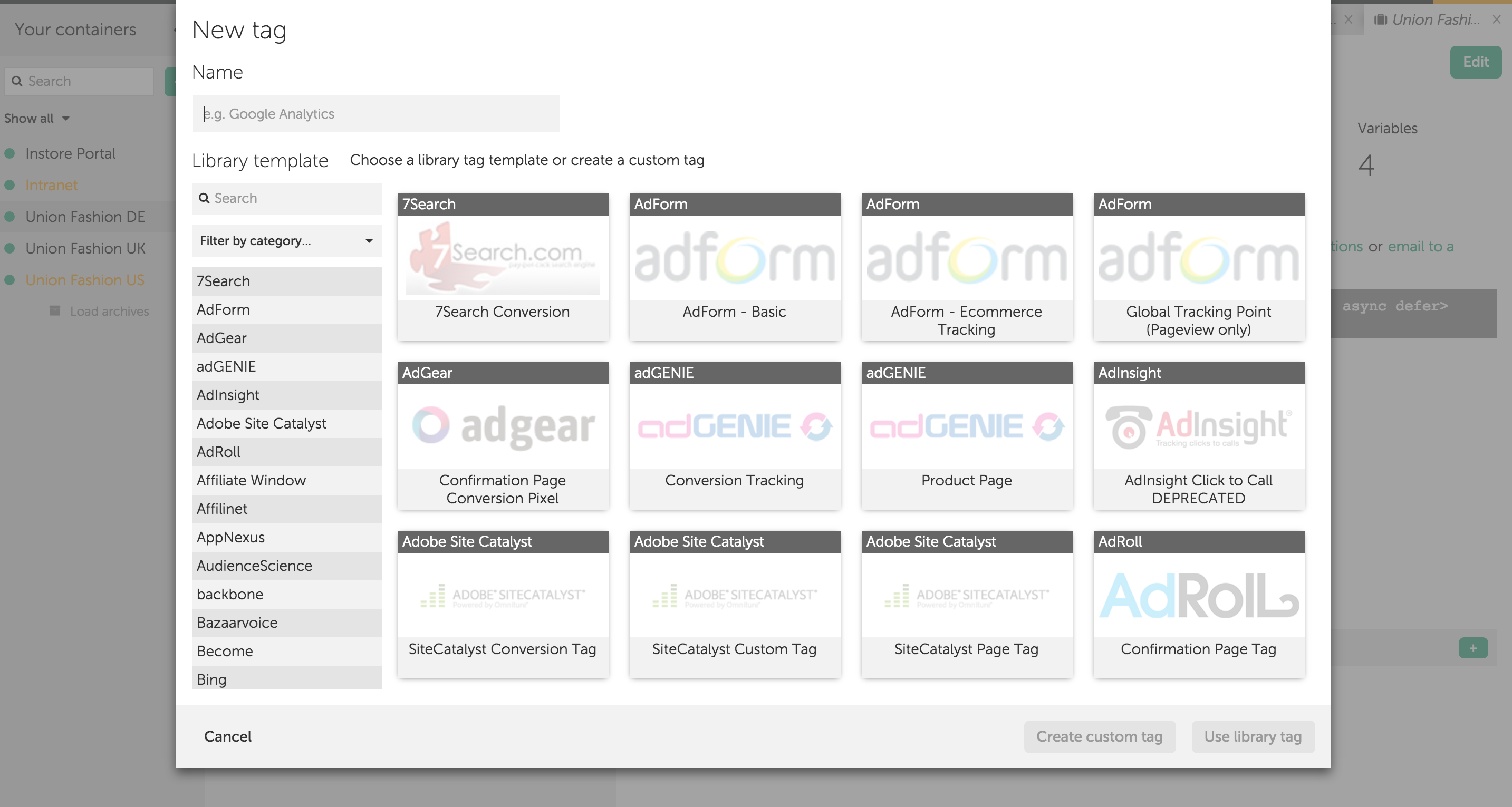
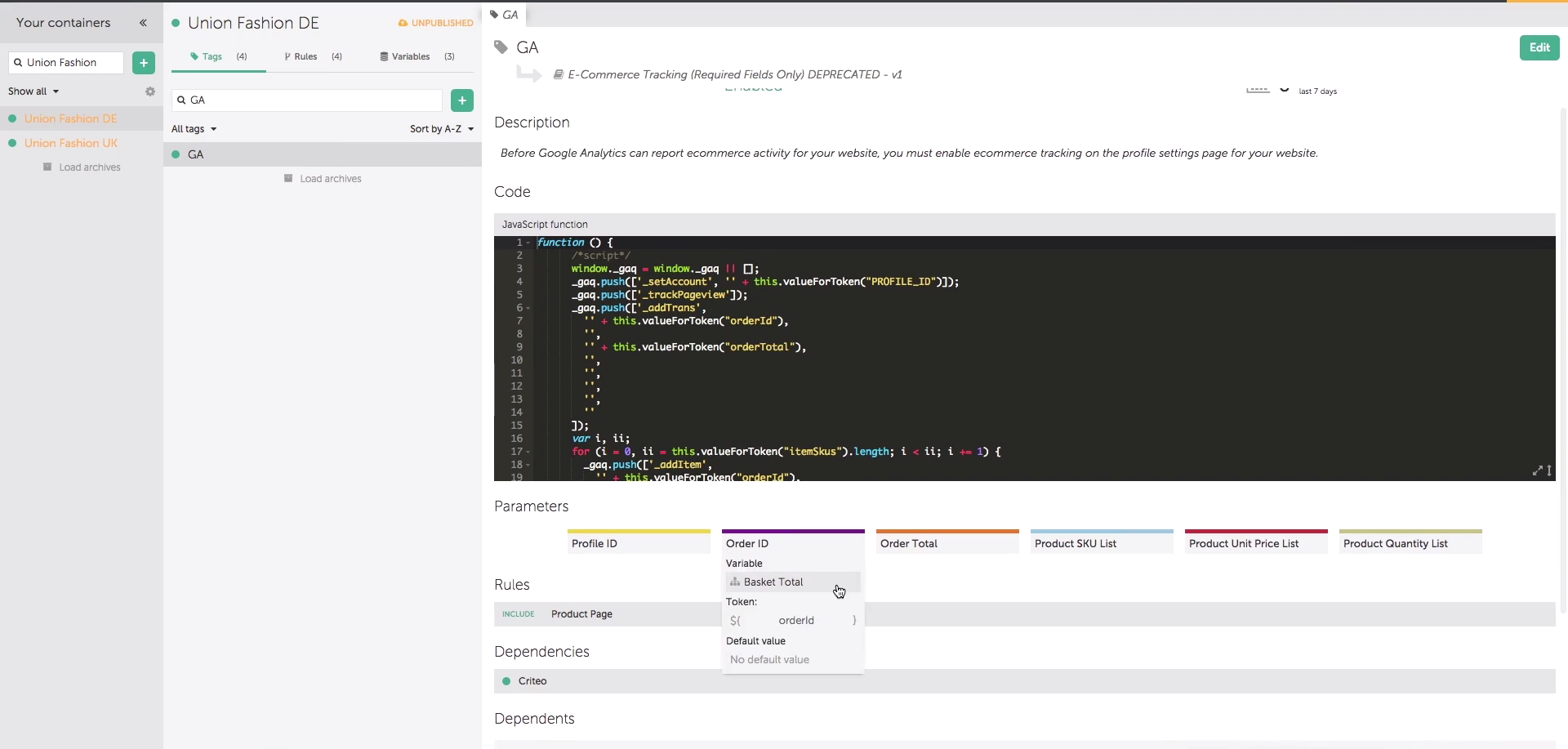
Opentag is an open source enterprise tag management solution that runs on Qubit's open Universal Variable data model. Some key features include: Container Tag, CPA De-duplication and Privacy Consent.
N/A
Pricing
IBM Storage Ceph
Qubit OpenTag
Editions & Modules
No answers on this topic
No answers on this topic
Offerings
Pricing Offerings
IBM Storage Ceph
Qubit OpenTag
Free Trial
No
Yes
Free/Freemium Version
No
Yes
Premium Consulting/Integration Services
No
Yes
Entry-level Setup Fee
No setup fee
No setup fee
Additional Details
—
—
More Pricing Information
Features
IBM Storage Ceph
Qubit OpenTag
Security
Comparison of Security features of IBM Storage Ceph and Qubit OpenTag
Feature
IBM Storage Ceph
-
Ratings
Qubit OpenTag
10.0
1 Ratings
17% above category average
Role-based user permissions
00 Ratings
10.01 Ratings
Tag Management
Comparison of Tag Management features of IBM Storage Ceph and Qubit OpenTag
Feature
IBM Storage Ceph
-
Ratings
Qubit OpenTag
8.6
2 Ratings
5% above category average
Tag library
00 Ratings
9.02 Ratings
Tag variable mapping
00 Ratings
5.01 Ratings
Ease of writing custom tags
00 Ratings
9.02 Ratings
Rules-driven tag execution
00 Ratings
10.02 Ratings
Tag performance monitoring
00 Ratings
10.01 Ratings
Page load times
00 Ratings
7.02 Ratings
Mobile app tagging
00 Ratings
9.01 Ratings
Library of JavaScript extensions
00 Ratings
10.01 Ratings
Data Management & Integrity
Comparison of Data Management & Integrity features of IBM Storage Ceph and Qubit OpenTag
Large scale data storage: Red Hat Ceph Storage is designed to be highly scalable and can handle large amounts of data. It's well suited for organizations that need to store and manage large amounts of data, such as backups, images, videos, and other types of multimedia content.Cloud-based deployments: Red Hat Ceph Storage can provide object storage services for cloud-based applications such as SaaS and PaaS offerings. It is well suited for organizations that are looking to build their own cloud storage infrastructure or to use it as a storage backend for their cloud-based applications.High-performance computing: Red Hat Ceph Storage can be used to provide storage for high-performance computing (HPC) applications, such as scientific simulations and other types of compute-intensive workloads. It's well suited for organizations that need to store
A de minimis incentive was given to thank the reviewer for their time. The incentive was not used to bias or drive a particular response, nor was the incentive contingent on a positive endorsement. More Info
Pros: Easy tagging process, custom alerts, and Notifications, KPIs dashboard, Marketing operations alignment. Cons: Could use some improvement around the custom export options for data visualization.
A de minimis incentive was given to thank the reviewer for their time. The incentive was not used to bias or drive a particular response, nor was the incentive contingent on a positive endorsement. More Info
Highly resilient, almost every time we attempted to destroy the cluster it was able to recover from a failure. It struggled to when the nodes where down to about 30%(3 replicas on 10 nodes)
The cache tiering feature of Ceph is especially nice. We attached solid state disks and assigned them as the cache tier. Our sio benchmarks beat the our Netapp when we benchmarked it years ago (no traffic, clean disks) by a very wide margin.
Ceph effectively allows the admin to control the entire stack from top to bottom instead of being tied to any one storage vendor. The cluster can be decentralized and replicated across data centers if necessary although we didn't try that feature ourselves, it gave us some ideas for a disaster recovery solution. We really liked the idea that since we control the hardware and the software, we have infinite upgradability with off the shelf parts which is exactly what it was built for.
A de minimis incentive was given to thank the reviewer for their time. The incentive was not used to bias or drive a particular response, nor was the incentive contingent on a positive endorsement. More Info
A de minimis incentive was given to thank the reviewer for their time. The incentive was not used to bias or drive a particular response, nor was the incentive contingent on a positive endorsement. More Info
A de minimis incentive was given to thank the reviewer for their time. The incentive was not used to bias or drive a particular response, nor was the incentive contingent on a positive endorsement. More Info
A de minimis incentive was given to thank the reviewer for their time. The incentive was not used to bias or drive a particular response, nor was the incentive contingent on a positive endorsement. More Info
A de minimis incentive was given to thank the reviewer for their time. The incentive was not used to bias or drive a particular response, nor was the incentive contingent on a positive endorsement. More Info
A de minimis incentive was given to thank the reviewer for their time. The incentive was not used to bias or drive a particular response, nor was the incentive contingent on a positive endorsement. More Info
MongoDB offers better search ability compared to Red Hat Ceph Storage but it’s more optimized for large number of object while Red Hat Ceph Storage is preferred if you need to store binary data or large individual objects. To get acceptable search functionality you really need to compile Red Hat Ceph Storage with another database where the search metadata related to Red Hat Ceph Storage objects are stored.
A de minimis incentive was given to thank the reviewer for their time. The incentive was not used to bias or drive a particular response, nor was the incentive contingent on a positive endorsement. More Info
A de minimis incentive was given to thank the reviewer for their time. The incentive was not used to bias or drive a particular response, nor was the incentive contingent on a positive endorsement. More Info
A de minimis incentive was given to thank the reviewer for their time. The incentive was not used to bias or drive a particular response, nor was the incentive contingent on a positive endorsement. More Info
A de minimis incentive was given to thank the reviewer for their time. The incentive was not used to bias or drive a particular response, nor was the incentive contingent on a positive endorsement. More Info