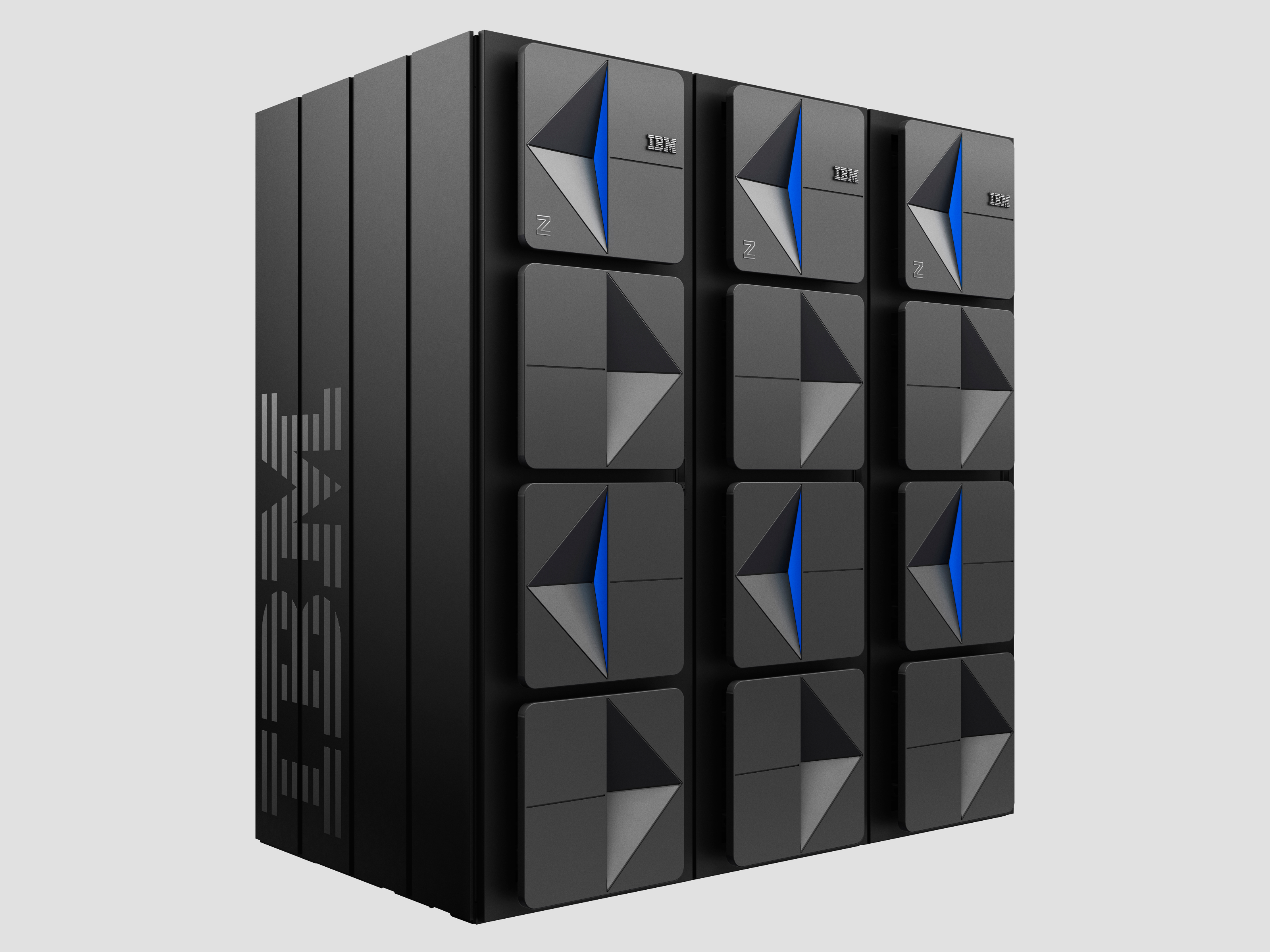
IBM Z is the company's mainframe enterprise server solution product line.
N/A
Oracle Exadata
Score 9.8 out of 10
N/A
Oracle Exadata is an enterprise database platform that runs Oracle Database workloads of any scale and criticality with high performance, availability, and security. Exadata’s scale-out design employs optimizations that let transaction processing, analytics, machine learning, and mixed workloads run faster. Consolidating diverse Oracle Database workloads on Exadata platforms in enterprise data centers, Oracle Cloud Infrastructure (OCI), and multicloud environments helps organizations increase…
$2.90
Per Unit
Pricing
IBM Z
Oracle Exadata
Editions & Modules
No answers on this topic
Database Server
$2.9032
Per Unit
Quarter Rack
$14.5162
Per Unit
Offerings
Pricing Offerings
IBM Z
Oracle Exadata
Free Trial
No
No
Free/Freemium Version
No
No
Premium Consulting/Integration Services
No
No
Entry-level Setup Fee
Optional
No setup fee
Additional Details
—
—
More Pricing Information
Community Pulse
IBM Z
Oracle Exadata
Features
IBM Z
Oracle Exadata
Access Control and Security
Comparison of Access Control and Security features of Product A and Product B
Most of the time, server utilization is reliable and stable during peak times. Truly amazing, this product offers a lot and gets it done in no time without any confusion.It is reliable, too accurate and the performance is top-notch. It seems to be competitive in all virtual energy systems and its connectivity is also good. It's available at a low cost, but it's enough to have as many low-cost, more efficient systems as possible. It's a minor thing, but very rarely, it can cause work interruptions while it can get stuck due to more frequent use such as restless work. These power servers are very efficient and really help when things go wrong. I am using this product to retrieve data much faster.
Oracle Exadata is well-suited for environments where massive performance for Oracle databases is required. Storage indexes reduce the unnecessary I/O. Smart Flash Cache accelerates random reads/writes.
Our OLTP application demands very high concurrency. Multi-node Exadata provides high availability and zero downtime during DB patching. It comes with lots of built-in automations, so it reduces many routine tasks for sysadmins, like network, storage, and VM configuration, and it also reduces many Oracle DBA tasks, like Oracle software installation, patching, and upgrades.
Oracle Database : Deliver industry-leading security, high availability and scalability with Oracle Database, which has been significantly enhanced to take advantage of the Oracle Exadata Storage Servers.
Exadata Smart Scan : Improve query performance by offloading intensive query processing and data mining scoring to scalable intelligent storage servers.
Smart Flash Cache : Transparently cache 'hot' read and write data to fast solid-state storage, improving query response times and throughput. Exadata systems use the latest PCI flash technology rather than flash disks. PCI flash delivers ultra-high performance by placing flash directly on the high speed PCI bus rather than behind slow disk controllers.
Hybrid Columnar Compression : Reduce the size of data warehousing tables by 10x, and archive tables by 50x, to improve performance and lower storage costs for primary, standby, and backup databases. Query high, query low, archive high and archive low.
Infiniband Network : Connect multiple Oracle Exadata Database Machines using the InfiniBand fabric to form a larger single system image configuration. Each InfiniBand link provides 40 Gigabits of bandwidth–many times higher than traditional storage or server networks.
Petabyte Scalability : Easily scale data warehouse to support enterprise data growth.
The process of patching and upgrade of Exadata server components could be improved with a goal to minimize the overall effort, make it fully automated and transparent.
Improved guidelines and possibly more sophisticated tools for sizing of new Exadata servers for migration from old legacy hardware.
The IBM Z mainframe capabilities are unmatched for cloud readiness and optimization the learning capabilities are matched perfectly with Watson and the expandability of the cloud makes it a perfect choice.
I am comparing Exadata with the Oracle RAC database experience. In addition to Oracle RAC features, Exadata provides automatic performance optimization through Smart Scan and storage indexes. Deep integration with the Oracle ecosystem and tight coupling with Oracle Enterprise Manager for monitoring and management. Some downsides of Exadata are: a steep learning curve, concepts like cell offloading, IORM, and flash cache behavior aren’t intuitive initially. Operating Exadata requires specialized DBA skills.
Performance is a major part when you configure your system. IBM has many tools to study your system and suggest the appropriate configuration. With the right contract, you can add processing power dynamically and remove it when no longer needed
Support is usually superb, only occasionally dropping to very good. We participate in some of the CD (Continuous Delivery) aspects of z/OS, IMS, MQ, and DB2.
IBM Z is the best storage solution as it provides the best in class data protection with the cryptographic hardware keys, no loss in data while migration, and a user-friendly interface that makes it easy for develops to understand and has less of a learning curve. This makes it well above the competition.
Oracle Exadata Database Machine had the best performance overall hands down. It clearly beat the competition and we were seeing 1000X improvement on SAP HANA. Oracle Exadata Database Machine beat that without us refactoring our code. To achieve that in HANA, we had to refactor the code somewhat. Now this was for our limited POC of 5 use cases. Given the large number of stored procedures we had in Sybase, we need to capture more production metrics but we are seeing incredible performance.
If you need more processing power, just add more CPU's or memory. The largest system can have close to 200 CPU's and 40 TB of memory. If that is not enough, you can add more physical computers, and connect them using a sysplex
Single support from a single vendor with both machine and database from Oracle, which is costing us less.
With Exadata, we need less technical manpower and less technical support. A business transaction with the integrated and centralized database helps us focus on other business needs.
We don't need to buy additional licenses and Hardware for the next 3 to 5 years.