
IDERA SQL Diagnostic Manager vs. DataGrip
| Product | Rating | Most Used By | Product Summary | Starting Price |
|---|---|---|---|---|
 IDERA SQL Diagnostic Manager | Score8 out of 10 | N/A | SQL Diagnostic Manager for Microsoft SQL Server helps database administrators to find and fix Microsoft SQL Server performance problems in physical, virtual, and cloud environments. Unlike its competition, it provides effective scalability, advanced SQL query analysis and optimization, prescriptive analysis with corrective SQL scripts, powerful automated alert responses, broad PowerShell integration, complete customization, and extensive support for current and legacy Microsoft SQL Server and… | $1,996 per instance with first year maintenance included |
 DataGrip | Score9.7 out of 10 | N/A | DataGrip, from JetBrains, is a database IDE that is tailored to suit the specific needs of professional SQL developers. | $9.90 per month per user |
| IDERA SQL Diagnostic Manager | DataGrip | |||||||||||||||
|---|---|---|---|---|---|---|---|---|---|---|---|---|---|---|---|---|
| Editions & Modules |
|
| ||||||||||||||
| Offerings |
| |||||||||||||||
| Entry-level Setup Fee | No setup fee | No setup fee | ||||||||||||||
| Additional Details | — | — | ||||||||||||||
| More Pricing Information | ||||||||||||||||
| IDERA SQL Diagnostic Manager | DataGrip | |
|---|---|---|
| Considered Both Products | No answer on this topic | No answer on this topic |
| Key User Insights | ||
| Would buy again | ||
No answers on this topic | 100% Would buy again 5 Answers | |
| Delivers good value for the price | ||
No answers on this topic | 80% Delivers good value for the price 4 Answers | |
| Happy with the feature set | ||
No answers on this topic | 100% Happy with the feature set 5 Answers | |
| Lived up to sales and marketing promises | ||
No answers on this topic | 80% Lived up to sales and marketing promises 4 Answers | |
| Implementation went as expected | ||
No answers on this topic | 100% Implementation went as expected 5 Answers | |
| IDERA SQL Diagnostic Manager | DataGrip | |||||||||||||||||||
|---|---|---|---|---|---|---|---|---|---|---|---|---|---|---|---|---|---|---|---|---|
| SQL Performance Monitoring |
| |||||||||||||||||||
| IDERA SQL Diagnostic Manager | DataGrip | |
|---|---|---|
| Small Businesses | No answers on this topic |  Visual Studio Score8.8 out of 10 |
| Medium-sized Companies |  SolarWinds SQL Sentry Score10 out of 10 |  PyCharm Score9.3 out of 10 |
| Enterprises | SolarWinds SQL Sentry Score10 out of 10 |  WebStorm Score9.6 out of 10 |
| All Alternatives | View all alternatives | View all alternatives |
| IDERA SQL Diagnostic Manager | DataGrip | |
|---|---|---|
| Likelihood to Recommend | 9.0 | 8.4 |
| Usability | - | 8.5 |
| IDERA SQL Diagnostic Manager | DataGrip | |
|---|---|---|
| Likelihood to Recommend |
|
|
| Pros |
|
|
| Cons |
|
|
| Usability | No answers on this topic |
|
| Alternatives Considered |
|
|
| Return on Investment |
|
|
| ScreenShots | IDERA SQL Diagnostic Manager Screenshots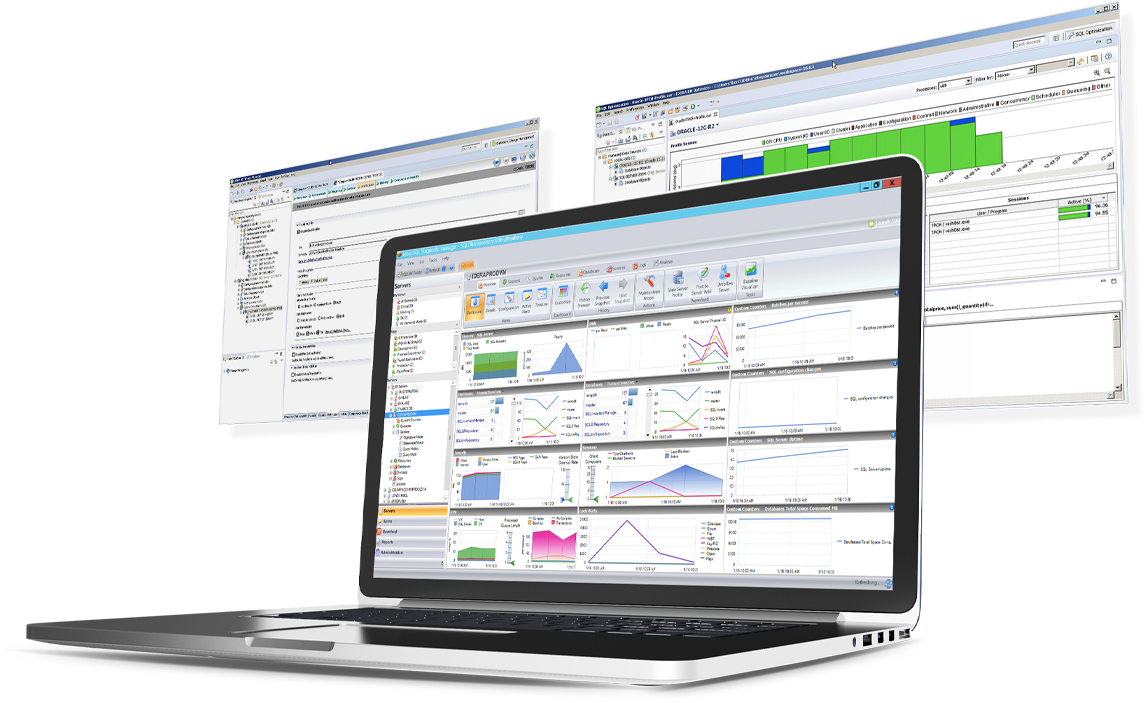 |



