K3s is a lightweight, certified Kubernetes distribution built for IoT & Edge computing, developed by Rancher Labs, which is now supported by SUSE since the 2020 acquisition. K3s is available free and open source under the Apache 2.0 license.
N/A
Navigine
Score 0.0 out of 10
N/A
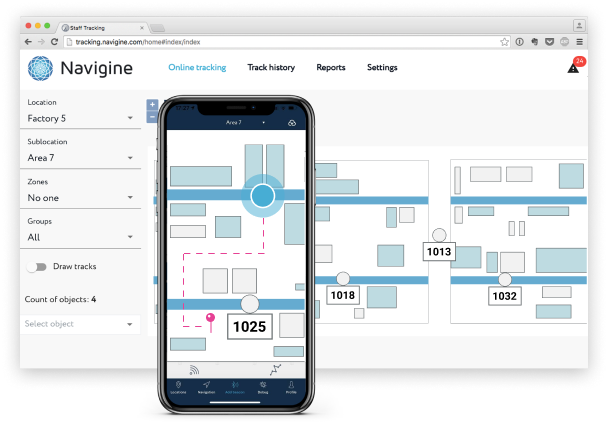
Navigine offers developers an SDK for internal navigation. The Navigine SDK is a mobile library that developers and mobile integrators can embed into any mobile application to implement indoor positioning systems. A set of algorithms opens up possibilities in tracking the movement of company assets inside corporate buildings. With it, users can create advanced applications for smartphones using iBeacon technology.
N/A
Pricing
K3s Lightweight Kubernetes
Navigine
Editions & Modules
No answers on this topic
No answers on this topic
Offerings
Pricing Offerings
K3s Lightweight Kubernetes
Navigine
Free Trial
No
No
Free/Freemium Version
No
No
Premium Consulting/Integration Services
No
No
Entry-level Setup Fee
No setup fee
No setup fee
Additional Details
—
—
More Pricing Information
Community Pulse
K3s Lightweight Kubernetes
Navigine
Considered Both Products
K3s Lightweight Kubernetes
Verified User
Anonymous
Chose K3s Lightweight Kubernetes
We have mostly used kind, minikube, and Docker Desktop Kubernetes for local development. Only kind has lower resource requirements, but K3s Lightweight Kubernetes seems to be even lighter. It is a big benefit to be able to deploy a K3s Lightweight Kubernetes cluster in seconds …
K3s Lightweight Kubernetes is well suited for local development. K3s Lightweight Kubernetes is not well suited when you need backward support. In the case that you want to test an application that is still using deprecated APIs or CRDs which are supported on popular managed Cloud Kubernetes Distributions, because K3s Lightweight Kubernetes is trying to be a lightweight application and dropping early support for APIs/CRDs marked for deprication K3s Lightweight Kubernetes will not be a good solution. If you are trying to test Kubernetes etc, functionality, K3s Lightweight Kubernetes is not a good case since it's using Dqlite or SQLite.
We have mostly used kind, minikube, and Docker Desktop Kubernetes for local development. Only kind has lower resource requirements, but K3s Lightweight Kubernetes seems to be even lighter. It is a big benefit to be able to deploy a K3s Lightweight Kubernetes cluster in seconds locally in our workstation, there is no cost, and it makes it easy to redeploy from scratch no matter how many times we want. The removal of deprecated APIs or CRDs also makes it more secure since it reduces unnecessarily exposed attack vectors.