
Litera Kira vs. Pytorch
| Product | Rating | Most Used By | Product Summary | Starting Price |
|---|---|---|---|---|
 Kira | Score7.6 out of 10 | Enterprise companies (1,001+ employees) | Kira, now from Litera (acquired August, 2021) is software that searches and analyzes contract text. Kira offers pre-built, machine learning models covering due diligence, general commercial, corporate organization, real estate and compliance. Using Kira Quick Study, anyone can train additional models that can identify any desired clause. Kira can be deployed on virtual data rooms and other large repositories of contracts, creating summary analyses. | N/A |
 Pytorch | Score9.4 out of 10 | N/A | Pytorch is an open source machine learning (ML) framework boasting a rich ecosystem of tools and libraries that extend PyTorch and support development in computer vision, NLP and or that supports other ML goals. | N/A |
| Kira | Pytorch | |||||||||||||||
|---|---|---|---|---|---|---|---|---|---|---|---|---|---|---|---|---|
| Editions & Modules | No answers on this topic | No answers on this topic | ||||||||||||||
| Offerings |
| |||||||||||||||
| Entry-level Setup Fee | Required | No setup fee | ||||||||||||||
| Additional Details | — | — | ||||||||||||||
| More Pricing Information | ||||||||||||||||
| Kira | Pytorch | |
|---|---|---|
| Considered Both Products | No answer on this topic | No answer on this topic |
| Key User Insights | ||
| Would buy again | ||
95% Would buy again 20 Answers | 100% Would buy again 6 Answers | |
| Delivers good value for the price | ||
90% Delivers good value for the price 9 Answers | 100% Delivers good value for the price 6 Answers | |
| Happy with the feature set | ||
86% Happy with the feature set 18 Answers | 100% Happy with the feature set 6 Answers | |
| Lived up to sales and marketing promises | ||
92% Lived up to sales and marketing promises 12 Answers | 100% Lived up to sales and marketing promises 5 Answers | |
| Implementation went as expected | ||
61% Implementation went as expected 11 Answers | 100% Implementation went as expected 5 Answers | |
| Kira | Pytorch | |
|---|---|---|
| Small Businesses | No answers on this topic |  TensorFlow Score7.6 out of 10 |
| Medium-sized Companies | No answers on this topic |  Google Cloud AI Score8.7 out of 10 |
| Enterprises | No answers on this topic | Google Cloud AI Score8.7 out of 10 |
| All Alternatives | View all alternatives | View all alternatives |
| Kira | Pytorch | |
|---|---|---|
| Likelihood to Recommend | 7.6 | 9.0 |
| Usability | 7.6 | 10.0 |
| Support Rating | 7.5 | - |
| Kira | Pytorch | |
|---|---|---|
| Likelihood to Recommend |
|
|
| Pros |
|
|
| Cons |
|
|
| Usability |
|
|
| Support Rating |
| No answers on this topic |
| Alternatives Considered |
|
|
| Return on Investment |
|
|
| ScreenShots | Kira Screenshots 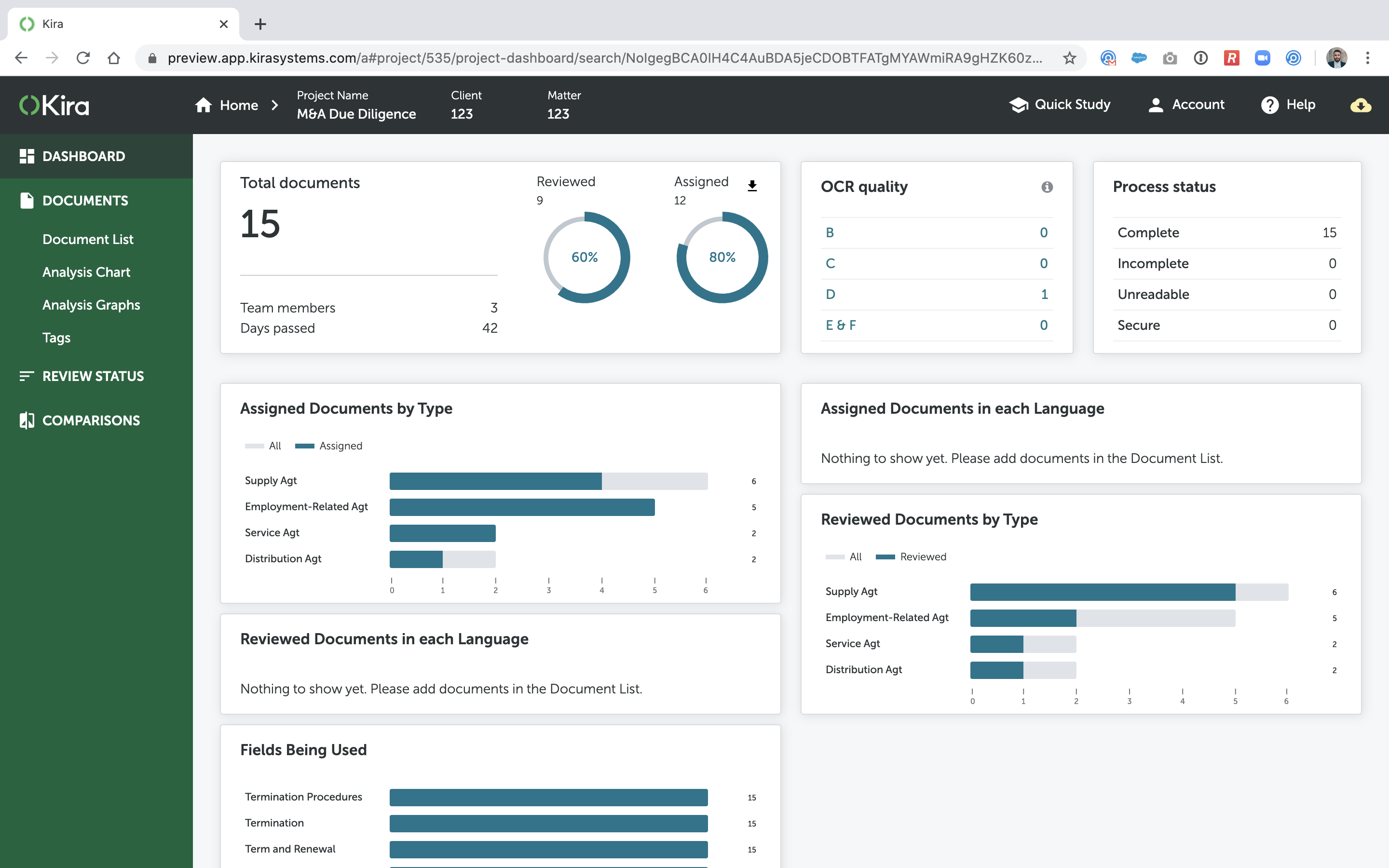   |


