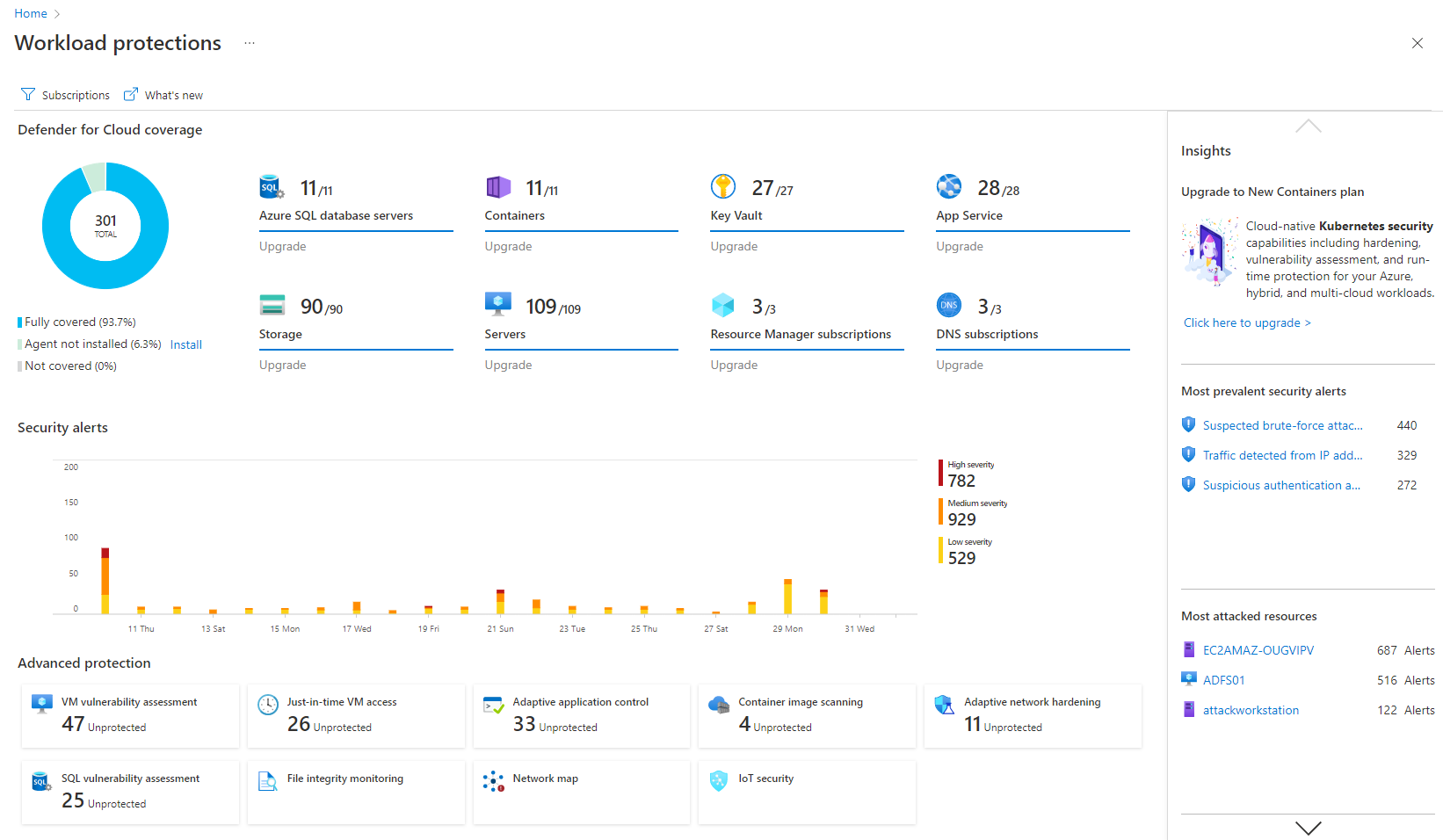
Microsoft Defender for Cloud is a Cloud Security Posture Management (CSPM) and Cloud Workload Protection Platform (CWPP) for Azure, on-premises, and multicloud (Amazon AWS and Google GCP) resources.
N/A
Qualys VMDR
Score 9.3 out of 10
N/A
Qualys VMDR 2.0 with TruRisk gives enterprises visibility and insight into cyber risk exposure with the goal of making it easy to prioritize vulnerabilities, assets, or groups of assets based on business risk. Security teams can take action to mitigate risk, helping the business measure its true risk, and track risk reduction over time.
So, for companies that are strictly Microsoft-based for PCs, it's a good thing for them to have. Some that are more Mac-based or Linux-based have some gaps, and I think there are some gaps in the availability of vulnerability scanning for third-party software that gets loaded onto those machines. Microsoft does a really good job of scanning the products that are good for Windows devices, but they struggle a bit on the Linux side and a little bit on the Mac side. So I'd like to see them try to improve.
Qualys VMDR is best suited for larger companies with a very large IT asset footprint. Qualys VMDR is not suited for businesses that are small and upcoming as the price for the tool is very expensive and could be a budget sink if not used properly. In our organization we use the Qualys VMDR dashboard and reporting in order to collect any vulnerabilities we miss during our routine audits to ensure that our environment is stable and protected for attacks.
It's really well laid out, with an easy-to-use, accessible UI.
With Microsoft Defender for Cloud, it has everything you need with the Safelink attachment, the Safelink emails for URL, the way it scans those URLs and attachments within the product, and you're seeing the results. And that adds an extra layer of security for the user, so you feel comfortable knowing the product monitors those. That's something I really like about that product.
I think Microsoft Defender for Cloud could do a better job of making some of the security alerts easier to understand and easier to resolve.
Since there are some popular ITSM tools that a lot of companies use, I think Microsoft should make it a lot easier for Microsoft Defender for Cloud to integrate with the popular ITSM tools.
The should be a way for users to trigger their own scans for data security related events.
It is a great product that integrates nicely when running an Azure platform and even multi-cloud environment. Not looking for point-solutions but a suite that answers most requirements. It is very comfortable being able to use KQL, workbooks and automation that is native to the azure platform
Next to Veeam (which is a tremendous product for backup/DR) this is the best service/software I have used in the past three decades. Should be called the Swiss Army Knife of security.
My visibility is limited because I'm only doing very small pieces of what the overall org does. And also, we have limitations on what we're allowed to use. It's not like we get a new product as users or leadership level users, and everything is on, and we can just do whatever we want. We're very restricted in what we can use any tooling within the org because of the different levels of regulatory constraints we have, because of just the nature of who we are inherently. So that's why. I don't think it's necessarily the product. I think it's more or less of what we're able to do with the product.
This is iron but I am giving it 5 star and I can give more If I can do because they are best in support. So once you own this product they will assign a dedicated support for you and when you are under the weather with anything just connect them with anything call, ping or ticket they will come like Genie.
Microsoft Defender for Cloud is definitely the choice with the latest market trend and attacks that are currently happening. Microsoft has been able to safe guard a lot after the recent serious attacks happening globally in the digital world. There is a trust in this software and with the latest updates and machine learning capabilities, Microsoft Defender for Cloud should be the choice.
It is a very similar tool but Qualys VMDR is much better when it comes to reporting and solutions provided. Asset management is really good in Qualys VMDR. Qualys VMDR support is really quick , you can get a TPM if you run into any issues. Qualys VMDR has wide variety of scanning options which lacks in tenable.