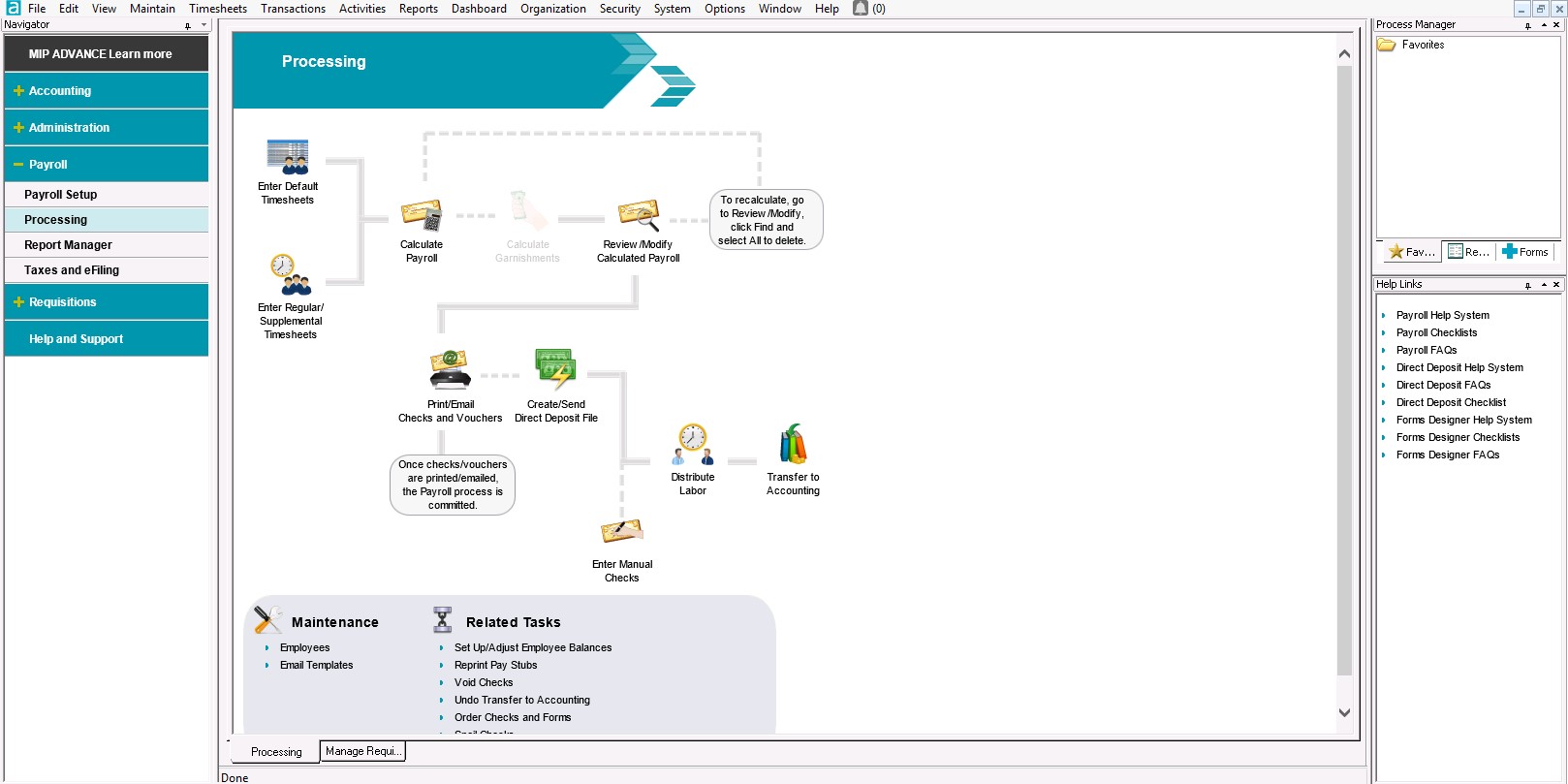
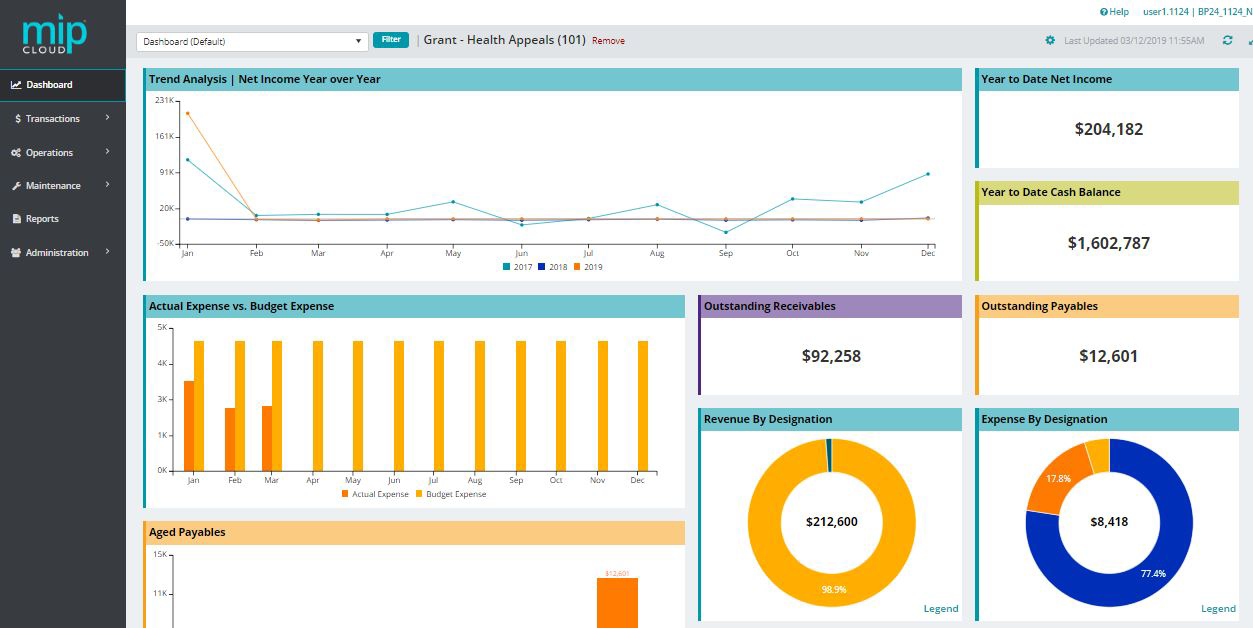
MIP Fund Accounting™ is a configurable fund accounting solution. The solution includes functionality for fund accounting, procurement, budgeting, payroll, human resources, timekeeping, fixed asset management, grant management, and dashboards for nonprofits and government agencies.
N/A
Oracle Textura Payment Management
Score 9.6 out of 10
N/A
A construction payment management application that helps general contractors, owners, and subcontractors simplify and automate the draw process. Reduces risk by securely managing lien waivers and compliance. Increases visibility to downstream payments to minimize the risk of disruption and ensure the entire supply chain is paid on time for work completed.
N/A
Pricing
MIP Fund Accounting
Oracle Textura Payment Management
Editions & Modules
No answers on this topic
No answers on this topic
Offerings
Pricing Offerings
MIP Fund Accounting
Oracle Textura Payment Management
Free Trial
No
No
Free/Freemium Version
No
No
Premium Consulting/Integration Services
Yes
No
Entry-level Setup Fee
No setup fee
No setup fee
Additional Details
—
—
More Pricing Information
Community Pulse
MIP Fund Accounting
Oracle Textura Payment Management
Features
MIP Fund Accounting
Oracle Textura Payment Management
Accounts Receivable
Comparison of Accounts Receivable features of Product A and Product B
MIP Fund Accounting works very well for general fundraising. The form creation process is easy and allows you to set parameters and add fees, quantities, images, etc. This process is smooth on the customer (forward-facing) side as well. Reports are generated once the transactions have gone through, making tracking and reconciliation with accounting easy.
With the payroll process, if there is an error in sending the stubs through email, there is no option to resend without a restore. That really needs to change.
Being able to void encumbrance at the same time as a PO would be an incredible time saver.
Signatory workflow - Logging into the signatory and notary in the same process. There isn't as much separation as there could be.
We could use a place to put in our job number. Running reports to ensure we billed everything in our system matches what's in Textura isn't easy because there are different job names.
If our authorized signer inadvertently fails to execute the application and the GC closes the draw period, it appears as though the pay application was never submitted. From what I can see, there is no clear audit trail reflecting that it had been prepared or pending signature prior to the draw closing.
I give MIP a 10 because Our organization use MIP Fund Accounting ever since I've been there and that's been for over 20 plus years for all of our accounting and payroll. MIP has stayed on the cutting edge of technology, ever evolving to meet the needs of the times, especially post pandemic, while many are working remotely! MIP support staff are very knowledgeable and efficient. Even new users can get up to speed quickly with MIP Fund Accounting.
I have used this system for about 12 years now and I still learning how to use it. It always surprises me how there is another report to learn to achieve my data reporting goals. It is great to have a system that you have used long enough to feel comfortable with but also a system that allows you to learn new ways to report and enter data into the system
Although there are minor improvements to be made, Oracle Textura Payment Management is far and away the easiest payment solution out there for any invoicing procedure that requires monthly draws.
I have rarely encountered any issues accessing MIP Fund Accounting over the years. On the rare occasions when availability was interrupted, the reasons were always found in-house when using the on-premises version. Since we have migrated to the MIP cloud, we have had no issues with availability. Any maintenance or updates are always communicated to us and are usually done outside of business hours.
We have 18 programs and the CFO has the ability through MIP Fund Accounting to generate separate and/or collective reporting for those programs. Each program has its own grant or funding source. Each has its own reporting guidelines that must be met so the ability to run reporting separately or collectively is a plus.
I have not reached out to MIP for technical support; however, their website offers great help resources so I can solve an issue on my own. Another team member reached out to MIP for support and was helped quickly. The transition process took longer than expected due to a lag in communication.
There are no specifics on what happens if you make one choice or another to know which is the best selection. This is true for JVs and AP. In training we were not given specifics of what happens when one possibility is selected over another.
Denise O'Malley provided training for the HR module when we added it to our system. Denise also gave us a demo of the EWS module which we were able to see that it would not meet our needs. She was very kind about and understanding regarding the functions we needed with a time clock system.
Don't waste your time with MIP. There are plenty of other softwares out there that will do the job better. Do your homework. Get references from actual users. Make sure that what you choose will truly integrate. Make sure that there is local support. Get training. You will be glad that you passed this one by. Trust me.
I've utilized other ERP accounting software like Infor, NetSuite, and MS Dynamics, to name a few. MIP Fund Accounting offers flexibility and room for growth while not being overly heavy on your team to maintain it. And, we're now learning more about the add-on's and more advanced capabilities to leverage with our team.
Currently, we use Textura if our GC requires it. If we implement Textura for OUR subs, it will be b/c we are familiar with the product and see how it works for our GC's.
The flexibility to create certain features are helpful and are designed to be easier on MIP Accounting Cloud. It has been easier than the MIP Accounting classic version. I may have not fully utilized the software to deploy across multiple departments other than generating revenue reports or expenses. As well as developing budget worksheets for our departments. Which are great as it is, but have not gone farther than that.
We converted to the cloud version a few years ago to reduce our dependency on a dedicated internal IT server which needed to be replaced. The cost of the product switched to a monthly fee which increased cost somewhat but probably is matched with IT savings over time in doing upgrades.
We have an efficient team of two people doing the transactional work, so we don't really have much incentive to further automate our processes. And with the turnover in the CFO position we have had, has helped us maintain consistency in our processing.
Once I learned how to memorize and recall transactions it was a huge timesaver and increased the accuracy and consistency of our entry.
The cost of training is sometimes prohibitive. Example is my accounting clerk MIGHT benefit from additional training but at about $200 for a lot of the courses, it is more than we have budgeted.
Oracle Textura Payment Management has dramatically improved our AR process (when the GC uses it). We wish that every job used it so we wouldn't have to deal with the dozens of builder-specific invoicing processes each month. Before Oracle Textura Payment Management, each builder had specific process we had to follow in order to get paid. After GCs started to use it, we have been able to consolidate multiple clients and jobs into a single easy-to-learn and easy-to-teach process that allows us to submit invoices easily and track when we are going to get paid.