
dbForge Studio (Edge) vs. MySQL Workbench
| Product | Rating | Most Used By | Product Summary | Starting Price |
|---|---|---|---|---|
 dbForge Studio (Edge) | Score8 out of 10 | N/A | dbForge Studio is provided by Devart and is a universal front-end client for database management, administration and development. Devart's GUI tool provides utilities to compare, synchronize, and back up databases (e.g. MySQL, Oracle, SQL Server, PostgreSQL, etc.) with scheduling, and includes the possibility to analyze and report MySQL tables data. For example, dbForge Studio for MySQL works with any MariaDB database servers, and supports all MariaDB objects types. This solution enables users… | $9.95 per month |
 MySQL Workbench | Score7.9 out of 10 | N/A | MySQL Workbench is a unified visual tool for database architects, developers, and DBAs. MySQL Workbench provides data modeling, SQL development, and comprehensive administration tools for server configuration, user administration, and backup. MySQL Workbench is available on Windows, Linux and Mac OS X. It is available free through its Community edition, and an Enterprise edition is available for a commercial license as well, supported by Oracle. | $0 |
| dbForge Studio (Edge) | MySQL Workbench | |||||||||||||||
|---|---|---|---|---|---|---|---|---|---|---|---|---|---|---|---|---|
| Editions & Modules |
|
| ||||||||||||||
| Offerings |
| |||||||||||||||
| Entry-level Setup Fee | No setup fee | No setup fee | ||||||||||||||
| Additional Details | — | — | ||||||||||||||
| More Pricing Information | ||||||||||||||||
| dbForge Studio (Edge) | MySQL Workbench | |
|---|---|---|
| Considered Both Products | No answer on this topic | No answer on this topic |
| Key User Insights | ||
| Would buy again | ||
100% Would buy again 8 Answers | No answers on this topic | |
| Delivers good value for the price | ||
100% Delivers good value for the price 8 Answers | No answers on this topic | |
| Happy with the feature set | ||
100% Happy with the feature set 8 Answers | No answers on this topic | |
| Lived up to sales and marketing promises | ||
100% Lived up to sales and marketing promises 8 Answers | No answers on this topic | |
| Implementation went as expected | ||
100% Implementation went as expected 8 Answers | No answers on this topic | |
| dbForge Studio (Edge) | MySQL Workbench | |||||||||||||||||||
|---|---|---|---|---|---|---|---|---|---|---|---|---|---|---|---|---|---|---|---|---|
| Database Development |
| |||||||||||||||||||
| Database Administration |
| |||||||||||||||||||
| dbForge Studio (Edge) | MySQL Workbench | |
|---|---|---|
| Small Businesses |  DBeaver Score8.7 out of 10 | DBeaver Score8.7 out of 10 |
| Medium-sized Companies | DBeaver Score8.7 out of 10 | DBeaver Score8.7 out of 10 |
| Enterprises | DBeaver Score8.7 out of 10 | DBeaver Score8.7 out of 10 |
| All Alternatives | View all alternatives | View all alternatives |
| dbForge Studio (Edge) | MySQL Workbench | |
|---|---|---|
| Likelihood to Recommend | 9.8 | 7.5 |
| Usability | - | 8.8 |
| Support Rating | 8.0 | - |
| dbForge Studio (Edge) | MySQL Workbench | |
|---|---|---|
| Likelihood to Recommend |
|
|
| Pros |
|
|
| Cons |
|
|
| Usability |
|
|
| Support Rating |
| No answers on this topic |
| Alternatives Considered |
|
|
| Return on Investment |
|
|
| ScreenShots | dbForge Studio (Edge) Screenshots 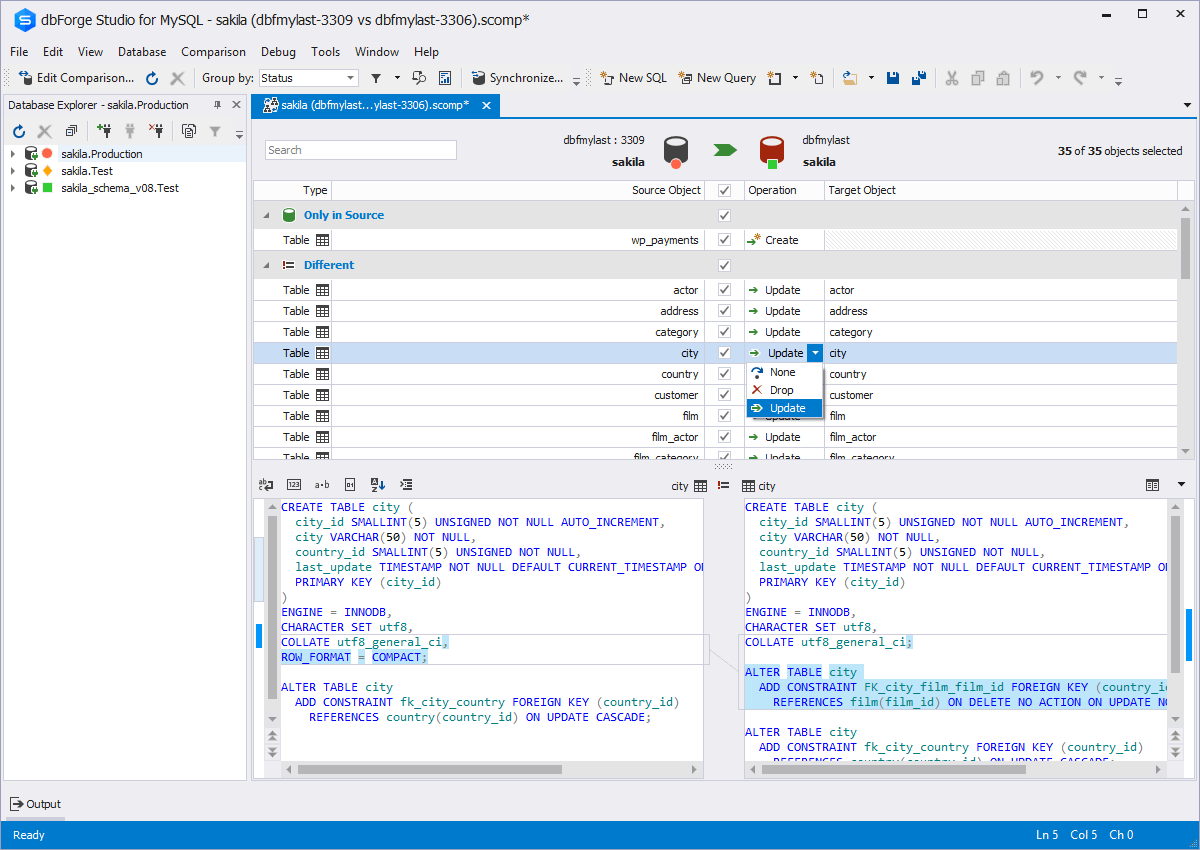  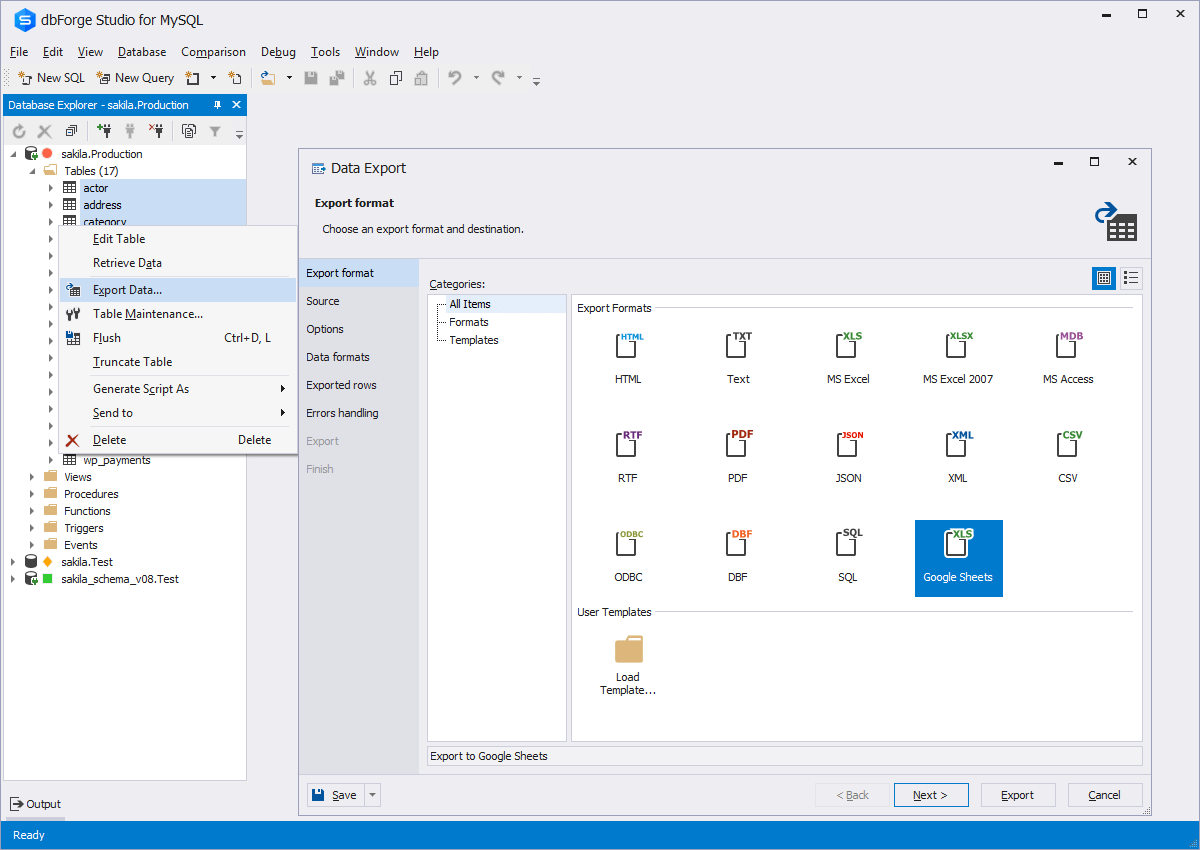   |




