
RaviShankar Sundaresan
Senior Enterprise Cloud Architect
Chose OCI
Excellent IOPS, Able to handle huge data volumes, highly scalable, Enterprise grade security features to meet the Global information Security compliance audits

| Product | Rating | Most Used By | Product Summary | Starting Price |
|---|---|---|---|---|
 OCI | N/A | Oracle Cloud Infrastructure (OCI) is Oracles's infrastructure-as-a-service (IaaS) platform which combines the utility of public cloud with the granular control, security, and predictability of on-premises infrastructure. | N/A | |
 Oracle WebLogic Server | N/A | Oracle WebLogic Server is a unified and extensible platform for developing, deploying and running enterprise applications, such as Java, for on-premises and in the cloud. WebLogic Server offers a scalable implementation of Java Enterprise Edition (EE) and Jakarta EE. | N/A | |
 Telefonix | N/A | N/A | N/A |
| Oracle Cloud Infrastructure | Oracle WebLogic Server | Telefonix | ||||||||||||||||||||||
|---|---|---|---|---|---|---|---|---|---|---|---|---|---|---|---|---|---|---|---|---|---|---|---|---|
| Editions & Modules | No answers on this topic | No answers on this topic | No answers on this topic | |||||||||||||||||||||
| Offerings |
| |||||||||||||||||||||||
| Entry-level Setup Fee | Optional | No setup fee | No setup fee | |||||||||||||||||||||
| Additional Details | — | — | — | |||||||||||||||||||||
| More Pricing Information | ||||||||||||||||||||||||
| Oracle Cloud Infrastructure | Oracle WebLogic Server | Telefonix | |
|---|---|---|---|
| Considered Multiple Products |  OCI RaviShankar Sundaresan Senior Enterprise Cloud Architect Chose OCI Excellent IOPS, Able to handle huge data volumes, highly scalable, Enterprise grade security features to meet the Global information Security compliance audits  Randeep Singh Sr Associate Chose OCI Better customer Support. Secure and reliable processing of data  Sagar Mehta Consultant Chose OCI - Performance was big reason for choosing Oracle Cloud infrastructure over AWS Ec2 and Azure VMware Solutions.- Oracle Database as application design was another reason for choosing Oracle Cloud infrastructure over AWS Ec2 and Azure VMware Solutions. In turn, OCI was better …  Eldhose K Shibu IT Infrastructure Analyst Chose OCI DigitalOcean, 11:11 Solutions for AWS and Vultr  Vineethkumar Marpadge ☁️ Cloud Support Engineer Chose OCI Red Hat Enterprise Linux (RHEL), Datadog and Grafana  Sayam Jain Associate Project Manager Chose OCI Amazon Web Services and Microsoft Azure  Muhammad Arsalan Niazi Sr. Lead Devops Engineer Chose OCI We don't face any issues with Google Cloud Platform, it's just like we want to save some billing costs so we looked for other solutions like Digital Ocean or Linode, but we found Oracle Cloud Infrastructure best suited for our requirements. Its region wise segregation also … | Oracle WebLogic Server  Surbhi Singhal Senior Software Engineer Chose Oracle WebLogic Server Oracle Analytics Cloud  Scott Kennedy Director, eCommerce Analytics and Digital Marketing Chose Oracle WebLogic Server I believe the Oracle WebLogic Suite is probably a better all encompassing suite of development tools for the IT department. [It] is probably a bit more expensive than other competitors like apache tomcat or NGINX, but is worth the investment if you consider the savings from …  Gonzalo Segarra Sub-Gerente de Desarrollo Chose Oracle WebLogic Server We have no option because we need it to use Oracle Forms, but we have used Jboss and tomcat in other projects and Weblogic is more stable.  Pranshu Sharma Service Fulfillment Domain Manager Chose Oracle WebLogic Server Apache Tomcat, Red Hat JBoss Enterprise Application Platform and IBM WebSphere Application Server on Cloud  Alexius Dionysius Diakogiannis, CSM Development Team Lead & Scrum Master Chose Oracle WebLogic Server The main competitor is Wildfly and Websphere. The choice it's all about the bundled cost regarding the chosen OS and Java vendor. All three are almost the same in terms of performance and features. An exceptional alternative from the OSS ecosystem is Payara. Payra has some …  Sirish Vadala Applications Developer Information Technology Specialist Chose Oracle WebLogic Server Oracle WebLogic Application Server is much more stable when compared to opensource application servers like Oracle GlassFish Server or Apache Tomcat. Coming to JBoss Enterprise Application Server, Oracle WebLogic Application Server has better support with most of the cloud …  Amanda Decker Development Coordinator, Advancement Services Chose Oracle WebLogic Server Red Hat JBoss EAP is good and open source. We chose Oracle WebLogic because we are using Oracle products like Oracle Enterprise Manager and it's very easy to integrate WebLogic with it. Also, for our mission critical applications, we wanted an application server with great …  Hakan Karayel System and Data Management Dep Manager Chose Oracle WebLogic Server We tested Red Hat JBoss. Then we decided to use WebLogic because of support issues we had with the other.  Daniel Pacheco Consultor ADF Chose Oracle WebLogic Server Apache Tomcat, Oracle GlassFish Server and Red Hat JBoss Enterprise Application Platform | Telefonix No answer on this topic |
| Oracle Cloud Infrastructure | Oracle WebLogic Server | Telefonix | |||||||||||||||||||||||||||||||||||||||
|---|---|---|---|---|---|---|---|---|---|---|---|---|---|---|---|---|---|---|---|---|---|---|---|---|---|---|---|---|---|---|---|---|---|---|---|---|---|---|---|---|---|
| Infrastructure-as-a-Service (IaaS) |
| ||||||||||||||||||||||||||||||||||||||||
| Application Servers |
|
| Oracle Cloud Infrastructure | Oracle WebLogic Server | Telefonix | |
|---|---|---|---|
| Small Businesses |  DigitalOcean Droplets Score 9.6 out of 10 |  NGINX Score 9.1 out of 10 |  CloudTalk Score 7.4 out of 10 |
| Medium-sized Companies |  SAP on IBM Cloud Score 9.0 out of 10 | NGINX Score 9.1 out of 10 | CloudTalk Score 7.4 out of 10 |
| Enterprises | SAP on IBM Cloud Score 9.0 out of 10 | NGINX Score 9.1 out of 10 |  Cisco Business Edition 7000 (discontinued) Score 9.0 out of 10 |
| All Alternatives | View all alternatives | View all alternatives | View all alternatives |
| Oracle Cloud Infrastructure | Oracle WebLogic Server | Telefonix | |
|---|---|---|---|
| Likelihood to Recommend | 8.1 (0 ratings) | 7.5 (0 ratings) | - (0 ratings) |
| Likelihood to Renew | 9.2 (0 ratings) | 9.0 (0 ratings) | - (0 ratings) |
| Usability | 7.0 (0 ratings) | 7.0 (0 ratings) | - (0 ratings) |
| Availability | 7.7 (0 ratings) | - (0 ratings) | - (0 ratings) |
| Performance | 8.7 (0 ratings) | 9.0 (0 ratings) | - (0 ratings) |
| Support Rating | 7.8 (0 ratings) | 6.0 (0 ratings) | - (0 ratings) |
| In-Person Training | 9.0 (0 ratings) | - (0 ratings) | - (0 ratings) |
| Online Training | 9.0 (0 ratings) | - (0 ratings) | - (0 ratings) |
| Implementation Rating | 8.0 (0 ratings) | - (0 ratings) | - (0 ratings) |
| Configurability | 8.0 (0 ratings) | - (0 ratings) | - (0 ratings) |
| Ease of integration | 8.0 (0 ratings) | 9.0 (0 ratings) | - (0 ratings) |
| Product Scalability | 8.4 (0 ratings) | - (0 ratings) | - (0 ratings) |
| Vendor post-sale | 8.0 (0 ratings) | - (0 ratings) | - (0 ratings) |
| Vendor pre-sale | 8.0 (0 ratings) | - (0 ratings) | - (0 ratings) |
| Oracle Cloud Infrastructure | Oracle WebLogic Server | Telefonix | |
|---|---|---|---|
| Likelihood to Recommend |
|
| No answers on this topic |
| Pros |
|
 Jayden Nishimura Digital Marketing Director | No answers on this topic |
| Cons |
 Bill Starling Cloud Engineer Team Lead |
| No answers on this topic |
| Likelihood to Renew |
| No answers on this topic | No answers on this topic |
| Usability |
 KAUSHIK DEBNATH SAP BASIS Consultant |
| No answers on this topic |
| Reliability and Availability |
| No answers on this topic | No answers on this topic |
| Performance |
RaviShankar Sundaresan Senior Enterprise Cloud Architect |
Amanda Decker Development Coordinator, Advancement Services | No answers on this topic |
| Support Rating |
|
| No answers on this topic |
| In-Person Training |
 Raosaheb Shinde Warehouse operation | No answers on this topic | No answers on this topic |
| Online Training |
| No answers on this topic | No answers on this topic |
| Implementation Rating |
| No answers on this topic | No answers on this topic |
| Alternatives Considered |
|
| No answers on this topic |
| Scalability |
| No answers on this topic | No answers on this topic |
| Return on Investment |
 David Williams CTO (Chief Technical Officer) |
| No answers on this topic |
| ScreenShots | OCI Screenshots    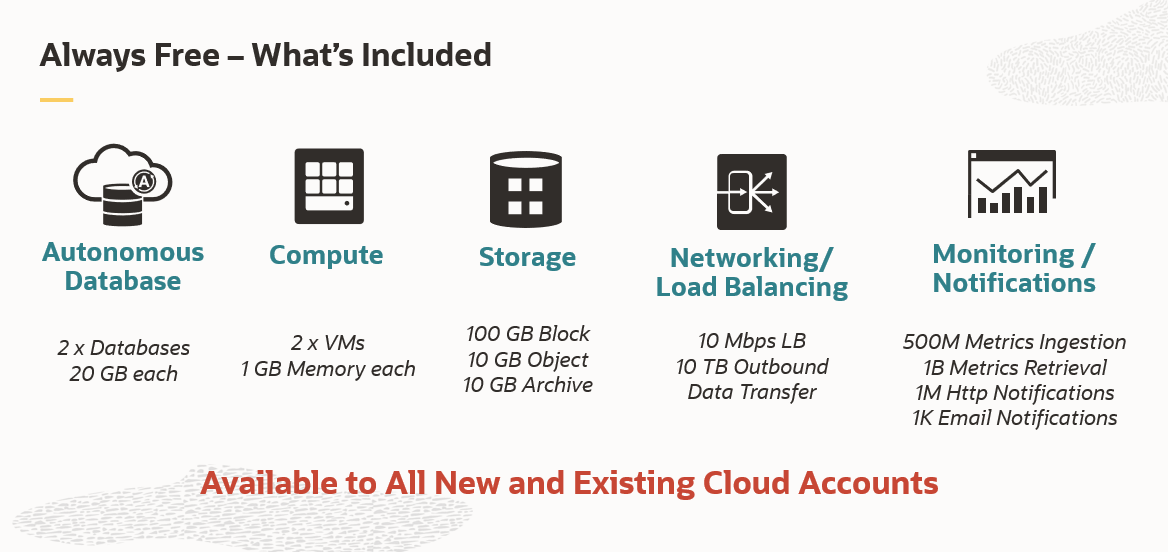 |
