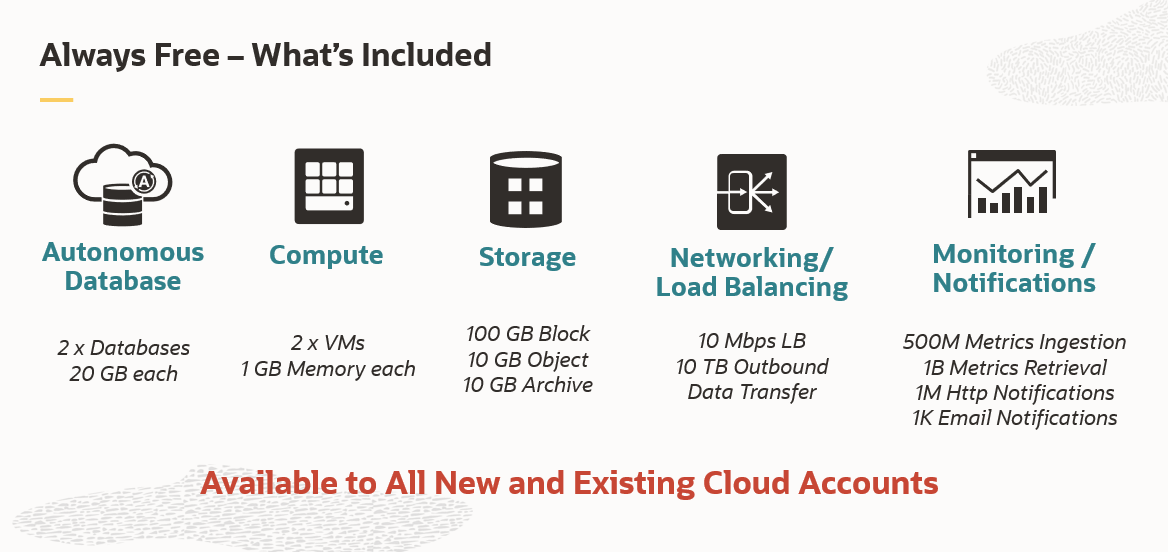
Oracle Cloud Infrastructure (OCI) is Oracles's infrastructure-as-a-service (IaaS) platform which combines the utility of public cloud with the granular control, security, and predictability of on-premises infrastructure.
A de minimis incentive was given to thank the reviewer for their time. The incentive was not used to bias or drive a particular response, nor was the incentive contingent on a positive endorsement. TR verified that a representative sample of customers was invited. More Info
Senior Enterprise Cloud Architect in Information Technology at Blue Yonder (5001-10,000 employees employees)
Use Cases and Deployment Scope
We have hosted our Mission Critical Global Supply Chain Management Applications in Oracle Cloud Infrastructure Platform by utilizing OCI services such as Oracle OCI IaaS VM, Oracle DB PaaS service. Also, we have created the Storage buckets with critical and secured data which is essential for our global supply chain management SaaS customers across the world.
Pros
IAAS VM's
Large size Storage buckets with Auto Tiering enabled
Oracle Database
Cons
User interface need finetuning
More Support for serverless
Container support
Need Flexible SaaS Offerings
Return on Investment
Improved the time to launch new features in supply chain solutions
Data Security
Fully Scalable
Alternatives Considered
Microsoft SQL Server
Other Software Used
ServiceNow IT Asset Management, Microsoft Azure, Jira Service Management
A de minimis incentive was given to thank the reviewer for their time. The incentive was not used to bias or drive a particular response, nor was the incentive contingent on a positive endorsement. More Info
Database Engineer in Information Technology at Giesecke+Devrient (10,001+ employees employees)
Use Cases and Deployment Scope
The main reason for using the Oracle Cloud Infrastructure is the Oracle database services provided in OCI like Autonomous database, Oracle Base Service and Exadata etc. Oracle is putting lots of innovations in it's Oracle database running into OCI and features being released first in the Oracle cloud. For our product cloud journey we were looking for the best place to run the Oracle database.
Pros
Autonomous database.
Oracle Database Base service.
We can start with the small size of the Oracle Database scale-up as demand grows as opposed to the On-Premise Oracle Database setup.
No upfront investment in Oracle Database.
The latest and greatest feature is firstly available in the OCI for Oracle Database.
Cons
Costs are still high for using the Oracle Database.
Oracle Cloud is still lacking lots of good features which is available in the clouds like Azure, AWS, or GCP.
There should be open-source options & services available in the OCI.
Return on Investment
It is not a good option if your application uses a database other than Oracle.
Limited open-source features in OCI creates vendor lock issue.
Limited options are available as compared with Azure and AWS.
Alternatives Considered
Azure Cloud Services
Other Software Used
Oracle Autonomous Database, Microsoft Azure, Oracle Exadata
A de minimis incentive was given to thank the reviewer for their time. The incentive was not used to bias or drive a particular response, nor was the incentive contingent on a positive endorsement. More Info
Senior software engineer in Information Technology at Manhattan (501-1000 employees employees)
Use Cases and Deployment Scope
We use Oracle Cloud Infrastructure as our cloud provider for one of the biggest supply chain provider organizations in the world. All our 500+ customers are hosted on Oracle Cloud Infrastructure, and everything is going as expected with it. Initially, we never had our own infra so we were dependent on customers' owned infra and managing each infrastructure from customer to customer for us was a critical task. So with Oracle Cloud Infrastructure, we hosted all our applications in one place and we are giving them as a SAAS product.
Pros
More Reliability and especially Oracle Database
Pricing is really impressive
UI is very easy to manage and has explanation for each step
Easily integrated to other clouds as well
Cons
They should introduce messaging queue like pub/sub or sqs
When major outage comes we see delay in communication from them
Customer support needs an improvement
MySQL and some more services
Return on Investment
First it generated a lot of income as we provide full service as SAAS.
Since we have all customers on one cloud, managing and applying fixes is very easy for us.
Customers are also happy because they had to spend a lot of money on having their own infra and managing that.
Alternatives Considered
Google Cloud Platform, AWS Cloud9 and Azure Cloud Services
Other Software Used
Azure Cloud Services, Splunk AppDynamics, Google Kubernetes Engine, IBM Cognos Analytics, IBM webMethods, Jenkins
Administrator in Information Technology (5001-10,000 employees employees)
Use Cases and Deployment Scope
I am fairly new to using Oracle Cloud Infrastructure in my team. I started learning and using it when the requirement in my team was raised for many reason like scalability, pricing flexibility and security for oracle servers. We use Oracle Cloud Infrastructure for the pre-prod and Prod servers. Oracle provides a nice feasibility to manage VM instance and solutions for the resolving issues and growing need of business. So far its been a great experience.
Pros
Sacalibitly
Management
Availability
Cost Saving
Cons
Support team
Guide Documents
Return on Investment
OCI maintains an extensive compliance program
Data is encrypted for each customer
Customers can control the data they store
Other Software Used
Jenkins, Red Hat Ansible Automation Platform, Microsoft Visual Studio
A de minimis incentive was given to thank the reviewer for their time. The incentive was not used to bias or drive a particular response, nor was the incentive contingent on a positive endorsement. More Info
Verified User
Consultant in Information Technology (10,001+ employees employees)
Use Cases and Deployment Scope
We are extensively using Oracle Cloud Infrastructure in our organization which includes IaaS, SaaS and PaaS services. With Oracle Cloud Infrastructure we are easily able to deploy the applications without much involvement of other infrastructure team. With Oracle Cloud Infrastructure management of Databases is very easy and with autonomous databases, we don't have to worry about maintenance work like patches, backups etc.
Pros
Autonomous operations of databases without much human interventions.
Easy scalability of infrastructure like, compute, storage etc.
Highest security because of data encryption and data masking.
Cons
Oracle Cloud Infrastructure could provide better integration with third-party tools and applications.
Migration from legacy system is challenging with Oracle Cloud Infrastructure
Oracle Cloud Infrastructure is expensive for mid cap companies
Return on Investment
Less human resources are required to manage databases decreasing the overall IT budget.
With instant scalability, we dont have to make a projection about the requirement prior.
Easy to create and destroy instances saves overall infrastructure costs.
Alternatives Considered
Google Cloud Platform and Amazon Web Services
Other Software Used
Amazon Web Services, Microsoft Azure, Google Cloud Platform
OCI Alternatives
Products similar to OCI that may also meet your needs.
