Polarion ALM is an application requirement management software platform now owned and supported by Siemens since the 2015 acquisition. It is available on the cloud (Polarion X) and on-premise. Polarion connect teams and projects to improve application development processes with
a single, unified solution for requirements, coding, testing and release.
$42
per month per user
SonarQube
Score8.7 out of 10
N/A
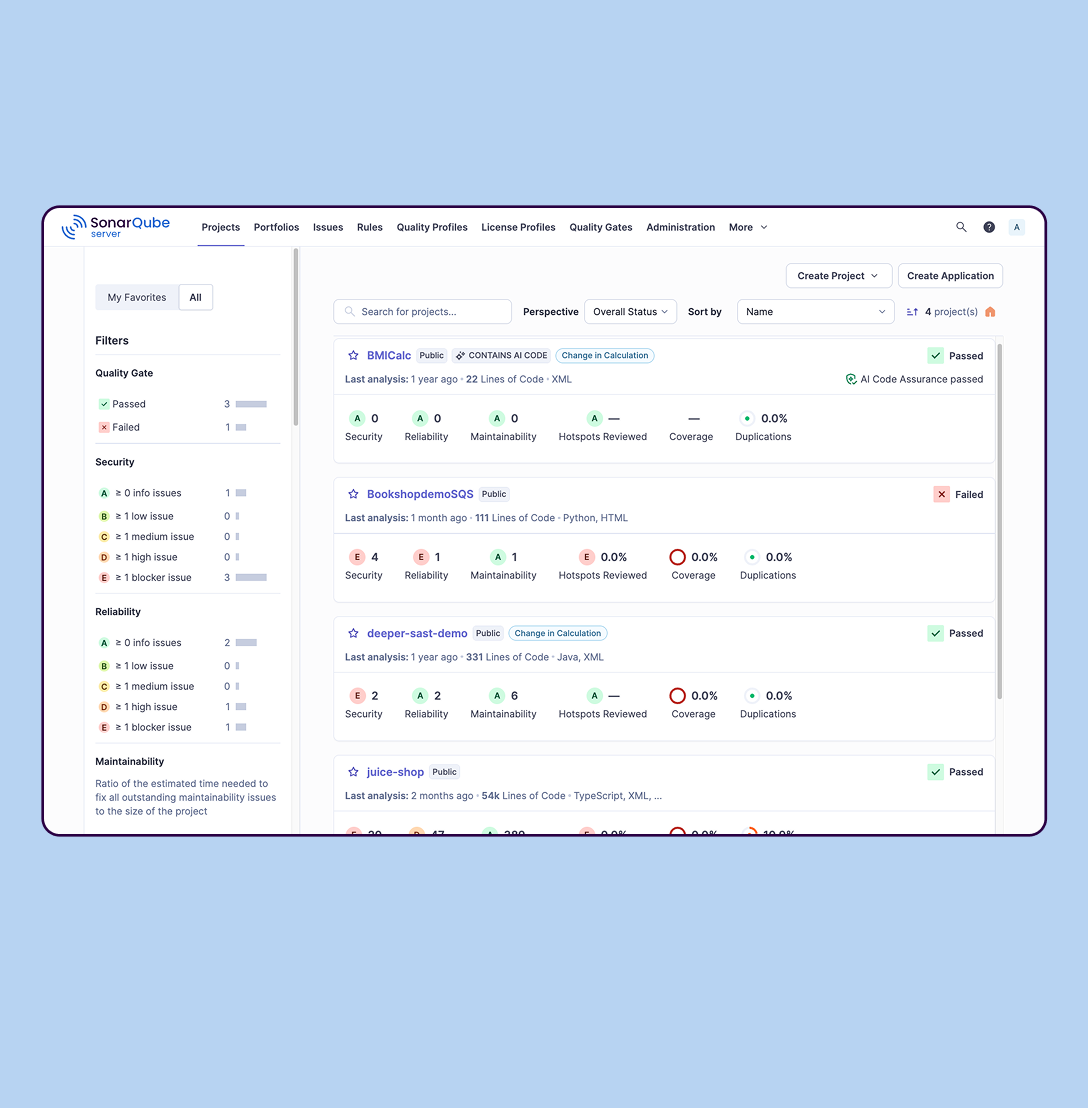
SonarQube is an automated code review solution, serving as the verification layer for code quality and SDLC security. SonarQube is used to ensure that code is secure, reliable, and maintainable. It is available through SaaS or self-managed deployment.
The question is actually not trivial to answer in 200 words. To summarize, I can say that we have had consistently positive experiences with all customers where we have used Polarion ALM. The sector in which the customer operates only played a subordinate role. We use Polarion ALM in almost all sectors: Medical technology, pharmaceuticals, aerospace, agriculture, automotive and many others. It is also interesting to note that in the beginning we were mostly active in the development of products, systems or software. Over time, this has changed more and more for some customers and risk management or projects for lessons learned have taken up more space. This enabled us to banish a seemingly endless number of Excel lists. Who doesn't know this problem: at first there is only one Excel list on the drive. Day by day there are more. Some with a date in the file name. Others with an employee abbreviation. In the end, nobody can tell which is the current and complete list. The really good thing about Polarion ALM is that it is extremely flexible to use and the configuration determines what the project is used for in Polarion ALM. It is customizable to my situation and not rigid.
SonarQube is excellent if you start using it at the beginning when developing a new system, in this situation you will be able to fix things before they become spread and expensive to correct. It’s a bit less suitable to use on existing code with bad design as it’s usually too expensive to fix everything and only allows you to ensure the situation doesn’t get worse.
A de minimis incentive was given to thank the reviewer for their time. The incentive was not used to bias or drive a particular response, nor was the incentive contingent on a positive endorsement. More Info
Polarion ALM provides a centralized repository for capturing and managing requirements. Teams can define, organize, and link requirements to other artifacts like test cases and development tasks.
Test Management:
Polarion ALM facilitates end-to-end test management. Teams can create detailed test cases, manage test execution, and track test results.
Traceability and Impact Analysis:
Polarion ALM ensures traceability across all phases of the development lifecycle. Users can establish links between requirements, test cases, development tasks, and other artifacts. This traceability helps in impact analysis, allowing teams to understand how changes in one area may affect other parts of the project.
Customization and Adaptability:
Polarion ALM is highly customizable to fit the unique needs of different organizations and industries. Users can create custom workflows, define custom fields, and adapt the tool to their specific development processes.
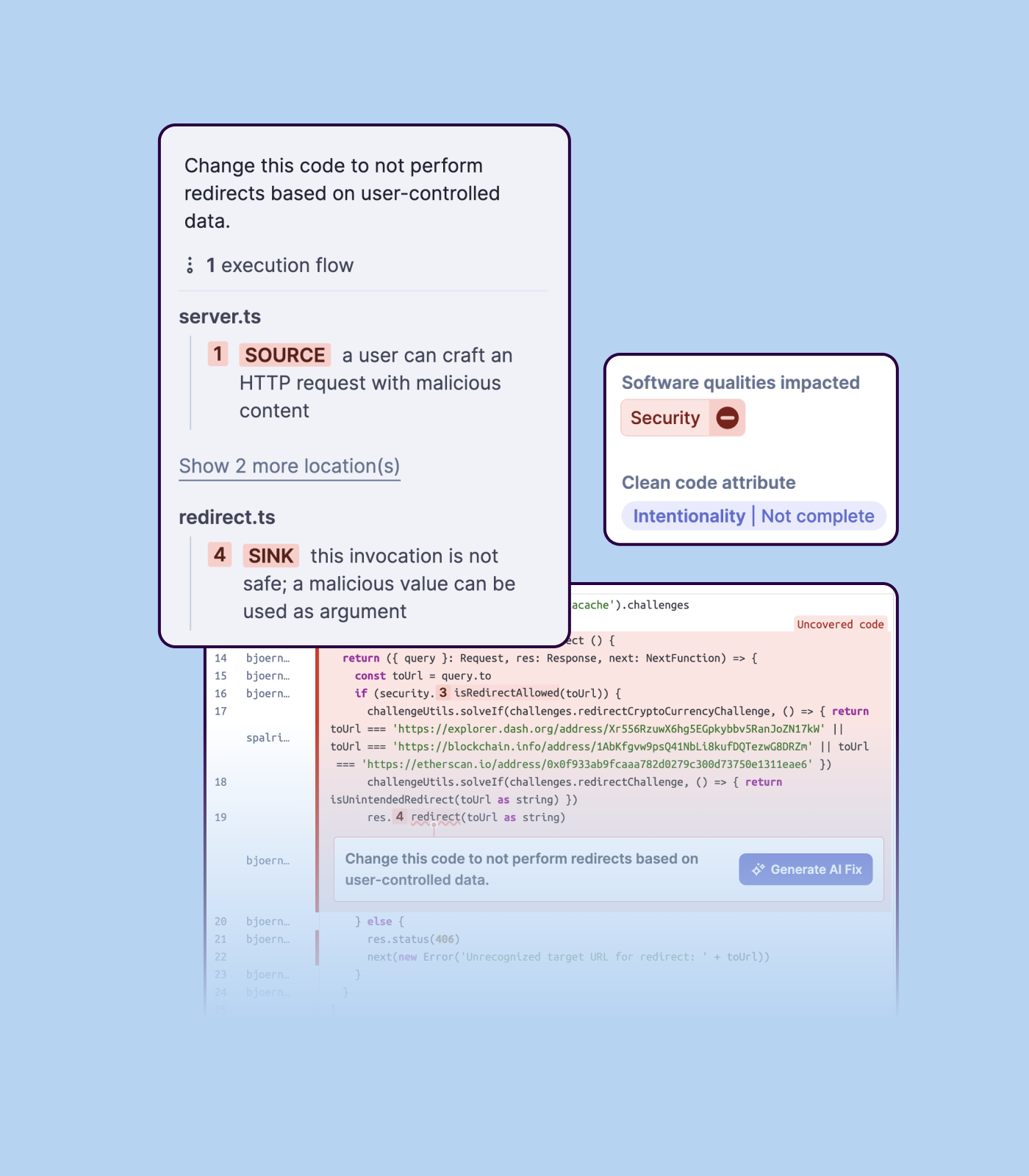
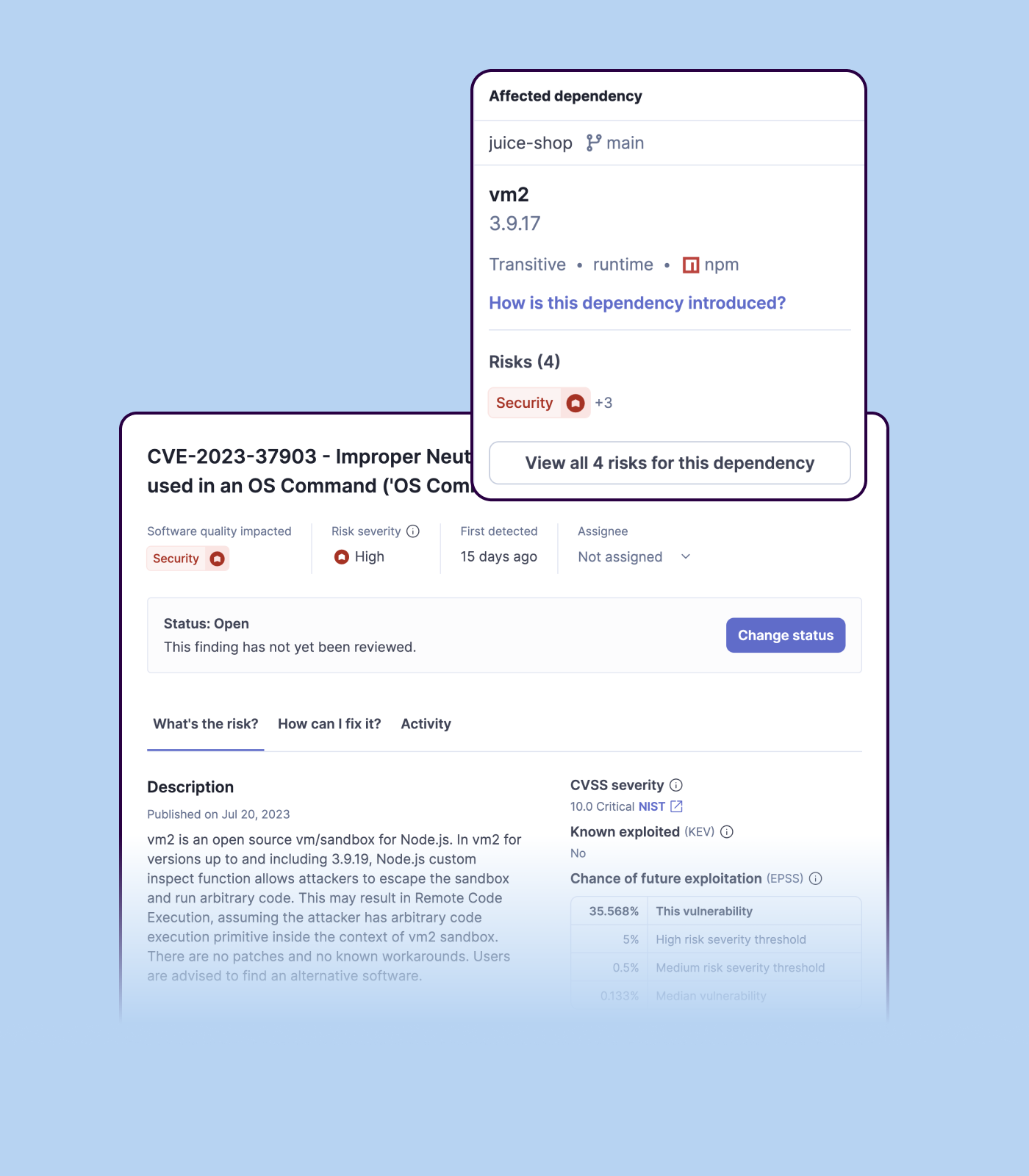
Detecting bugs and vulnerabilities: SonarQube can identify a wide range of bugs and vulnerabilities in code, such as null pointer exceptions, SQL injection, and cross-site scripting (XSS) attacks. It uses static analysis to analyze the code and identify potential issues, and it can also integrate with dynamic analysis tools to provide even more detailed analysis.
Measuring code quality: SonarQube can measure a wide range of code quality metrics, such as cyclomatic complexity, duplicated code, and code coverage. This can help teams understand the quality of their code and identify areas that need improvement.
Providing actionable insights: SonarQube provides detailed information about issues in the code, including the file and line number where the issue occurs and the severity of the issue. This makes it easy for developers to understand and address issues in the code.
Integrating with other tools: SonarQube can be integrated with a wide range of development tools and programming languages, such as Git, Maven, and Java. This allows teams to use SonarQube in their existing development workflow and take advantage of its powerful code analysis capabilities.
Managing technical debt: SonarQube provides metrics and insights on the technical debt on the codebase, enabling teams to better prioritize issues to improve the quality of the code.
Compliance with coding standards: SonarQube can check the code against industry standards like OWASP, CWE and more, making sure the code is compliant with security and coding standards.
A de minimis incentive was given to thank the reviewer for their time. The incentive was not used to bias or drive a particular response, nor was the incentive contingent on a positive endorsement. More Info
More robust engine as far as the actual took is concerned. There are navigation components in trace to reporting which we feel can be improved especially when dealing with cross global accessing of the tool. It slows us down a bit so it's backend driven optimization as well as some front end "clunkiness" that can be improved.
Improve some filtering capabilities especially in creating custom reports and generally all around the ALM components of the tool.
As of the version we have, the ability to enhance replationship types in traceability is limited.
A de minimis incentive was given to thank the reviewer for their time. The incentive was not used to bias or drive a particular response, nor was the incentive contingent on a positive endorsement. More Info
Importing a new custom quality profile on SonarQube is a bit tricky, it can be made easier
Every second time when we want to rerun the server, we have to restart the whole system, otherwise, the server stops and closes automatically
When we generate a new report a second time and try to access the report, it shows details of the old report only and takes a lot of time to get updated with the details of the new and fresh report generated
A de minimis incentive was given to thank the reviewer for their time. The incentive was not used to bias or drive a particular response, nor was the incentive contingent on a positive endorsement. More Info
There is too much at stake to go into a new system. But with everything else being promised as far as newer more innovative products, the justification to not renew is a huge risk so that is not a concern
A de minimis incentive was given to thank the reviewer for their time. The incentive was not used to bias or drive a particular response, nor was the incentive contingent on a positive endorsement. More Info
Polarion ALM can be used individually and what I do with Polarion ALM is decided by my configuration. Lesson-learned, operational risk management, product, system or software development or customer management .... doesn't matter at all. I decide with my configuration what I will do with Polarion ALM. Of course, you can also use Polarion ALM out-of-the-box for your development because it comes with a large set of project templates.For this reason, I would also recommend not to just get started. A suitable consultant will show you the right templates and customize them according to your needs. Having Polarion ALM is like having a car. You know exactly how to operate the car. You've done it a thousand times before. The details are in the configuration: did I have a navigation system installed or not? Do I have a lane departure warning system or not? Do I have cruise control or not? Unlike when buying a vehicle, almost all functions are already available and can be used, usually at no extra cost. However, if something is missing, it can be obtained via the manufacturer's extension portal. Individual extensions are subject to a charge. Polarion ALM - easy to deploy and easy to use.
A de minimis incentive was given to thank the reviewer for their time. The incentive was not used to bias or drive a particular response, nor was the incentive contingent on a positive endorsement. More Info
A de minimis incentive was given to thank the reviewer for their time. The incentive was not used to bias or drive a particular response, nor was the incentive contingent on a positive endorsement. More Info
A de minimis incentive was given to thank the reviewer for their time. The incentive was not used to bias or drive a particular response, nor was the incentive contingent on a positive endorsement. More Info
We we easily able to integrate the SonarQube steps into our TFS process via the Microsoft Marektplace, we didn't have the need to call SonarQube support. We've used their online documentation and community forum if we ran into any issues.
A de minimis incentive was given to thank the reviewer for their time. The incentive was not used to bias or drive a particular response, nor was the incentive contingent on a positive endorsement. More Info
A de minimis incentive was given to thank the reviewer for their time. The incentive was not used to bias or drive a particular response, nor was the incentive contingent on a positive endorsement. More Info
A de minimis incentive was given to thank the reviewer for their time. The incentive was not used to bias or drive a particular response, nor was the incentive contingent on a positive endorsement. More Info
A de minimis incentive was given to thank the reviewer for their time. The incentive was not used to bias or drive a particular response, nor was the incentive contingent on a positive endorsement. More Info
Polarion ALM has the best usability, extensibility and reactiv product management. The support is also very good compared to other companies. Or in other words it is closer to the customer. Codebeamer is for sure also a good ALM tool with a great feature set, but existing customers are often neglected. We will see, what PTC as the new owner of codebeamer will change at this point.
SonarQube is an open-source. It's a scalable product. The costs for this application, for the kind of job it does, are pretty descent. Pipeline scan is more secured in SonarQube. Its a very good tool and its support multiple languages. Its main core competency is of static code analysis and that is why SonarQube exists and it does it exceedingly well. The quality of scan on code convention, best practices, coding standards, unit test coverage etc makes them one of the best competent tool in the market
A de minimis incentive was given to thank the reviewer for their time. The incentive was not used to bias or drive a particular response, nor was the incentive contingent on a positive endorsement. More Info
A de minimis incentive was given to thank the reviewer for their time. The incentive was not used to bias or drive a particular response, nor was the incentive contingent on a positive endorsement. More Info
A de minimis incentive was given to thank the reviewer for their time. The incentive was not used to bias or drive a particular response, nor was the incentive contingent on a positive endorsement. More Info
Positive ROI from the standpoint of flagging several issues that would have otherwise likely been unaddressed and caused more time to be spent closer to launch
Slightly positive ROI from time-saving perspective (it's an automated check which is nice, but depending on the issues it finds, can take developers time to investigate and resolve)