React or React.js is a JavaScript library for building user interfaces. React enables users to create interactive UIs.
$0
Tricentis qTest
Score8.7 out of 10
N/A
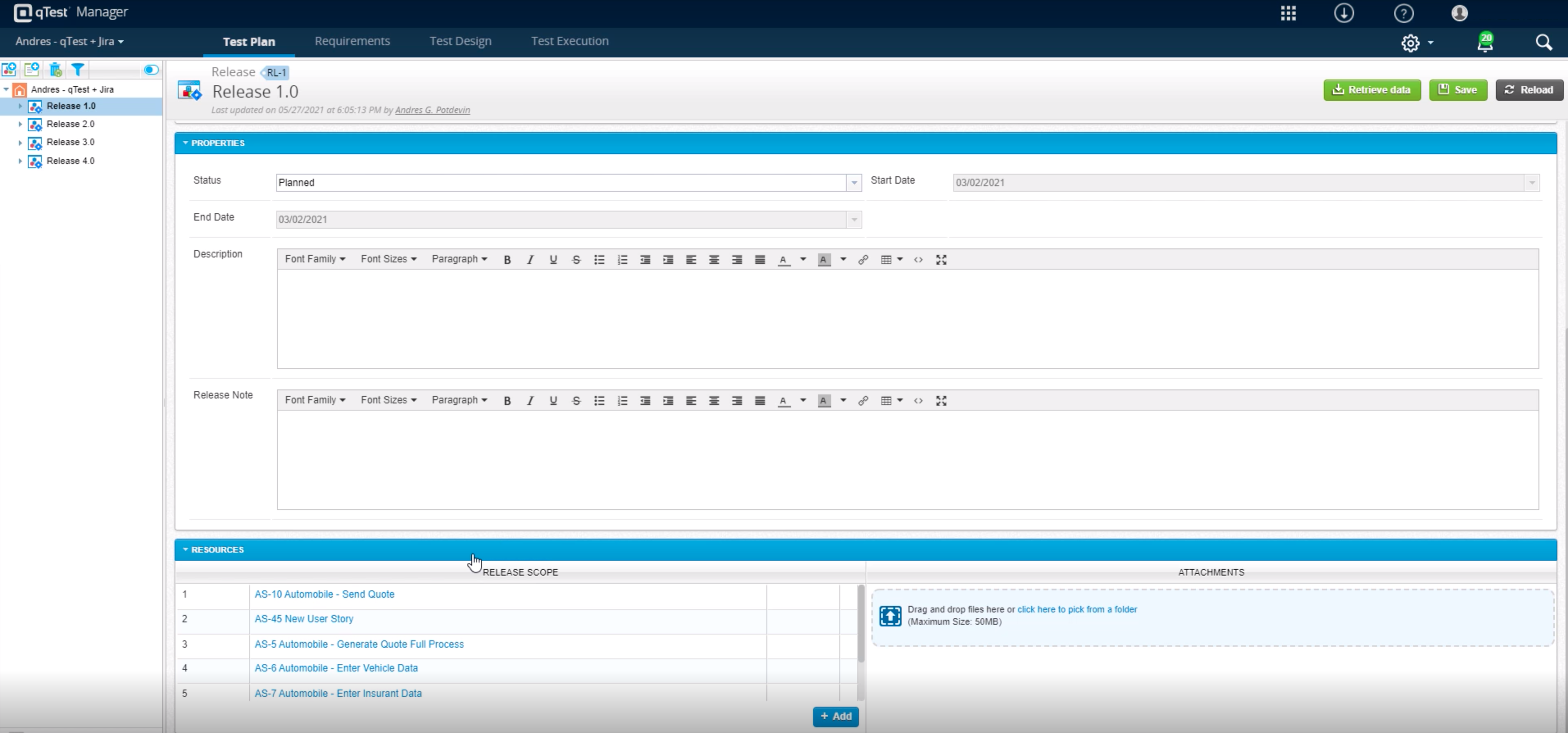
Tricentis qTest (formerly QASymphony) provides enterprise-level agile testing tools giving businesses visibility and control needed to ensure application quality in fast-paced development environments. Tricentis and QASymphony merged in summer 2018.
React is a JavaScript user interface construction library that works well for:
Developing web apps with dynamic and complicated user interfaces.
creating reusable UI elements that may be used in other applications.
creating single-page applications with dynamic content updates that don't require a page reload.
The Virtual DOM's effective updating mechanism allows it to handle large volumes of data updates.
React, on the other hand, might be less suitable for:
Websites that are simple, stagnant, and have no interaction. Other libraries or simple HTML, CSS, and JavaScript may be a better fit in such circumstances.
Web sockets may be a better choice for applications that need real-time updates, such as chat or gaming apps.
When creating mobile apps, React Native is a better option.
Server side rendering only, as React is designed to run on the client side.
Tricentis qTest integrates seamlessly with Jira, making it ideal for teams that manage user stories and defects in Jira while keeping test cases and execution in qTest. When paired with automation tools like tosca, Selenium, or WebdriverIO, qTest is excellent for aggregating both manual and automated test results in one place.
A de minimis incentive was given to thank the reviewer for their time. The incentive was not used to bias or drive a particular response, nor was the incentive contingent on a positive endorsement. More Info
React is fantastic for building performant user interfaces. Our web app is snappy and great for our customers.
React has the philosophy of doing one thing and doing it well which is the view layer of the application. This makes it incredibly intuitive and flexible for developers to use.
React has lead the way in being able to write modular and structured code. It is a drastic improvement since the days of spaghetti jQuery code.
React has an unmatched community. The amount of tools and libraries available is fantastic, and there plenty of solutions available online for common problems.
A de minimis incentive was given to thank the reviewer for their time. The incentive was not used to bias or drive a particular response, nor was the incentive contingent on a positive endorsement. More Info
Tricentis qTest manages test cases very well and keeps step by step by details of each and every scenarios
Tricentis qTest provides all the details related to functionality in a single place which saves time and efforts of QA
QA doesnt require much knowledge for test case execution as every details are there in Tricentis qTest test cases which saves the time of knowledge transfer
A de minimis incentive was given to thank the reviewer for their time. The incentive was not used to bias or drive a particular response, nor was the incentive contingent on a positive endorsement. More Info
Debugging React is challenging. Bugs in react code generate stack traces internal to React and it is often totally unclear how it relates to the code you actually wrote.
Relating your React elements to corresponding DOM elements is difficult. The intentional separation of virtual and actual DOM also makes it difficult to map the elements to the structures in the DOM. This is partially ameliorated by the use of the React dev tool, which provides a DOM-like view of the React elements, but the tool still does not provide a direct correspondence with the DOM that is often necessary to figure out why something isn't right.
Because JSX is React-specific and not a language feature, a special compilation process is necessary to convert JSX code to normal JS. Coming from a C++ background, compiling things doesn't bother me, but many JS developers are used to a less structured development.
A de minimis incentive was given to thank the reviewer for their time. The incentive was not used to bias or drive a particular response, nor was the incentive contingent on a positive endorsement. More Info
We can add some more integration features with JIRA so the users can directly mark the test as executed from JIRA itself when functional testing is done.
Tricentis qTest can provide some features like sending reminders for retesting if there are failed test cases marked while testing to keep Tricentis qTest up to date.
A de minimis incentive was given to thank the reviewer for their time. The incentive was not used to bias or drive a particular response, nor was the incentive contingent on a positive endorsement. TR verified that a representative sample of customers was invited. More Info
A de minimis incentive was given to thank the reviewer for their time. The incentive was not used to bias or drive a particular response, nor was the incentive contingent on a positive endorsement. TR verified that a representative sample of customers was invited. More Info
React is just a bit of a different animal. I was avoiding it for the longest time. I thought for sure I would land on Vue or something else with a more approachable and familiar appearance. But after taking an online course in React, I started realize what people were raving about (and complaining about) and decided to implement it at our office for one of our products.
A de minimis incentive was given to thank the reviewer for their time. The incentive was not used to bias or drive a particular response, nor was the incentive contingent on a positive endorsement. More Info
It successfully balances deep enterprise functionality with a clean and modern interface. One of its strongest points is the intuitive, folder based navigation, which makes organizing test case and cycles feel natural. Learning curve is relatively shallow for the new team members to become productive without extensive onboarding. Also the deep integration with JIRA is a significant boost to its usability.
A de minimis incentive was given to thank the reviewer for their time. The incentive was not used to bias or drive a particular response, nor was the incentive contingent on a positive endorsement. More Info
Since it's open-source and very popular, the community support for React and related tools and libraries is excellent. There are a lot of people using the same tools, and so issues tend to get fixed quickly and "recipes" are easy to come by. And since it's backed by Facebook, they have a dedicated engineering team working on the progression of React.
A de minimis incentive was given to thank the reviewer for their time. The incentive was not used to bias or drive a particular response, nor was the incentive contingent on a positive endorsement. More Info
A de minimis incentive was given to thank the reviewer for their time. The incentive was not used to bias or drive a particular response, nor was the incentive contingent on a positive endorsement. TR verified that a representative sample of customers was invited. More Info
A de minimis incentive was given to thank the reviewer for their time. The incentive was not used to bias or drive a particular response, nor was the incentive contingent on a positive endorsement. TR verified that a representative sample of customers was invited. More Info
While this is a widely contested debate with various blog posts and benchmarks all over the place, its really a personal choice to determine what works for the team. Coming from a Angular 1.x background, I decided to try a new framework when Angular 2.x was announced and at that time React is gaining popularity and Vue hasn't taken off yet. Compared to Angular 1.x and Vue (hybrid of React and Angular) that split the logic from the html templates, I loved the way React breaks code into components using the jsx syntax. In my mind, this allows for cleaner components and easier maintenance
A de minimis incentive was given to thank the reviewer for their time. The incentive was not used to bias or drive a particular response, nor was the incentive contingent on a positive endorsement. More Info
All of them offer formidable solutions in the test management realm, but each one caters to different niche and need. qTest distinguishes itself with its deep integration capabilities, especially with Agile and DevOps tools, enabling streamlined CI/CD process. Its modern, user-centric interface contrasts with ALM's more dated appearance and complex setup. While TestRail provides a clean user experience and caters to a broad spectrum of business, qTest's scalability, from SMBs to large enterprises, stands out. PractiTest's cloud-based solution is geared towards mid-sized companies, but qTest's flexibility, advanced analytics, and robust reporting grant teams actionable insights. qTest' approach to a more holistic test management closely aligning with modern software development practices
A de minimis incentive was given to thank the reviewer for their time. The incentive was not used to bias or drive a particular response, nor was the incentive contingent on a positive endorsement. More Info
A de minimis incentive was given to thank the reviewer for their time. The incentive was not used to bias or drive a particular response, nor was the incentive contingent on a positive endorsement. More Info