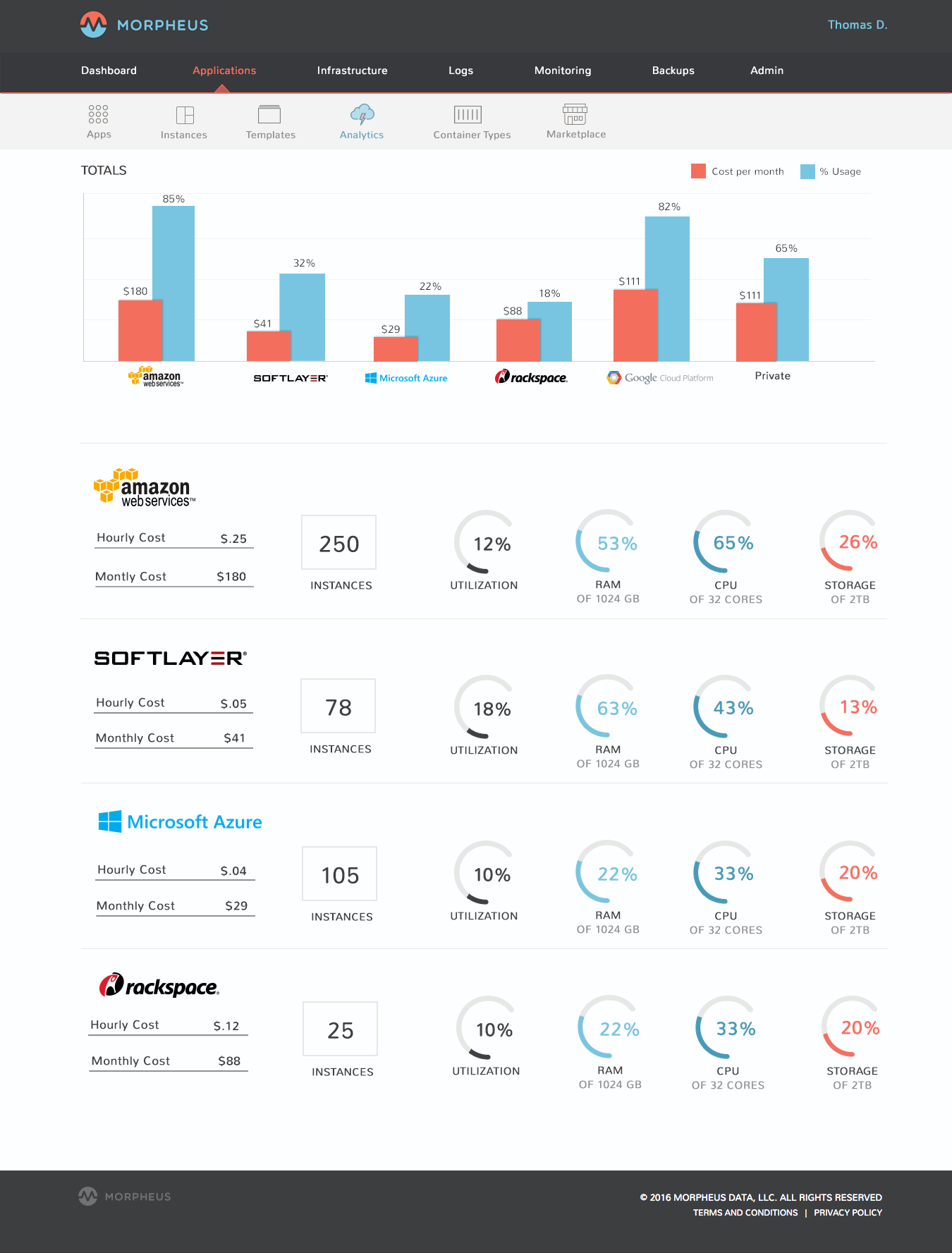
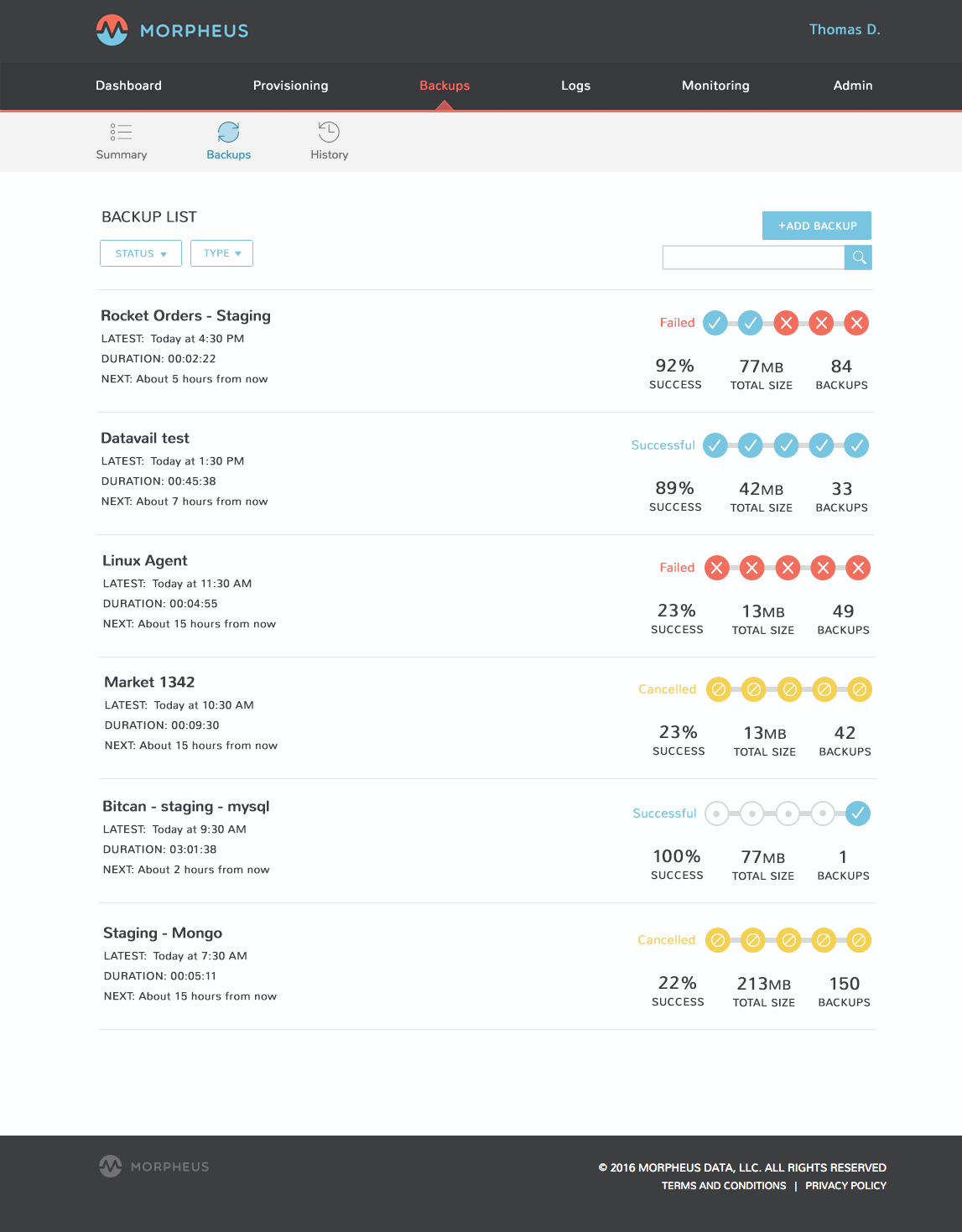
Morpheus is a hybrid cloud management platform that simplifies and automates the management of IT infrastructure across multiple clouds. According to the vendor, it caters to organizations of all sizes, including small and medium-sized businesses as well as large enterprises. Morpheus is utilized by various professionals and industries, including IT operations and infrastructure teams, cloud architects and engineers, DevOps teams, system administrators, and IT service management professionals. It is commonly used in finance, healthcare, manufacturing, retail, and technology sectors.
Key Features
Containers: Morpheus supports the management of containers, enabling users to easily provision and manage containerized applications across multiple cloud environments. Users can deploy and scale containers using popular container orchestration platforms such as Kubernetes and Docker Swarm. Morpheus offers a unified interface for efficient management of container resources, including monitoring, logging, and resource allocation.
Identity: Morpheus integrates with various identity providers, including LDAP, Microsoft Active Directory, Microsoft Azure AD, OneLogin, and Okta. Users can seamlessly connect their existing identity management systems to Morpheus, facilitating role-based access control and policy enforcement. Morpheus supports SAML authentication, allowing users to authenticate using their preferred SAML providers.
ITSM: Morpheus seamlessly integrates with leading IT service management (ITSM) tools like BMC Remedy, Cherwell, and ServiceNow. Users can automate ITSM processes and workflows, such as ticketing, change management, and incident management, through Morpheus. It provides a centralized platform for efficient management of ITSM activities, enhancing collaboration and productivity across IT teams.
Load Balancers: Morpheus offers comprehensive support for various load balancers, including Amazon ALB, Amazon ELB, Citrix NetScaler, F5, HA Proxy, OpenStack Octavia, and NSX Advanced Load Balancer. Users can easily configure and manage load balancers through Morpheus, ensuring high availability and optimized distribution of traffic. Morpheus enables load balancing for both on-premises and cloud environments, enhancing application performance and scalability.
Monitoring: Morpheus provides robust monitoring capabilities, allowing users to effectively monitor the health and performance of their infrastructure and applications. Users can customize monitoring policies, receive timely alerts and notifications, and access real-time metrics and logs through the Morpheus interface. Morpheus integrates with popular monitoring tools like ServiceNow, providing a unified view of monitoring data and facilitating proactive troubleshooting.
Networking: Morpheus supports a wide range of networking technologies and services, including AWS Route 53 for DNS, Bluecat and Infoblox for IPAM, Cisco ACI, Microsoft DNS, phpIPAM, Power DNS, SolarWinds for IPAM, and VMware NSX-T. Users can effortlessly manage network resources, configure network policies, and automate network provisioning and configuration through Morpheus. It serves as a centralized platform for streamlined network management across diverse environments.
Storage: Morpheus seamlessly integrates with various storage solutions, including AWS S3, Dell EMC Isilon, Dell EMC ECS, Rackspace CDN, and HPE 3PAR StoreServ. Users can easily provision and manage storage resources, configure storage policies, and automate storage operations through Morpheus. It offers a unified interface for efficient management of storage resources across multiple cloud providers and on-premises environments.