

OroCommerce
What is OroCommerce?
OroCommerce is a B2B eCommerce platform for operating digital storefronts with customer-specific catalogs, pricing, buyer roles, requests for quote, ordering, invoicing, and payments. The platform supports complex business-account structures and multiple storefronts.
Key Capabilities
- Catalog and pricing management: Organizations can manage customer-specific catalogs, price books, contract pricing, product bundles, order minimums, and account entitlements.
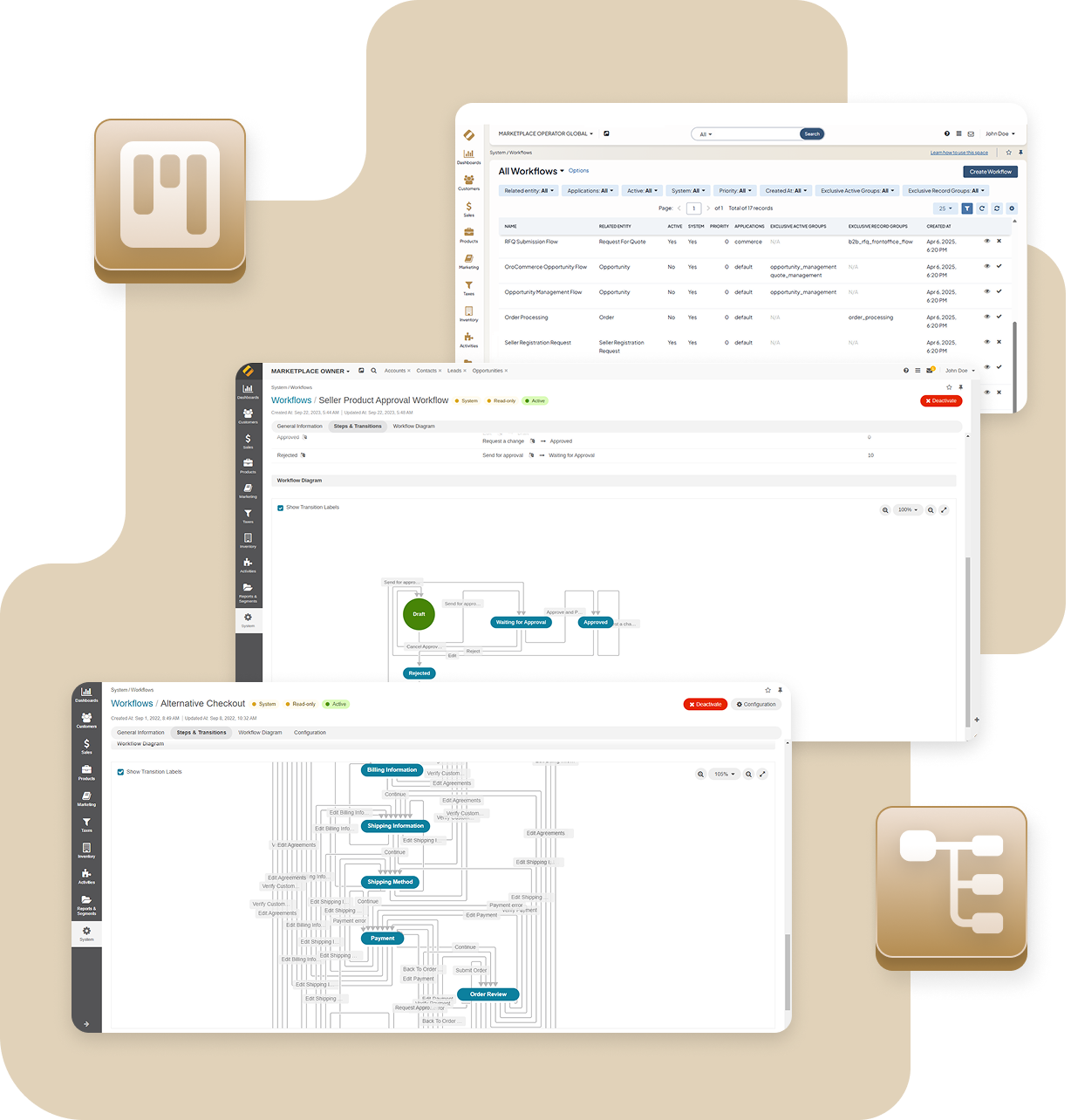
- Quoting and order processing: Quote to Cash functions support requests for quote, configure-price-quote workflows, approvals, orders, invoices, payment collection, and transaction histories.
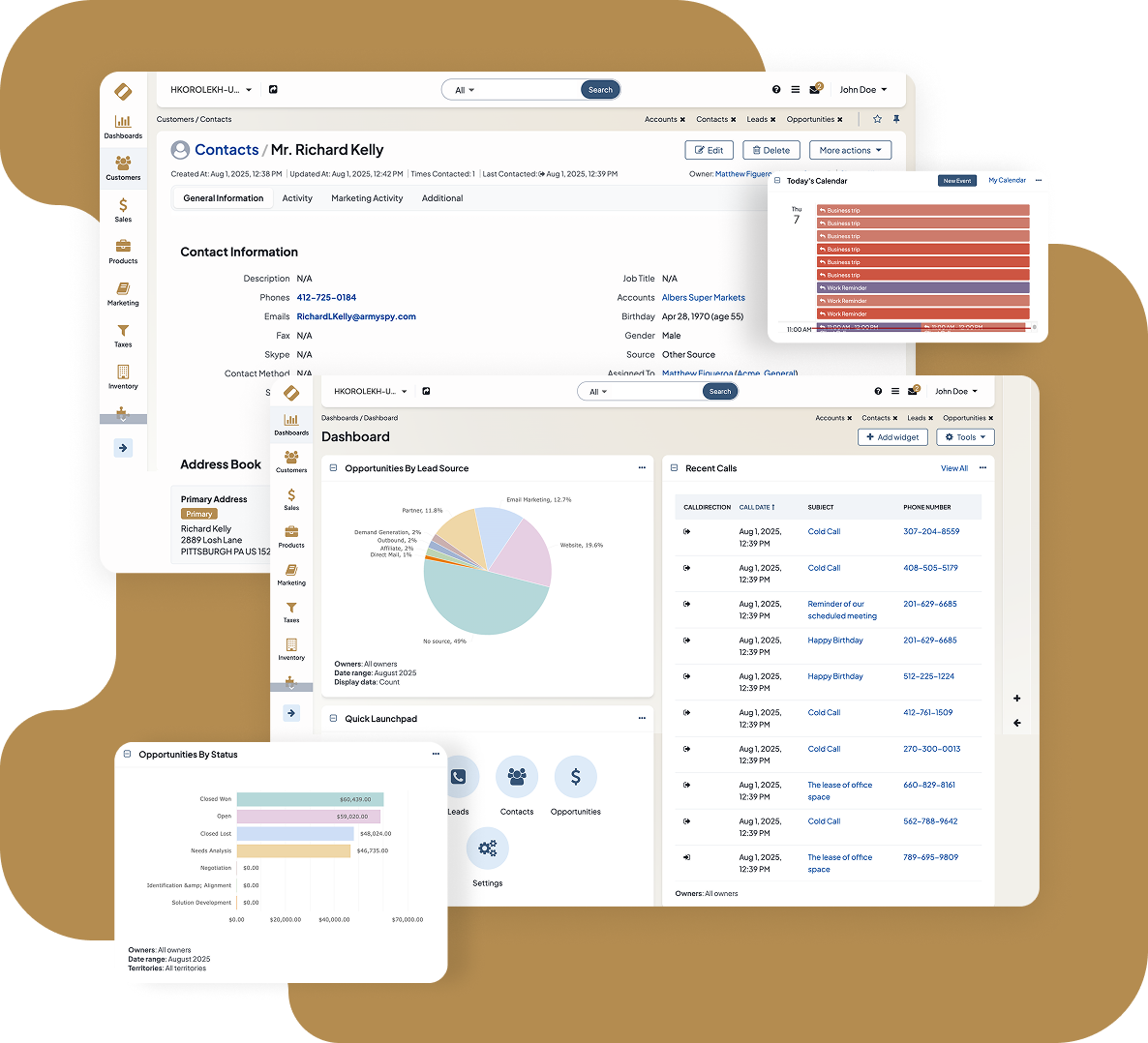
- Customer records and sales activity: Built-in Customer Relationship Management (CRM) functions track accounts, contacts, leads, opportunities, contracts, sales activities, and customer interactions.
- Marketplace operations: OroCommerce Marketplace supports vendor onboarding, multi-vendor catalogs, buyer and seller relationships, combined orders, and marketplace order workflows.
- Content and product data: The platform includes content-management, product-information, digital-asset, search, personalization, and merchandising capabilities for storefronts and buyer portals.
- Integration and deployment: OroCommerce provides application programming interfaces, ERP integrations, workflow configuration, and cloud, hybrid, or on-premises deployment options.
Audience & Use Cases
- Audience: B2B manufacturers, distributors, wholesalers, industrial suppliers, and organizations that sell complex products or services through customer-specific buying workflows.
- Use Case: OroCommerce supports organizations that need to combine self-service purchasing with sales-assisted quoting, negotiated pricing, account management, order processing, invoicing, and payment workflows.
Technical Specifications
- Commerce functions: Catalogs, customer-specific pricing, buyer portals, requests for quote, orders, invoicing, and payments.
- Sales functions: Accounts, contacts, leads, opportunities, contracts, activities, dashboards, and reporting.
- Integration model: API-first architecture with ERP, payment-provider, and CRM integrations.
- Deployment: Cloud, hybrid, and on-premises options.
Categories & Use Cases
Media


1 / 4
Screenshot of sales order automation

