Chose Aerospike
Aerospike is much more performant than MongoDB, however there is much greater community adoption and support for mongo

| Product | Rating | Most Used By | Product Summary | Starting Price |
|---|---|---|---|---|
 Aerospike | N/A | The Aerospike Real-time Data Platform aims to enable organizations to act instantly across billions of transactions while reducing server footprint up to 80%. The vendor states Aerospike multi-cloud platform powers real-time applications with predictable sub-millisecond performance up to petabyte scale with five-nines uptime with globally distributed, consistent data. Aerospike boasts customers such as Airtel, Experian, European Central Bank, Nielsen, PayPal, Snap, Verizon Media and Wayfair. | N/A | |
 Amazon DocumentDB (with MongoDB compatibility) | N/A | Amazon DocumentDB (with MongoDB compatibility) is presented by the vendor as a fast, scalable, highly available, and fully managed document database service that supports MongoDB workloads. As a document database, Amazon DocumentDB is designed to make it easy to store, query, and index JSON data. | N/A | |
 MongoDB | N/A | MongoDB is an open source document-oriented database system. It is part of the NoSQL family of database systems. Instead of storing data in tables as is done in a "classical" relational database, MongoDB stores structured data as JSON-like documents with dynamic schemas (MongoDB calls the format BSON), making the integration of data in certain types of applications easier and faster. | $0.10 million reads |
| Aerospike | Amazon DocumentDB (with MongoDB compatibility) | MongoDB | ||||||||||||||||||||||
|---|---|---|---|---|---|---|---|---|---|---|---|---|---|---|---|---|---|---|---|---|---|---|---|---|
| Editions & Modules | No answers on this topic | No answers on this topic |
| |||||||||||||||||||||
| Offerings |
| |||||||||||||||||||||||
| Entry-level Setup Fee | No setup fee | No setup fee | No setup fee | |||||||||||||||||||||
| Additional Details | — | — | Fully managed, global cloud database on AWS, Azure, and GCP | |||||||||||||||||||||
| More Pricing Information | ||||||||||||||||||||||||
| Aerospike | Amazon DocumentDB (with MongoDB compatibility) | MongoDB | |
|---|---|---|---|
| Considered Multiple Products |  Aerospike  Anson Abraham Data Lord Chose Aerospike | Amazon DocumentDB (with MongoDB compatibility) No answer on this topic |  MongoDB No answer on this topic |
| Aerospike | Amazon DocumentDB (with MongoDB compatibility) | MongoDB | |||||||||||||||||||||||||||||||
|---|---|---|---|---|---|---|---|---|---|---|---|---|---|---|---|---|---|---|---|---|---|---|---|---|---|---|---|---|---|---|---|---|---|
| NoSQL Databases |
|
| Aerospike | Amazon DocumentDB (with MongoDB compatibility) | MongoDB | |
|---|---|---|---|
| Small Businesses |  IBM Cloudant Score 7.4 out of 10 | IBM Cloudant Score 7.4 out of 10 | IBM Cloudant Score 7.4 out of 10 |
| Medium-sized Companies | IBM Cloudant Score 7.4 out of 10 | IBM Cloudant Score 7.4 out of 10 | IBM Cloudant Score 7.4 out of 10 |
| Enterprises | IBM Cloudant Score 7.4 out of 10 | IBM Cloudant Score 7.4 out of 10 | IBM Cloudant Score 7.4 out of 10 |
| All Alternatives | View all alternatives | View all alternatives | View all alternatives |
| Aerospike | Amazon DocumentDB (with MongoDB compatibility) | MongoDB | |
|---|---|---|---|
| Likelihood to Recommend | 9.0 (4 ratings) | 8.0 (1 ratings) | 10.0 (79 ratings) |
| Likelihood to Renew | 8.0 (1 ratings) | - (0 ratings) | 10.0 (67 ratings) |
| Usability | 7.0 (3 ratings) | - (0 ratings) | 10.0 (15 ratings) |
| Availability | - (0 ratings) | - (0 ratings) | 9.0 (1 ratings) |
| Support Rating | 8.9 (2 ratings) | - (0 ratings) | 9.6 (13 ratings) |
| Implementation Rating | - (0 ratings) | - (0 ratings) | 8.4 (2 ratings) |
| Aerospike | Amazon DocumentDB (with MongoDB compatibility) | MongoDB | |
|---|---|---|---|
| Likelihood to Recommend | Aerospike Inc
 Savan Solanki Senior Software Engineer | Amazon AWS
 Aman Makwana DevOps Engineer | MongoDB
 Kendal Droddy Senior System Engineer |
| Pros | Aerospike Inc
| Amazon AWS
Aman Makwana DevOps Engineer | MongoDB
 Ronald Melendez Desarrollador de software |
| Cons | Aerospike Inc
Anson Abraham Data Lord | Amazon AWS
Aman Makwana DevOps Engineer | MongoDB
 Joshua Weaver Developer |
| Likelihood to Renew | Aerospike Inc
Anson Abraham Data Lord | Amazon AWS No answers on this topic | MongoDB
 Jon Kern Manager Strategic Products |
| Usability | Aerospike Inc
| Amazon AWS No answers on this topic | MongoDB
 Jose Manuel Ortega Software Engineer && Security researcher |
| Support Rating | Aerospike Inc
Savan Solanki Senior Software Engineer | Amazon AWS No answers on this topic | MongoDB
 Mehmet Fatih Onal Technical Architect |
| Implementation Rating | Aerospike Inc No answers on this topic | Amazon AWS No answers on this topic | MongoDB
 Tom Maiaroto Sr. Platform Developer / UX Designer / Optimization Engineer |
| Alternatives Considered | Aerospike Inc
| Amazon AWS No answers on this topic | MongoDB
 Oleg Chumin Java Software Engineer |
| Return on Investment | Aerospike Inc
| Amazon AWS
Aman Makwana DevOps Engineer | MongoDB
 Jeff Sherard Senior Leader |
| ScreenShots | Amazon DocumentDB (with MongoDB compatibility) Screenshots   | MongoDB Screenshots     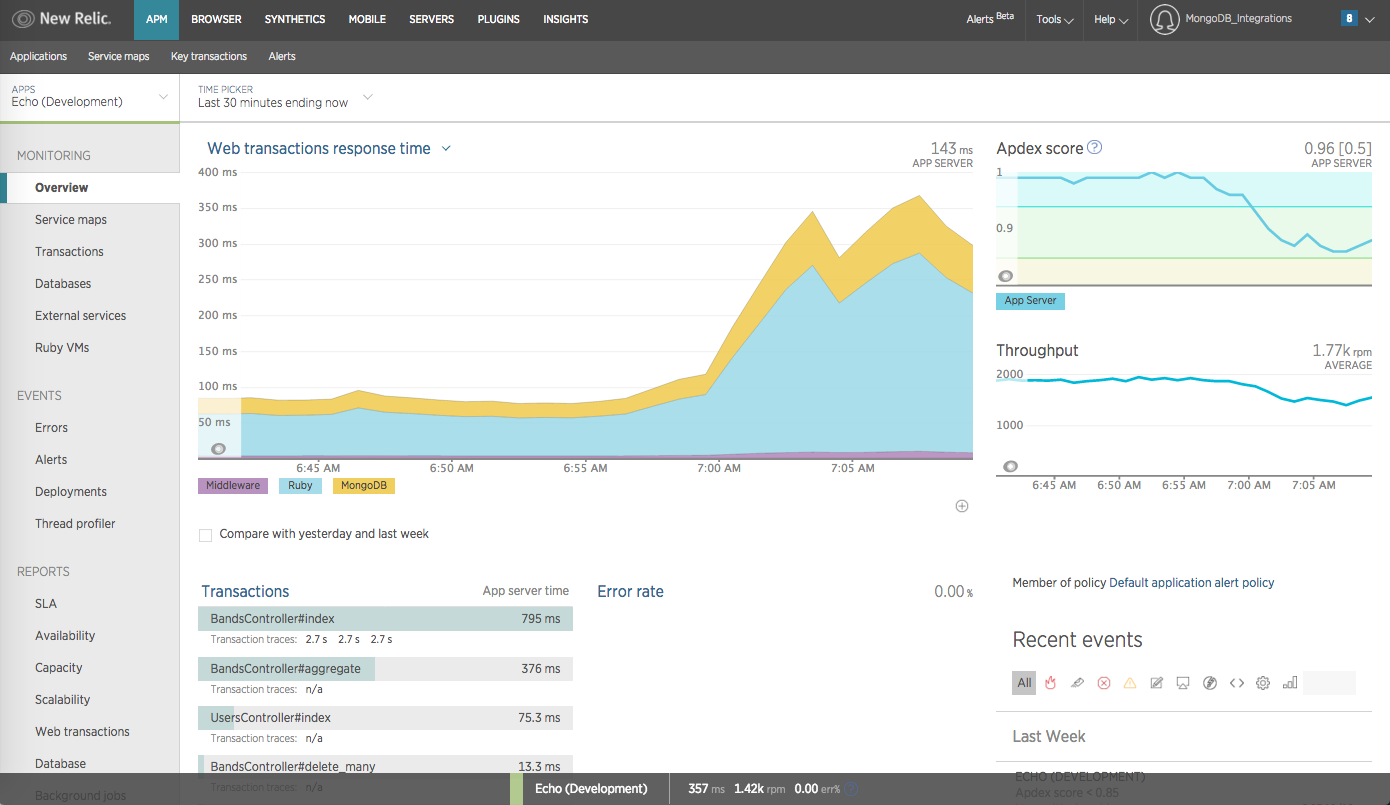 |