
Amazon CloudWatch vs. vRealize Operations (discontinued)
Amazon CloudWatch vs. vRealize Operations (discontinued)
| Product | Rating | Most Used By | Product Summary | Starting Price |
|---|---|---|---|---|
 Amazon CloudWatch | N/A | Amazon CloudWatch is a native AWS monitoring tool for AWS programs. It provides data collection and resource monitoring capabilities. | $0 per canary run | |
 vRealize Operations (discontinued) | N/A | vRealize Operations, or Aria Operations, provided simplified and automated IT Operations Management across private, hybrid, and multi-cloud environments, and visibility into the entire tech stack, including all physical, virtual, and cloud infrastructure components. The product is no longer available for sale. | N/A |
| Amazon CloudWatch | vRealize Operations (discontinued) | |||||||||||||||
|---|---|---|---|---|---|---|---|---|---|---|---|---|---|---|---|---|
| Editions & Modules |
| No answers on this topic | ||||||||||||||
| Offerings |
| |||||||||||||||
| Entry-level Setup Fee | No setup fee | No setup fee | ||||||||||||||
| Additional Details | With Amazon CloudWatch, there is no up-front commitment or minimum fee; you simply pay for what you use. You will be charged at the end of the month for your usage. | — | ||||||||||||||
| More Pricing Information | ||||||||||||||||
| Amazon CloudWatch | vRealize Operations (discontinued) |
|---|
| Amazon CloudWatch | vRealize Operations (discontinued) | |
|---|---|---|
| Small Businesses |  InfluxDB Score 8.8 out of 10 |  Hyper-V Score 8.3 out of 10 |
| Medium-sized Companies |  Sumo Logic Score 8.8 out of 10 |  Red Hat OpenShift Score 9.2 out of 10 |
| Enterprises |  NetBrain Technologies Score 9.2 out of 10 | Red Hat OpenShift Score 9.2 out of 10 |
| All Alternatives | View all alternatives | View all alternatives |
| Amazon CloudWatch | vRealize Operations (discontinued) | |
|---|---|---|
| Likelihood to Recommend | 7.7 (40 ratings) | 10.0 (6 ratings) |
| Usability | 7.0 (3 ratings) | 8.0 (1 ratings) |
| Support Rating | 8.4 (8 ratings) | 8.0 (3 ratings) |
| Amazon CloudWatch | vRealize Operations (discontinued) | |
|---|---|---|
| Likelihood to Recommend |  Amazon AWS
| Discontinued Products
 Mohanish Khatkhede Associate Consultant |
| Pros | Amazon AWS
 Apurv Doshi Senior Solutions Architect | Discontinued Products
|
| Cons | Amazon AWS
| Discontinued Products
 Parag Bhardwaj Senior Infrastucture engineer |
| Usability | Amazon AWS
| Discontinued Products
Mohanish Khatkhede Associate Consultant |
| Support Rating | Amazon AWS
 Ramindu Deshapriya Lead Consultant - Technology | Discontinued Products
|
| Alternatives Considered | Amazon AWS
| Discontinued Products
 Mike Nostrom Senior Systems Software Specialist |
| Contract Terms and Pricing Model | Amazon AWS No answers on this topic | Discontinued Products
Mohanish Khatkhede Associate Consultant |
| Return on Investment | Amazon AWS
 Rob Domenico Senior Systems Administrator | Discontinued Products
|
| ScreenShots | Amazon CloudWatch Screenshots  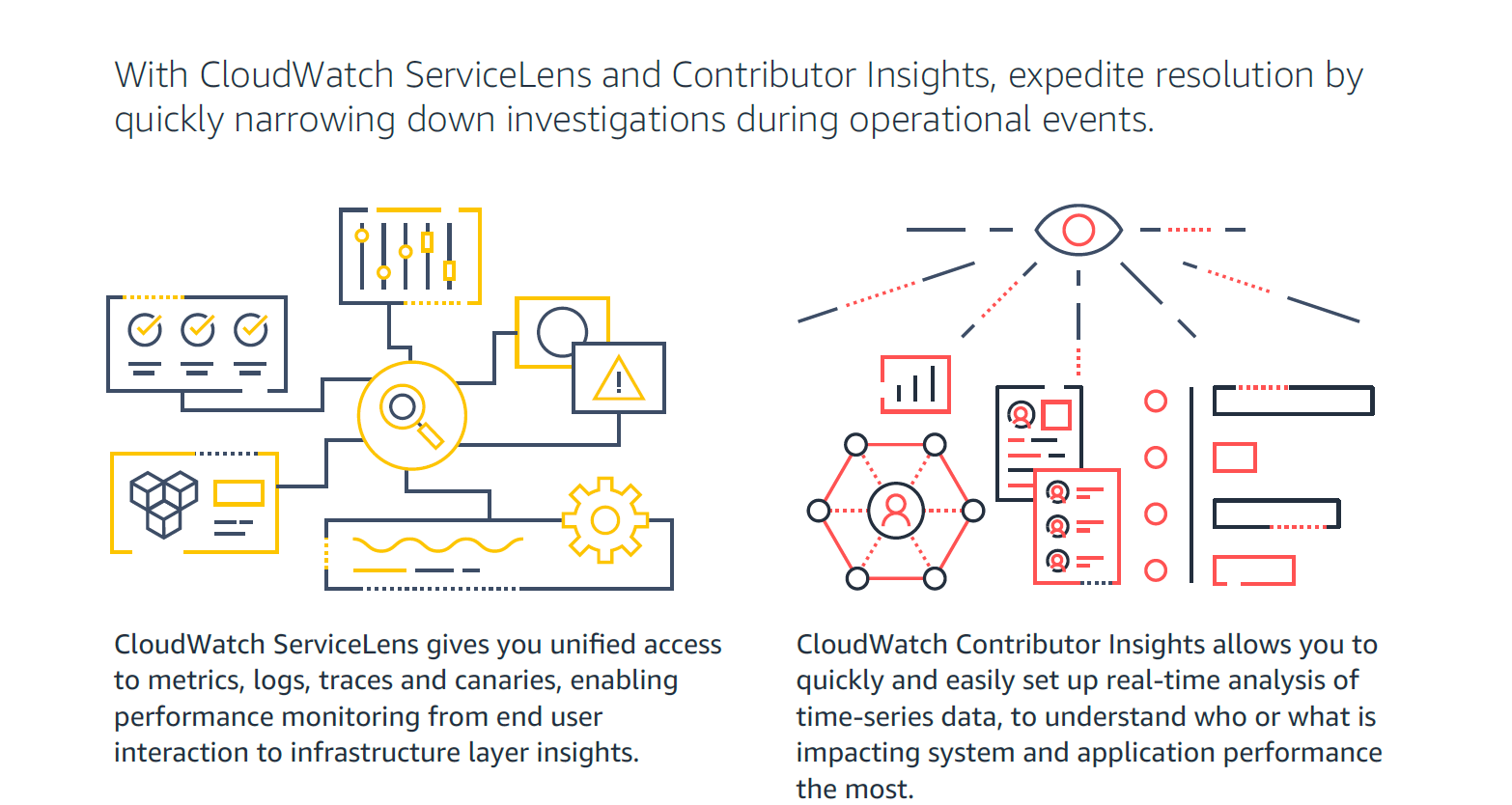   |