Amazon EMR is a cloud-native big data platform for processing vast amounts of data quickly, at scale. Using open source tools such as Apache Spark, Apache Hive, Apache HBase, Apache Flink, Apache Hudi (Incubating), and Presto, coupled with the scalability of Amazon EC2 and scalable storage of Amazon S3, EMR gives analytical teams the engines and elasticity to run Petabyte-scale analysis.
N/A
QlikView
Score 8.1 out of 10
N/A
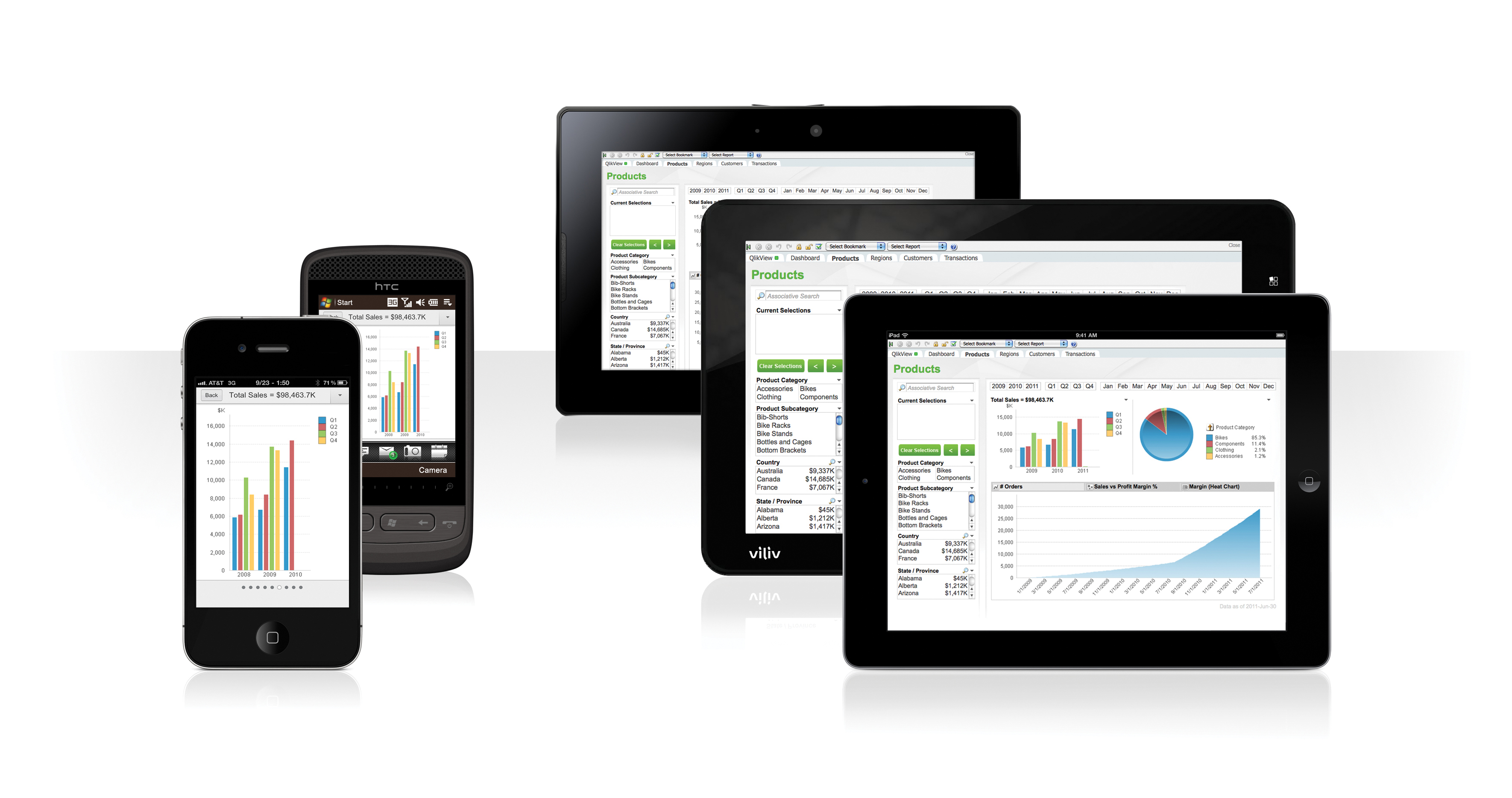
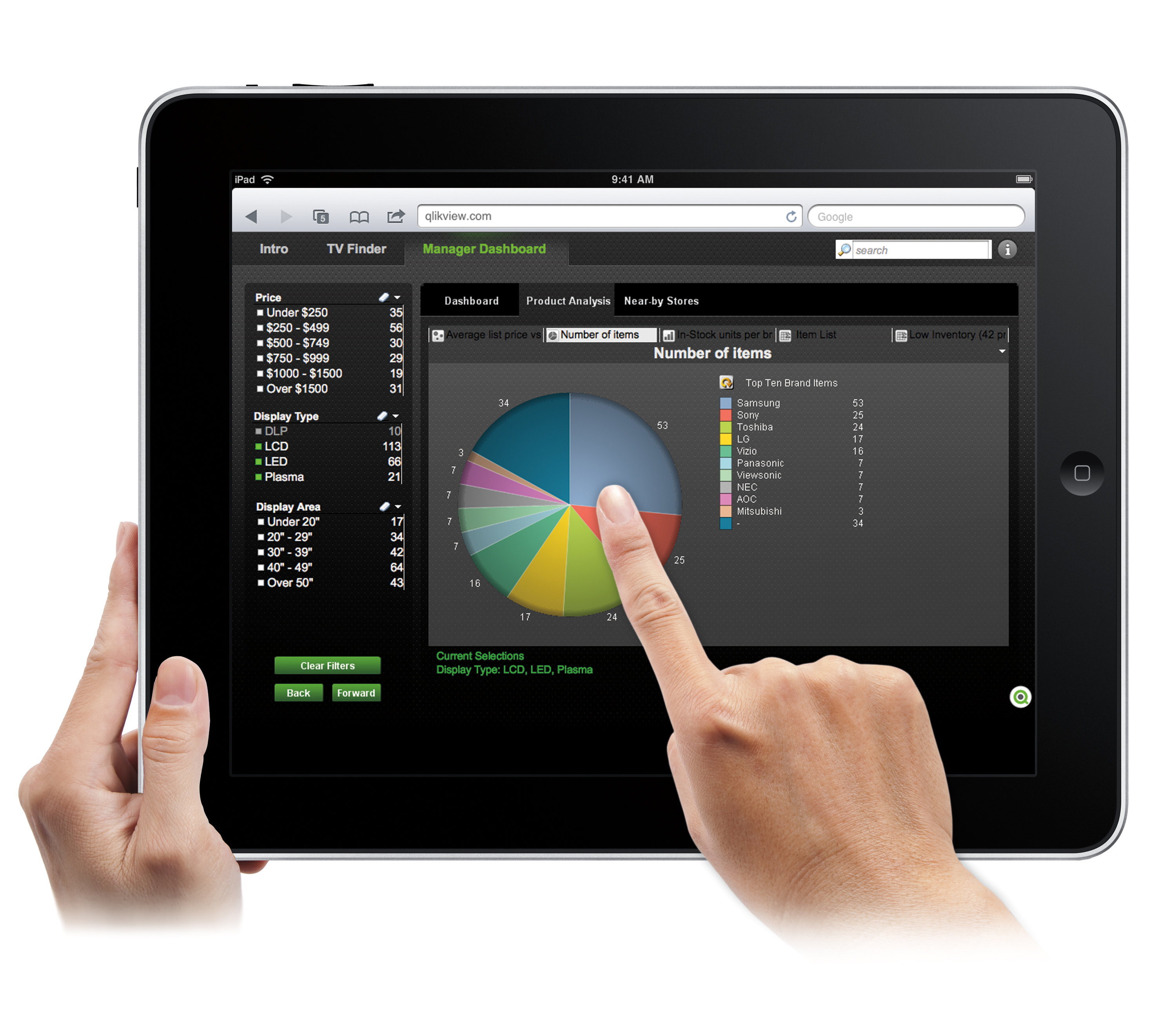
QlikView® is Qlik®’s original BI offering designed primarily for shared business intelligence reports and data visualizations. It offers guided exploration and discovery, collaborative analytics for sharing insight, and agile development and deployment.
N/A
Pricing
Amazon EMR (Elastic MapReduce)
QlikView
Editions & Modules
No answers on this topic
QlikView
Custom
per user
Offerings
Pricing Offerings
Amazon EMR
QlikView
Free Trial
No
Yes
Free/Freemium Version
No
No
Premium Consulting/Integration Services
No
Yes
Entry-level Setup Fee
No setup fee
Optional
Additional Details
—
On an perpetual license basis, based on server plus number of users.
Contact vendor for pricing.
More Pricing Information
Community Pulse
Amazon EMR (Elastic MapReduce)
QlikView
Features
Amazon EMR (Elastic MapReduce)
QlikView
BI Standard Reporting
Comparison of BI Standard Reporting features of Product A and Product B
Amazon EMR (Elastic MapReduce)
-
Ratings
QlikView
8.4
68 Ratings
3% above category average
Pixel Perfect reports
00 Ratings
8.050 Ratings
Customizable dashboards
00 Ratings
9.366 Ratings
Report Formatting Templates
00 Ratings
8.060 Ratings
Ad-hoc Reporting
Comparison of Ad-hoc Reporting features of Product A and Product B
Amazon EMR (Elastic MapReduce)
-
Ratings
QlikView
8.1
67 Ratings
1% above category average
Drill-down analysis
00 Ratings
8.466 Ratings
Formatting capabilities
00 Ratings
7.667 Ratings
Integration with R or other statistical packages
00 Ratings
8.336 Ratings
Report sharing and collaboration
00 Ratings
8.362 Ratings
Report Output and Scheduling
Comparison of Report Output and Scheduling features of Product A and Product B
Amazon EMR (Elastic MapReduce)
-
Ratings
QlikView
8.6
62 Ratings
4% above category average
Publish to Web
00 Ratings
8.049 Ratings
Publish to PDF
00 Ratings
9.056 Ratings
Report Versioning
00 Ratings
7.542 Ratings
Report Delivery Scheduling
00 Ratings
10.048 Ratings
Data Discovery and Visualization
Comparison of Data Discovery and Visualization features of Product A and Product B
We are running it to perform preparation which takes a few hours on EC2 to be running on a spark-based EMR cluster to total the preparation inside minutes rather than a few hours. Ease of utilization and capacity to select from either Hadoop or spark. Processing time diminishes from 5-8 hours to 25-30 minutes compared with the Ec2 occurrence and more in a few cases.
Sales data validations have helped manage our justifications in the past, especially with regard to new product development and new business introduction. It has also been helpful in identifying trends with business impact and direction specific to quarter and monthly sales from ERP data as well as decisions to purchase equipment of staffing based on run rates and product demand.
One thing that can get out of hand is data output - if you aren't careful in your query, you may be overloaded with data dumps and drown in the amount of info you have to filter through. This is a user caution, not a comment on the software itself.
EMR does well in managing the cost as it uses the task node cores to process the data and these instances are cheaper when the data is stored on s3. It is really cost efficient. No need to maintain any libraries to connect to AWS resources.
EMR is highly available, secure and easy to launch. No much hassle in launching the cluster (Simple and easy).
EMR manages the big data frameworks which the developer need not worry (no need to maintain the memory and framework settings) about the framework settings. It's all setup on launch time. The bootstrapping feature is great.
It would have been better if packages like HBase and Flume were available with Amazon EMR. This would make the product even more helpful in some cases.
Products like Cloudera provide the options to move the whole deployment into a dedicated server and use it at our discretion. This would have been a good option if available with EMR.
If EMR gave the option to be used with any choice of cloud provider, it would have helped instead of having to move the data from another cloud service to S3.
We found that QlikView can be a bit slow in supporting some forms of encryption. It is web-based and we needed to upgrade all of our server to not support the older SSL and TLS 1 protocols, only support TLS 1.2 and TLS 1.3. However, QlikView could not run with TLS 1.2 and TLS 1.3. We had to wait over six months to get a version that would handle the newer TLS versions.
There are so many options with QlikView that you can get lost when developing a visualization. There are still items I have not yet figured out, such as labeling a graph with the name of a selected detail item.
QlikView works by pulling the data it is going to use for visualization into its database. I am a security reviewer and I need to make certain that PII and PHI is not pulled by QlikView for a visualization, otherwise this could become a reportable indecent.
Ease of use, ability to load from pretty much any data source. today I created an application that loaded time sheets from excel that are not in a table format. With Qlik's "enable transformation steps" I was able to automate loads of multiple spreadsheets and multiple tabs easily. Could not do that with any other tool.
Documentation is quite good and the product is regularly updated, so new features regularly come out. The setup is straightforward enough, especially once you have already established the overall platform infrastructure and the aws-cli APIs are easy enough to use. It would be nice to have some out-of-the-box integrations for checking logs and the Spark UI, rather than relying on know-how and digging through multiple levels to find the informations
QlikView is very easy to implement. The installation is very straight forward. QlikView has several different data connectors that can connect to different data sources very smoothly. The user interface to build the reports is very easy to understand. This helps to have a smaller learning curve. Something very helpful is that QlikView is a browser application for the end users. So, you don't need to install any applications on the user's computer.
I give the overall support for Amazon EMR this rating because while the support technicians are very knowledgeable and always able to help, it sometimes takes a very long time to get in contact with one of the support technicians. So overall the support is pretty good for Amazon EMR.
My experience with the Qlik support team has been somewhat limited, but every interaction I have had with them has been very professional and I received a response quickly. Typically if there is a technical issue, our IT team will follow up. My inquiries are specific to product functionality, and Qlik has been very helpful in clarifying any questions I might have.
My team attended, but I cannot myself rate, but I think it was good as they've successfully launched a training program at our company themselves for users. It was 3-4 day training.
Training was as expected. The demo environments tend to be more fully featured that our own environment, but the training was clear and well delivered.
"Implementation" can mean a few things... so I'm not sure that this is the answer you want.... but here it goes: To me, implementation means: "Is the user interface intuitive and can I produce meaningful reports with ease?" On that score, I'd say YES. The amount of training required was minimal and the results were powerful. The desktop implementation is a simple, "blank" interface just waiting for your creativity. The pre-populated templates give you a reasonable start to any project -- and a good set of objects to "play around with" if you're just getting started. Finally, note that the "implementation" I used was baked into QuickBooks 2016 Enterprise -- called "Advanced Reporting"..... That integration makes it ultra useful and simple.
Snowflake is a lot easier to get started with than the other options. Snowflake's data lake building capabilities are far more powerful. Although Amazon EMR isn't our first pick, we've had an excellent experience with EC2 and S3. Because of our current API interfaces, it made more sense for us to continue with Hadoop rather than explore other options.
The only other vendor product that I have worked with that provides a similar experience to Qlikview is Tableau. I would recommend Tableau if your use case is to build a fixed dashboard. You can share reports for free without needing to buy additional licenses. I would recommend Qlikview if your users are looking for a more interactive experience. They can create new objects to represent the data which can't be accomplished as easily in Tableau
It was obviously cheaper and convenient to use as most of our data processing and pipelines are on AWS. It was fast and readily available with a click and that saved a ton of time rather than having to figure out the down time of the cluster if its on premises.
It saved time on processing chunks of big data which had to be processed in short period with minimal costs. EMR solved this as the cluster setup time and processing was simple, easy, cheap and fast.
It had a negative impact as it was very difficult in submitting the test jobs as it lags a UI to submit spark code snippets.
You can use the free desktop version to do a lot of reporting and analysis work more quickly so the ROI is huge
QlikView is great at finding outliers such as data entry errors
QlikView is great at helping you quickly discover new insights about your business that can prompt you to take action that can immediately affect your cash flow.