Amazon Web Services offers the Amazon Simple Notification Service (SNS) which provides pub/sub messaging and push notifications to iOS and Android devices. It is meant to operate in a microservices architecture and which can support event-driven contingencies and support the decoupling of applications.
$0.01
per 1 million
Anypoint Platform
Score 7.9 out of 10
N/A
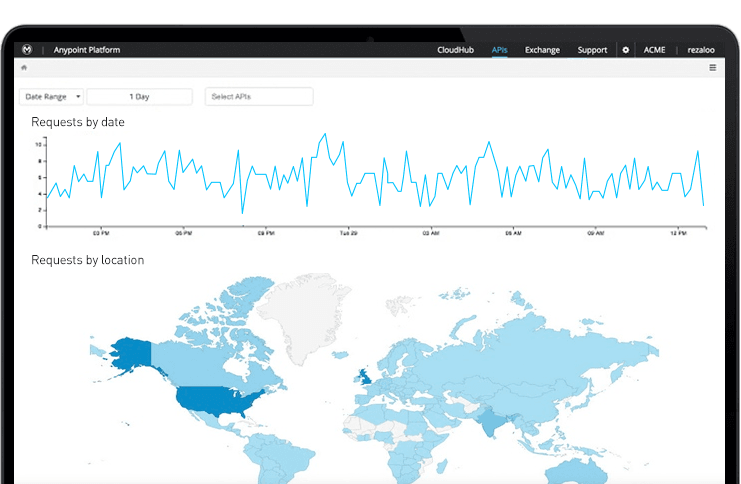
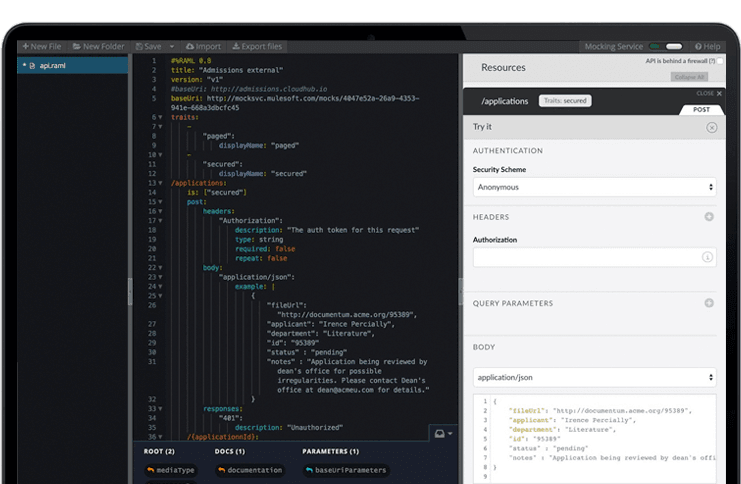
The Anypoint Platform developed by MuleSoft and acquired by Salesforce in early 2018 is designed to
connect apps, data, and devices anywhere, on-premises or in the cloud. This platform was built to
offer out-of-the-box connectors as well as tools that architects and developers can adopt quickly to
design, build and manage the entire lifecycle of their APIs, applications, and products.
N/A
Oracle SOA Suite
Score 8.0 out of 10
N/A
The rapid adoption of cloud-based applications by the enterprise, combined with organizations’ desire to integrate applications with mobile technologies, is dramatically increasing application integration complexity. Oracle SOA Suite 12c, the latest version of the company's unified application integration and SOA solution, offers a simplified cloud, mobile, on-premises and Internet of Things (IoT) integration capabilities within a single platform.
N/A
Pricing
Amazon Simple Notification Service (SNS)
MuleSoft Anypoint Platform
Oracle SOA Suite
Editions & Modules
API Requests & Payload Data
$0.01
per 1 million
API Requests
$0.50
per 1 million requests
Notification Deliveries
$0.50
per million notifications
No answers on this topic
No answers on this topic
Offerings
Pricing Offerings
Amazon SNS
Anypoint Platform
Oracle SOA Suite
Free Trial
No
Yes
No
Free/Freemium Version
No
Yes
No
Premium Consulting/Integration Services
No
No
No
Entry-level Setup Fee
No setup fee
No setup fee
No setup fee
Additional Details
—
—
—
More Pricing Information
Community Pulse
Amazon Simple Notification Service (SNS)
MuleSoft Anypoint Platform
Oracle SOA Suite
Features
Amazon Simple Notification Service (SNS)
MuleSoft Anypoint Platform
Oracle SOA Suite
Cloud Data Integration
Comparison of Cloud Data Integration features of Product A and Product B
The Amazon SNS service is well suited to support event notifications, monitoring applications, workflow systems, time-sensitive information updates, and mobile applications that generates or consumes notifications. It can be used to relay time-critical events to mobile applications and devices. It provides significant advantages to developers who build mobile applications that rely on real-time events. It is not well suited for hybrid cross platform mobile application frameworks at this juncture. An optimal version to meet the needs of a cross platform mobile developer is needed as generally the frameworks are not meant to manage real-time events. It is also not suited for cases where the queue management needs improvement or requires special workflows/tooling.
MuleSoft Anypoint Platform is best tool in the market for developing APIs with complex structures communicating with various different types of applications including web applications as well as legacy applications. Also applications including database connectivity for fetching and updating data in the DB tables. I cant think of any scenario which MuleSoft Anypoint Platform could not be used for developing the integrations.
Oracle service bus is great to quickly proxy any legacy services exposed as soap service. It's well suited for aggregating multiple services on a single endpoint. We can point to multiple endpoints on the business service and use a round-robin approach to access the endpoints. It's not well suited for data transformation and quick preview of mappings and transformations. It's not great on path to cloud transformation.
The Oracle Service Bus makes the management of web services extremely easy. Through its point and click interface, the web service endpoints can be easily modified.
The administration console provides useful dashboards to diagnose any service issues.
At times you receive access denied errors which are annoying.
Rarely do you receive internal failure errors where you can't access the information. It is rare but it does happen.
You are required to add an MWS Authentication Token every so often. I wish it would pull that information automatically for you so you don't have to go searching for it.
Has more features than what we really need so we're paying for more than we use. Sort of like paying for an Abrams tank when all we really need is a Toyota Corolla.
Not a value product, tends to be expensive.
Takes a while for developers to learn to use Mulesoft Anypoint.
Message reporting tied to a database seems counter productive. Better options to eliminate that would not only minimize the maintenance hassle but also gives more ease to manage the product.
Polling feature isn't very efficient where the end point JMS queues may still have JMS connections despite not enabling the corresponding poller proxy services.
Unable to deploy multiple web services in one go from the OSB Web console.
We have had not many issues with Oracle Service Bus and it's very stable for our requirements. It's highly available and helps us implement Tier1 applications on it.
It is useful for applications developed using event driven architecture. It helps in tracking and logging the events in a very timely and efficient manner. The dashboards are a little difficult to implement. But overall it is very easy to integrate with other AWS services like Lambda, API GW, S3 and DynamoDB. The permissions to access should be resolved before using it.
There’s a lot of learning curve at the beginning when it comes to building the code and everything. In terms of usability, I’d say once you get used to it, it’s fine — but it’s not very easy during the initial stages.
It's an excellent enterprise service bus and has very stable features. We have been using it since 2008. We did hit into some issues. But, recreating the service helped fix many issues. Also, deployment to various environments was easy. Also, the plugin on Eclipse helps to build proxy and business services quick and easy.
Amazon Simple Notification Sevices (SNS) support depends on your usage pattern and definitely on your support plan as an enterprise with AWS. Before reaching out to support you should read their documentation, as they have mentioned almost all the common issues and their solutions there. However, for specific issues, they generally respond in 1-2 business days.
Anypoint Platform support is very responsive. There is also a huge knowledge base and an active online forum where answers to most questions can be found. When needed support engages the engineering group so adequate solutions or workarounds are always provided.
We had some issues with MQ connectivity through OSB and our experience was poor with the support team. They do respond. But, it felt like we are ignored and we had bad support. We had to escalate and things used to get dragged for weeks before we get more quality questions on how to pursue investigation.
Amazon’s SNS is incredibly easy to set up compared to the more powerful, but complex, Kafka flavours.
SNS’s core advantages are –
· no setup/no maintenance
· either a queue (SQS) or a topic (SNS)
· various limitations (on size, how long a message lives, etc)
· limited throughput: you can do batch and concurrent requests, but still achieving high throughputs would be expensive
· SNS has notifications for email, SMS, SQS, HTTP built-in.
· no "message stream" concept Overall, it would be the best choice to get into the concepts of Pub/Sub concepts as although it has limitations it can provide significant capabilities and solutions
Once we have moved all of our system integration APIs to the MuleSoft Anypoint Platform, we will need to communicate with a wide variety of external systems. All of our business and service logic is stored in the aforementioned core systems. Anypoint Platform (and all of our APIs) makes it easy to connect to various other platforms. In order to link to these many other systems, connectors and/or components are utilized, and they are simple to configure and integrate.
Amazon Simple Notification Service (SNS) saved us a lot of extra coding time by providing straightforward functionality we needed in our ad campaign automation tool.
Amazon Simple Notification Service (SNS) allows us to maintain a consistent, serverless model within our applications.