Apache Spark is a multi-language engine for executing data engineering, data science, and machine learning on single-node machines or clusters.
N/A
Posit
Score 10.0 out of 10
N/A
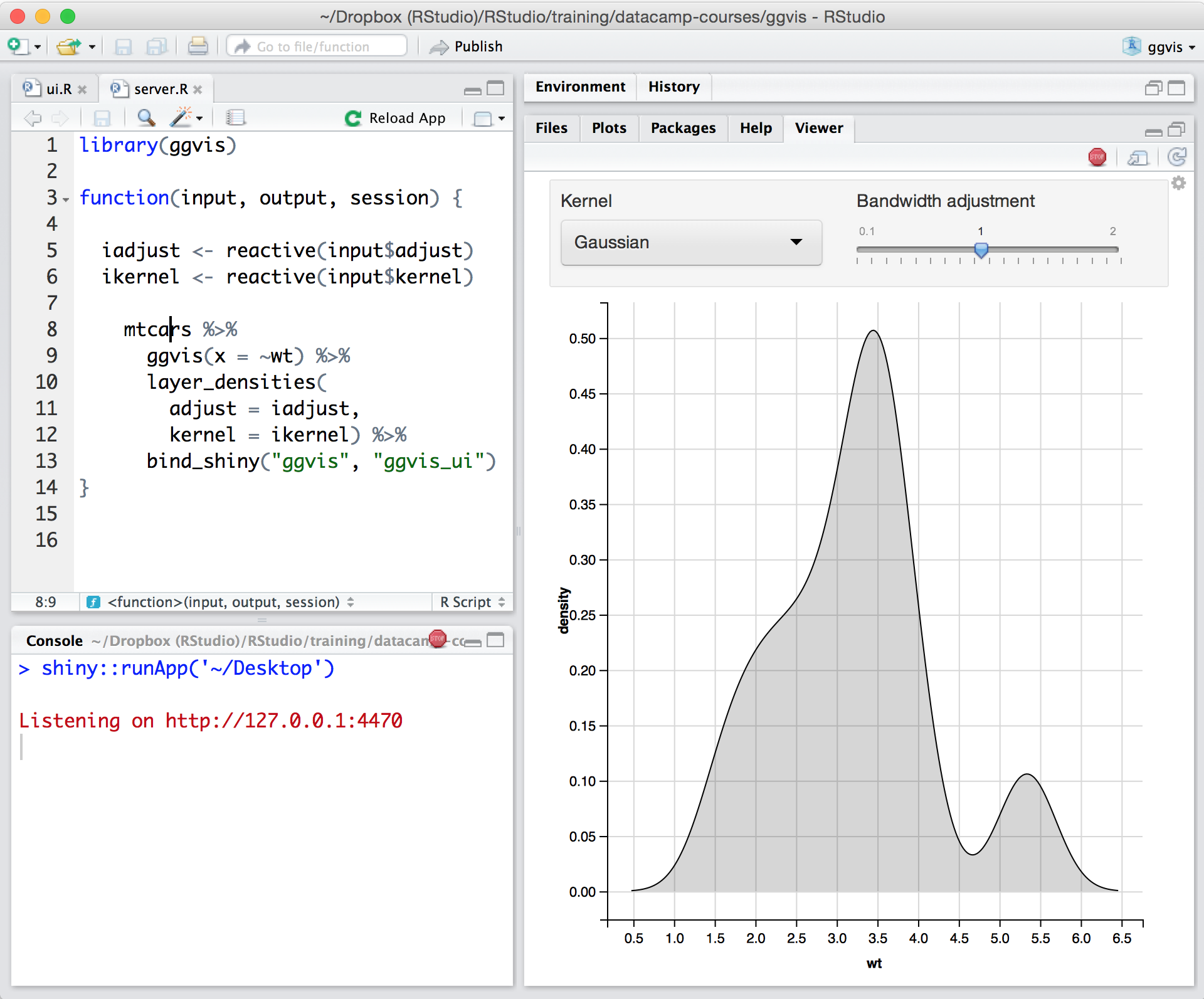
Posit, formerly RStudio, is a modular data science platform, combining open source and commercial products.
N/A
Snowflake
Score 8.7 out of 10
N/A
The Snowflake Cloud Data Platform is the eponymous data warehouse with, from the company in San Mateo, a cloud and SQL based DW that aims to allow users to unify, integrate, analyze, and share previously siloed data in secure, governed, and compliant ways. With it, users can securely access the Data Cloud to share live data with customers and business partners, and connect with other organizations doing business as data consumers, data providers, and data service providers.
N/A
Pricing
Apache Spark
Posit
Snowflake
Editions & Modules
No answers on this topic
No answers on this topic
No answers on this topic
Offerings
Pricing Offerings
Apache Spark
Posit
Snowflake
Free Trial
No
Yes
Yes
Free/Freemium Version
No
Yes
No
Premium Consulting/Integration Services
No
No
No
Entry-level Setup Fee
No setup fee
Optional
No setup fee
Additional Details
—
—
—
More Pricing Information
Community Pulse
Apache Spark
Posit
Snowflake
Considered Multiple Products
Apache Spark
Verified User
Executive
Chose Apache Spark
Databricks uses Spark as a foundation, and is also a great platform. It does bring several add-ons, which we did not feel needed by the time we evaluated - and haven't needed since then. One interesting plus in our opinion was the engineering support, which is great depending …
Before implementing RStudio, our team struggling with coding in R. We tried to implement Visual Studio and Jupyter as alternatives to RStudio. But Jupyter was found to be not user friendly for our end-user and Visual Studio enterprise was not that great. We have not evaluated …
Compared to Amazon Redshift, Snowflake is slightly easier and faster to achieve ROI but based on the user's perspective, the two tools have very little difference since both are leveraging SQL to pull data from AWS S3. Snowflake is also working with Microsoft Azure but it is …
Well suited: To most of the local run of datasets and non-prod systems - scalability is not a problem at all. Including data from multiple types of data sources is an added advantage. MLlib is a decently nice built-in library that can be used for most of the ML tasks. Less appropriate: We had to work on a RecSys where the music dataset that we used was around 300+Gb in size. We faced memory-based issues. Few times we also got memory errors. Also the MLlib library does not have support for advanced analytics and deep-learning frameworks support. Understanding the internals of the working of Apache Spark for beginners is highly not possible.
In my humble opinion, if you are working on something related to Statistics, RStudio is your go-to tool. But if you are looking for something in Machine Learning, look out for Python. The beauty is that there are packages now by which you can write Python/SQL in R. Cross-platform functionality like such makes RStudio way ahead of its competition. A couple of chinks in RStudio armor are very small and can be considered as nagging just for the sake of argument. Other than completely based on programming language, I couldn't find significant drawbacks to using RStudio. It is one of the best free software available in the market at present.
Snowflake is well suited when you have to store your data and you want easy scalability and increase or decrease the storage per your requirement. You can also control the computing cost, and if your computing cost is less than or equal to 10% of your storage cost, then you don't have to pay for computing, which makes it cost-effective as well.
The support is incredibly professional and helpful, and they often go out of their way to help me when something doesn't work.
The one-click publishing from RStudio Connect is absolutely amazing, and I really like the way that it deploys your exact package versions, because otherwise, you can get in a terrible mess.
Python doesn't feel quite as native as R at the moment but I have definitely deployed stuff in R and Python that works beautifully which is really nice indeed.
Snowflake scales appropriately allowing you to manage expense for peak and off peak times for pulling and data retrieval and data centric processing jobs
Snowflake offers a marketplace solution that allows you to sell and subscribe to different data sources
Snowflake manages concurrency better in our trials than other premium competitors
Snowflake has little to no setup and ramp up time
Snowflake offers online training for various employee types
Python integration is newer and still can be rough, especially with when using virtual environments.
RStudio Connect pricing feels very department focused, not quite an enterprise perspective.
Some of the RStudio packages don't follow conventional development guidelines (API breaking changes with minor version numbers) which can make supporting larger projects over longer timeframes difficult.
Do not force customers to renew for same or higher amount to avoid loosing unused credits. Already paid credits should not expire (at least within a reasonable time frame), independent of renewal deal size.
There is no viable alternative right now. The toolset is good and the functionality is increasing with every release. It is backed by regular releases and ongoing development by the RStudio team. There is good engagement with RStudio directly when support is required. Also there's a strong and growing community of developers who provide additional support and sample code.
SnowFlake is very cost effective and we also like the fact we can stop, start and spin up additional processing engines as we need to. We also like the fact that it's easy to connect our SQL IDEs to Snowflake and write our queries in the environment that we are used to
If the team looking to use Apache Spark is not used to debug and tweak settings for jobs to ensure maximum optimizations, it can be frustrating. However, the documentation and the support of the community on the internet can help resolve most issues. Moreover, it is highly configurable and it integrates with different tools (eg: it can be used by dbt core), which increase the scenarios where it can be used
For someone who learns how to use the software and picks up on the "language" of R, it's very easy to use. For beginners, it can be hard and might require a course, as well as the appropriate statistical training to understand what packages to use and when
Because the fact that you can query tons of data in a few seconds is incredible, it also gives you a lot of functions to format and transform data right in your query, which is ideal when building data models in BI tools like Power BI, it is available as a connector in the most used BI tools worldwide.
RStudio is very available and cheap to use. It needs to be updated every once in a while, but the updates tend to be quick and they do not hinder my ability to make progress. I have not experienced any RStudio outages, and I have used the application quite a bit for a variety of statistical analyses
1. It integrates very well with scala or python. 2. It's very easy to understand SQL interoperability. 3. Apache is way faster than the other competitive technologies. 4. The support from the Apache community is very huge for Spark. 5. Execution times are faster as compared to others. 6. There are a large number of forums available for Apache Spark. 7. The code availability for Apache Spark is simpler and easy to gain access to. 8. Many organizations use Apache Spark, so many solutions are available for existing applications.
Since R is trendy among statisticians, you can find lots of help from the data science/ stats communities. If you need help with anything related to RStudio or R, google it or search on StackOverflow, you might easily find the solution that you are looking for.
We have had terrific experiences with Snowflake support. They have drilled into queries and given us tremendous detail and helpful answers. In one case they even figured out how a particular product was interacting with Snowflake, via its queries, and gave us detail to go back to that product's vendor because the Snowflake support team identified a fault in its operation. We got it solved without lots of back-and-forth or finger-pointing because the Snowflake team gave such detailed information.
Spark in comparison to similar technologies ends up being a one stop shop. You can achieve so much with this one framework instead of having to stitch and weave multiple technologies from the Hadoop stack, all while getting incredibility performance, minimal boilerplate, and getting the ability to write your application in the language of your choosing.
RStudio was provided as the most customizable. It was also strictly the most feature-rich as far as enabling our organization to script, run, and make use of R open-source packages in our data analysis workstreams. It also provided some support for python, which was useful when we had R heavy code with some python threaded in. Overall we picked Rstudio for the features it provided for our data analysis needs and the ability to interface with our existing resources.
I have had the experience of using one more database management system at my previous workplace. What Snowflake provides is better user-friendly consoles, suggestions while writing a query, ease of access to connect to various BI platforms to analyze, [and a] more robust system to store a large amount of data. All these functionalities give the better edge to Snowflake.
RStudio is very scalable as a product. The issue I have is that it doesn't necessarily fit in nicely with the mainly Microsoft environment that everybody else is using. Having RStudio for us means dedicated servers and recruiting staff who know how to manage the environment. This isn't a fault of the product at all, it's just part of the data science landscape that we all have to put up with. Having said that RStudio is absolutely great for running on low spec servers and there are loads of options to handle concurrency, memory use, etc.
Using it for data science in a very big and old company, the most positive impact, from my point of view, has been the ability of spreading data culture across the group. Shortening the path from data to value.
Still it's hard to quantify economic benefits, we are struggling and it's a great point of attention, since splitting out the contribution of the single aspects of a project (and getting the RStudio pie) is complicated.
What is sure is that, in the long run, RStudio is boosting productivity and making the process in which is embedded more efficient (cost reduction).