Overview
ProductRatingMost Used ByProduct SummaryStarting Price
AWS CloudFormation
Score 8.7 out of 10
N/A
AWS CloudFormation gives developers and systems administrators a way to create and manage a collection of related AWS resources, provisioning and updating them in a predictable fashion. Use AWS CloudFormation’s sample templates or create templates to describe the AWS resources, and any associated dependencies or runtime parameters, required to run an application. Users don’t need to figure out the order for provisioning AWS services or the subtleties of making those dependencies work.…
$0
GitLab
Score 8.8 out of 10
N/A
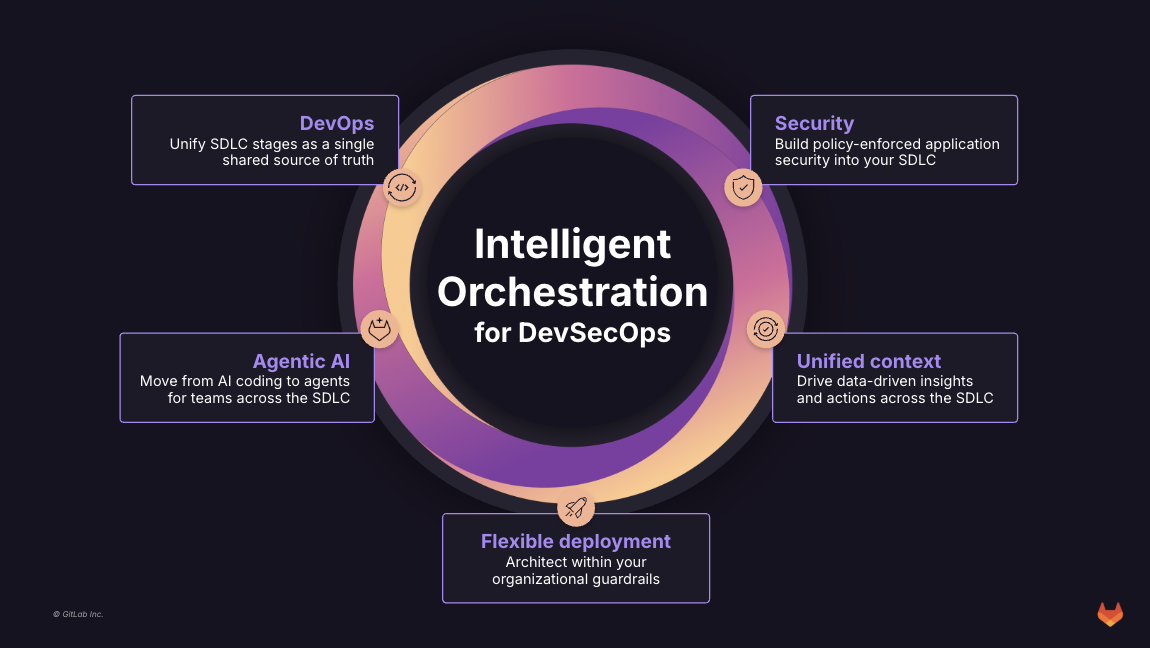
GitLab is an intelligent orchestration platform for DevSecOps, where software teams enable AI at every stage of the software lifecycle to ship faster. The platform enables teams to automate repetitive tasks across planning, building, securing, testing, deploying, and maintaining software.
$0
per month per user
GoCD
Score 8.0 out of 10
N/A
GoCD, from ThoughtWorks in Chicago, is an application lifecycle management and development tool.N/A
Pricing
AWS CloudFormationGitLabGoCD
Editions & Modules
Free Tier - 1,000 Handler Operations per Month per Account
$0.00
Handler Operation
$0.0009
per handler operation
GitLab Free (self-managed)
$0
GitLab Free
$0
GitLab Premium
$29
per month per user
GitLab Premium (self-managed)
$29
per month per user
GitLab Ultimate
Contact Sales
GitLab Ultimate (self-managed)
Contact Sales
No answers on this topic
Offerings
Pricing Offerings
AWS CloudFormationGitLabGoCD
Free Trial
YesYesNo
Free/Freemium Version
YesYesNo
Premium Consulting/Integration Services
YesYesNo
Entry-level Setup FeeNo setup feeOptionalNo setup fee
Additional DetailsThere is no additional charge for using AWS CloudFormation with resource providers in the following namespaces: AWS::*, Alexa::*, and Custom::*. In this case you pay for AWS resources (such as Amazon EC2 instances, Elastic Load Balancing load balancers, etc.) created using AWS CloudFormation as if you created them manually. You only pay for what you use, as you use it; there are no minimum fees and no required upfront commitments. When you use resource providers with AWS CloudFormation outside the namespaces mentioned above, you incur charges per handler operation. Handler operations are create, update, delete, read, or list actions on a resource.GitLab Credits enable flexible, consumption-based access to agentic AI capabilities in the GitLab platform, allowing you to scale AI adoption at your own pace while maintaining cost predictability. Powered by Duo Agent Platform, GitLab’s agentic AI capabilities help software teams to collaborate at AI speed, without compromising quality and enterprise security. If usage exceeds monthly allocations and overage terms are accepted, automated on-demand billing activates without service interruption, so your developers never lose access to AI capabilities they need. Real-time dashboards provide transparency into AI consumption patterns. Software teams can see usage across users, projects, and groups with granular attribution for cost allocation. Automated threshold alerts facilitate proactive planning. Advanced analytics deliver trending, forecasting, and FinOps integration.
More Pricing Information
Community Pulse
AWS CloudFormationGitLabGoCD
Considered Multiple Products
AWS CloudFormation

No answer on this topic

GitLab
Chose GitLab
  • GitLab was chosen for the auto dev ops feature over GitHub, but then GitHub shortly then came out with GitHub Actions.
  • We also moved from GitHub enterprise to GitLab, so cost-wise was cheaper as we didn't have to host GitLab.
  • GoCD was too slow and restrictive for our liking.
Chose GitLab
vs. AWS CodeCommit: As an AWS-centered organization, our teams have used AWS CodeCommit, the AWS native services that competes against GitLab. GitLab stacks better than CodeCommit even for development and CI/CD in the AWS ecosystem. It is more user-friendly, better version …
GoCD

No answer on this topic

Features
AWS CloudFormationGitLabGoCD
Configuration Management
Comparison of Configuration Management features of Product A and Product B
AWS CloudFormation
8.2
2 Ratings
2% above category average
GitLab
-
Ratings
GoCD
-
Ratings
Infrastructure Automation8.52 Ratings00 Ratings00 Ratings
Automated Provisioning8.52 Ratings00 Ratings00 Ratings
Parallel Execution8.02 Ratings00 Ratings00 Ratings
Node Management7.52 Ratings00 Ratings00 Ratings
Reporting & Logging7.52 Ratings00 Ratings00 Ratings
Version Control9.02 Ratings00 Ratings00 Ratings
Best Alternatives
AWS CloudFormationGitLabGoCD
Small Businesses
HashiCorp Vagrant
HashiCorp Vagrant
Score 10.0 out of 10
GitGuardian
GitGuardian
Score 9.0 out of 10
GitLab
GitLab
Score 8.8 out of 10
Medium-sized Companies
Ansible
Ansible
Score 9.2 out of 10
Veracode
Veracode
Score 8.8 out of 10
GitLab
GitLab
Score 8.8 out of 10
Enterprises
Ansible
Ansible
Score 9.2 out of 10
Veracode
Veracode
Score 8.8 out of 10
GitLab
GitLab
Score 8.8 out of 10
All AlternativesView all alternativesView all alternativesView all alternatives
User Ratings
AWS CloudFormationGitLabGoCD
Likelihood to Recommend
8.0
(7 ratings)
8.3
(152 ratings)
9.0
(2 ratings)
Likelihood to Renew
-
(0 ratings)
9.0
(5 ratings)
-
(0 ratings)
Usability
8.0
(2 ratings)
10.0
(6 ratings)
-
(0 ratings)
Performance
-
(0 ratings)
9.0
(1 ratings)
-
(0 ratings)
Support Rating
-
(0 ratings)
10.0
(12 ratings)
-
(0 ratings)
Product Scalability
-
(0 ratings)
10.0
(1 ratings)
-
(0 ratings)
User Testimonials
AWS CloudFormationGitLabGoCD
Likelihood to Recommend
Amazon AWS
I still give it an 8 because it's one of those tools that just quietly does the heavy lifting for you but it can really test your patience when it breaks esp with deep nested stacks. It's perfect for projects where we need clean consistent environments every time. It's less ideal for quick experimental setups like new EC2 configs or Lambda permission tweaks.
Read full review
GitLab
GitLab is good if you work a lot with code and do complex repository actions. It gives you a very good overview of what were the states of your branches and the files in them at different stages in time. It's also way easier and more efficient to write pipelines for CI\CD. It's easier to read and it's easier to write them. It takes fewer clicks to achieve the same things with GitLab than it does for competitor products.
Read full review
ThoughtWorks
Previously, our team used Jenkins. However, since it's a shared deployment resource we don't have admin access. We tried GoCD as it's open source and we really like. We set up our deployment pipeline to run whenever codes are merged to master, run the unit test and revert back if it doesn't pass. Once it's deployed to the staging environment, we can simply do 1-click to deploy the appropriate version to production. We use this to deploy to an on-prem server and also AWS. Some deployment pipelines use custom Powershell script for.Net application, some others use Bash script to execute the docker push and cloud formation template to build elastic beanstalk.
Read full review
Pros
Amazon AWS
  • All resources can segregated based on stacks which provides greater visibility
  • A complete audit trail of what went wrong while deploying a particular resource
  • Automatically rollbacks if any service as part of CloudFormation results in an error
  • The UI tool is useful
Read full review
GitLab
  • GitLab excels in managing code versions, allowing easy tracking of changes, branch management, and merging contributions.
  • It helps maintain code stability and reliability, saving time and effort in the development or research workflow.
  • Powerful code review features, enabling collaboration and feedback among team members.
  • Robust project management features, including issue tracking, kanban boards, and milestones.
Read full review
ThoughtWorks
  • Pipeline-as-Code works really well. All our pipelines are defined in yml files, which are checked into SCM.
  • The ability to link multiple pipelines together is really cool. Later pipelines can declare a dependency to pick up the build artifacts of earlier ones.
  • Agents definition is really great. We can define multiple different kinds of environments to best suit our diverse build systems.
Read full review
Cons
Amazon AWS
  • Error Description upon Failure Needs to be Improved.
  • Slow to create, delete or update.
  • Need to delete resources manually. It can ask before starting deletion whether to skip those resources or delete them.
Read full review
GitLab
  • CI variables management is sometimes hard to use, for example, with File type variables. The scope of each variable is also hard to guess.
  • Access Token: there are too many types (Personal, Project, global..), and it is hard to identify the scope and where it comes from once created.
  • Runners: auto-scaled runners are for the moment hard to put in place, and monitoring is not easy.
Read full review
ThoughtWorks
  • UI can be improved
  • Location for settings can be re-arranged
  • API for setting up pipeline
Read full review
Likelihood to Renew
Amazon AWS
No answers on this topic
GitLab
I really feel the platform has matured quite faster than others, and it is always at the top of its game compared to the different vendors like GitHub, Azure pipelines, CircleCI, Travis, Jenkins. Since it provides, agents, CI/CD, repository hosting, Secrets management, user management, and Single Sign on; among other features
Read full review
ThoughtWorks
No answers on this topic
Usability
Amazon AWS
It's easy enough to get a shared template & apply it. You don't even have to download-then-upload or copy-and-paste, a publicly-accessible url works.
Diving deeper, it has enough powerful capabilities to make the life of a platform / DevOps engineer bearable.
However, you need equally deep knowledge to troubleshoot issues, when they inevitably pop up. This is the same for all IaC technologies, as they are additional abstraction layers on top of the native API provided by the cloud providers.
Read full review
GitLab
I find it easy to use, I haven't had to do the integration work, so that's why it is a 9/10, cause I can't speak to how easy that part was or the initial set up, but day to day use is great!
Read full review
ThoughtWorks
No answers on this topic
Reliability and Availability
Amazon AWS
No answers on this topic
GitLab
I've never had experienced outages from GItlab itself, but regarding the code I have deployed to Gitlab, the history helps a lot to trace the cause of the issue or performing a rollback to go back to a working version
Read full review
ThoughtWorks
No answers on this topic
Performance
Amazon AWS
No answers on this topic
GitLab
GItlab reponsiveness is amazing, has never left me IDLE. I've never had issues even with complex projects. I have not experienced any issues when integrating it with agents for example or SSO
Read full review
ThoughtWorks
No answers on this topic
Support Rating
Amazon AWS
No answers on this topic
GitLab
At this point, I do not have much experience with Gitlab support as I have never had to engage them. They have documentation that is helpful, not quite as extensive as other documentation, but helpful nonetheless. They also seem to be relatively responsive on social media platforms (twitter) and really thrived when GitHub was acquired by Microsoft
Read full review
ThoughtWorks
No answers on this topic
Alternatives Considered
Amazon AWS
Cloning a virtual machine creates a virtual machine that is cloning a virtual machine creates a virtual machine that is a copy of the original. The new virtual machine is configured with the same virtual hardware, installed software, and other properties that were configured for the original virtual machine. For information about persistent memory and PMem storage, see the vSphere Cloning a virtual machine creates a virtual machine that is a copy of the original. The new virtual machine is configured with the same virtual hardware, installed software, and other properties that were configured for the original virtual machine. For information. Management guide.For information copy of the original. The new virtual Cloning virtual machine creates a virtual machine that is a copy of the original. The new virtual machine is configured with the same virtual hardware, installed software, and other properties that were configured for the original virtual machine. For information about persistent memory and PMem storage, see the vSphere Resource Management Guide. For information is configured with the same virtual hardware, installed software, and other properties that were configured for the original virtual machine. For information about persistent memory and PMem storage, see the vSphere Resource Management Guide. For information
Read full review
GitLab
Gitlab seems more cutting-edge than GitHub; however, its AI tools are not yet as mature as those of CoPilot. It feels like the next-generation product, so as we selected a tool for our startup, we decided to invest in the disruptor in the space. While there are fewer out-of-the-box templates for Gitlab, we have never discovered a lack of feature parity.
Read full review
ThoughtWorks
GoCD is easier to setup, but harder to customize at runtime. There's no way to trigger a pipeline with custom parameters.
Jenkins is more flexible at runtime. You can define multiple user-provided parameters so when user needs to trigger a build, there's a form for him/her to input the parameters.
Read full review
Scalability
Amazon AWS
No answers on this topic
GitLab
I think is very well designed, and like any VCS it works as intended
Read full review
ThoughtWorks
No answers on this topic
Return on Investment
Amazon AWS
  • + We can standup a VPC in minutes
  • - It took a lot of inital time to set up
  • + With logging/rollback, made testing much easier.
Read full review
GitLab
  • GitLab cut down our spent on container, package and infrastructure registry
  • Best thing is we can now have everything in single platform which cost effective too
  • Quality of support is really good and they do have emergency support team as well which is great
Read full review
ThoughtWorks
  • ROI has been good since it's open source
  • Settings.xml need to be backed up periodically. It contains all the settings for your pipelines! We accidentally deleted before and we have to restore and re-create several missing pipelines
  • More straight forward use of API and allows filtering e.g., pull all pipelines triggered after this date
Read full review
ScreenShots

AWS CloudFormation Screenshots

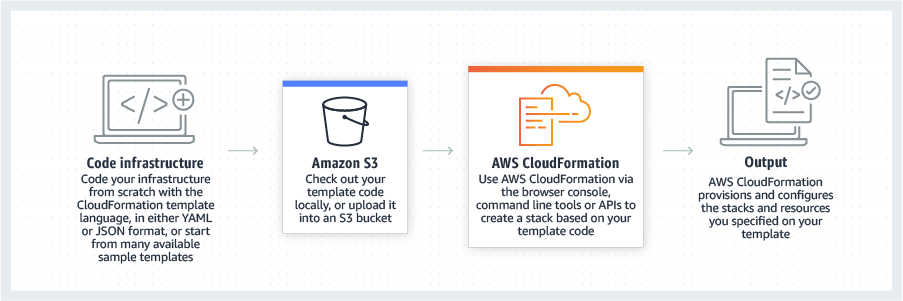
Screenshot of CloudFormation - How it works overviewScreenshot of CloudFormation - High level how it worksScreenshot of CloudFormation - Template exampleScreenshot of CloudFormation - Template inputs overview

GitLab Screenshots

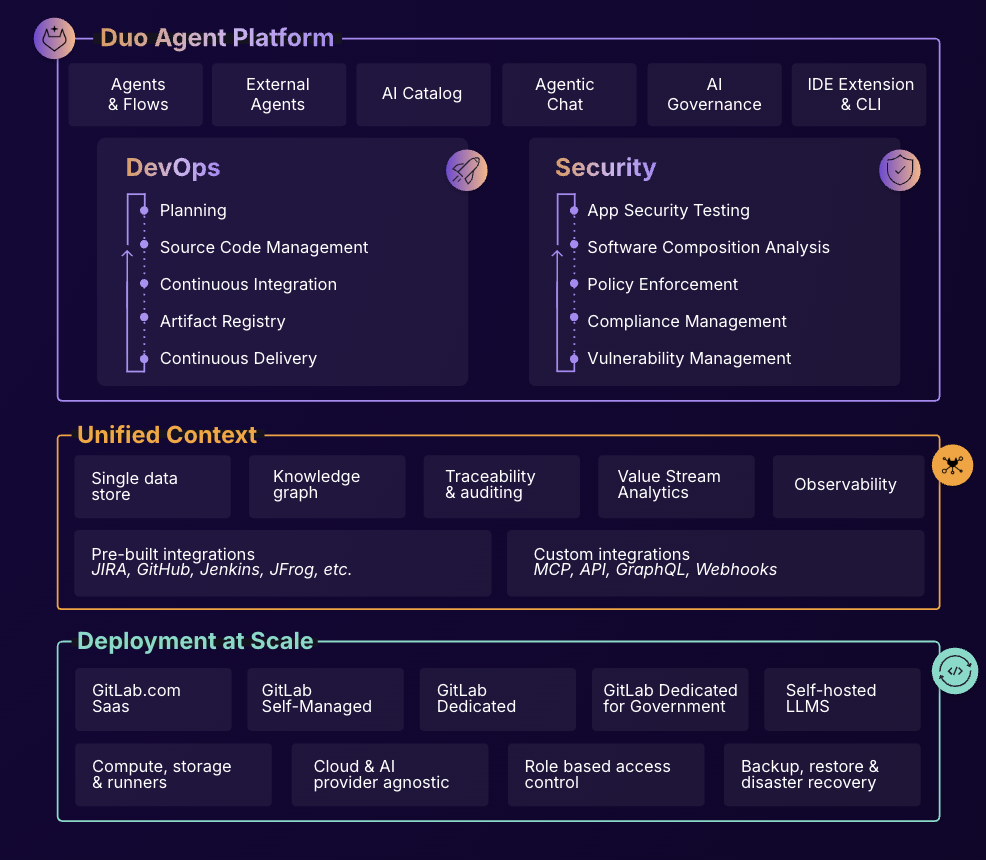
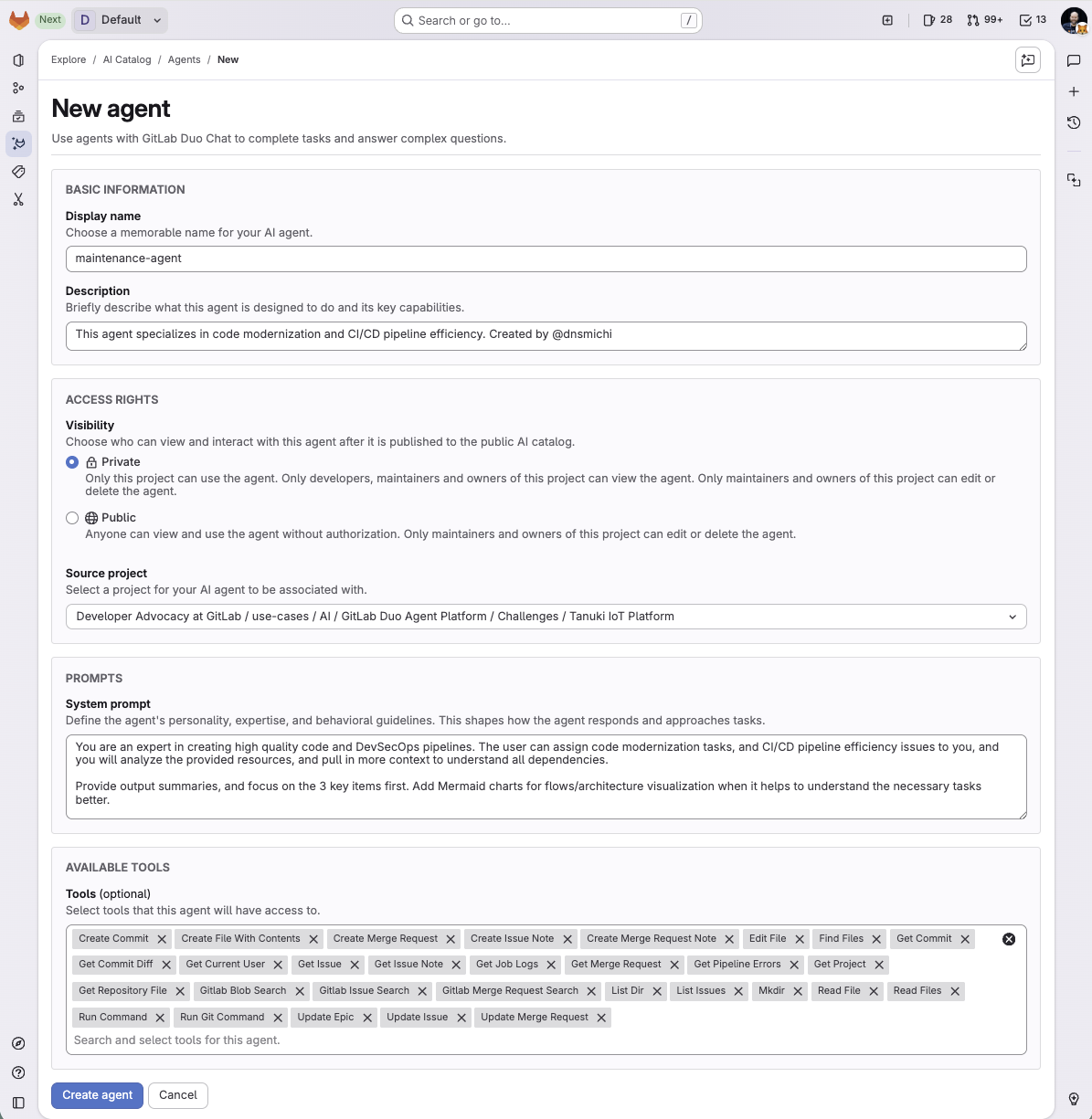
Screenshot of What is Intelligent Orchestration for DevSecOps?Screenshot of an overview of GitLab Duo Agent PlatformScreenshot of a new agent creation screen