
AWS CodePipeline vs. Rapise
AWS CodePipeline vs. Rapise
| Product | Rating | Most Used By | Product Summary | Starting Price |
|---|---|---|---|---|
 AWS CodePipeline | N/A | AWS CodePipeline is a fully managed continuous delivery service that helps users automate release pipelines. CodePipeline automates the build, test, and deploy phases of the release process every time there is a code change, based on the release model a user defines. | $1 per active pipeline/per month | |
 Rapise | Mid-Size Companies (51-1,000 employees) | Rapise is a software testing platform that allows users to regression test web, desktop and mobile applications. Some key features include: Playback of Tests, Test Script Editing and Data Driven Testing. | $324 per month (1 license) |
| AWS CodePipeline | Rapise | |||||||||||||||
|---|---|---|---|---|---|---|---|---|---|---|---|---|---|---|---|---|
| Editions & Modules |
| No answers on this topic | ||||||||||||||
| Offerings |
| |||||||||||||||
| Entry-level Setup Fee | No setup fee | No setup fee | ||||||||||||||
| Additional Details | — | Discount available for annual billing (up to 10%). | ||||||||||||||
| More Pricing Information | ||||||||||||||||
| AWS CodePipeline | Rapise |
|---|
| AWS CodePipeline | Rapise | |
|---|---|---|
| Small Businesses |  GitLab Score 8.7 out of 10 |  BrowserStack Score 8.5 out of 10 |
| Medium-sized Companies | GitLab Score 8.7 out of 10 |  ReadyAPI Score 6.2 out of 10 |
| Enterprises | GitLab Score 8.7 out of 10 |  ignio AIOps Score 8.1 out of 10 |
| All Alternatives | View all alternatives | View all alternatives |
| AWS CodePipeline | Rapise | |
|---|---|---|
| Likelihood to Recommend | 9.0 (8 ratings) | 9.0 (2 ratings) |
| Usability | 9.0 (1 ratings) | - (0 ratings) |
| Performance | 6.8 (2 ratings) | - (0 ratings) |
| Support Rating | 9.1 (2 ratings) | - (0 ratings) |
| Ease of integration | 7.4 (2 ratings) | - (0 ratings) |
| AWS CodePipeline | Rapise | |
|---|---|---|
| Likelihood to Recommend |  Amazon AWS
 Alec Dibble Founder |  Inflectra Corporation
 Moris Mendez Ing. de Sistemas Informaticos |
| Pros | Amazon AWS
| Inflectra Corporation
|
| Cons | Amazon AWS
 Richard Rout Software Developer | Inflectra Corporation
Moris Mendez Ing. de Sistemas Informaticos |
| Usability | Amazon AWS
| Inflectra Corporation No answers on this topic |
| Performance | Amazon AWS
| Inflectra Corporation No answers on this topic |
| Support Rating | Amazon AWS
 Ramindu Deshapriya Lead Consultant - Technology | Inflectra Corporation No answers on this topic |
| Alternatives Considered | Amazon AWS
| Inflectra Corporation
|
| Return on Investment | Amazon AWS
Alec Dibble Founder | Inflectra Corporation
Moris Mendez Ing. de Sistemas Informaticos |
| ScreenShots | Rapise Screenshots 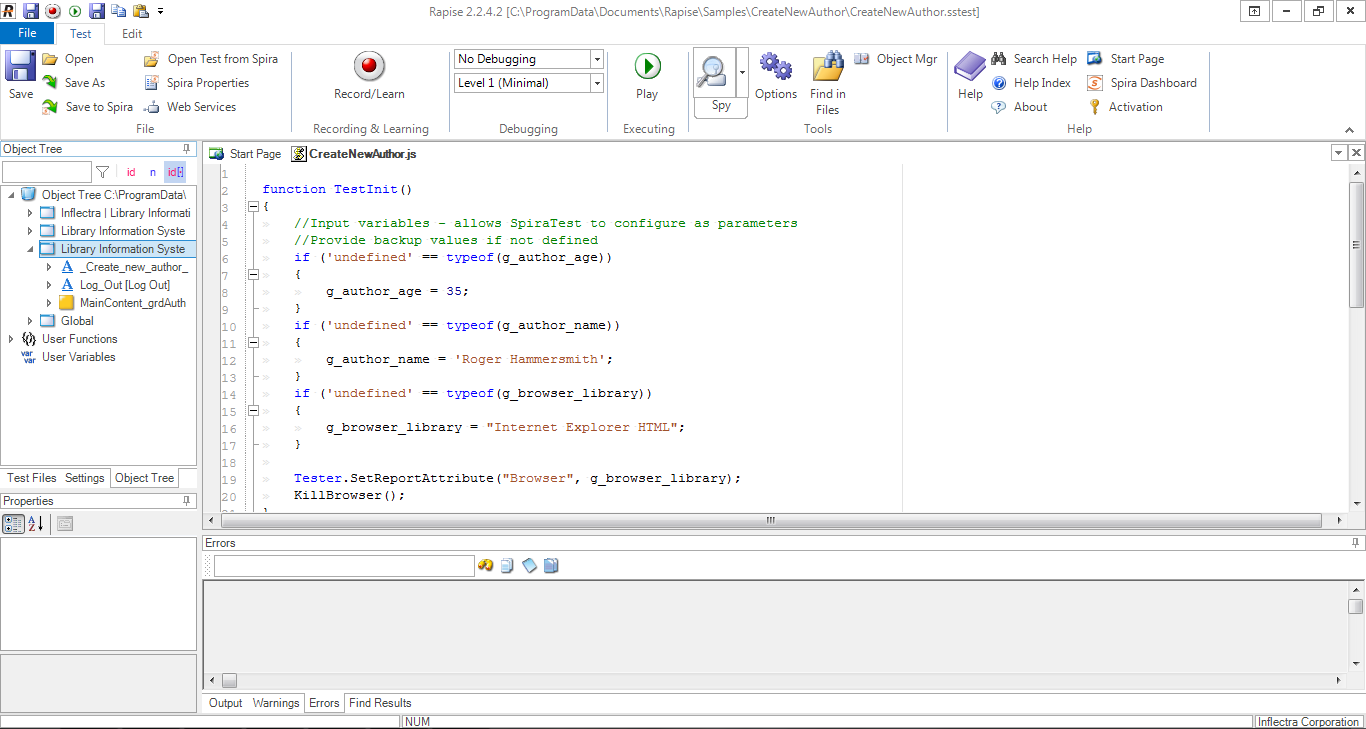  |