Axway headquartered in Phoenix, Arizona offers Managed File Transfer (formerly SecureTransport), a managed file transfer system providing mft gateway, mft controller, and governance.
N/A
NGINX
Score 9.8 out of 10
Mid-Size Companies (51-1,000 employees)
NGINX, a business unit of F5 Networks, powers over 65% of the world's busiest websites and web applications. NGINX started out as an open source web server and reverse proxy, built to be faster and more efficient than Apache. Over the years, NGINX has built a suite of infrastructure software products o tackle some of the biggest challenges in managing high-transaction applications. NGINX offers a suite of products to form the core of what organizations need to create…
[NGINX] is very well suited for high performance. I have seen it used on servers with 1k current connections with no issues. Despite seeing it used in many environments I've never seen software developers use it over apache, express, IIS in local dev environments so it may be more difficult to setup. I've also seen it used to load balance again without issues.
If you use Axway SecureTransport with their edge server. The system separates your user accounts from the first point of entry into the system. This is done by creating an edge device in your DMZ that acts only as a proxy to the backend ST server.
Their support has been really good when you have a questions or issues with the version you are on. They respond pretty quickly to your open cases.
I also like the fact that their system can be really customizable. This does take a little bit of knowledge of how the system works. I did go to a 4 day class that Axway provided back in version 4.
They support a wide range of security and automation when it comes to sending/receiving files.
They have low CVE vulnerabilities and they keep up with the latest security holes that may arise.
SecureTransport is a pretty solid platform and it's pretty hands off once it's up and running. We did have to tweak a few things regarding the memory allocated to the running services and there are a still few open bugs that are supposed to be released in the next SecureTransport. Those are not causing any issue on our side.
You can create different templates for your HTTPS sites. This is useful if you have different needs for your customers.
I have come a cross several bugs that came up in their new releases, but this is kind of expected given they support a wide range of technologies in terms of B2B transfers or ad-hoc transfers.
Support is sometimes difficult to communicate with just because of them being out of India. They are responsive and know their stuff when it comes to SecureTransport.
Customer support can be strangely condescending, perhaps it's a language issue?
I find it a little weird how the release versions used for Nginx+ aren't the same as for open source version. It can be very confusing to determine the cross-compatibility of modules, etc., because of this.
It seems like some (most?) modules on their own site are ancient and no longer supported, so their documentation in this area needs work.
It's difficult to navigate between nginx.com commercial site and customer support. They need to be integrated together.
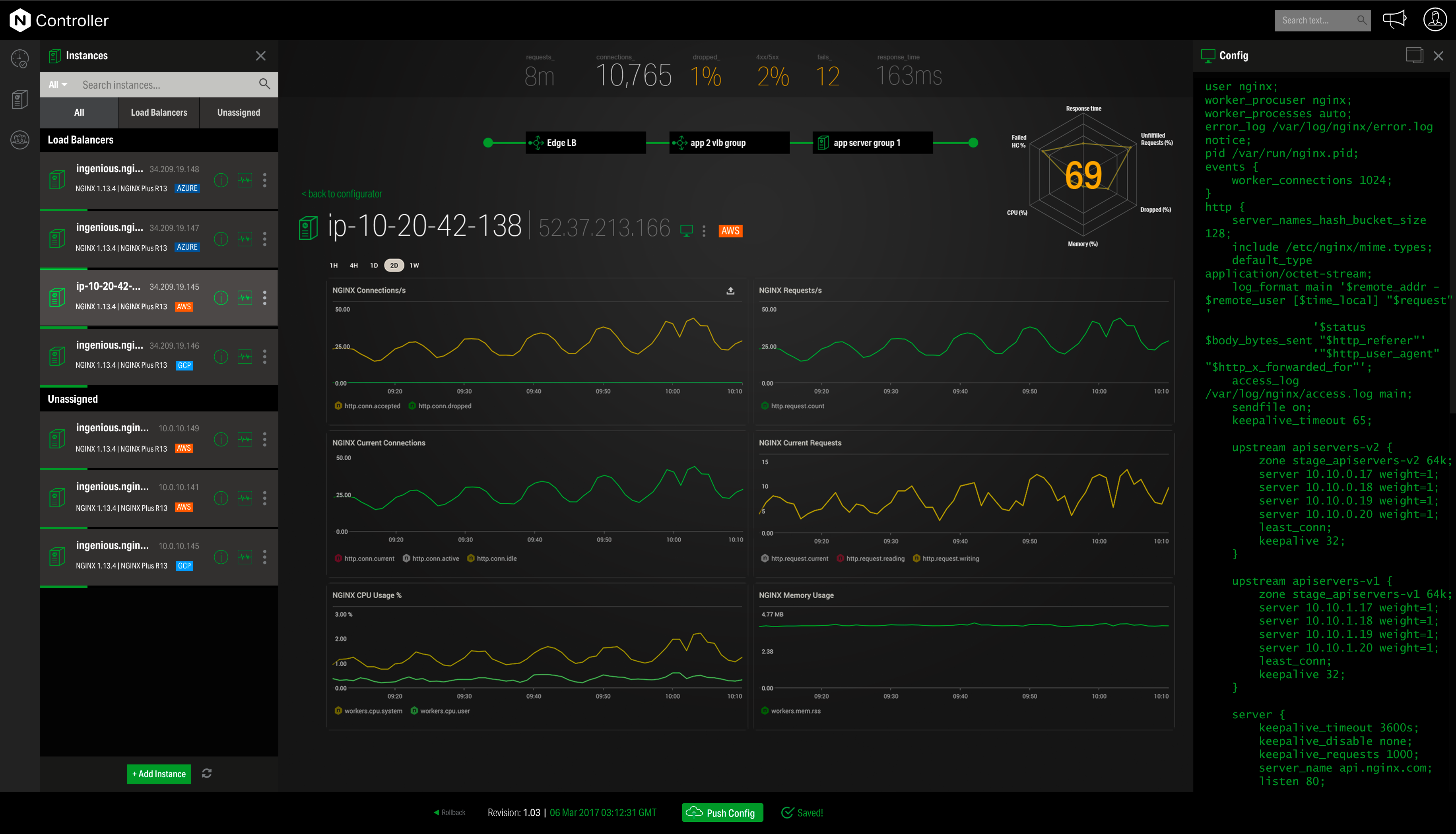
I'd love to see more work done on nginx+ monitoring without requiring logging every request. I understand that many statistics can only be derived from logs, but plenty should work without that. Logging is not an option in many environments.
Front end proxy and reverse proxy of Nginx is always useful. I always prefer to Nginx in overall usability when you have application server and database or multiple application servers and single database i.e. clustered application. Nginx provides really good features and flexibility which helps the system administrator in case of troubleshooting and also from the administration perspective. Also, Nginx doesn't delay any request because of internal performance issues.
Community support is great, and they've also had a presence at conferences. Overall, there is no shortage of documentation and community support. We're currently using it to serve up some WordPress sites, and configuring NGINX for this purpose is well documented.
I have not used another product other than SecureTransport. I have only researched to see if there are any alternatives better. Frankly we just don't have the time to invest in switching either. SecureTransport does what it needs to do in our environment.
We have used Traffic, Apache, Google Cloud Load Balancing and other managed cloud-based load balancers. When it comes to scale and customization nothing beats Nginx. We selected Nginx over the others because
we have a large number of services and we can manage a single Nginx instance for all of them
we have high impact services and Nginx never breaks a sweat under load
individual services have special considerations and Nginx lets us configure each one uniquely
Once the system is set up and operational, the only internal support would be to configure new accounts or research failed transmissions. It's really hands off once you have it up and running. It doesn't require a bunch of support or baby sitting.
We are able to offer new services to our business customers which benefits both sides.
Nginx has decreased the burden of web server administration and maintenance, and we are spending less time on server issues than when we were using Apache.
Nginx has allowed more people in our company to get involved with configuring things on the web server, so there's no longer a single point of failure ("the Apache guy").
Nginx has given us the ability to handle a larger number of requests without scaling up in hardware quite so quickly.