Azure DevOps Server vs. DataKitchen DataOps Platform

Overview
ProductRatingMost Used ByProduct SummaryStarting Price
Azure DevOps Server
Score 8.5 out of 10
N/A
Azure DevOps Server (formerly Team Foundation Server, or TFS) is the on-premise version of Azure DevOps. To license Azure DevOps Server an Azure DevOps license and a Windows operating system license (e.g. Windows Server) for each machine running Azure DevOps Server.N/A
DataKitchen DataOps Platform
Score 0.0 out of 10
N/A
The DataKitchen DataOps Platform aims to automate key functions of data development & production workflows so data teams can collaborate, quickly innovate & deliver error-free, on-demand insight. Tool-Agnostic DataOps Platform supports an array of native tooling integrations & flexible methods for integrating new tools as they come available. Meta-Orchestration Meta-orchestrates all the steps in production & development…N/A
Pricing
Azure DevOps ServerDataKitchen DataOps Platform
Editions & Modules
No answers on this topic
Offerings
Pricing Offerings
Azure DevOps ServerDataKitchen DataOps Platform
Free Trial
NoNo
Free/Freemium Version
YesNo
Premium Consulting/Integration Services
NoYes
Entry-level Setup FeeNo setup feeNo setup fee
Additional Details
More Pricing Information
Community Pulse
Azure DevOps ServerDataKitchen DataOps Platform
Best Alternatives
Azure DevOps ServerDataKitchen DataOps Platform
Small Businesses
GitHub
GitHub
Score 9.2 out of 10
GitLab
GitLab
Score 8.9 out of 10
Medium-sized Companies
GitHub
GitHub
Score 9.2 out of 10
GitLab
GitLab
Score 8.9 out of 10
Enterprises
Perforce P4
Perforce P4
Score 7.5 out of 10
GitLab
GitLab
Score 8.9 out of 10
All AlternativesView all alternativesView all alternatives
User Ratings
Azure DevOps ServerDataKitchen DataOps Platform
Likelihood to Recommend
9.0
(48 ratings)
-
(0 ratings)
Likelihood to Renew
10.0
(1 ratings)
-
(0 ratings)
Usability
6.0
(4 ratings)
-
(0 ratings)
Support Rating
8.4
(10 ratings)
-
(0 ratings)
Implementation Rating
8.0
(1 ratings)
-
(0 ratings)
Ease of integration
9.0
(2 ratings)
-
(0 ratings)
User Testimonials
Azure DevOps ServerDataKitchen DataOps Platform
Likelihood to Recommend
Microsoft
Azure DevOps is good to use if you are all-in on the Microsoft Azure stack. It's fully integrated across Azure so it is a point-and-click for most of what you will need to achieve. If you are new to Azure make sure you get some outside experience to help you otherwise it is very easy to overcomplicate things and go down the wrong track, or for you to manually create things that come out of the box.
Read full review
DataKitchen
No answers on this topic
Pros
Microsoft
  • Reporting Integration- Azure boards provides Kanban and other dashboard, their templates for easy management of project.
  • Project Pipeline- easy integration and development of CI/CD pipelines, helped in testing, releasing project artifacts.
  • Version Control- Integration with Git and code IDE made it easy to share, review our code, fix bugs and do testing.
Read full review
DataKitchen
No answers on this topic
Cons
Microsoft
  • Can add more build templates for specific technology requirements
  • Can have more features in dashboards which can help dev teams stream line their tasks and priorities
  • Can have raise alarm feature in case of any sort of failure in devops pipeline execution
Read full review
DataKitchen
No answers on this topic
Likelihood to Renew
Microsoft
Because we are a Microsoft Gold Partner we utilize most of their software and we have so much invested in Team Foundation Server now it would take a catastrophic amount of time and resources to switch to a different product.
Read full review
DataKitchen
No answers on this topic
Usability
Microsoft
For standard users the interface is friendly. but if you are a manager some tools are a little confusing to use, like the query system that you always need to create from scratch. Templates should be more helpful for queries and for standard procedures that you need to duplicate PBIs over time. The search history of Work Items is a little painful to use.
Read full review
DataKitchen
No answers on this topic
Support Rating
Microsoft
I have not had to use the support for Azure DevOps Server. There have never been any issues where I was not able to figure it out or quickly resolve. Our Scrum Master has used support before though, and the service has always been prompt and clear with a customer-focus
Read full review
DataKitchen
No answers on this topic
Implementation Rating
Microsoft
Do research beforehand and, if possible, do a trial run before implementing into production environment.
Read full review
DataKitchen
No answers on this topic
Alternatives Considered
Microsoft
In my opinion, DevOps covers the development process end to end way better than Jira or GitHub. Both competitors are nice in their specific fields but DevOps provides a more comprehensive package in my opinion. It is still crazy to see that the whole suite can be used for free. The productivity increase we realized with DevOps is worth real money!
Read full review
DataKitchen
No answers on this topic
Return on Investment
Microsoft
  • It has streamlined the pipeline and project management for our agile effort.
  • It has helped our agile team get organized since that is a new methodology being leveraged within the Enterprise.
  • The calendar has improved visibility into different OOOs across the project team since we all come from different departments across the larger organization.
Read full review
DataKitchen
No answers on this topic
ScreenShots

DataKitchen DataOps Platform Screenshots
Screenshot of Meta-Orchestration
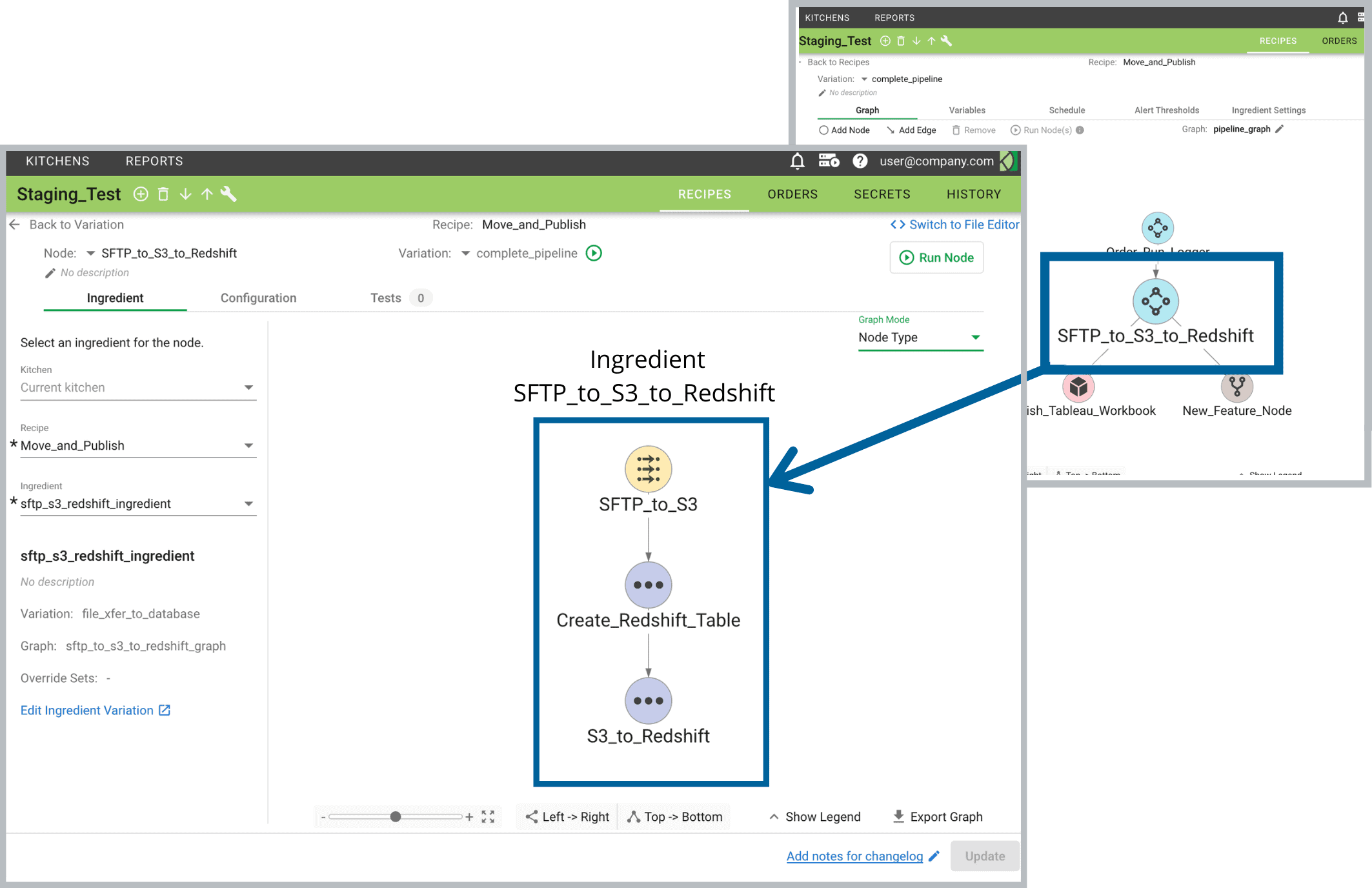
Data organizations may be hierarchical and siloed, but analytics production cuts across teams, locations, and environments. The DataKitchen Platform meta-orchestrates all the steps in your production and development pipelines (and even pipelines of pipelines), providing a coherent framework for inter-team collaboration that transcends heterogeneous toolchains and distributed data centers.Screenshot of Environment Creation & Management
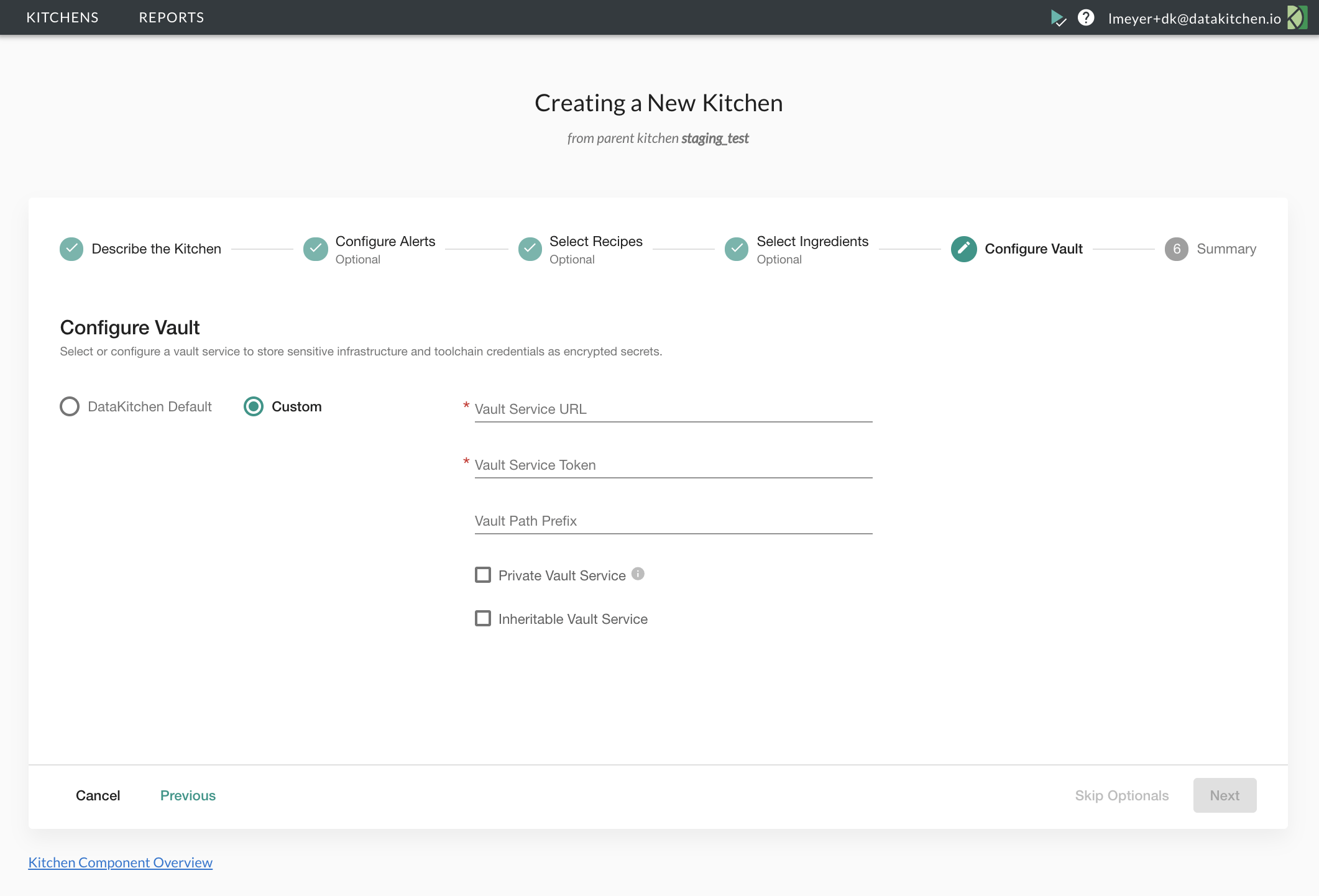
With the DataKitchen Platform, create Kitchen workspaces in minutes – not weeks or months – to provide developers with a controlled and secure space to work. Kitchens contain pre-configured tools, datasets, hardware, and tests – everything users need to create and innovate.  When new analytics are ready, Kitchens streamline an individual’s work into a team’s work and eventually into production by seamlessly merging to aligned environments.Screenshot of Continuous Deployment
Analytics can’t be agile with manual, error-prone, and time-consuming release processes. The DataKitchen Platform automates the end-to-end deployment process allowing analytics teams to test and release new analytics on-demand. Kitchens align and integrate toolchain environments so continuous deployment orchestrations can easily migrate analytics to production.Screenshot of Automated Testing & Monitoring
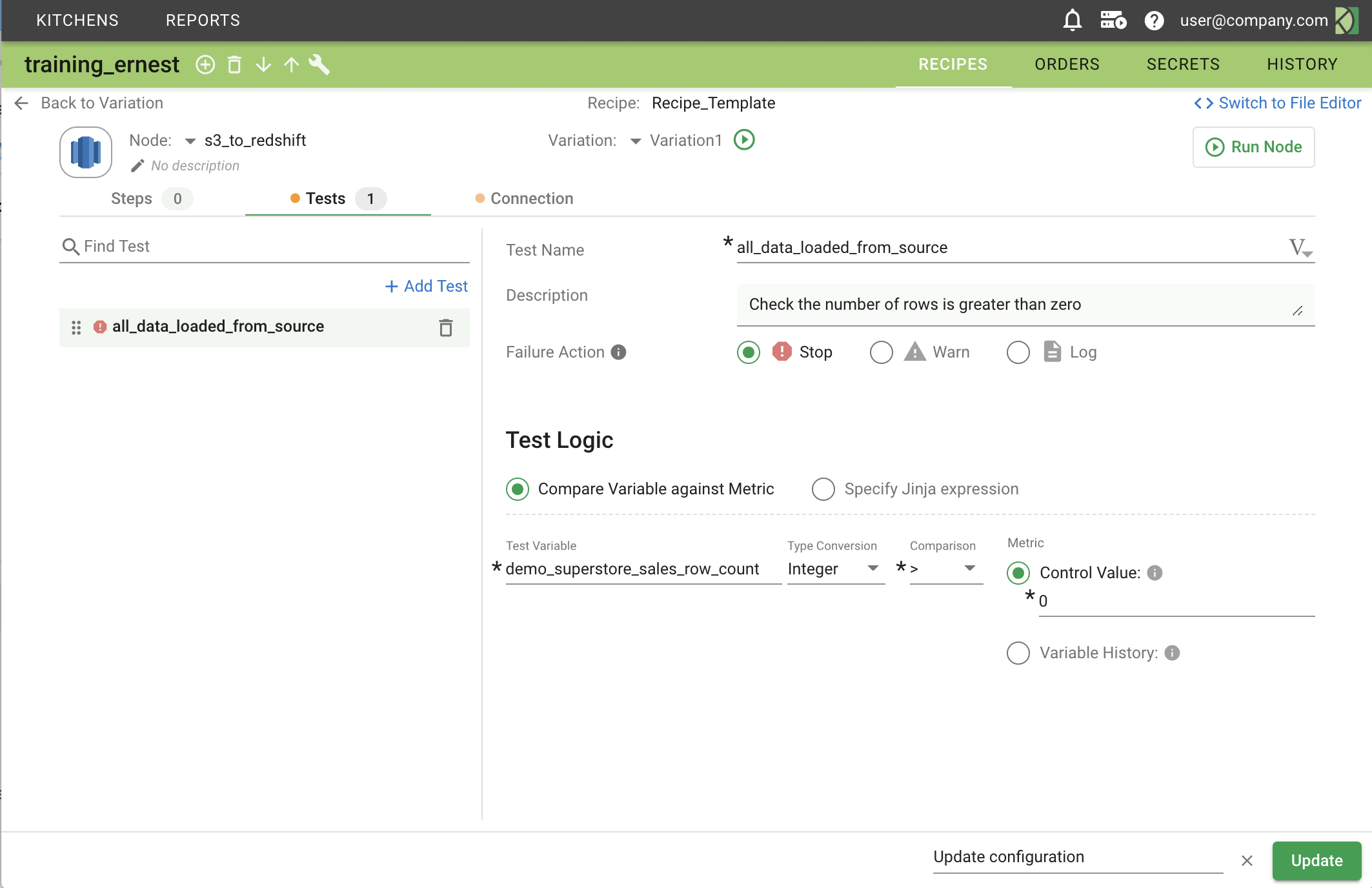
Automated testing and monitoring are foundational to DataOps. The Platform enables you to dramatically improve data quality by catching costly and embarrassing data errors early.  Embed automated tests at every step in your production and development pipelines. Use failures as an opportunity to add more tests and increase the reliability of your pipelines over time. Preset alerts to increase agility and reduce data downtime.Screenshot of Collaboration & Sharing
DataOps is a team effort, and the DataKitchen Platform fosters collaboration by providing a common place to work and a single view of the end-to-end analytic process.  Team members innovate and experiment in separate but aligned Kitchens, then integrate the collective work with confidence.  Teams can easily save and share commonly used parts of pipelines as Ingredients – a significant productivity multiplier.Screenshot of DataOps Process Analytics
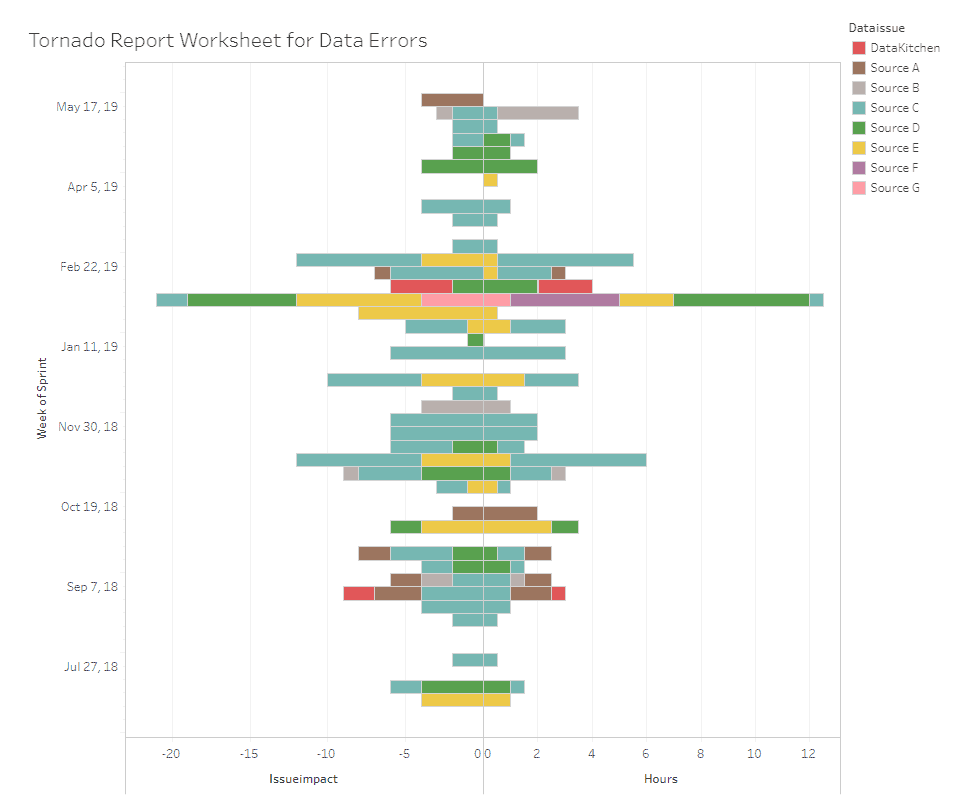
You can’t improve what you don’t measure. The DataKitchen Platform provides unprecedented visibility into the state of your data operations.  Process metrics show how your teams are increasing collaboration, improving productivity, expanding test coverage, reducing errors, speeding deployment cycle times, and consistently meeting deadlines.